Paramount pitches simpler storytelling, lands global/local content slate balance with media buyers; integrations, shoppable ads welcomed but questions of viewer friction arise
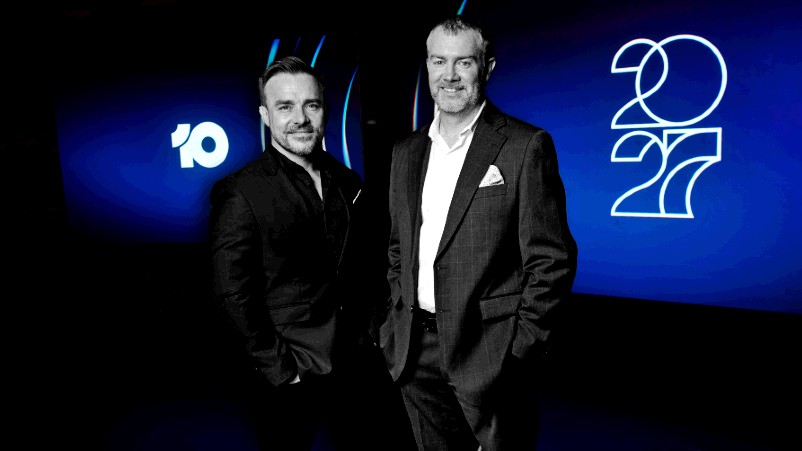
Paramount 2027 Upfronts (from left): Lee Sears and Grant Madigan
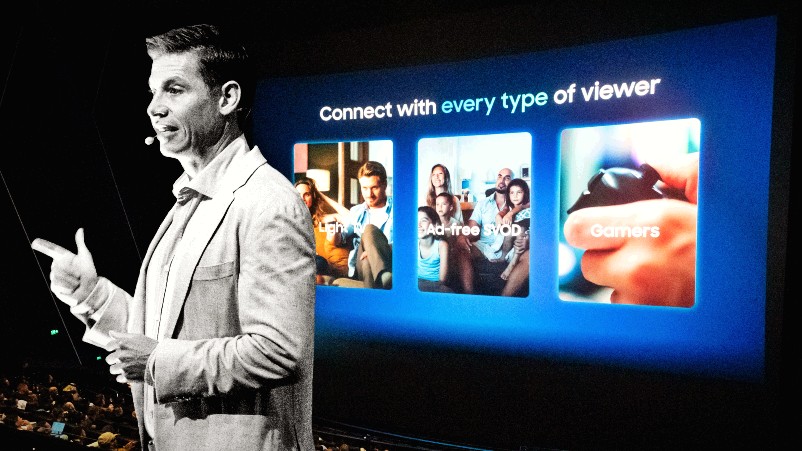
Paramount had a simpler story to tell compared to traditional TV competitors at its upfronts this year, and it showed. While parent company Skydance may have just sealed a US$110 billion deal to buy Warner Bros, and faces the colossal challenge of bringing the two businesses together, the local Paramount business was telling an evolution story anchored in unified ad trading, a more rounded full-funnel measurement approach, complementary and increasingly shoppable content and a total, owned entertainment proposition. Media buyers speaking to Mi3 saw a confident display of complementary global and local programming that took pride of place, from blockbuster US drama to local additions such as Mushroom Murders – that one drew audible gasps from guests in the MasterChef kitchen. They were also pleased with how brand integrations are evolving with it. But the big looming question is one of friction: Can Paramount and Network 10 balance the increasing points of positioning and purchase available to brands without pissing off the 16.6m monthly viewers it claims to have?
What you need to know:
- Paramount Australia pitched a unified entertainment and advertising proposition at its 2027 upfronts, with its owned ecosystem spanning Network 10, 10 Streaming, Paramount+ and FAST channels a simpler proposition to sell against the integration work and more complex channel mixes being pursued by traditional TV rivals, Nine and Seven.
- The business claims to reach 16.6 million Australians monthly across its platforms. Paramount+ has about 2.4 million users, growing 12 per cent year-on-year, according to the latest figures cited.
- Paramount Connect, its unified premium video buying platform, has delivered more than 70 campaigns. The company plans to expand premium ad formats, programmatic access and dynamic linear TV bookings in 2027, while exploring agentic AI for media trading.
- Brand integrations are also visible and now becoming even more shoppable and measurable. The Great Aussie Christmas, a four-part Bunnings-backed series, will make every aspect of the show shoppable, while AI-powered MomentAI technology will bring contextual advertising to major sporting highlights, starting with the FIFA Women’s World Cup Brazil 2027.
- On the audience measurement front, Paramount is expanding measurement across attention, brand lift, site visits and sales, combining partners including Adelaide, Cint, Infinitum and Samba. It claims the bundled approach is an Australian broadcasting first, with the rollout extending to linear TV in 2027.
- For media buyers, Paramount’s 2027 content slate balanced local programming alongside global franchises nicely, with new local culture additions including Mushroom Murders, the return of Junior MasterChef Australia featuring Meghan, Duchess of Sussex, and Australian Ninja Warrior. Paramount+ will also stream every FIFA Women’s World Cup match, alongside coverage across Network 10.
- Yet even as they welcomed the strong content slate, local investment, and a clearer commercial proposition, media buyers, including Spark Foundry Australia's Rachida Murray and Involved Media’s Dan Hojnik, warn that more integrations and shopping opportunities risk creating friction with viewers. Paramount’s challenge will be balancing advertiser outcomes with relevance and restraint to protect audience engagement.
There had been a few leaks before Paramount’s upfronts kicked off – Megan, Duchess of Sussex was returning to co-host a junior version of MasterChef (back after a six-year hiatus), Ninja Warriors had switched channels and would now screen on Channel 10, with Rob Irwin adding another show to his resume. But that didn’t stop the Skydance company and Network 10 owner from making a big song and dance of its content slate, using the immersive nature of the MasterChef kitchen in Melbourne to engage media buyers and planners in what’s on offer in 2027. And it got an audible gasp when its latest local series was revealed, Mushroom Murders, based on Erin Patterson’s true crime.
Consensus across media buyers speaking to Mi3 is one of a confident Paramount, with a complementary set of global and local shows that fit well into yesterday’s broader theme of integration. Moreover, while traditional competitors Nine and Seven Media Group were largely telling advertisers the story of how they’re connecting the dots and integrating in distinctly different channels and audiences represented by their acquisitions and mergers, Paramount’s owned portfolio of linear TV, BVOD, SVOD and FAST channels has already had years of integration work that made the tech innovations, advertising unit additions and rounded-out measurement less onerous to talk through on stage.
That’s not to say colossal integration work globally isn’t afoot. In a nod to yet another change for global owner, Skydance, A/NZ chief, Beverly McGarvey, kicked off proceedings by flagging the recently rubber-stamped $US110 billion Skydance and Warner Brothers deal, noting “it brought two of the most iconic studios in the world powered by stories, accelerated by technology”.
But compared with the upfronts of traditional linear and BVOD competitors at least, Paramount arguably had the easier story to put forth. With Nine vetting questions about how it’ll successfully integrate its QMS offering into both the audience and advertising mix, and Seven still working to connect the internal integration dots on its merger with SCA, Paramount presented an owned ecosystem and evolving unified audience, trading and measurement story.
“It wasn’t that long of a presentation, and I think it’s because they had the simplest thing to sell,” Spark Foundry Australia's chief digital and media officer, Rachida Murray, told Mi3. “It was just really great content you don't need to labour on. A pretty simple commercial, ‘bring it together’ proposition and a three-pillar measurement framework … I think sometimes a simple story is easy to land.”
Kaimera buying director, Ngita Bowers, also saw it as one of the better TV upfronts. “Paramount started with the core business strength in the global IP, and although acknowledged, not much time was spent on the recent merger with Warner,” she said. “The true impact on the Australian landscape, if any, is yet to be revealed or explained.
“What Paramount did demonstrate was the clear importance of programming, revealing a strong mix of existing and new shows. That included investment in Australian drama, which was rather absent from the other main commercial networks' programming slate. Except for outlining their Paramount Connect's unified buying packages, it was refreshing to have ad tech playing second fiddle. By setting its strategy as an entertainment company, it sets them apart from the other commercial FTAs.”
Total numbers
Paramount Australia, a Skydance company, again beefed up the reach numbers cited at this year’s upfronts, claiming it now has 16.6 million Australian viewers every month in aggregate (it claimed 16.3 million 18 months ago). The figures cover Network 10 and 10 Streaming, Paramount+ and its FAST channels.
According to SVOD figures out of Telstye from June, Paramount+ is tracking at about 2.4 million users, growing 12 per cent year-on-year and putting it in fifth position behind Netflix, Amazon Prime Video, Disney+ and Stan.
Among the few audience breakdowns provided through the show was that 78 per cent of Australians are watching connected TV, averaging over 11 hours per week. Paramount also claimed a “number one in key demos” for this year’s Big Brother – though it didn’t specify what those key demos were – and also claimed the strength of its 6.30pm – 7.30pm game shows had lifted audience almost 25 per cent year-on-year. Comedy was the other genre cited as a portfolio strong suit, with 2.32 million Australians tuning in weekly.
The challenge is we've got everything. The brilliance is we've got everything. That in a nutshell is the job really. We're very fortunate to have some of the best assets in the world, but because we've got all of them, that means we're competing with everybody.
Integrated, evolving proposition
The other integrated story Paramount was very keen to land with local media buyers and clients is that its advertising and brand solutions are very much an evolving, united offering – and there are copious brand opportunities to get involved.
“We're seeing lots of other people inventing new things, coming up with new things. Actually, we're building on a solid foundation,” Paramount president of international ad sales, Lee Sears told Mi3 in an interview prior to the official upfronts.
The crowning achievement here is Paramount Connect, a converged trading platform and single customer view bringing both content-led and audience-led buying across BVOD, SVOD, AVOD and FAST assets. Last year, Paramount Connect evolved via the introduction of Paramount Connect Streaming, enabled by Paramount's technology transformation and switch to global preferred platform, FreeWheel, so advertisers can access and activate campaigns across 10 and Paramount+.
“We have our product Paramount Connect, which puts all of our premium video inventory in one place to buy. That's already been in market for over a year,” said Sears. “What we’re doing is we’re building on that … it’s all coming to fruition, and genuinely, we're really excited about it.”
More than 70 campaigns have run through the platform. “That tells us clients want premium audiences with less friction, better control, and a cleaner path to delivery,” Paramount Australia VP sales, Grant Madigan told upfront attendees.
Then there’s the integrated sales and trading structure. “We have built our sales structure around the way the market now buys video: One team, one conversation, one connected approach across national linear television, BVOD, SVOD, and FAST,” he said. “In 2027, we will expand premium ad formats and programmatic access so advertisers can buy more what works more easily.”
For example, in a bid to bring more agility to linear television through summer, the group is unlocking more metro schedule for dynamic bookings. “We recognise that agility and adaptability are table stakes in this market, and that gives us the opportunity to assess a long-term ambition of a fully automated ecosystem,” Sears told Mi3.
“I do a lot of upfronts. We did one in the UK last week, the one in Germany three weeks ago. I'm in the US one, and in different markets things are in different stages of evolution. But coming to Australia this week, having done the last three or four years of coming here, I'm really excited because I know what we've got, the products we've got, and the team knows what we've got and how to sell them. And we’re very fortunate that some of the things in the schedule next year are going to really accentuate them.
“We're building on a solid foundation, and we're excited to take it to the next level.”
With a nod to the future, Sears said Paramount will also bring agentic AI capabilities into the supply side as the next piece in the puzzle. Paramount is one of the founding publishers in a pilot program with IAB Australia to help shape how AI agents will plan and transact media in this market.
“Alongside that, we are working with our global team to build a Paramount seller agent, so the buying agents, when they come knocking, our premium inventory is ready to answer,” Sears continued.
He agreed the complexity of the competitive ad-supported TV and premium video landscape Paramount is operating in makes it critical it becomes as easy as possible to buy one audience via a single plug in.
“The challenge is we've got everything. The brilliance is we've got everything. That in a nutshell is the job really,” said Sears. “We're very fortunate to have some of the best assets in the world, but because we've got all of them, that means we're competing with everybody.”
Relevance and restraint is very important. Sport produces that peak attention for audiences, which is great … If you become part of the momentum without distracting from the reason the audience is there in the first place, that’s great salience. If it becomes too much, it'll get the audience annoyed and be like the backlash with the hydration breaks we had during the World Cup.
More integrated campaigns, ads and a whole shoppable show for Bunnings
What the team is also looking to do is put more brands inside the moments audiences are choosing, from entertainment to sports, and live events with real attention and cultural pull. Paramount by far had the strongest integration story here of this year’s TV upfronts, demonstrating a raft of examples of brands integrated into programming. But that is where the risk of audience friction also hits.
Furthering brand integration firstly means more shopping and actionability. Twelve months on from testing the shoppable format in its Big Brother programming with launch brand partner, McCain, Paramount has extended its KERV.ai Moment Match Engine from the ad break and into the program. Every aspect of its new branded content show, The Great Aussie Christmas presented by Bunnings Warehouse, will be shoppable. The four-part series was built for connected TV and uses Paramount’s Pause to Shop each time a viewer pauses into an advertising and shopping opportunity.
“What we are building on is what was an ad unit in the show to building an entire show that’s shoppable,” Madison told Mi3. “It’s an outcome that’s trackable, attributable purchase, fully linked, full attribution.”
Strategic development and delivery of the Bunning’s content campaign was supported by PHD and OM Content, and kicks off from 1 November on 10 Streaming, before fully airing on Channel 10, followed by Paramount+.
“Through The Great Aussie Christmas, we’re showing customers practical, achievable ways to transform their spaces, while making it easier than ever to shop the products they discover along the way – whether it’s creating a welcoming front yard, refreshing an entertaining space or adding festive touches throughout the home,” Bunnings director of marketing and retail media, Justine Mills, said.
In addition, Paramount is extending its use of Transmit’s MomentAI capability in the US to Australia, beginning with Paramount+ and 10’s coverage of the FIFA Women’s World Cup Brazil 2027 in June and July. The tech snips goals, shots, finishes and other highlight moments from a game and inserts advertisers alongside them in what the media company said turns high-value and high-attention moments into moments for brand association.
“It’s not limited to sport at all,” Sears told Mi3. “Sports is obvious and easy to understand, but you could be getting some of the best evictions on Ninja Warrior, or it could be someone that's done an amazing run through the course.”
For Madigan, the solution set is “about more exposure, more attention, and more chances to convert viewers from the same schedule”.
“We are already delivering the benefits to our advertisers with the 10+1 [multi-channel], increasing our audience by 5 per cent. Then the refreshed 10 Streaming app adds our biggest content drop ever, giving advertisers more content, more premium moments, and more opportunities to reach engaged streaming audiences,” he said.
There’s also sponsorship and integration with specific titles available on Paramount+ from early 2027, along with pause, high impact and interactive format premium advertising solutions rolled out on 10 Streaming over the past year.
“Streaming fixed units will give sponsors priority placement around the highest value viewing window across major tentpole programming,” continued Madigan. “More than 70 per cent of on-demand episode viewing happens in the first week. This product is designed to help brands own that first week attention across Paramount+, 10 Streaming, and linear, maximising exposure when audience interest is at its peak. On Paramount+, advertisers will be able to align with individual programs, allowing brands to sponsor and integrate with our biggest global and local hits.”
Friction points
There’s a warning here, however. Publicis’ Murray stressed the onus on both media buyers as well as media owners to ensure this onslaught of ad and integration opportunities meets client needs and, importantly, doesn’t introduce friction into viewing.
“Relevance and restraint are very important,” she told Mi3. “Sport produces that peak attention for audiences, which is great … If you become part of the momentum without distracting from the reason the audience is there in the first place, that’s great salience. If it becomes too much, it'll get the audience annoyed and be like the backlash with the hydration breaks we had during the World Cup.
“Agencies will really need to focus on that relevance piece, where are we building salience, and how relevant is it to an audience, without becoming part of the furniture. But with the restraint piece, the media operators have a really important part to play in that, because at the end of the day, it is also their audience they want to keep engaged and coming back into the format. A space that's too crowded is no good for the media environment.”
For Involved Media head of strategy, Dan Hojnik, the integrated, united play was a strong one, but again, he was concerned about balancing more ads with viewer friction.
"Managing frequency across all three means [platforms] less duplicated reach and more incremental reach, which is where budgets work hardest. Paramount is seeking to take friction out of buying. The question is whether formats like Pause To Shop add it back into watching,” he said. “I worry that asking people to shop mid-show feels like friction nobody asked for. Pause To Shop is definitely the right instinct – the brand doing something in the content; the question is really about the shopping mechanic and how seamless they can make it. It's definitely an interesting innovation, but I wonder whether we're asking too much of people to shop while they're being entertained."
Madigan agreed. “What we don't do is pigeonhole a brand into an opportunity,” he said. “It's got to make sense, and it has to be the right fit for the client. It's got to be the right fit for the publisher. And it’s got to be the right fit for the budget. But the shopping list is long.”
Full-funnel attention
Alongside Paramount’s evolving ad offering is its extension of measurement to understanding attention. Last year, the group struck a new partnership with attention firm Adelaide, employing its average attention unit (AU) media quality metric.
The first round of audits reported 10 and Paramount+ delivering an average attention unit (AU) score of 71.98 on connected TV, 22 per cent above Adelaide’s benchmarks. Paramount is also delving into how attention stacks up across key genres, finding live Big Brother content scored up to 80 per cent AU, 36 per cent above benchmarks. Madison is also claiming strong scores across other genres.
On top of attention quality metrics, Paramount has now struck deals with Cint on its Lucid Measurement Dashboard to provide insights into brand lift, plus Infinitum to link streaming ad exposure to onsite actions across a household. The full-funnel measurement solution is first being rolled out across Paramount+ and 10 Streaming, and it’ll get across 10 linear in 2027 thanks to ad exposure matching intelligence from Samba.
Madison is claiming an Australian broadcaster first with the bundling of measurement solutions to measure attention, brand lift, site visits and sales in a single campaign.
Sears also pointed to its latest Science of Sponsorship research, which shows content integration drives attention, purchase intent, and product sales, while total TV sponsorships lift purchase intent by over 20 per cent. In early 2027, Paramount will release new research with Publicis and data analytics firm Marketing Scientists Group, which he said would reveal “the missing value of in-market buyers reached through TV and streaming. “That means faster planning, stronger proof, and better results for our advertisers,” he added.
But if that wasn’t enough to win over the punters, a short video featuring viewers from Paramount’s Gogglebox TV reality program turned the verdict over to them, and many demonstrated both brand recall and affinity across integrated brand examples such as Ikea (Australian Survivor), Coles and Ancestry (Masterchef), KFC (Big Brother) and Shark Ninja (A-League).
Murray applauded what she saw as a triumvirate of measurement from attention through to sales conversion. “In measurement, sales can be an end goal, but sometimes that might be very difficult to measure for a brand. And obviously everybody wants attention, but that's not really enough to take to the board,” she commented. “They have the layers there, and can support different types of advertisers with building that full picture. It'll depend on how interoperable it becomes, and how it can stand in a bigger measurement framework.
“Because no clients really want to know just how one thing did for them, they want to understand how everything works together.”
The content slate
Turning the dial to what’s on the box, Paramount Australia’s 2027 entertainment roster revolves around “big, bold, noisy shows”, as Network 10 VP content, Tamara Simoneau put it, spanning returning reality heavyweights, homegrown originals, global franchises, comedy and live sport across 10 and Paramount+.
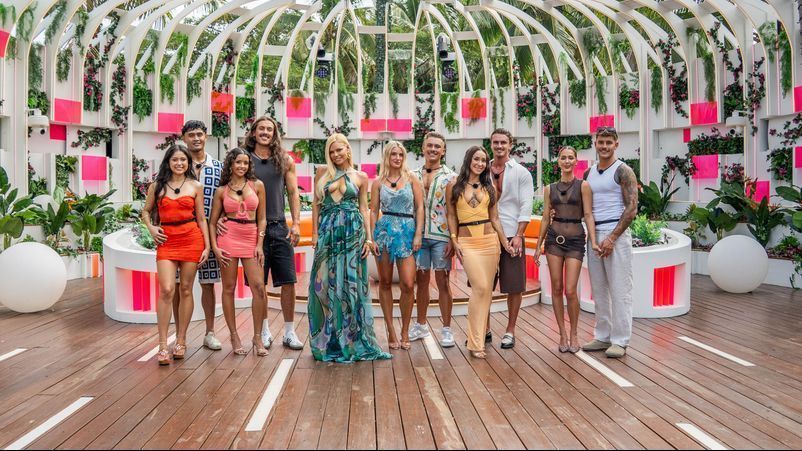
On 10, Big Brother returns from a new Brisbane base, while Australian Survivor: Rivals heads to Malaysia for a global-first season. MasterChef Australia and The Traitors Australia are also back, while Junior MasterChef Australia returns after a six-year hiatus, with Poh Ling Yeow joined by Meghan, Duchess of Sussex, following her guest stint on MasterChef Australia earlier this year. Fresh additions include Australian Ninja Warrior, hosted by Robert Irwin, Georgie Tunny and Beau Ryan, Aussie Auctions, Extraordinary Homes Australia and Dogs At Work.
The network is also keeping its comedy bench intact with Have You Been Paying Attention?, The Cheap Seats, Sam Pang Tonight, Shaun Micallef’s Parents’ Evening and Taskmaster Australia coming back. Gogglebox Australia reaches its 25th season.
But the new show that got the biggest upfront gasps is Mushroom Murders with Melanie Lynskey playing Erin Patterson. Many media buyers saw this as a great tie-in to local culture and stories and a powerful addition to the programming.
Paramount+ also offered up several other Aussie originals, headlined by Sam Kerr Kicking Goals, Hedley Thomas Investigates, and The Inspired Unemployed Sketch Show. Returning local titles include Last King of the Cross, NCIS: Sydney and Aussie Shore, with Who The Hell Is Hamish? also joining the fresh additions.
The streamer’s global line-up brings in Nicole Kidman and Elle Fanning's thriller Discretion, Jeremy Strong-led The Best Of Us, Kenneth Branagh’s Scottish drama, Laird, Anne Hathaway's drama Fear Not, and Richard Madden's thriller, Trauma. Alicia Silverstone returns as Cher Horowitz in a Clueless sequel series, while Samuel L. Jackson fronts Frisco King, expanding the Tulsa King universe.
On the sports front, Paramount has one of the biggest draws in Women’s sport next year: The FIFA Women’s World Cup Brazil 2027, with every game streaming on Paramount+, plus coverage across 10. It sits alongside the AFC Asian Cup, Matildas and Socceroos internationals, A-League Men, and Ninja A-League. Motorsport also features heavily, with Formula 1 returning to Albert Park with Australia’s first Sprint Race and MotoGP moving to a new Adelaide street circuit, while UFC and Zuffa Boxing continue on Paramount+.
The broader streaming slate is rounded out by returning global franchises including Dexter: Resurrection, MobLand, Landman, Tulsa King, The Gilded Age, Yellowjackets and South Park, plus films including Street Fighter, Sonic the Hedgehog 4, Scary Movie and Coyote vs. Acme.
Hojnik said Paramount did a good job of putting content front and centre. “Coming at the tail end of upfronts season, Paramount didn't tell the market it was confident; it showed it,” he said. “Today, a brand is what it does, not what it says. Integrations let brands go deeper than a spot ever could. Spots and dots tell people about a brand; integrations let the brand show up and do something inside the content people already love. Paramount now has the tools across 10, 10 Streaming and Paramount+: sponsorship within specific Paramount+ titles, Streaming Fixed Units from early 2027, and partnerships like Bunnings' The Great Aussie Christmas. If Paramount builds more propositions around integration, brands will value deeper content partnerships well beyond a 30-second spot.”
All media agencies noted the balance between local content standing next to Hollywood, rather than behind it.
“Local titles like Who The Hell Is Hamish? and Mushroom Murders held their own. They felt like part of the slate, not a token Australian add-on,” Hojnik added. “The 10 slate is overwhelmingly local, and local content is what builds audiences here. Brands need to know that continues."