
‘Content has been completely commodified’: Mamamia's new CEO Luca Lavigne calls time on volume, bets big on fewer podcasts, deeper brand deals as AI slop floods the internet
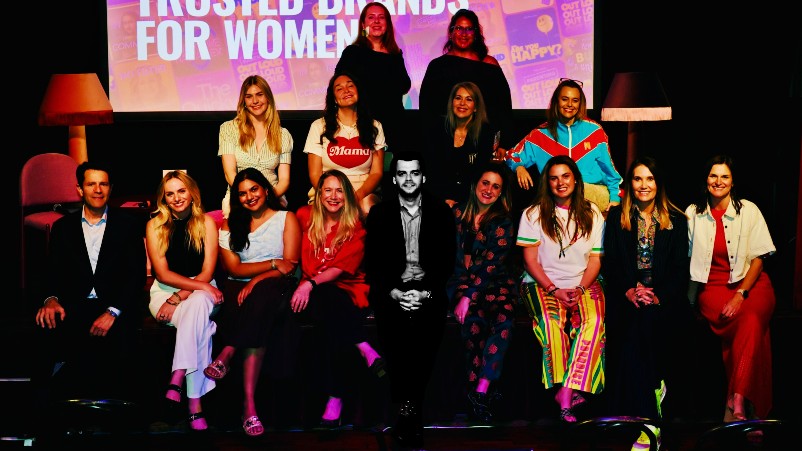
Six weeks into the top job, Mamamia CEO Luca Lavigne is wasting no time reshaping the publisher's content and commercial strategy. "Content has been completely commodified,” Lavigne told Mi3. His answer is ‘fewer, bigger, deeper’: cutting back on standalone podcasts, concentrating investment on established franchises and building bigger commercial opportunities around the creators audiences already trust. But fewer shows don't mean smaller advertiser ambitions. Mamamia is opening its biggest brands to longer-term Platinum Partnerships, category exclusivity and deeper access to talent and editorial teams. Buyers broadly back the strategy, but warn that “putting brands inside the show, not next to it” is where both the value and risk lie, particularly when audience trust is the publisher's biggest asset. The overhaul stretches beyond podcast feeds. Mamamia is taking its creator-led video proposition into living rooms through a 24/7 Samsung TV Plus channel, experimenting with AI-powered ad trading, expanding campaign measurement and positioning itself for the rise of AI-generated search. But amid the shiny commercial packages, co-founder Mia Freedman warned Australia's media buyers: “Every single media business in Australia is under threat right now.”
"More content or a higher volume of stuff is not the way forward in our view. Rather, it is about doing fewer things really well."
Content has become a commodity in an internet awash with AI-generated slop, according to Mamamia's new boss Luca Lavigne, who is betting on fewer, bigger podcasts and deeper advertiser partnerships to cut through the noise.
This year's pitch is not only about consolidating content and commercial capabilities, but also about what the next phase of a media brand cherished by female audiences looks like under new (male) leadership.
The 28-year-old Lavigne was recently appointed as Mamamia's new CEO – taking the reins from Nat Harvey, now at the revenue helm of Seven Media Group.
“It's been an absolute whirlwind,” Lavigne told Mi3. “The tabloids and various publications can say what they like (he is the son of founders Mia Freedman and Jason Lavigne), but I've long since learnt that, at the end of the day, I can't really control what anyone else thinks of me or writes about me," he said, thus displaying a level of maturity exceeding that of the critics.
Lavigne said the opinions that matter most to him come from the people he works alongside, followed closely by Mamamia's partners and audiences. Anything outside those walls, he claims, is “just noise.”
And, as he reminded the audience at UpClose, it's been “six weeks into the job, not the company”. Now Lavigne is looking to put his own mark on the business, with his first major pitch centred around ‘fewer, bigger, deeper’ investments.
At the heart is the Dead Internet Theory. Lavigne claimed that “more than 50 per cent of what's out there these days is AI and bots making content for other bots”.
“Content has been completely commodified,” he explained. For Lavigne, that growing scepticism reinforces Mamamia's bet on established creators and loyal audiences rather than chasing content volume and entering slop status.
“More content or a higher volume of stuff is not the way forward in our view. Rather, it is about doing fewer things really well.”
Fewer shows, bigger cheques: What's making the cut?
That philosophy is now translating into a significant rethink of Mamamia's content strategy. After announcing nine new shows at last year's upfronts, the publisher is changing course, with Lavigne confirming they “will be making fewer shows than we did last year.”
The move comes as Mamamia's flagship names continue to draw significant audiences for the local media company. Out Loud reached 1.2 million monthly listeners in March 2026, while its audience grew 46 per cent year-on-year in August. No Filter recorded a 16.5 per cent increase in downloads over the same period, while The Spill more than doubled its downloads and grew unique listeners by 45 per cent. Meanwhile, Unleashed, launched in February, has surpassed 1.5 million downloads.
That answers which shows Mamamia is concentrating its resources on, but what about the smaller, seasonal shows not making the cut?
Among the casualties is Well, Mamamia's standalone health podcast, which Lavigne confirmed will be “rested indefinitely”. The publisher has not disclosed the full list or how many titles will be affected.
“Rather than going and making a standalone health show, we look at one of the most successful brands that we launched in February this year, which is Unleashed. It's our Gen X comedy show, which has seen some of the fastest growth that we've ever had on the network.”
But the strategy goes deeper than chopping content production costs. It also marks a departure from developing new standalone podcasts in response to individual advertiser briefs, an approach that could generate short-term commercial opportunities without necessarily delivering sustained audience growth or long-term results for brands.
“What is going to move their business metrics in the long run is aligning that brand alongside a show that already has incredible trust.” Instead, Mamamia will extend existing show brands into adjacent formats and topics, building on established audience relationships rather than starting from scratch.
“Many of your shows will be resting to be replaced by brand extensions within our existing brands, or a couple of shows that we think have more longevity.”
In practice, that would look like Unleashed Burning Questions, an extension of the Unleashed franchise featuring Dr Ginny Mansberg and Cath Mahoney, which takes the show's humour and conversational approach into women's health. Out Loud will expand into Parenting Out Loud, while a new spin-off, Out Loud Recos, will build on the recommendations segment, now one of its most popular Friday features.
But fewer shows doesn't mean Mamamia is shutting the door on new launches. Coming in November are Lazy Girl Hour, a new comedy podcast from twin sisters Clare and Jessie Stephens, and Grout, an audio memoir by co-founder Freedman.
The wanted evolution is more of stronger franchises that can support more content extensions, more consistent audience engagement, and, ultimately, bigger commercial pockets. And Media Buyers seem bullish on the strategy. “Mamamia's strategy to focus on fewer shows makes sense,” Involved Media’s group business director Jenn Reid told Mi3.
Reid argued that in an increasingly crowded content market, quality matters more than quantity. She said Mamamia's established creators give it an opportunity to build stronger brands across formats, extensions and merchandise. “At the heart of those are powerful creators, who have built a solid following over the past decade.”
Nunn Sydney managing director Chris Walton shared the same thought: “Mamamia's decision to put its weight behind fewer, bigger shows is the right call.” He pointed to Out Loud's record audience as evidence of what concentrated investment can deliver.
But for Walton, the real catch is higher stakes. “Bigger bets mean the shows must be promoted well and the audience kept engaged, in a market where every week brings another podcast.”
We build your brand into the show in the same way that we build everything else. That is audience-first and editorially led. In fact, we are inviting these platinum partners into the planning room with them.
This is what you came for
Mamamia is also shifting how it wants advertisers to think about its talent as the industry evolves. As it said at Cannes this year: creators are becoming brands. Rather than treating creators simply as podcast hosts, the publisher is increasingly positioning them as brands in their own right.
Mamamia's director of strategy and partnerships, Danni Wright, argued that podcasts have become “the operating system for modern creator-led brands”, with hosts carrying their influence well beyond the podcast feed.
“So remember, when you partner with Mamma Mia, you're not just buying reach; you're accessing influence,” Wright told buyers at Restaurant Hubert.
That is where the ‘deeper’ element of Lavigne's content strategy comes into play. Introducing Platinum Partnerships, a premium commercial offering built around longer-term commitments and category exclusivity across an established show's ecosystem.
“It's almost like coming on board with a Formula One team for a whole season. They come across the whole brand and show ecosystem,” Lavigne reiterated.
But exclusivity remains central to the proposition. Under the model, only one advertiser from each category can secure a Platinum Partnership within a show, extending the category protections already available in individual presenting sponsorships across social content, newsletters, events and talent.
Wright said the restriction is designed to protect hosts' authenticity and the trust they have built with audiences. “She [audience] believes the recommendations from our hosts because she knows that they mean it, and that can only hold true if they're not also recommending your competitor as well.”
Wright said presenting partnerships already offer advertisers some protection from competitors within individual episodes. Platinum Partnerships pushes that further, extending exclusivity across a show's wider ecosystem, including social content, newsletters, events and talent.
“And that does come at the expense of competitors in the category, but it has to - it's best first in, best dressed,” she said.
The bigger shift, however, is how closely advertisers will be involved in content development, beyond simply booking advertising inventory around episodes.
Platinum Partners will be invited into planning sessions with the same talent and producers behind Mamamia's editorial content. Mamamia calls these meetings Spark sessions, designed to develop brand integrations that work across the entire franchise rather than individual advertising placements.
“We build your brand into the show in the same way that we build everything else. That is audience-first and editorially led. In fact, we are inviting these platinum partners into the planning room with them.”
The ambition is for brands to be “seamlessly integrated into the very fabric of the show”, with content adapted for different platforms and audiences rather than simply replicated across channels.
That means the commercial opportunity extends beyond host-read podcast advertising to “multiple touchpoints”: video, social, newsletters, events and creator-led extensions, giving advertisers a recurring presence wherever the franchise reaches its audience.
The publisher backs its pitch with audience research, claiming 82 per cent of its podcast listeners trust host recommendations, while 71 per cent have made a purchase after hearing about a product on a Mamamia show. A question worth asking is when your favourite hosts are now sharing the planning room with advertisers, where does authentic recommendation end and commercial influence begin?
For buyers, however, category exclusivity is hardly a revolutionary catch when brands make substantial financial commitments. “I think for big brands, there is still appetite for this type of deal but at that level - when you're spending that amount of money - category exclusivity is a client expectation,” said Reid.
The bigger opportunity, Reid argued, lies in access to Mamamia's creators, editorial teams and wider ecosystem, turning sponsorship into something more meaningful than a “Brought to you by” logo attached to a podcast.
But that deeper integration comes with risks, particularly as Mamamia doubles down on its biggest household names, with several shows built around the same familiar talent from Mamamia Out Loud.
“The harder question is commercial. Putting brands inside the show, not next to it, is where the value is, and also where the risk is,” said Walton.
“How do you stop competing brands sitting side by side in the same host's voice? And how do you do all that without spending the trust Mamamia has spent years building?”
There is more to the shiny package
But Mamamia's national sales director, Lanai Wiadrowski, made it clear that Platinum Partnerships sit above the publisher's traditional partnerships and day-to-day campaigns, rather than replacing them.
“That's crucial because this year we're supercharging every single campaign at every investment level,” she told advertisers. How, you ask? Wiadrowski mapped five key areas:
-
Insight: Mamamia is opening up access to Culture Pulse, a new platform drawing on more than six million behavioural data points daily, rather than claimed survey responses. The publisher says it will give agencies and advertisers real-time insights into what Australian women engage with, helping inform campaign planning, buying and optimisation. “No gatekeeping,” Wiadrowski said.
-
Trading: Mamamia claims to have executed Australia's first fully automated supply- and buy-side advertising campaign using Ad Context Protocol, in partnership with Coca-Cola. AI autonomously handled the booking, building, trafficking and optimisation of the campaign end-to-end, with a human required to approve it once. “When you're ready to trade in the way of the future, we're there,” Wiadrowski added.
-
Measurement: The publisher claimed it has more than doubled its capacity to conduct brand uplift studies, making campaign effectiveness measurement available at lower investment thresholds. “Proof is no longer reserved for the brands with the biggest budgets to spend with Mamamia,” she added.
-
Product innovation: Mamamia is doubling down on vodcast monetisation, pushing its host-led video advertising proposition beyond YouTube into Apple Podcasts. The pitch is to deliver host-read audio ads when audiences listen and video ads when they watch, extending the same creator-led proposition from mobile screens to television.
-
GEO: This was arguably the most confident part of the pitch: “When AI answers a question for an Australian woman - it's often citing us”. That's the authority, she said, that advertisers can tap into. She pointed to YouTube integrations, where brand mentions embedded in videos can appear in transcripts and potentially be surfaced by LLMs.
The measurement needs to be there for it to become another channel in its own right.
From podcast feeds to living room screens
The publisher says video now accounts for 36 per cent of its network downloads, with Lavigne telling Mi3 that the growth has been almost entirely incremental rather than cannibalising its existing audio audience - guess that early investment in video paid off.
That expansion is taking another step through a partnership with Samsung TV Plus, the tech giant's free, ad-supported streaming service, with Mamamia set to launch its first 24/7 television channel in early 2027. The announcement was teased at Samsung Ads' upfront presentation, where Lavigne positioned connected TV as a “natural” extension of Mamamia's growing video investment and creator-led strategy.
“Mamamia's podcasts have been downloaded more than half a billion times. Mamamia Out Loud is the number one podcast in Australia, and this year it recorded its largest monthly audience of any Australian podcast ever,” Lavigne told the Samsung Ads upfront audience.
Reid described the connected TV expansion as timely, given the growth of streaming and video consumption and the trust Mamamia has built with audiences. As we previously reported, new research from the Video Futures Collective and YouGov found 66 per cent of Australians now prefer streaming to traditional TV.
But Reid added a crucial caveat: “The measurement needs to be there for it to become another channel in its own right.”
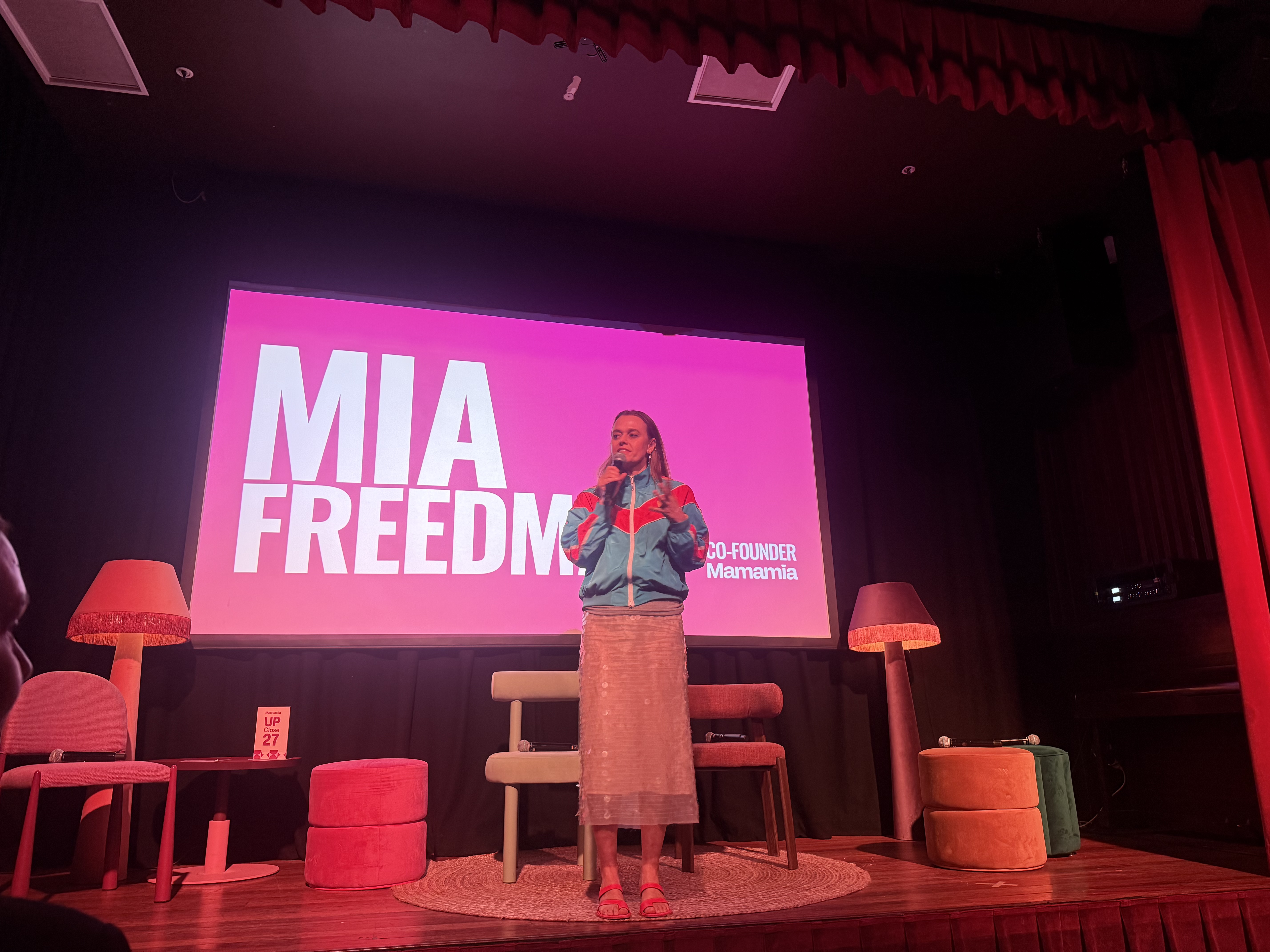
Mia Freedman: "They're radicalising young men. They're funnelling boys directly into the manosphere. They're impacting the mental health of entire generations of girls and young women in the most devastating ways.”
The bigger battle for Australian ad dollars
But beyond the shiny packages, Mamamia's pitch circled back with a broader message to Australia's media buyers: back local media before it's too late.
Ending the UpClose presentation, Mamamia’s Freedman shifted the conversation from what advertisers could buy from the publisher to where their budgets were going in the first place. “Every single media business in Australia is under threat right now,” she warned.
Freedman argued that global technology platforms are swallowing an ever-larger share of advertising expenditure, claiming 75 cents of every advertising dollar now flows offshore to those businesses. Meanwhile, Australian-owned publishers are left competing for the remainder, despite investing in local journalism, talent, jobs and content.
Where that money is actually being spent, she said, is in separating communities and countries. “They're radicalising young men. They're funnelling boys directly into the manosphere. They're impacting the mental health of entire generations of girls and young women in the most devastating ways.”
Freedman's appeal follows a broader trend across this year's upfronts. Nine boss Matt Stanton urged advertisers to consider how their spending decisions affect Australian content, culture and journalism.
Meanwhile, Seven’s Harvey made a similar case, arguing that local media must prove its commercial value rather than simply appeal for support. “We're not begging for people to support us. Yes, it's important. However, we know we can deliver the results as well,” Harvey told Mi3 at the time.
“Our homegrown media brands and audiences have earned the right to be a bigger part of your mix,” Freedman told the room. “Not as a favour. And not because we want you to take a risk. But because homegrown media is effective.”
Freedman, however, left the final decision squarely with the buyers in the room. “The future of Australian media won't be decided by the platforms. Or by the government. It'll be decided by you.”
