Platinum Partner
Gold Partners
Deep Dive 3 Aug 2026 - 8 min read

The CMO Awards Podcast Episode 16: Brand rejuvenation: CMO winners from Bank of Queensland and Uber unpack their playbooks for marketing effectiveness

By Nadia Cameron - Publisher | Editor - Marketing

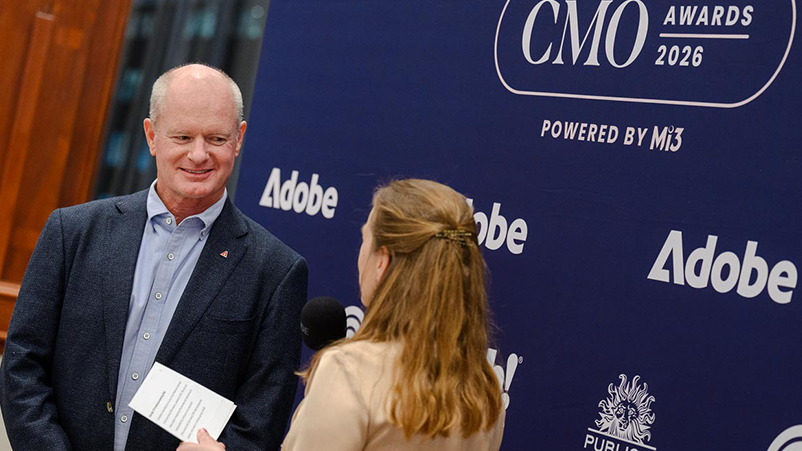
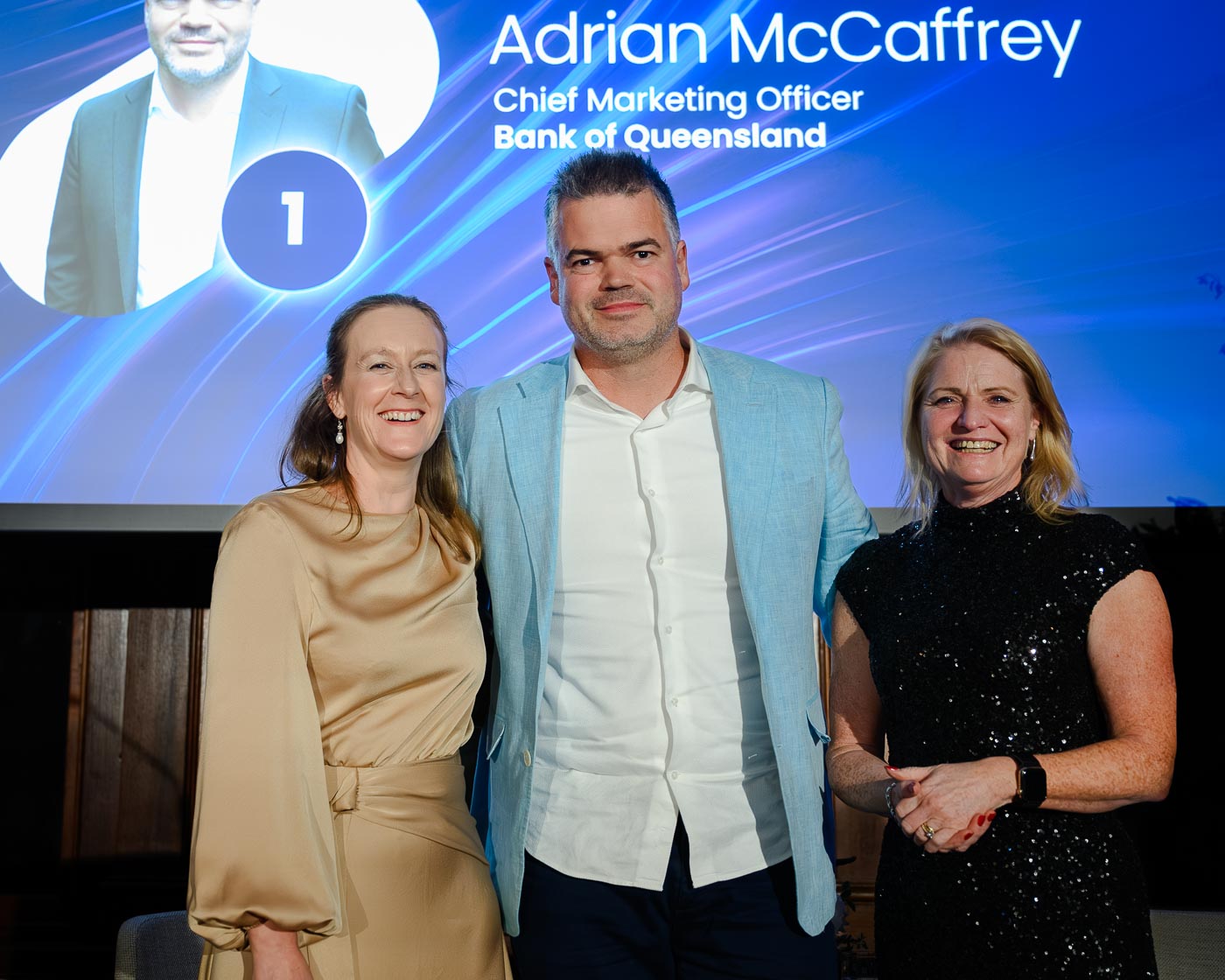
Bank of Queensland's Adrian McCaffrey and Uber's Nicole Bardsley

Hacking off media channels and markets to build evidence of impact, durable consumer and cultural insights that you can build an enduring narrative and brand character around, and the balance of honouring legacy and building momentum for change, are just a few ways two of this year’s top CMO Awards recipients have chalked up the wins on marketing effectiveness. Bank of Queensland marketing chief and #1 CMO of the year, Adrian McCaffrey, and Uber head of marketing and our #6 CMO of the Year, Nicole Bardsley, unpack how they’ve instigated fresh, reinvigorating approaches to brand and what it’s taught them about how marketing can drive true balance sheet contribution.

You wouldn’t expect Bank of Queensland and Uber to have a heap in common on the brand front. But dig under the hood of the marketing effectiveness plans marketers at their helm run to, and the similarities become striking – not least because the pair actually worked together once upon a time.

Bank of Queensland marketing chief and CMO Awards #1 CMO of the Year, Adrian McCaffrey, and Uber head of marketing and #6 CMO of the Year, Nicole Bardsley, have both spearheaded brand rejuvenation projects over the last 18 months. These have required the pair to honour the legacy, maturity and identity of their respective monikers, while seeking a new narrative that grabs attention, compounds consumer and customer affinity, can trigger behaviour change, and therefore delivers new commercial momentum. As strikingly different as the size of each marketing budget may be, and the market and unit economics, both marketing chiefs also squared up to tough choices – including chopping off media channels and deliberately keeping major Australian cities dark to improve share of voice but also prove out their impact.

The pair have also been driven by extensive data and insight utilisation, while recognising the emotive power of talent, partnerships, and compounding campaign plans. Equally, they’ve proactively connected the throughline beyond marketing and across their organisations, opening up the ‘black box’ of marketing to other functions. And both exhibit a strong knack of seeing and driving kinship with customers by leveraging the cultural nuances of Australianness of their consumers increasingly looking to engage and be understood by the brands they select, not simply be reached by them.

The brand was stagnating and attempting to compete for a national share of voice that was economically unwinnable. It was pretty obvious – we were trying to do too much for too many people across too many geographies, and we needed to rethink that approach.

— Adrian McCaffrey, CMO, Bank of Queensland

The Bank of Queenslanders

Since joining BOQ from Westpac in October 2024, McCaffrey has been spearheading the bank’s key strategic growth program, ‘The Bank of Queenslanders’. The multi-pronged repositioning takes into account brand, media and customer channels to new product development, tech and app innovation, and internal cultural and operational change.

BOQ was carrying the “hallmarks of being a leader”, including the brand codes, cultural affection and lovable Australian larrikinism that could take it there. Deep familiarity with the community and connection across the state had been built over 150 years. Yet it lacked the energy and united momentum to make it one, says McCaffrey. Having been outspent by the majors by 25:1 in a $400m+ media spend category, BOQ is also competing against the big four, 80 regional banks and credit unions and an increasing swathe of fintechs.

“The brand was stagnating and attempting to compete for a national share of voice that was economically unwinnable,” says McCaffrey. “It was pretty obvious – we were trying to do too much for too many people across too many geographies, and we needed to rethink that approach.”

Three pillars reset the game plan: Reinvigorate the brand’s core promise as a bank for Queenslanders, build a new customer-first multi-channel platform model, and win in retail and business banking. Cue a return to significant sporting partnerships, a more targeted media approach, and even an ‘ultimate Queenslander’ program and quiz upcoming on TikTok under the platform, ‘Bank of Queenslanders’.

McCaffrey thanks agency partner, Team One, for adding the “ers” to the end of its name. “The genius of the ‘Bank of Queenslanders’ is that it’s so simple. It felt like we’d fallen into a trap of having to explain who we were and what our brand meant a little too much, versus leveraging what it says on the tin, or what people know us for,” he says.

“It was also a perfect leverage, build and reference to the historic ‘Count on a Queenslander’ tagline and campaign … in the vernacular, that’s so successful, the Queensland Government has actually bought the trademark and is planning to use it themselves.”

And if you’re going to be so specific about an audience, you also get specific about the media investment. Plans accordingly adjusted to prioritise Queensland, then into the relevant Queensland corridors, particularly where growth is occurring.  

“The team rebalanced spend from what really was 100 per cent performance into a 30/70 brand/performance mix. There’s a long way to go, but it’s an amazing start,” says McCaffrey. “They found unique approaches to traditional broadcast media and set up long-term partnerships there, and were very successful in hindsight through the media mix modelling, which has reinforced the strategy and provided even further ideas to double down on as we go into the future.”

These include a deal with Nine, spearheaded by former Queensland Reds and Wallabies player, Tim Horan, and Brisbane-born TV presenter, Sofie Formica. In addition, BOQ has reignited its sponsorship efforts after a 10-year hiatus, including a return to supporting local rugby team, the Queensland Reds.

Yet at the same time, ongoing structural change meant BOQ was being really selective in where it would deploy capital and home and business lending. Old products were turned off or paused as new iterations came online, which meant turning off marketing in certain aspects too – “which gives you a new baseline”, says McCaffrey.

“Then when you reintroduce it, there’s a control variant, and you’re having a moment while you get ready for the new one … Through that period, very smart people in the team started to use the language, ‘for every $100,000 of investment, this is what we get as a return for the business. When you link to that, you can then go on a journey in your conversations. The appetite is that people want more, obviously, and the sales leader is saying, we’d like more. You can then have relatively sensible conversations around how much of the market is available through performance channels. That then leads to further investment needing to go into consideration or brand-level channels as well to get even more through the door.”

Concurrently, BOQ brought marketing and digital teams together within the business, integrating marketing, digital, brand growth, CX, production through augmentation and hybrid models, and overhauled the campaign process as well as its prioritisation – an ongoing exercise McCaffrey sees as never-ending with AI’s disruption. These are complemented by rapid decision cycles and agile delivery across teams.

The team stood up a customer data platform (CDP) in record time, enabling a unified view of customers, products and behaviours that’s now driving personalised, value-based advertising to new and existing customers, along with tailored onboarding and lifecycle messaging.

“In the Queensland sense, it enables the Bank of Queensland to be very Queensland-centric when we’re talking to Queenslanders,” says McCaffrey.

The results in six months were hefty: Number one share of voice in Queensland, along with significant double-digit percentage growth in home loan SME applications that had the team “checking a few times to make sure they were correct”. BOQ also saw positive uplift in key brand metrics within the first six months.

“If the market had stayed the same, that would have seen those increases put us well in the mix of the big five,” McCaffrey says. “But when you stand back and reflect on that, if you keep true to the strategy and the story, then number one position for consideration is very achievable.”  

Importantly, it’s an example of how marketing can drive true balance sheet contribution, says McCaffrey.

“The models are helpful to prove you’re on the right track. But if you can show genuine cause and effect, then you’re absolutely on to a winner,” he says. “Then if I think about the team in relation to that, the marketing team is an effective cultural catalyst within the business. It’s a customer experience and growth engine … the success of the team now is that you hear people saying, ' We need more marketing, Geez, you’d take that every other week, wouldn’t you?”


We created a robust market-level experiment, which means we had clear treatment markets and clear control markets. It meant major cities of Australia didn’t receive the campaign, which is often a tough decision when you’ve got the business wanting to drive short-term impact as well. But we needed to ensure we could build out statistically robust evidence to be able to support the business case that marketing can drive both long-term brand impact as well as short-term incremental demand.

— Nicole Bardsley, head of marketing, Uber and Uber Eats ANZ

Uber: You can’t do that if you’re driving

At Uber, the double whammy of mature market and category leadership meant a diminishing growth trajectory for the rides business if it continued relying on its product-led marketing or geo-based expansion. Being so product-led in advertising and campaigning also appeared a strange contradiction to the Uber Eats business, which is an excellent example of brand-led growth.

“The business entered fourth in the market in online food delivery, and within a really quick period of time, went to a position of category leadership”, Bardsley says. The catalysts: The ‘Tonight I’ll be eating’ platform, followed by the pivot to ‘Get almost, almost anything’ positioning and creative narrative.

By comparison, rides had great campaigns but had been operating to a product-led growth strategy globally, Bardsley says.

“The first step was driving that internal business case and internal alignment,” she says. “Australia is in the position where we are at a point of category maturity that we can try things that might not have been done elsewhere in the world.”

Marketing knew the leapfrog in growth wasn’t going to come from chasing more taxi trips either. Swathes of consumer research therefore came into play, and Uber landed on private cars the next big competitor to take on: 85 per cent of car trips remain in private vehicles.

Cue Shania Twain for broad appeal, Aussie comedian Tom Cardy for local flavour, and the enduring brand platform, ‘Can’t do that if you’re driving’. Uber is the poster child for leveraging talent to generate outsized impact, buzz, talkability and earned currency on top of its paid media efforts and having repeatedly seen the dividends, the approach compounded here.

“Brand marketing is most effective at doing behaviour change. Hence why we needed to shift away from saying there’s not a product that’s going to change that. It needs to be a brand-led strategy to drive that,” Bardsley comments. “But what I will say is while we do use talent a lot, we’re very deliberate in how we use it. We’re always idea first, talent second. The idea needs to be right, and needs to be grounded in the right consumer insight and answering the right business problem.”

Yet halfway through the gameplan, budgets were cut – a challenge Bardsley agrees many marketers can relate to. “It forced us to be much more disciplined in our approach,” she says.

“We made the deliberate decision to concentrate investment and to prioritise learning … we created a robust market-level experiment, which meant we had clear treatment markets and clear control markets. It meant major cities of Australia didn’t receive the campaign, which is often a tough decision when you’ve got the business wanting to drive short-term impact as well. But we needed to ensure we could build out statistically robust evidence to be able to support the business case that marketing can drive both long-term brand impact as well as short-term incremental demand – and then over the long term. We had this really concentrated market-level test in place to be able to measure that.”  

And it worked: The marketing team was able to prove the brand marketing campaign drove incremental demand in markets it was live in. Incremental trips were early off the mark too.

“We also saw brand lift and those other great aspects that had strong earned cut through as well. Most importantly, those numbers have been critical to help us prove out the business case, and we’re currently planning for the second run of the campaign,” says Bardsley.  

The work has reinforced marketing’s critical role in not only helping drive immediate business growth, but “helping the business define where the growth is going to come from in future as well,” she adds. “We can help shape the pathway and uncover those new markets and those new opportunities.”

A commitment to data and insights

Both marketing executives repeatedly return to consumer insights and empathy as the cornerstones of their marketing effectiveness playbooks. In BOQ’s case, it’s those uniquely Sunshine State characteristics that keep generating fodder for McCaffrey and his team.

“I have a lot of human Queensland truths that the team and I have an incredible amount of fun with. I think I’d offend a lot of Queenslanders if I read them out,” says McCaffrey.

Bardsley also talks to the multiple stages of consumer-based research as “steps two, three, four and five” of getting the Uber rides program of work off the ground.

“How do we uncover a really durable consumer insight in that space that would drive that required behavioural change?” Bardsley asks. “What we uncovered through qualitative research is Australians consider driving themselves as a form of freedom. But when you unpack it, there’s actually more freedom when you’re a passenger than when you’re in the driver’s seat. That became the core foundation of our strategy.”

But beyond that, McCaffrey points to the nexus of data in terms of identity – and importantly, who’s going to be able to connect those dots both as brands and as agency partners – as a key competitive advantage.

“Identity is fascinating me at the moment, but also us as a team in terms of how we implement it. At the data level, your digital identity, your advertising identities, media identities, website and customer identities. You enable really mature, end-to-end sales and service journeys when you bring it all together,” he argues.

“I look at companies like Publicis in the process of acquiring LiveRamp, and who acquired Epsilon a few years back now. They are identity management systems. This is obviously where the future is going. The first to harness that from an existing and new customer perspective across the media ecosystem and beyond? That’s a very interesting trend you definitely want to be a part of.”

Tune into the full episode for loads more insights and thoughtful marketing conversations from these two top 10 CMOs of the Year here.


What do you think?

Keep Reading

Deep Dive 3 Aug 2026 - 8 min read
Listen to the Podcast  
Deep Dive 27 Jul 2026 - 7 min read
Listen to the Podcast  
CMO Awards 26 23 Jul 2026 - 7 min read
 
Industry contributor 29 Jun 2026 - 7 min read
 
By Mitch Hunter - Group strategy director, Leo Australia
Video Q&A 16 Jun 2026 - 5 min read
 
Video Q&A 12 Jun 2026 - 5 min read
 
Deep Dive 11 Jun 2026 - 6 min read
 
Video 10 Jun 2026 - 4 min read
 
By Nadia Cameron - Publisher | Editor - Marketing
Video Q&A 10 Jun 2026 - 11 min read
 
Video Q&A 9 Jun 2026 - 4 min read
 
Video Q&A 8 Jun 2026 - 5 min read
AMI CPD: 
 
Deep Dive 4 Jun 2026 - 9 min read
Listen to the Podcast  
Analysis 3 Jun 2026 - 7 min read
 
Deep Dive 26 May 2026 - 7 min read
Listen to the Podcast  
CMO Awards 26 13 May 2026 - 4 min read
 
CMO Awards 26 13 May 2026 - 6 min read
 
CMO Awards 26 7 May 2026 - 3 min read
 
Partner Q&A 7 May 2026 - 6 min read
 
Deep Dive 7 May 2026 - 6 min read
 
Deep Dive 5 May 2026 - 7 min read
Listen to the Podcast  
Partner Q&A 4 May 2026 - 5 min read
 
Search Mi3 Articles