Platinum Partner
Gold Partners
Analysis 3 Jun 2026 - 7 min read

How CMOs are finding their VOICE: What this year’s CMO Awards submissions reveal about delivering more marketing effectiveness – and proving out value

By Nadia Cameron - Publisher | Editor - Marketing

One of the incredibly insightful elements of the CMO Awards submissions process and judges meetings is picking out the trends and ways marketing leadership is evolving to find effectiveness. This year’s crop of contenders for our CMOs of the Year revealed progress over perfection was the name of the game. Submissions commonly described efforts to transform marketing from cost centre or support function into a primary driver of revenue and business-grade value. It’s a huge ask – littered through submissions are examples of capability rebuilding, fighting to build confidence in what marketing is doing through MMM, creating in-house content and agency teams to lift velocity and pace to meet fickle and fragmented consumers and customers – and backing brand even as the ability to make bold decisions is crippled by risk, business and market volatility. Here’s what this year’s submissions revealed – and importantly, what they tell us about how the best and most progressive marketers are finding their voice and impact.

Progress, not perfection, was increasingly in evidence across this year’s CMO Awards submissions as our contenders worked to reposition marketing as a commercial growth engine.

Almost universally, candidates describe transforming marketing from a support or cost-centre function into a primary driver of revenue, profit and enterprise value. In many cases, the changes they are making are not incremental, but required structural, cultural and strategic shifts to meet their ambitions and build new momentum. That’s reflected especially in capability upskilling, repositioning and team realignments, ever greater volumes of nuanced cross-functional and stakeholder engagement, and more discerning decision-making to ensure investments, whether they be media channel choices, technology, data or other programs of work, deliver better pay off.

As a consequence, CMO Awards judges perused example after example of reshuffles, new structures and team operating approaches. The impetus is to drive agility and speed, cut back the disconnects across ways of working to better integrate the marketing, digital and customer experience propositions, and ensure more suitably modern responsiveness to acquisition, engagement and the experience lifecycle. But there also continue to be restructures – and job cuts – triggered by the tougher business and economic trading conditions.

Being a CMO is no easy task. Most of this year’s CMO Awards entries talk to significant business, market, customer and consumer macros around them and their organisations they have to grapple with. Barring a few examples, most companies have sluggish growth prospects, and lingering operational complexity to contend with. Now combine that with swift AI adoption and appetite, audience fragmentation, rising costs, and the relentless quest to be faster, more responsive, more dynamic and more adaptable. Change fatigue is a risk if not a reality, and it means bold decision making is counterbalanced by looming fears there’s more ways to fail.

What’s equally obvious is just how hard marketing leaders have to work to demonstrate their impact. They’re constantly looking for ways to not only realise efficiencies, but also better value from everything they do – several because the budgets got cut. Helping optimise media to minimum wastage and lift working media ROI is a popular lever, and we had at least four examples across submissions of marketers opting to either drop channels or narrow media spend into regional or state areas to overindex share of voice and therefore results.

But investments into modelling and other marketing measurement isn’t just for optimisation or internal campaign decision making; it’s also being used as an instrument to build more confidence in what marketing is doing as function itself. As one of our judges and non-executive director, John Batistich, put it: MMM and data are ultimately being used to “build internal credibility” and help CMOs prove their worth.

That’s because many marketers are fighting to switch up the long and short – with plenty of them batting for brand. Across this year’s entries are many examples of those making concerted effort to build a multi-year, brand proposition and power with notable success. Although as another longstanding one of judges also noted, Billy Baxter noted, this often means big swings either way versus consistency or balance.  

What’s also glaringly obvious is how many marketing leaders are investing in in-house capability. The reason? To gain more pace and get more out, with investments most commonly in content and campaign production iteration and extension. Meanwhile, most marketers are looking to AI to find efficiencies and alleviate a crippling load. But the most progressive marketers talking about AI thus far, are the ones who aren’t just using AI to create more for the sake of it, but use it to experiment and test more before unleashing creative, content and cuts into the wild.

Finding a strong CMO voice

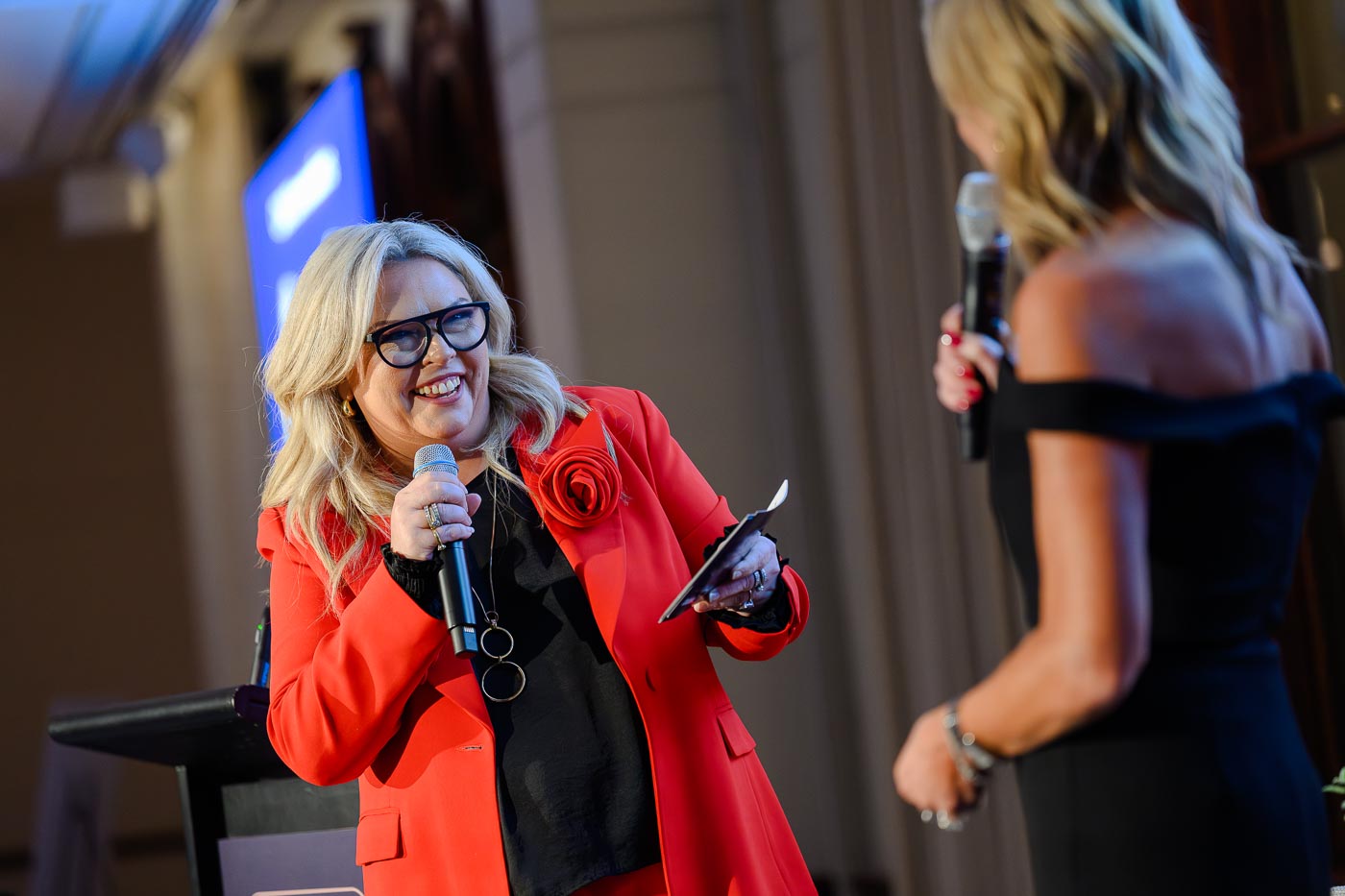
Those are just some of reflections CMO Awards judges had after reading the submissions from our second-year CMOs of the Year entries. And off the back of these, I shared with Gala Awards attendees my own summation of how I believe marketing leaders are truly gaining their ‘VOICE’ inside organisations and realising their growth ambitions.

V is for velocity: Almost every submission talked to this imperative of picking up the pace – whether it was velocity in decision making, in campaign and content execution or operating rhythms. Yes it’s the year of the horse – and boy are we galloping. There’s more content, more channels, more campaign executions, more communication, more choices. With AI, what we’re going to have to be careful of is that we don’t just do more, faster, because the tools enable us to. Crap in is still crap out, broken process is still broken process, and a lack of marketing discipline or skill isn’t going to be solved by just throwing agents at the task.

I do think we’re at an inflection point of AI where the question that needs to be put first is this: WHY are we doing it?

Take Accenture Australia’s CMO Carrie Smith. She told us on our recent CMO Awards AI capability podcast that the team looked at the marketing discipline first to understand where the bottlenecks are, the bits they were not doing well, and where more deeper data crunching could be leveraged to do things better. The first port of call became briefing, sorting out a better way for local and global teams to understand the nuance of markets, strategy, and brief it in better.

O is for opportunity: The modus operandi for the best marketers is seeking opportunity to capitalise on – whether that’s an opportunity to influence, to build cross functional connections, to better connect to peers and to customers, and the opportunities in the data to realise and action. But this isn’t just a scattergun approach. There’s deliberate choices being made here and we can point to many examples where the opportunity is to try to stop stretching budget and focus dollars to get a higher return.

I is for incrementality: Disruptive growth isn’t always going to be possible, but I’m using incrementality here to also describe how marketers are looking to ensure they’re articulating lift – ultimately in sales – with things they’ve done that go beyond what might have happened if they hadn’t bothered. We had many people looking to find gains – more discerning decision making on media spends for outsized returns is one. Marketing is about upping the ROI, overindexing when you can, building the case for investment into existing products, extending to new distribution channels, better targeting segments and driving personalisation for a better return.

C is for clarity: Most capability building and restructuring actively comes down to this. Clarity in what the brand means, what teams do, how they integrate and hand off, who’s accountable, resource concentration, what the outcome is, and to shift teams from execution into strategy-led functions.

But it’s also clarity around the rationale for marketing. As one judge pointed out, almost universally, candidates described transforming marketing from a support or cost-centre function into a primary driver of revenue, profit, and enterprise value. This has required structural, cultural, and strategic reinvention.

E is for effectiveness: This is the one marketers recognise is critical to their impact, tenure and business standing. We have a lot of examples of efficiency gains – most of the time it’s manifesting as cost or media effectiveness.

The definition of effectiveness is “the degree to which actions produce determined results and how well a goal is achieved”. The best marketers make great cases for what they’re doing along these lines.

But I’d argue we need to get to commercial effectiveness – that’s the distinction. Unit economics, gross profit, business language and needs. It comes back to this.


What do you think?

Keep Reading

Deep Dive 3 Aug 2026 - 8 min read
Listen to the Podcast  
Deep Dive 27 Jul 2026 - 7 min read
Listen to the Podcast  
CMO Awards 26 23 Jul 2026 - 7 min read
 
Industry contributor 29 Jun 2026 - 7 min read
 
By Mitch Hunter - Group strategy director, Leo Australia
Video Q&A 16 Jun 2026 - 5 min read
 
Video Q&A 12 Jun 2026 - 5 min read
 
Deep Dive 11 Jun 2026 - 6 min read
 
Video 10 Jun 2026 - 4 min read
 
By Nadia Cameron - Publisher | Editor - Marketing
Video Q&A 10 Jun 2026 - 11 min read
 
Video Q&A 9 Jun 2026 - 4 min read
 
Video Q&A 8 Jun 2026 - 5 min read
AMI CPD: 
 
Deep Dive 4 Jun 2026 - 9 min read
Listen to the Podcast  
Analysis 3 Jun 2026 - 7 min read
 
Deep Dive 26 May 2026 - 7 min read
Listen to the Podcast  
CMO Awards 26 13 May 2026 - 4 min read
 
CMO Awards 26 13 May 2026 - 6 min read
 
CMO Awards 26 7 May 2026 - 3 min read
 
Partner Q&A 7 May 2026 - 6 min read
 
Deep Dive 7 May 2026 - 6 min read
 
Deep Dive 5 May 2026 - 7 min read
Listen to the Podcast  
Partner Q&A 4 May 2026 - 5 min read
 
Search Mi3 Articles