Platinum Partner
Gold Partners
CMO Awards 26 13 May 2026 - 6 min read

From why to what if, consistency, trust and precision: The terms Australia’s top 25 CMOs urge other marketers to use more

By Nadia Cameron - Publisher | Editor - Marketing

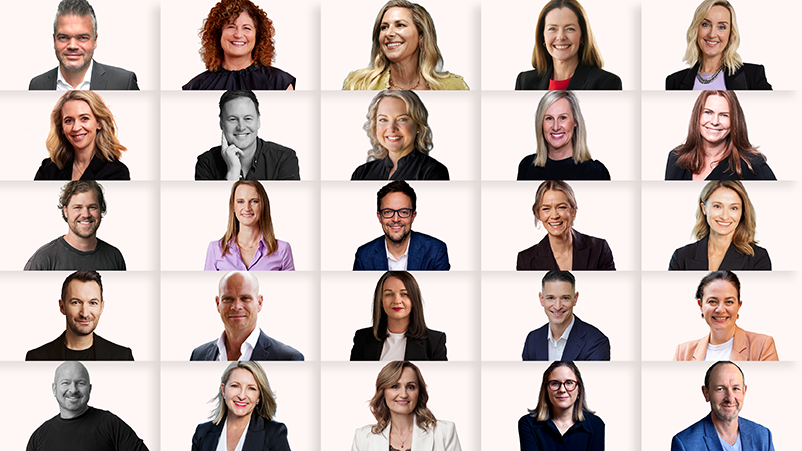
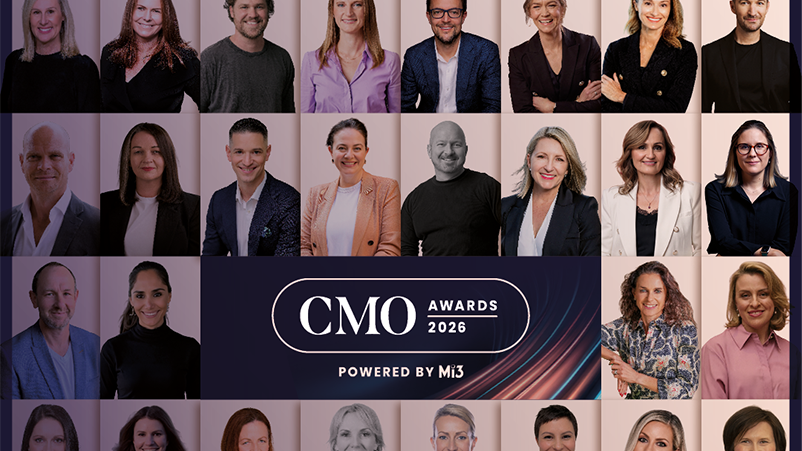
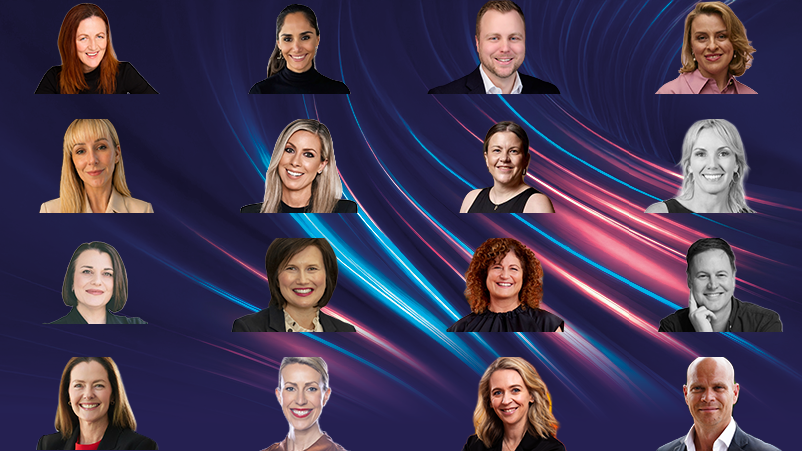
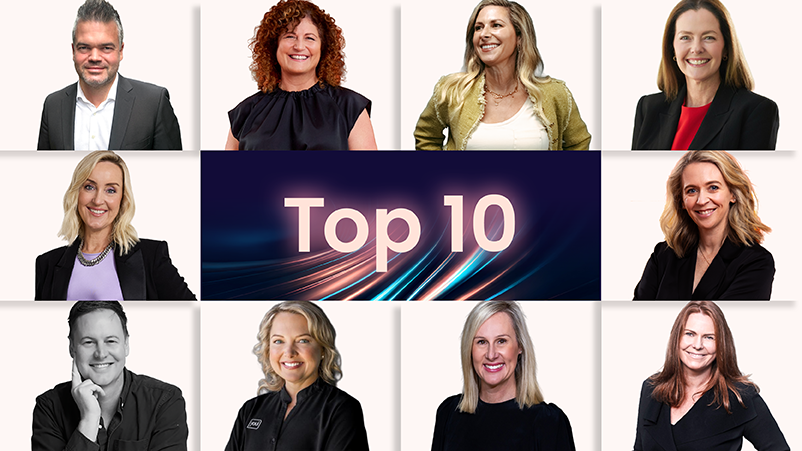
Marketers have been accused of having a lot of functionally focused words, acronyms and definitions for what they do and what they deliver in the lexicon. But are we using enough of the right ones to illustrate impact and excellence? Or are there others that might be more useful – either in explaining what marketing is doing, corralling teams better towards a more impactful outcome, or stopping the noise and distraction? You bet there are. So we asked this year’s top 25 CMOs the Year: What marketing term do you wish marketers would use MORE often and why?

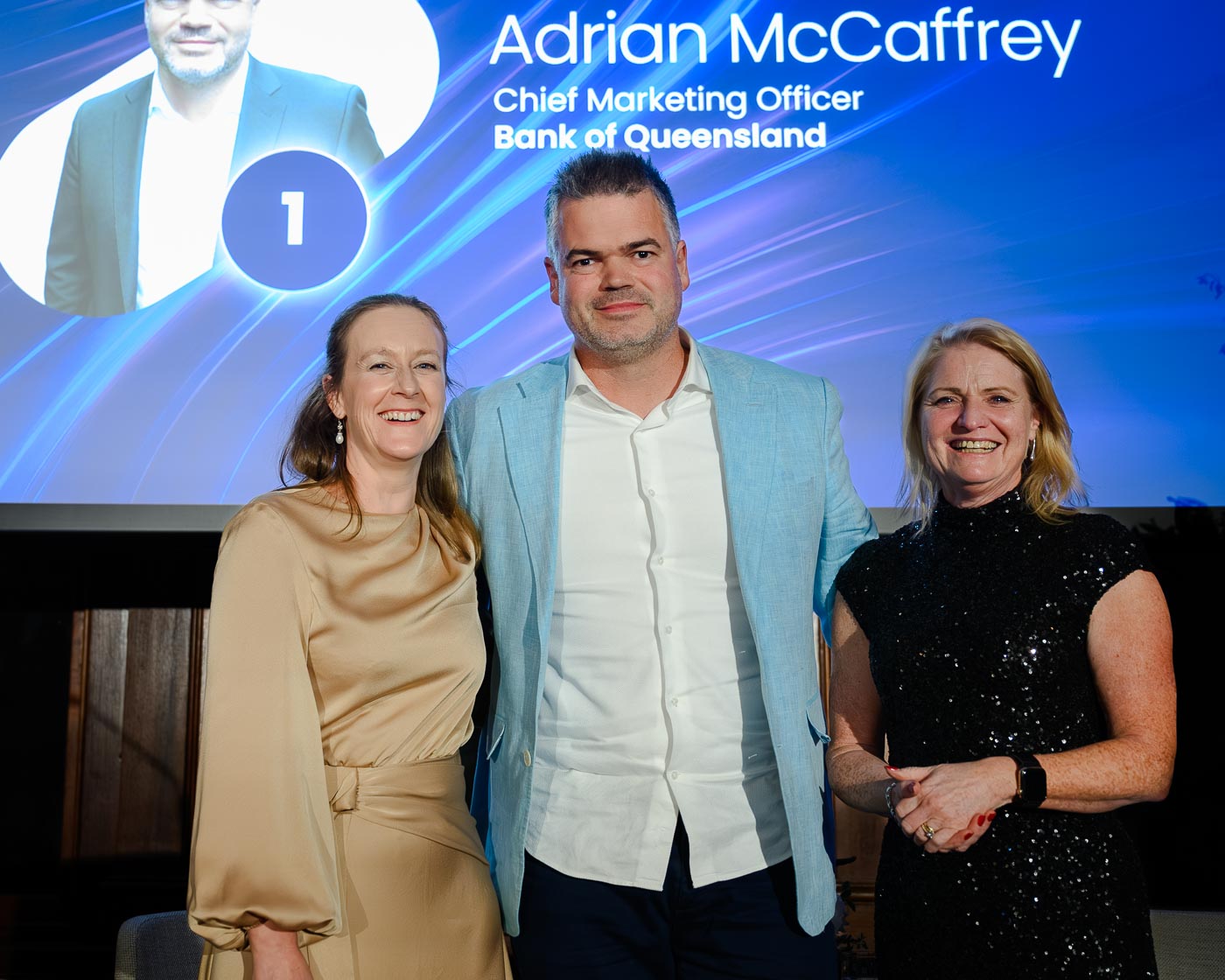
#1 Adrian McCaffrey, CMO, Bank of Queensland

True sales / balance sheet contribution. It’s a bit of a mouthful. I’m passionate about actual cause and effect, and a financial or experience outcome you can point to.

#2 Susan Coghill, CMO, Tourism Australia

Influential reach! Not all reach is equal, and the definition of what 'influential' means is shifting fast. The question we have been trying to answer is whether we are reaching the people who shape other influential people's decisions and what they share. And now we have to think about influencing humans and machines because algorithms and AI systems are increasingly the first filter between content and audience.

#3 Michelle Klein, chief brand growth and marketing officer, Westpac

‘What if?’

Not as a slogan, but as a commercial discipline. What if we used this investment in a different way? What if we were first to try a particular channel? What if we weren’t a bank, or an insurance company, or a tech conglomerate?

There’s a lot of marketing that is just activity without interrogation. Busy stuff. The gap between activity and impact is often a failure to interrogate possibilities. The best leaders and teams are both commercial and curious, so I’ve always worked to foster a culture where people feel safe to speak up and challenge. A simple ‘What if?’ is a great starting point for solving problems, uncovering new truths, and challenging our own thinking and beliefs as marketers. 

In fact, ‘What if? Why not?’ was the name of my meeting room in Silicon Valley for many years, to keep this curiosity top of mind.

#4 Joanne Smith, chief brand, innovation and communications officer, Blackmores Group

Growth effectiveness: Less activity, more effectiveness and full accountability. It is crucial for marketers to understand how their work connects to delivering growth strategy, what results they are driving in the P&L, what worked, what didn’t, why and to be fully accountable for their outcomes.

#5 Jo Robinson, CMO, The Iconic

Trust. It underpins everything from consideration and conversion to loyalty and advocacy, and without it, even the smartest marketing can only get you so far. In a world that is constantly scrolling and overwhelmed with choice, it is one of the most powerful advantages that you can have as a brand.

#6 Nicole Bardsley, head of marketing, Uber and Uber Eats ANZ

Behaviour change. It sounds simple, but it keeps you focused on what really matters - not just whether people saw something, but whether it genuinely changed what they thought, felt or did to create measurable business impact.

#7 Pete MacGregor, CMO, amaysim

‘Why’ and ‘incrementality’. Asking  ‘Why’ five times keeps you from solving the wrong problem. ‘Incrementality’ keeps you from taking credit for the wrong result. Everything else is just noise.

#8 Angela Greenwood, CMO, Youi

Alongside ROI, which is a given, I’m hugely focused on ROE - Return on Effort. Our time is as precious a commodity as our marketing investment, and it’s our duty to ensure it is spent wisely. There are always many hundreds of projects we’d love to pursue, but the juice has got to be worth the squeeze.

#9 Sarah Myers, GM audience and marketing, REA Group

I’d love to see more recognition of the strategic value of loyalty and owned channels. In a world obsessed with ‘renting’ attention, the power of building a loyal, addressable audience is often underestimated.

When you prioritise owned audience and channels, you turn reach into a real asset, shorten the journey from first interaction to loyal advocate and gain richer first‑party insights that deepen relationships over time.

#10 Petra Perry, CMO, Qantas Group

Experimentation: Because learning is so critical. I love it when I hear the team talking about all of the experiments they are doing, even the super small ones, because each success or failure is a gift. And then sharing it more broadly creates the right culture to give people permission to experiment with different ideas.

Alongside ROI, which is a given, I’m hugely focused on ROE - Return on Effort. Our time is as precious a commodity as our marketing investment, and it’s our duty to ensure it is spent wisely. There are always many hundreds of projects we’d love to pursue, but the juice has got to be worth the squeeze.

— Angela Greenwood, CMO, Youi

#11 Brad Firth, CMO, Mountain Culture Beer Co

Experience. In a job obsessed with distinctiveness and codes, I think we have started to forget that the best way to build memory structures is to create experiences people want to talk about. We have built it into our MC company mission and look at all 4 Ps through that lens. If what you're doing is well coded but boring, start over.

#12 Kirsten Hasler, head of marketing and insights, IKEA

I wish we could go back to the marketing fundamentals instead of getting lost in fluff. I’m a big fan of Ehrenberg Bass Institute’s terminology of growing a brand through building both mental and physical availability. It’s a great guiding principle, easy for people to understand, and best of all, it’s based on evidence.

#13 Rob Farmer, CMO, Australian Pork

Consistency in all its forms. The services side is so incentivised to sell shiny new objects, and fears. And marketers don't talk enough about building products or creative approaches that will outlast them. More voice could be given to consumer behaviours likely not to change in another 10 years, or common between generations, or to creative ideas with 10+ years of compounding memorability.

#14 Rennie Freer, GM marketing, Kmart Group

Impact. Too often, marketers can be perceived to focus on activity versus the impact that their work needs to achieve. Regardless of industry, every marketer needs to challenge this by demonstrating a genuine commitment to owning outcomes – not just outputs. In my experience, the real magic happens when teams pair creative ambition with insights and a focus on measurable outcomes and learnings. 

#15 Rebecca Darley CMO, TPG Telecom Group

Profit. Because at the end of the day, businesses want to make money. It’s about more net cash falling to the bottom line. 

Not a traditional marketing term, I hear you say? Well, it should be! More marketers must understand and quantify net return if we’re to be taken seriously.

#16 James Holloman, CMO, David Jones

Commercial impact: Vanity marketing metrics don’t deliver business outcomes on the P&L.  

#17 Pete Chapman, CMO, Reflections Holidays

Value. We need to stop talking about marketing metrics as the final measure. These are levers and indicators. Ultimately, we need to ladder our thinking up to answer one key question: What value is our strategy and associated plans delivering? 

Another tip: If your CFO, Board or Executive Peers don't understand the language you're speaking, learn and speak theirs. 

#18 Laura Halbert, GM customer strategy and marketing, Allianz Australia

Orchestration. Because the biggest constraint on growth is not budget or capability – it’s fragmented action. Marketing’s role isn’t just to generate insight, but to align the organisation around it. When marketing orchestrates the customer signal across product, operations, sales and service, insight turns into coordinated action, strategy turns into execution, and ambition turns into results. Growth accelerates when the whole organisation moves in the same direction – guided by the customer, not functionally optimised in silos.

#19 Leandro Perez, SVP and CMO, Salesforce ANZ

Precision. Not because it's trendy, but because most marketers are terrible at it. The hardest discipline in marketing is actually the act of subtraction – deciding what not to do. Which audiences not to pursue. Which programs to ruthlessly cut. FY26 forced that conversation for us in a real way – we had to make sharp choices about where to concentrate. And every time we went narrower and deeper rather than broad and shallow, we got better results. I'd love to hear more marketers say: "We chose not to do that – and here's why it made us more effective." That's the sentence that earns respect in a boardroom.

#20 Kate Ferguson, CMO, Sydney Children’s Hospital Foundation

Trust. Because in marketing, especially for charities, trust is the true currency. Without it, no message, story or channel works.

#21 Jason Piggott, GM marketing and franchisees, Freedom Furniture

Effectiveness. It sounds simple, but it’s often overshadowed by marketers who only want to talk to disruption. Mark Ritson has long argued that effectiveness is the only metric that really matters: did it work, and did it deliver against a clear commercial objective.

Too often, marketing celebrates ‘activity’ instead of ‘outcomes’. The old saying stands true – creativity gets attention, but effectiveness earns investment. We need to be more disciplined in linking what we do to what the business needs. That means clearer objectives, better measurement frameworks, and a relentless focus on commercial impact. It shifts the conversation from outputs to impact, which is exactly where the board expects it to be.

#22 Natalie Lockwood, CMO, National Australia Bank

Consistency. Not necessarily a marketing term, but I wish marketers valued consistency as much as creativity. Marketers often get bored long before a customer does; tinkering, changing or evolving creative or plans, diluting our impact and budgets. Consistency is a disciplined way to ensure marketing investment compounds over time.

#23 Suzana Ristevksi, CMO, Google ANZ

Relevance. We often chase 'awareness,' but you can be famous and completely useless. I’d rather we focus on being relevant, meaning we show up when a person genuinely needs us. 

#24 Catherine Anderson. CMO, Origin

None. Happy to just hear more conversations about customers and ideas. 

#25 Jeremy Weiss, director, customer experience and growth, Australian Red Cross Lifeblood

Customer journey. Firstly, because it encourages a customer-centric mindset; secondly, it recognises that customers engage across multiple touchpoints beyond marketing campaigns; and thirdly, effective use of data and technology is allowing marketers to orchestrate better experiences that deliver a stronger ROI.


What do you think?

Keep Reading

Deep Dive 3 Aug 2026 - 8 min read
Listen to the Podcast  
Deep Dive 27 Jul 2026 - 7 min read
Listen to the Podcast  
CMO Awards 26 23 Jul 2026 - 7 min read
 
Industry contributor 29 Jun 2026 - 7 min read
 
By Mitch Hunter - Group strategy director, Leo Australia
Video Q&A 16 Jun 2026 - 5 min read
 
Video Q&A 12 Jun 2026 - 5 min read
 
Deep Dive 11 Jun 2026 - 6 min read
 
Video 10 Jun 2026 - 4 min read
 
By Nadia Cameron - Publisher | Editor - Marketing
Video Q&A 10 Jun 2026 - 11 min read
 
Video Q&A 9 Jun 2026 - 4 min read
 
Video Q&A 8 Jun 2026 - 5 min read
AMI CPD: 
 
Deep Dive 4 Jun 2026 - 9 min read
Listen to the Podcast  
Analysis 3 Jun 2026 - 7 min read
 
Deep Dive 26 May 2026 - 7 min read
Listen to the Podcast  
CMO Awards 26 13 May 2026 - 4 min read
 
CMO Awards 26 13 May 2026 - 6 min read
 
CMO Awards 26 7 May 2026 - 3 min read
 
Partner Q&A 7 May 2026 - 6 min read
 
Deep Dive 7 May 2026 - 6 min read
 
Deep Dive 5 May 2026 - 7 min read
Listen to the Podcast  
Partner Q&A 4 May 2026 - 5 min read
 
Search Mi3 Articles