Platinum Partner
Gold Partners
Deep Dive 26 May 2026 - 7 min read

CMO Awards Podcast Episode 13: Combatting the belief marketing is a discretionary spend

By Nadia Cameron - Publisher | Editor - Marketing

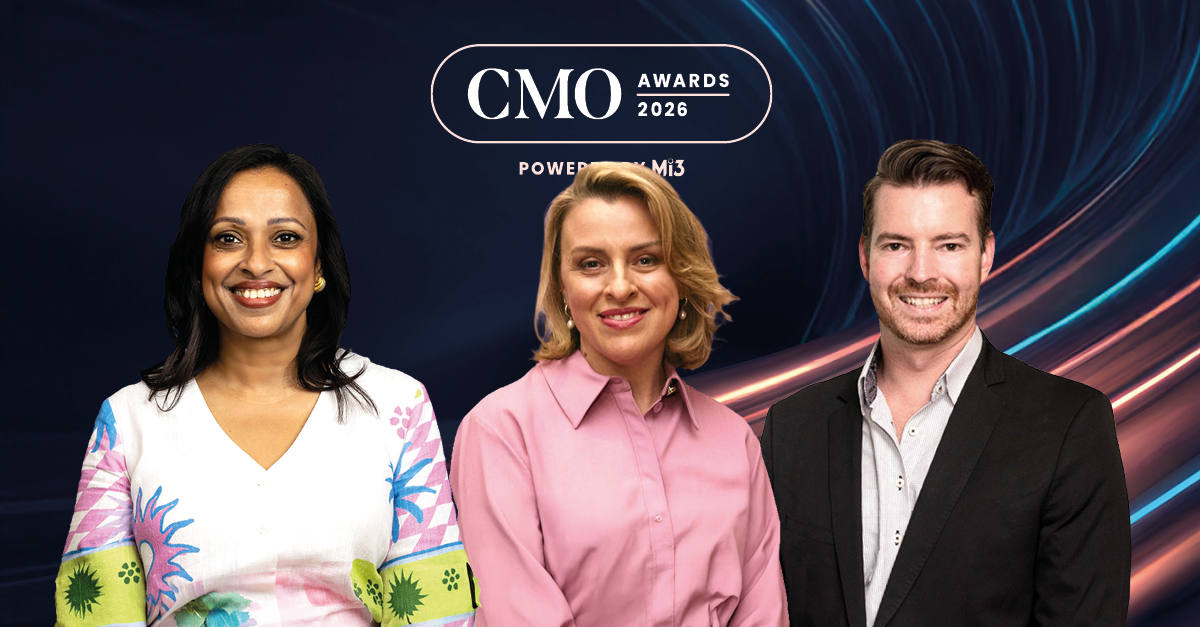
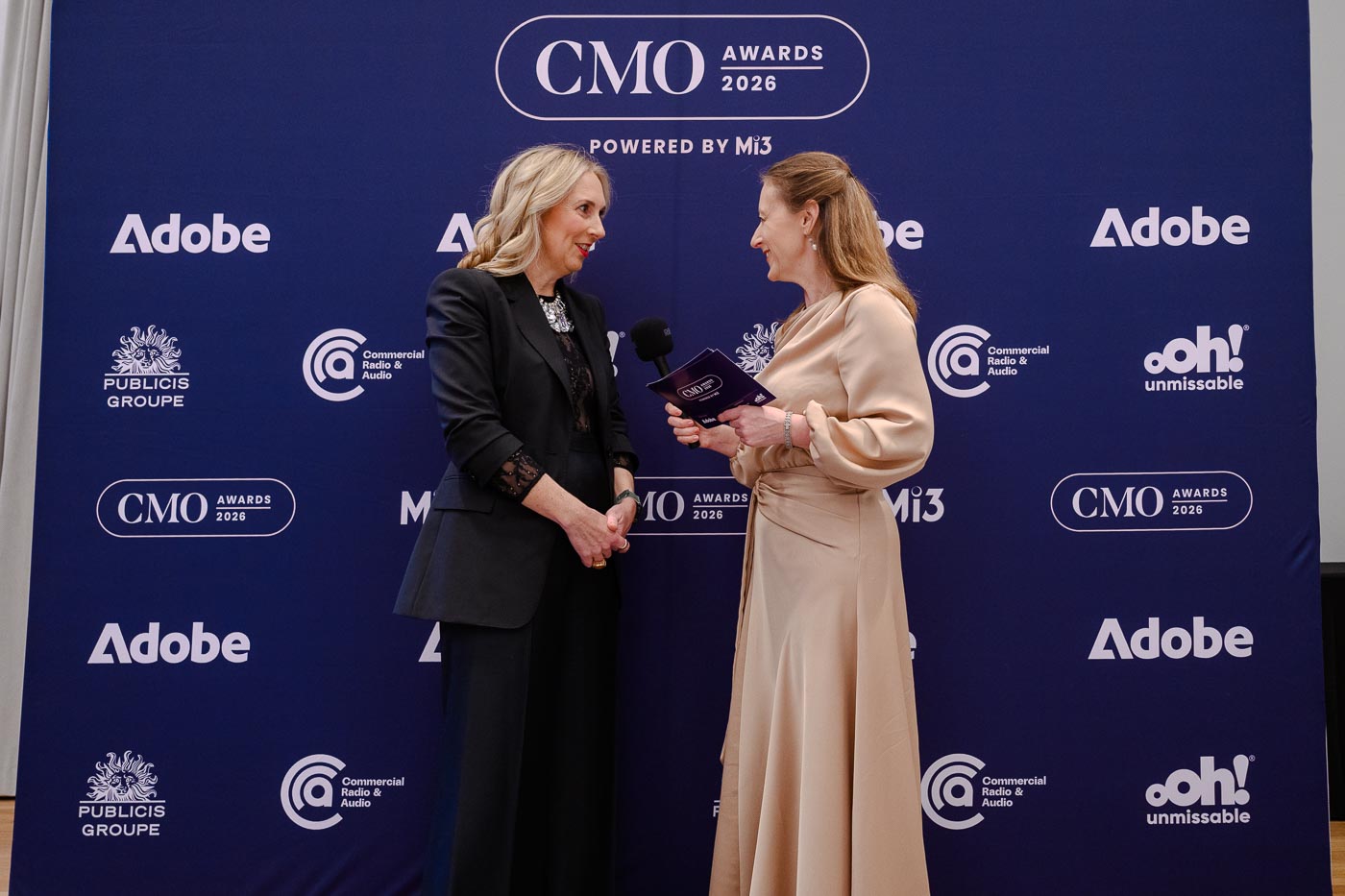
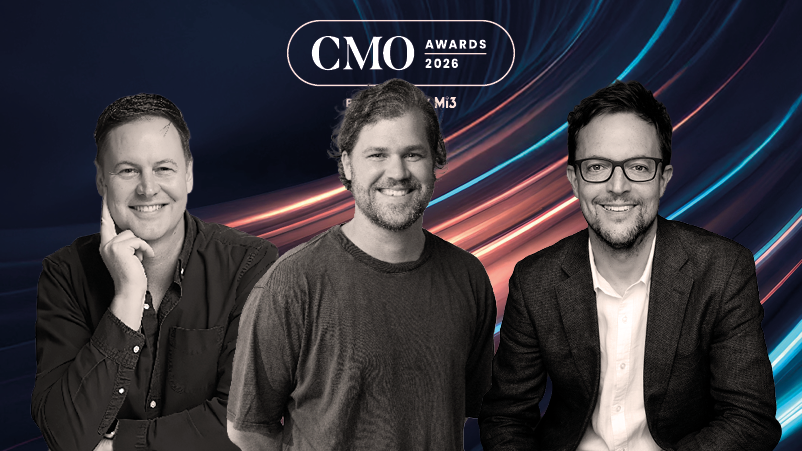
From Left: Paul Connell, Bec Darley and Jo Robinson

When times get tough, the first thing that’s cut is the marketing budget, goes the well-known industry adage. So how do marketing leaders better make the case for what they’re doing in terms of growth and profitability to get past perceptions of marketing as a cost on the balance sheet? Three marketing luminaries – TPG CMO, Bec Darley, The Iconic CMO, Jo Robinson, and former Naked Wines CEO and Unilever marketer and GM, Paul Connell, joined us on the mics for the latest CMO Awards podcast episode to explore the strategies they’ve pursued to grow their commercial muscle and embed an expansive, growth-oriented reputation internally for marketing. From getting to the heart of unit economics, and truly understanding what creates value inside a business, to balancing the logic of brand – increasingly possible through tools like MMM and tech – with the magic and behavioural psychology informing why marketers do what they do, these three provide a wealth of insight into how marketers win over stakeholders.

Too many marketers lack awareness of what delivers net cash to the company’s bottom line and therefore miss a trick in their efforts to be commercially astute leaders, says TPG CMO, Bec Darley.

The marketing leader joined The Iconic CMO, Joanna Robinson, and former Naked Wines CEO, Unilever marketer and CMO Awards judge, Paul Connell, for the latest episode in the CMO Awards podcast series investigating what it actually takes for marketing to get past persistent views of being a lag on the P&L, and firmly gain a foothold in pursuing sustainable growth.

Robinson describes commercial marketers as “customer obsessed, commercially disciplined, always data-informed and strategically curious”. Connell says it’s about being highly accountable, “and also being someone who’s in for the business outside of their lane”. And Darley adds another all-important word to the list: Profit.

“This is we know how much of the net cash that’s falling to the bottom line. Is it a term you’d expect a commercial marketer to have? Absolutely. Is it one we see a lot of? No … If marketing is truly to be seriously among our C-suite and board, understanding profit has to be part of the language of the commercial marketer,” Darley argues.

If you're thinking about how to drive a customer experience, it's very rarely the advertising dollars that are the best place to put your money. Secondly, it’s not about commercials at all. It's about leaders that can bring the whole business together. If your brand experience is your business, then everyone needs to come with you, and those people that sit in the centre and make that happen are gold – and are few and far between.

— Paul Connell, former MD, Naked Wines

CEO and board expectations

There’s absolutely no doubt in any of our panellists’ minds that marketers are being asked to be more accountable for commercial outcomes. It’s equally clear that most marketing teams are seeing spend scrutinised (and often trimmed) as times remain largely tight. So how do you successfully reframe marketing as revenue, not cost, and ensure you’re fiscally responsible while pursuing the growth game?

Robinson and Darley agree that marketers have never had more of the right tools to connect what they do to commercial outcomes.

“We’ve got more measurement and marketing effectiveness tools than we’ve ever had before, and we've got data at our fingertips to be able to tell the story,” comments Robinson. “But also, the role has evolved significantly. The modern marketer can't just be about storytelling or brand building. They've got to understand revenue, profitability, and retention. CLV [customer lifetime value] has become the north star that we all need to talk about, and that needs to be embedded across the whole enterprise.

“In ecom, that expectation is even higher, because we see customer behaviour shifting in real time. So traffic conversions, frequency retention, and so on create a much stronger expectation that marketing is not just sitting adjacent to the business, but it's deeply embedded within the commercial performance.”

Connell points to three shifts in how CEOs and boards view marketing leaders. “One, is people that can think about capital allocation, not their marketing budgets,” he says. “If you're thinking about how to drive a customer experience, it's very rarely the advertising dollars that are the best place to put your money. Secondly, it’s not about commercials at all. It's about leaders who can bring the whole business together. If your brand experience is your business, then everyone needs to come with you, and those people who sit in the centre and make that happen are gold – and are few and far between.

“Then I completely agree with what Jo said about commercial fluency: Really understanding the levers of the business, not just the area you technically own, is critical.”

Yet Darley believes CMOs still face scepticism and misguided perceptions around how marketing is demonstrating value. “Do the numbers really stack up, and do boards and CEOs truly understand the sophistication and the methodology and the approaches we’re using to quantify?” she asks.

“As a marketing community, we've never had better tools and capabilities at our disposal. But I think the level of understanding and trust from boards and CEOs is where we've still got some work to do.”

As a commercial marketer, I want to understand how the business makes money. And if I truly understand how the business makes money, I can then work out how marketing can help deliver more. So to that end, I spent a lot of time unpacking the unit economics. I want to really double down on this point, because it has been the absolute heart of what we've now built at TPG Telecom.

— Bec Darley, group CMO, TPG Telecom

The unit economics

Darley’s own approach to this when she arrived at TPG 16 months ago “didn’t start in marketing at all”. “I started with the product team, and I started with finance, because I really wanted to get an understanding of the business first and foremost at a really deep level,” she says.

“As a commercial marketer, I want to understand how the business makes money. And if I truly understand how the business makes money, I can then work out how marketing can help deliver more. So to that end, I spent a lot of time unpacking the unit economics. I want to really double down on this point, because it has been the absolute heart of what we've now built at TPG Telecom.

“TPG Telecom represents six brands, we have hundreds of products across a pre-pay, post-pay, and our fixed portfolio. I have a number of competing agendas from a mix of product teams. Coupled with that, I also have a finite budget and a finite resource profile. Everyone wants love, but actually, those dollars and resources can only stretch so far. How are we making the right, selective, strategic choices? What helped inform that was the work I did on unit economics.”

This involved looking across every product in every brand, ascertaining the customer lifetime value and tenure. “What that allowed me to then do was understand for every dollar I have in marketing, where do I invest it both short and long term to drive revenue,” Darley continues.

Second to that was gauging the perspectives of marketing and what marketing was doing inside the business. “Most candidly, marketing in the organisation was seen as order takers, not strategic partners. That was the single biggest moment of clarity for me in really understanding where the business was at today and where we needed to go,” she says.

So Darley then set about winning over key stakeholder groups across finance and product.

“The deep dive from a marketer into the commercials and unit economics of the business had not been seen before – to the point the CFO actually has commended myself and my leadership team on really understanding the numbers,” she says. “We should, and that should not come as a surprise, but of course it's not without tension. In a business of the size and scale ours is, that's a big leap of faith, and that's where, beyond the fact base, the level of trust from my peers and my boss is really important.

“But that leap of faith and trust also needs regular insight and reporting into how we're progressing. So it's making sure we've got the right cadences around the rhythms of showing the return on investment, really demonstrating where the value lies, but equally calling out where we're not doing so well.”

Yes, we need to pull it through the line, and yes, it needs to be attributable in terms of driving our overall business objectives and the commercial outputs. But our CFO said, ‘I really am starting to get a very strong understanding of what marketing is all about now’ … There was a moment of magic that happened this week that I think represents what we're talking about here.

— Joanna Robinson, CMO, The Iconic

Building brand buy-in

Over at The Iconic, Robinson attributes her own ability to change perceptions of marketing – and critically, get the focus back on brand building – to the timing of her arrival. And like Darley, her story similarly reflects a quest to understand business challenges and what marketing can do to help course correct and get things back on a growth path.

“The Iconic was at a tipping point, and certainly in terms of the brand dilution, we'd lost relevance and resonance with our audience. We were really caught at the bottom of funnel, so it was all about short-term conversion,” Robinson explains. “The market was tough, so we'd ridden the tail winds of all things Covid and lockdown … as soon as that was over, everybody rushed back to physical retail, and our competitors had upped the ante on their ecom offerings. So I think The Iconic took a punt on someone who wasn't a traditional ecom marketer. I've come from FMCG, where, quite frankly, marketing and consumer insights are at the core of everything you do.

“I still advocate for the fact that the four Ps are the same four Ps they always were. Ecom is a channel, so you still have to put the customer at the core of everything you do, then manipulate and navigate the 4Ps in a way that resonates for a particular audience. You're not trying to be all things to all people, which was certainly where we were at with The Iconic.”  

The most difficult part of “putting the defib on the brand” was internal education around how to drive that longer-term brand demand which would reestablish The Iconic back in market. But buoyed by a CEO who backed a bold, full-funnel campaign – ‘The Shop that Stops the Nation’ – there was enough confidence to get cracking.

“That was received well by our customers, and the commercial outputs that generated gave confidence in the fact we needed to reestablish The Iconic masterbrand,” says Robinson. “It was about some proof points, but also taking some chances and some risks. But you've got to be empowered to do that.”  

To that end, Robinson has built a strong relationship with her CEO as well as CFO, who's ex-Coke. “He really understands the importance of marketing and brand as well,” she adds.

Language of the business

The common catch-cry in any conversation about marketers being more commercially astute is that they must learn the language of the CFO and balance sheet. But all three panellists agree it’s also about the language of the business.

In tackling the unit economics, Darley gained “a fact base through the lens of the language of the business” to be able to embark on a program of brand repositioning, customer segmentation and bold campaign bets.

“What we have done is … build a portfolio strategy that is very different to what it looked like historically; we've moved away from just driving new connections into the organisation, and we're actually driving within the portfolios the right volume of connections based on the spend to deliver the optimal revenue outcome,” she claims. “It means some tough conversations, candidly, where some product teams are actually getting less from marketing and some product teams are getting more.”

A timely example she points to is a conversation with one product lead who wanted increased marketing investment in the short term on a certain product line. She said no.

“The reason I said no was because that product line has a lifetime value of $57. Where he wanted to take it from was a product line that had a customer lifetime value of over $1000,” explains Darley. “It's a pretty simple equation, but what you need to balance is the ask of the business and the short-term need versus the long-term growth. That was a request for a short-term need to pump up short-term connections coming into the business, which sits fundamentally at odds with delivering long-term growth for the organisation. This isn't always an easy conversation.”

Yet even with all this commitment to learning the terms of the business, Connell says marketers still need to factor in the human psychology that makes what they deliver unique in the first place.

“Sometimes it's much easier to get resonance talking about the logic than the magic, and actually, the magic is behavioural psychology,” he says. “It is human behaviour; it's what captures attention. It's all the things that marketers hold as real IP. But sometimes we could do a better job of saying, actually, this isn't just my feelings, this is facts.

“Sometimes, the best test is simply the memorability test: If it's not going to move anyone internally and everyone's going to forget it, you already know it's not good work, no matter what the data says. That is much more powerful – putting the work in front of people and seeing if it moves them, your staff, your teams. Because if it doesn't, what a waste of money.

“And that's where the commerciality comes in, because if you thought about it as your money and your business, and saw the work is academically good but frankly dull, you wouldn't do it. If we can do that proudly and confidently, then it is a commercial argument.”

Robinson agrees, and reveals that as she runs The Iconic’s current pitch for a creative agency, she’s brought both the CEO and CFO in to see what’s being presented.

“You can see the impact that has had on them actually understanding the power of creativity,” she says. “The CFO actually commented to me yesterday and said, ‘Jo, thank you for bringing me into the process. I really am seeing the magic of what you mean now when you talk about creativity and brand building, and how important it is’

“Yes, we need to pull it through the line, and yes, it needs to be attributable in terms of driving our overall business objectives and the commercial outputs. But our CFO said, ‘I really am starting to get a very strong understanding of what marketing is all about now’ … There was a moment of magic that happened this week that I think represents what we're talking about here.”


What do you think?

Keep Reading

Deep Dive 3 Aug 2026 - 8 min read
Listen to the Podcast  
Deep Dive 27 Jul 2026 - 7 min read
Listen to the Podcast  
CMO Awards 26 23 Jul 2026 - 7 min read
 
Industry contributor 29 Jun 2026 - 7 min read
 
By Mitch Hunter - Group strategy director, Leo Australia
Video Q&A 16 Jun 2026 - 5 min read
 
Video Q&A 12 Jun 2026 - 5 min read
 
Deep Dive 11 Jun 2026 - 6 min read
 
Video 10 Jun 2026 - 4 min read
 
By Nadia Cameron - Publisher | Editor - Marketing
Video Q&A 10 Jun 2026 - 11 min read
 
Video Q&A 9 Jun 2026 - 4 min read
 
Video Q&A 8 Jun 2026 - 5 min read
AMI CPD: 
 
Deep Dive 4 Jun 2026 - 9 min read
Listen to the Podcast  
Analysis 3 Jun 2026 - 7 min read
 
Deep Dive 26 May 2026 - 7 min read
Listen to the Podcast  
CMO Awards 26 13 May 2026 - 4 min read
 
CMO Awards 26 13 May 2026 - 6 min read
 
CMO Awards 26 7 May 2026 - 3 min read
 
Partner Q&A 7 May 2026 - 6 min read
 
Deep Dive 7 May 2026 - 6 min read
 
Deep Dive 5 May 2026 - 7 min read
Listen to the Podcast  
Partner Q&A 4 May 2026 - 5 min read
 
Search Mi3 Articles