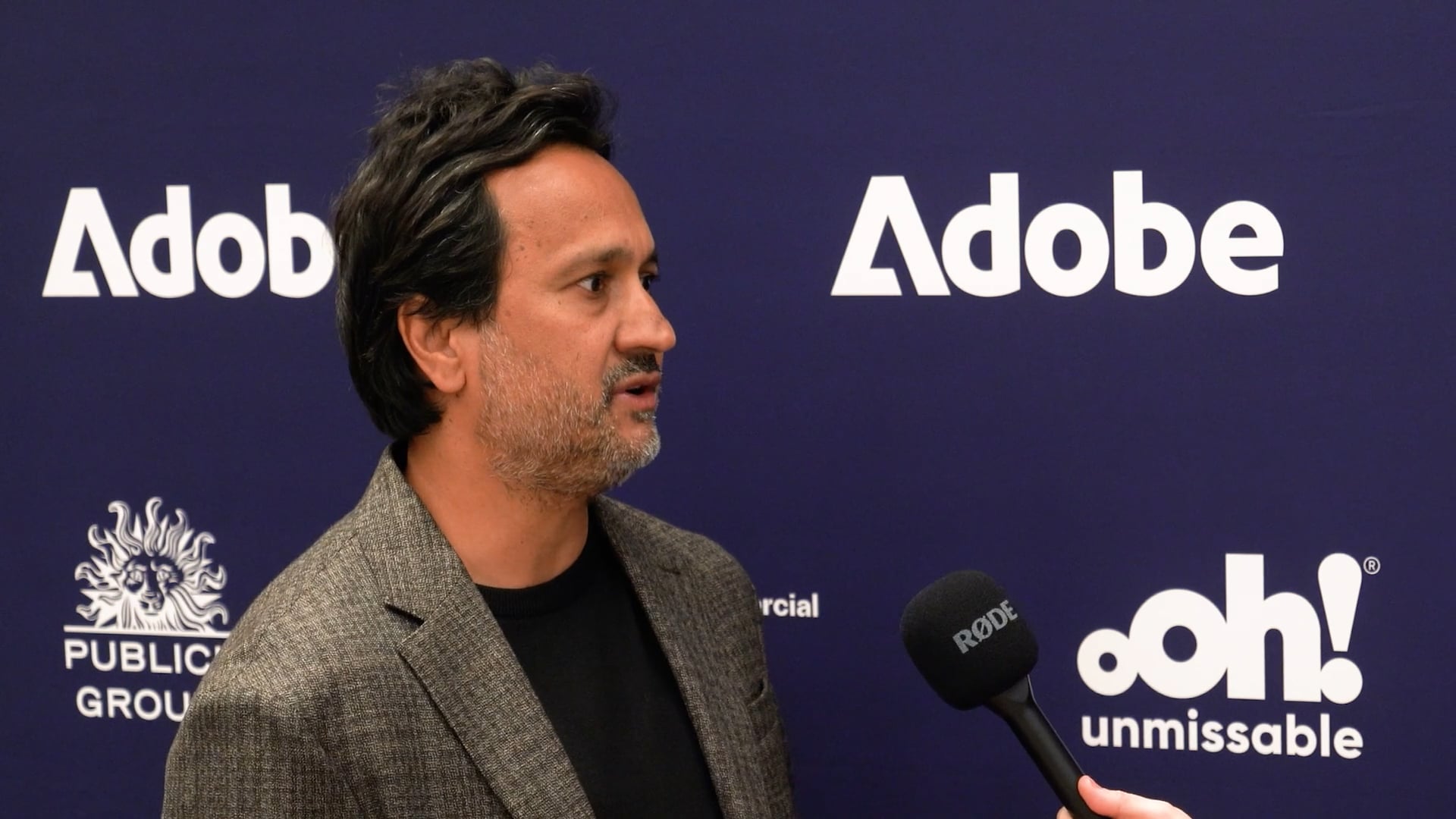



CMOs of the Year 2026 #11: Brad Firth
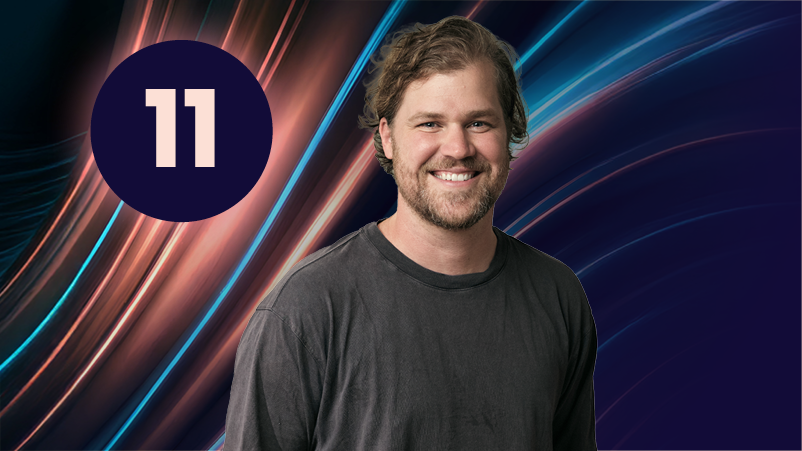
This SMB CMO is quick to challenge the clichés that come with marketing beer. “There’s a perception that selling beer is easy and we just get drunk all day. That’s only partly true," he says. So how is he cracking triple-digit growth with key tentpole clients? Find out here.
It’s a line delivered with humour, but it speaks to something more important; a role that’s often underestimated, and a category that’s far more complex than it looks from the outside.
That’s because behind the brand is a highly deliberate approach to growth. One that blends instinct with discipline, creativity with commercial focus, and increasingly, restraint.
Asked the number one thing marketing needs to prove to the board in 2026, Firth nominates “Focus”. “We are in a fun stage of growth where opportunities are endless. We also operate in a category under strain and prone to freak-outs, within an unpredictable economy. Focus, stay the course, invest in fewer, bigger, better,” he advises.
At Mountain Culture Beer Co, that mindset has helped fuel rapid expansion. “We are six years old, the fastest growing craft brewery in Australia and now the third largest independent craft beer producer. Over the last three years, our business has tripled.”
Innovative marketing
For a brand built on collaboration, Firth’s most effective marketing move this year was to extend that idea beyond beer and into how the brand shows up commercially.
“Amongst craft beer fans, one of the things we’re known for is collaborating with breweries from all over the world,” Firth says. “In FY26, we decided to apply that same spirit of collaboration to our marketing. Partly because it fits our brand, and partly because if we’re honest, it’s also a smart way to create more impact from a flat year-on-year marketing budget.”
Rather than defaulting to traditional endorsement when Blue Mountains local, Pat Cummins joined as an investor, the team took a different path. They built a joint business plan with some of its biggest customers, including Coles Liquor Group (CLG), with Cummins at the centre of a national summer campaign tied to the Ashes.
The upside wasn’t just visibility. It unlocked access to premium retail placements typically reserved for major beer brands, including national front-of-store positioning in December – all with minimal media spend.
“We had the inside lane with CLG, with Liquorland a major sponsor of Cricket Australia, but their sponsorship didn’t include Pat. We connected their brand and category teams [the first time MC had done this] and built a joint business plan with Pat at the centre,” Firth says.
“The result: Pat became the face of the Liquorland summer brand and retail campaign during the Ashes. In return, we gained access to the Liquorland promotional calendar usually reserved for macro beers, including front-of-store placement nationally in December. Our Status Quo Pale Ale also became the only brand featured across their ads getting millions of eyeballs on our brand, for no media investment.”
The impact was immediate. Sales with Coles Liquor Group increased 128 per cent year-on-year.
We invested heavily in data this year – yet our best results still came from putting an idea into a keg, tapping it under a fake name, and recording real drinker responses over a 3-month period. It's as old fashioned as it gets, but it also led to the launch of the best-selling new craft beer in Australia.
Effective marketing strategy
As the business scaled, so too did the need for structure. Firth introduced a formal marketing leadership team and implemented a consistent operating system across the function, creating alignment, accountability, and visibility of performance. This enables the team to operate more independently as his focus expanded to support the broader business.
But the challenge wasn’t just about discipline. It was about maintaining speed. “When you’re building a brand quickly, it’s easy to operate on instinct and speed,” he says.
“Installing these foundations – along with tools like a marketing plan template, social strategy and refreshed brand guidelines – has allowed the team to operate confidently.”
The impact has extended beyond process into capability, with team members stepping into expanded roles and greater ownership across the function. The risk, as the business grows, is that marketing slows down under the weight of structure. To counter that, the team introduced a weekly ‘sprinter’ session – a dedicated space for fast, creative thinking anchored in strategy.
“The rule is simple: When we land on a good idea, we back it, quickly and without fear. My job is mostly to get out of the way,” says Firth.
That balance between structure and speed is already shaping how the brand shows up in market.
One of the first outputs is a deliberately unconventional campaign, a series of personal ads placed in newspaper classifieds by the founder, inviting “mountain drinking buddies” to join him for outdoor activities that end at the brewery. With no overt branding, the work reflects the brand’s personality while bringing its community-led ethos to life.
It’s a small but telling example of the broader philosophy at play: structure where it matters, freedom where it counts.
Discerning decision making
Yet one of the most significant strategic decisions this year wasn’t about marketing at all, at least not in the traditional sense.
Rather than increasing marketing spend, Firth kept the budget flat and redirected investment into hospitality, the brand’s most powerful experience channel.
“At the time we operated three venues: Katoomba, our Emu Plains production taproom, and a bar in Redfern. These venues are our most powerful brand touchpoints – where both drinkers and customers experience Mountain Culture properly and in turn, propel our wholesale growth,” he explains.
In May 2025, the opportunity arose to acquire Fox Friday Brewing out of voluntary administration. “Through a family-and-friends capital raise we purchased the business assets – most importantly, its venues.”
To unlock the potential of hospitality, the company partnered with the GMs of its best pub customer in Melbourne.
“Our strategic pivot became clear: turn these venues into brand beacons that fuel wholesale growth. The two hero additions – Mountain Culture Hobart and Mountain Culture Melbourne – were rebranded and retooled for under $200k, roughly the same amount we had originally considered adding to the marketing budget,” he says. “Both venues are now +25 per cent year-on-year and generating strong EBITDA. More importantly, the Hobart venue helped unlock 150 new distribution points across Tasmania.”
The Richmond site in Melbourne has helped drive close to 1000 new distribution opportunities in Melbourne and is regularly used by major customers for training, events and team offsites.
“As a result, venue revenue has grown 2.5X and our venue count has grown from 3 to 7. This strategic investment in assets and people laid the groundwork for further growth, including sites in both the domestic and international terminals of Western Sydney Airport,” adds Firth.
Customer & market smarts
For all the investment in systems and scale, some of Mountain Culture Beer’s most valuable insights still come from the simplest possible source.
“We invested heavily in data this year, yet our best results still came from putting an idea into a keg, tapping it under a fake name, and recording real drinker responses over a 3-month period. It’s as old fashioned as it gets, but it also led to the launch of the bestselling new craft beer in Australia,” continues Firth.
In that vein, he says the company’s most valuable research is simple: Make beer, give it to drinkers, and listen. That mindset supports an innovation program that sees two new beers brewed each week.
In 2025, one experiment stood out. A new style, Fruit Enhanced Hazy, was tested anonymously at a Sydney festival and accounted for more than half of all sales that day.
“After that we started receiving unsolicited emails and comments about how wild the beer was,” he says. “That’s when we knew we might be onto something.”
With product innovation closely integrated into marketing, the concept was refined through multiple iterations, shaped by direct customer feedback. That approach led to the creation of Juice Trip, a bold, high-alcohol, flavour-forward beer that quickly became a breakout success, and takes the inspiration from a psychedelic trip.
“It is so bold that we knew the big macro beer brands could never get away with copying it. Based on the data and customer response, both EDG and CLG agreed to national ranging last August. Juice Trip immediately became the #1 best-selling new beer in Dan Murphy’s and Liquorland,” says Firth.
Six months after launch, Juice Trip accounted for 17 per cent of total sales volume and is on track to exceed 25 per cent, making it one of the most successful new product launches in the category.
Data-driven decision making
While instinct still plays a role, Firth has invested in building greater data visibility across the business to support more consistent decision-making.
Following the introduction of brand tracking, the team implemented new sales and CRM systems to strengthen customer relationships and improve execution across the independent channel.
“It’s not revolutionary technology, but the improved visibility – and the ability to apply those insights through the CRM – has had a significant impact on our independent sales channel,” he says.
With growth in that channel beginning to plateau, the team used data to take a more structured approach – focusing on lapsed customers, tap count, volume per outlet, customer grading and SKU distribution.
The impact has been immediate. Lapsed customers have been significantly reduced, higher-value accounts have grown, and the sales team is now operating with greater efficiency through improved route planning.
Commercial acumen
For Firth, marketing has to be measured by its ability to drive real business outcomes. Over the past 12 months, that focus has translated into progress across multiple fronts, from increased brand awareness and stronger retail collaboration, to the successful launch and rapid scale of new products, and growth in venue performance.
But one of the clearest examples of marketing’s commercial impact came from a deliberately simple experiment. Extending the brand’s collaborative approach, the team partnered with oOh!media.
“Together we designed the ultimate test by turning off every other channel and running only OOH during Dry July, traditionally the worst month for beer sales,” he says. “The result was a record-breaking July for the business … Every level of the brand funnel lifted, and we sold the most kegs of Status Quo Pale Ale in a single month in our history.
“For a founder-led SMB, the impact of that result can’t be overstated. It fundamentally shifted the internal view of brand investment and how quickly it could also generate sales.”
As a consequence, Mountain Culture is now running an always-on OOH program in the second half of the year.
Business & leadership impact
Much of Firth’s leadership impact is reflected in how the team operates day-to-day.
At the core is a simple operating rhythm built around visibility of performance and rapid problem-solving. A structured scorecard system tracks marketing performance weekly, monthly and quarterly, creating shared accountability and a clear view of what’s working, and what isn’t.
From there, the focus shifts to action. An evolving ‘issues list’ captures the key barriers to performance, with the team prioritising and working through them together each week.
“The belief is if you spend 10 minutes on a scorecard, you can spend one hour on tackling real issues,” says Firth.
Importantly, the process is team-led, with Firth’s role focused on helping move conversations from symptoms to root causes, and stepping in only when needed to guide decisions. Over time, this discipline has become embedded, helping the team break through growth ceilings and operate with greater clarity and confidence.
“Humility x drive. There’s a lot I don’t know but I will not stop.”