


CMOs of the Year 2026 #12: Kirsten Hasler
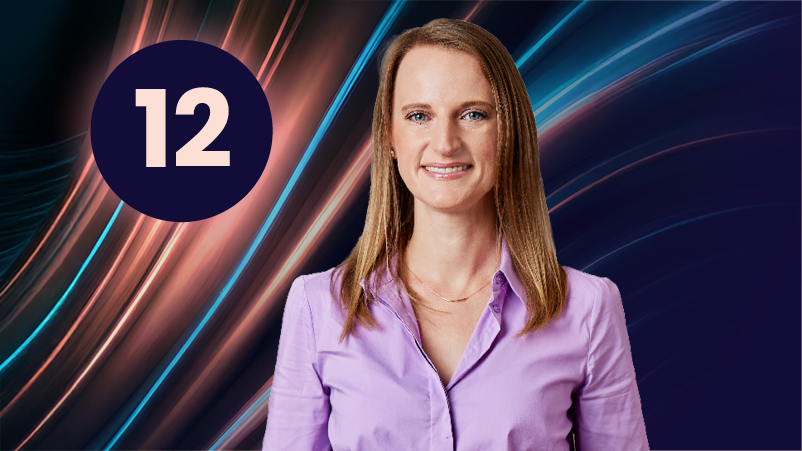
From tackling a “once in a career” launch across the Tasman, to tactically sacrificing spend from one area to make a big, local splash for Australia’s 50th anniversary that could build mental availability, Kirsten Hasler has been wielding significant internal influence and strategic insight to drive growth at her retailer employer.
A connoisseur of assembling furniture she’s not. But IKEA’s Kirsten Hasler does know what it takes to assemble stakeholders and teams in a way that drives marketing’s growth agenda.
“I spend almost as much time focused on managing stakeholders and developing the team, than on actual marketing,” the marketing and insights leader, who’s spent the last 14 years working her way up inside the packaged furniture retailer to the top marketing gig for ANZ, says. “Through deep curiosity, self-awareness and empathy, understanding people helps me with the consumers we’re marketing to, motivating and developing my team members, and influencing stakeholders internally and externally.”
Innovative marketing
All of this was brought to bear in launching IKEA into the New Zealand market last year, the furniture retailer’s 63rd market globally. Leading with a bold 'Best market entry ever' ambition, Hasler was tackling the Tasman expansion at the same time as facing reduced resources and challenged sales results in Australia.
“I motivated the Australia and NZ marketing team to embrace this once-in-a-career launch with a growth mindset,” she says.
The first step of the game plan was ethnographic research across 500 Kiwi homes, understanding the challenges and dreams of life at home, enriched by Ipsos focus groups, competitor analysis and brand health tracking.
“Our priority was leveraging strong existing brand love whilst addressing common misconceptions: IKEA only being accessible to Aucklanders and an 'IKEA lite' experience,” says Hasler. “With a lean budget and minimal additional resources, we boldly launched IKEA into New Zealand effectively using earned, owned and paid channels.”
The 20-month, three-phase 360-campaign included ‘Say hej’, leveraging the existing fanbase and showing IKEA understands Kiwi life. To do this, the team used IKEA’s blue FRAKTA bag in a social media series that demonstrated its versatile uses for Kiwis, from rugby training to tramping.
‘Our shared values’ then informed sustainability initiatives and collaboration with Maori communities, including the Upokongaro primary school library makeover, aptly named ‘LiBILLYries’. ‘IKEA Everywhere’ came next, featuring a national Digital Billboard takeover, a TVNZ ‘Swede-As road-trip’ and localised, unexpected pop-ups across Auckland, Christchurch and Wellington, showcasing omnichannel accessibility for all of New Zealand.
The campaign led to a successful launch, with top-of-mind awareness lifting from 4 per cent to 15 per cent. Marketing’s most important KPI, online and in-store visitation, exceeded its goal by over +100 per cent in launch month, sustaining +72 per cent three months later.
“This has built the IKEA Brand in Kiwi hearts and minds, driving demand for sustained, future commercial success,” says Hasler. “As a marketing leader, this was a career highlight; I’m immensely proud of the team’s relentless drive for excellence and commitment in bringing this to life.”
To fund the 50-year anniversary campaign, we reallocated production budget from retail campaigns, and media budget from the global brand campaign to a locally produced one – our first in over five years – executed with no additional people resources. During declining commercial performance, this strategic trade-off sacrificed immediate tactical sales for long-term brand equity and local relevance.
Effective marketing strategy
In the last 12 months, Hasler has built herself an AI agent to help with strategy development. Fed with macro and micro insights, IKEA’s business strategy, brand health data and target segments, it proved a great co-pilot in her job. “When I’m stuck on strategy development or want to check I haven’t missed a blind spot, it’s incredibly insightful,” she comments.
Such AI confidence came after Hasler joined the Australian Centre for AI in Marketing’s CMO Pioneer Circle as a way of upskilling and proactively equipping herself and her team to embrace AI for more effective marketing.
“I noticed a varied spectrum of AI adoption within the team, from enthusiasm – some co-workers even feeling the need to hide how much they were using AI, as it felt like ‘cheating’ – to complete, head-in-the-sand denial. This highlighted the need for a unified approach to AI in marketing,” she says.
Drawing on ACAM insights and utilising Co-pilot, a mandatory 7-week training course for all 25 team members was realised. This program started with AI's connection to the IKEA Values, ethical and risk considerations, job security fears, followed by shared practical use-cases from high adopters in the team.
“The digital function applauded marketing’s leadership in this area and gave us early access to the new IKEA AI Portal, the first in the Australian business,” notes Hasler.
From this initiative, 15 AI pilot programs were created, including a segmentation agent that integrates Experian Mosaic, first-party IKEA and brand health data, plus a marketing strategy support agent and KPI reporting automation. So far, these pilots achieve 5-10 per cent efficiency gains in terms of time saved.
“AI is allowing us more time to be human-centric, creative and uncover new insights and address them with speed,” says Hasler. “This not only upskills the team but has directly fuelled more agile and impactful marketing during a time of enormous macro-economic and commercial challenge.”
Discerning decision making
Such conviction around leveraging disruptive tech doesn’t stop Hasler from recognising the fundamental principles of marketing, however.
“I wish we could go back to the marketing fundamentals instead of getting lost in fluff. I’m a big fan of Ehrenberg Bass Institute’s terminology of growing a brand through building both mental and physical availability,” she comments. “It’s a great guiding principle, easy for people to understand, and best of all, based on evidence.
So it’s no surprise this marketer saw celebrating IKEA Australia's 50th anniversary in 2025 as a unique opportunity to build the IKEA brand and support commercial performance amidst declining consumer confidence and discretionary spending in the home furnishing category.
“With static marketing budgets, IKEA typically prioritises global brand campaigns and high-ROI local retail campaigns during sales declines,” Hasler explains. “To fund the 50-year anniversary campaign, we reallocated production budget from retail campaigns, and media budget from the global brand campaign to a locally produced one – our first in over five years – executed with no additional people resources. During declining commercial performance, this strategic trade-off sacrificed immediate tactical sales for long-term brand equity and local relevance.”
Developed with partner, Havas host, ‘Just the start’ blended nostalgia with playfulness to build emotive brand connection at a truly local level. The campaign centred on a locally produced TVC featuring iconic IKEA products, milestone life events, and thanking Australians for how they’ve helped their mates ‘move up, move on and move out’ with IKEA.
The work extended to interactive in-store experiences and PR stunts like the ‘Flatpack FLIP FLÖPS’ and ‘Meatball Party Pie’, blending Australian and Swedish culture and capturing national attention. These activations earned coverage on Channel 10’s Have You Been Paying Attention? and on ABC’s Gruen, creating real talking points for the brand.
“Appearing on Gruen was both the most exciting and terrifying moment of my marketing life,” admits Hasler.
Yet the risk paid off and strong commercial results were achieved. On launch weekend, 275,000 customers visited retail stores and 1.7m digital channels, +11 per cent year-on-year. Overall, the campaign delivered a short-term 15:1 ROI and was IKEA’s second highest short-term revenue driving campaign in FY25.
Customer & Market smarts
Another way Hasler’s team has been working to gain a more nuanced view of customers is through segmentation review. IKEA has always understood its three key target segments, but with customer base decline in 2024, Hasler led a significant shift in segmentation strategy for 2025.
The work required a cross-functional approach, engaging key stakeholders and the IKEA executive leadership team in workshops to define new segments together – vital for ensuring organisational adoption went beyond marketing. It’s led to four new key target segments being defined, supported by fresh Experian Mosaic and Kantar brand health data, covering 75 per cent of Australian households (up from 55 per cent). First-party CRM data and brand health data was also used to better understand consumers beyond demographics.
“New insights emerged: Spending power, home furnishing needs, design preferences, brand drivers/barriers, and channel consumption,” says Hasler. “The segmentation AI Agent provides continuous strategic direction through a deeper understanding of each segment at a furniture category level. Its insights underpin creative and media briefs, ensuring each campaign precisely addresses target group needs and barriers.”
Results are promising: At time of submission and over FY26 thus far, spontaneous awareness is up +3 per cent, consideration is up +4 per cent, and marketing’s most important KPIs, visitation and penetration, both grew by +4 per cent. Importantly, the customer base is stable too, with trips per customer growing +3 per cent, and items per basket by +5 per cent.
Data-driven decision making
Then there’s the kitchen renovators. In FY26, IKEA's growth focus targeted its Kitchens range: a $2bn fragmented market without a clear leader.
“Recognising the significant payoff that growing this high-margin category would have on our P&L, I challenged the team to elevate this into a primary marketing objective for the year,” continues Hasler. “Planning, buying and installing a kitchen is a complex process and major investment but is seen as having the biggest impact on Australian homes’ functionality and value. Without deep understanding of consumer perceptions of IKEA kitchens, defining the 'job to be done' was unclear.”
Enter local consumer research with Mindshare, exploring Australian buying behaviour, retailer consideration, and IKEA's specific drivers/barriers. The team also integrated these insights with first-party IKEA Family data and new target segment intelligence, then tapped its segmentation AI agent once more to assist.
“This provided a clear, segment-specific 'job to be done' understanding for lead generation of Kitchens. For example, affluent segments prioritised finishes over price, while across all, fear of DIY and low awareness of IKEA services were key barriers to overcome,” says Hasler.
“Our 'Always-on' search and social lead generation campaign used dynamic creative to directly address four areas: The width and depth of IKEA kitchens, our quality and 25-year guarantee, IKEA co-workers as kitchen planning experts and the different services available for supporting the whole buying journey. We utilised refreshed creative tailored to different journey drivers, optimised for lead generation.”
After 12 months, the resulting strategy achieved #1 unprompted awareness in the kitchens competitor set, generated leads +22 per cent above goal, and delivered +10 per cent market share growth FYTD, the highest ever for the Kitchens category in IKEA Australia’s history.
Commercial acumen
With almost 14 years of local and global experience at IKEA, including early recognition as a 'high potential' leader and extensive experience across the value chain, Hasler has clearly been actively involved in shaping our local business strategies for many years. In the last four years, she’s been more heavily involved in both long-term (5-year) and short-term (1-3 year) planning for Australia and NZ, responsible for collating business-wide, macro and micro insights, SWOT development, goal setting, and strategic prioritisation across the commercial team.
“My primary influence comes from driving the country-wide adoption of our new local brand positioning,” she says. “Traditionally viewed [skeptically] as a pure marketing initiative, I saw an opportunity to more deeply embed it across the business, widening brand responsibility to leaders in retail, DCs, and the service office.”
Thanks to these cross-functional efforts, brand positioning is now the shared responsibility of all leaders. Achieving this involved educating leaders on brand positioning, defining IKEA’s new CVP ('Clever solutions to create more room for life'), and crucially, connecting it to the 5Ps (People, Place, Promotion, Product, Price) with clear action plans.
For example, 'People' evolved from 'Customer Service' to 'Life at Home Improvement Experts', while 'Place' shift from 'The big blue box' to 'Seamless Omnichannel Ecosystem'.
“Developing and embedding brand positioning in this way provides a clear, unifying focus, recognising a strong IKEA brand as our most important asset, to be built and protected across the business,” says Hasler.
And again it’s paid off, ensuring IKEA overtook its main competitor as the #1 brand in Brand Desire and increasing penetration 5 percentage points to 40 per cent.
Business & leadership impact
The IKEA marketing function’s primary commercial contribution is driving visitation to online, in-store, and remote Customer Meeting Points, and it’s striving to deliver efficient marketing-driven sales measured by Econometrics (MMM).
“We achieve this by both creating and converting demand,” says Hasler. This was critical in FY25, when shrinking investment and a challenging macro-economic environment saw immense pressure brought to bear on marketing to drive brand, growth, and visitation.
“Our FY25 focus was on increasing top-of-funnel metrics such as Brand Desire and Brand Trust, bottom-of-funnel metrics such as driving profitable in-store visitation, and boosting overall Penetration,” she says. “I challenged the team to co-create a marketing plan focused on being 'Sharp, Efficient and Impactful'. Despite the pressure, the team remained highly engaged: In our annual employee survey, 'My work energises me' increased from 57 per cent to 74 per cent, directly reflecting their drive and commitment to these ambitious goals.”
As measured by Econometrics and Brand Health data, marketing achieved a +6 per cent increase in Brand Desire to goal and +4 per cent brand trust lift to goal, climbing to #1 in its competitive set. And despite an 11 per cent budget reduction, ROI increased +12 per cent. Another figure Hasler is proud of is cost of marketing-driven store visits decreasing by 26 per cent, showcasing greater efficiency.
“This demonstrates Marketing's direct and significant impact on IKEA's commercial and growth outcomes and could only be made possible with the talented team and our close agency partners,” she adds.