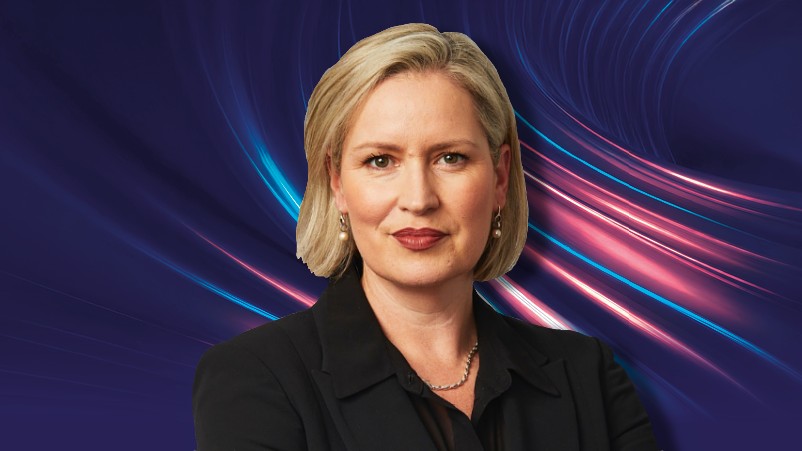



CMOs of the Year 2026 #14: Rennie Freer
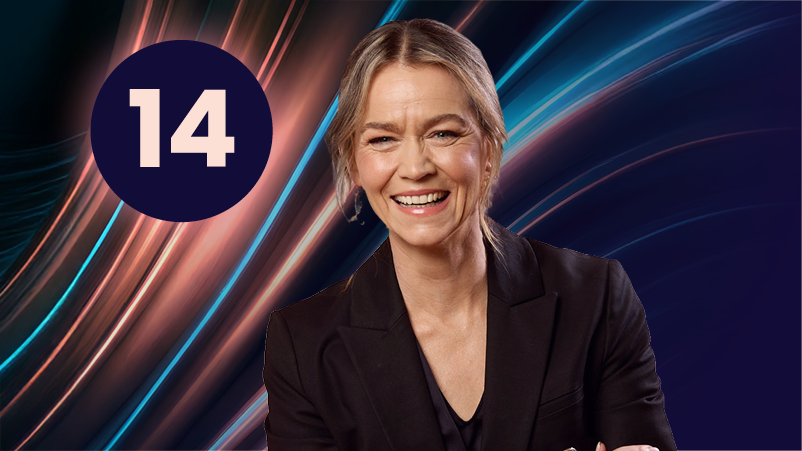
This retail marketing leader's philosophy fits neatly into four words: Freedom in the framework. The real magic, she says, is when teams combine their creative ambition with insights and a focus on measurable outcomes and learnings. And that’s what’s being leveraged to deliver more moments to customers – and more growth.
At Kmart Australia, Rennie Freer wasn’t trying to make the brand louder. She was trying to make it unmistakable again.
“When I stepped into the role, it was clear we did not have an awareness problem as nine in ten Australians already shopped with us. In a category flooded with noise and sameness, Kmart had drifted from our DNA, at a time when customers, and our own team, needed unity and confidence in what we should be famous for,” says the general manager marketing for Kmart and Target. “We lost our mojo. We had a distinctiveness problem.”
That challenge sat at the centre of a broader commercial reality. Marketing investment had remained flat while competitors increased spend, inflation eroded buying power, and Kmart’s position as a low-cost operator meant simply buying more media was never going to be the answer.
Instead, Freer led a disciplined reset of the retailer’s creative identity, operating model and marketing strategy, rebuilding the business around sharper brand fundamentals, faster execution and a much deeper understanding of how Australians discover, discuss and emotionally connect with the Kmart brand.
Notably, the transformation has not been built on excess. It has been built on precision.
“Impact,” Freer says, when asked what marketing term the industry should use more often. “Too often marketers can be perceived to focus on activity versus the impact that their work needs to achieve.
“Regardless of industry, every marketer needs to challenge this by demonstrating a genuine commitment to owning outcomes – not just outputs. In my experience the real magic happens when teams pair creative ambition with insights and a focus on measurable outcomes and learnings. ”
Innovative marketing
Under Freer’s leadership, Kmart re-established one of the most recognisable retail brand systems in the country by returning to the fundamentals that made the business distinctive in the first place.
“What we did next fundamentally redefined the retail marketing standard in Australia,” she says.
Central to the reset was the relaunch of Kmart’s iconic “white-world” creative platform, a simplified visual identity designed to cut through category clutter and put products, price and joy back at the centre of the brand.
“No clutter. No over-storytelling. Just proudly showcasing incredible products at irresistibly low prices, with the joy this brings our customers at the heart of the strategy,” Freer says.
The strategy was applied consistently across TV, outdoor, catalogue, email, display and owned channels, reinforcing a unified brand presence at scale. Kmart also reintroduced one of its strongest emotional brand assets: Avicii’s ‘Levels.’
“The track became an instant and iconic brand cue, being optimistic, energising and unmistakably ours, reconnecting both customers and a massive internal team to the power of the Kmart brand,” Freer says.
At the same time, the business amplified its social and PR strategy, leaning into the enormous level of organic customer engagement already surrounding the brand, with the belief that “discussion drives demand.”
“Kmart had a sleeping giant in community love,” she says. “People already talked about us; we just needed to nurture and amplify it.”
The results have been clear. Over two years, Kmart delivered sales growth, growth in transactions, nearly doubled earned media volume, achieved extremely high share of earned media voice, and built the largest organic social following of any Australian retailer at 3.5 million.
When I stepped into the role, it was clear we did not have an awareness problem as nine in ten Australians already shopped with us. In a category flooded with noise and sameness, Kmart had drifted from our DNA, at a time when customers, and our own team, needed unity and confidence in what we should be famous for. We lost our mojo. We had a distinctiveness problem.
Effective marketing strategy
For Freer, the creative reset only worked because the operating model behind it changed as well. “A clear brand needs a clear operating model, to ensure every team in the business executes consistently and with skill,” she says. “We call this freedom in the framework.”
The marketing team redesigned its workflow and planning structure to improve speed, alignment and consistency across the business. That included stripping weeks out of the marketing critical path without increasing cost or headcount, forcing clearer briefs, faster decisions and stronger prioritisation.
At the same time, Kmart shifted away from separate campaign-by-campaign execution toward integrated annual planning across brand, category and trade.
“This delivered consistency in market, unlocked tangible media and time efficiencies, and importantly unified the team around a single plan on how Kmart shows up in the lives of our customers, regardless of channel,” Freer says.
The transformation also accelerated the retailer’s in-house creative capability. Kmart significantly expanded internal social, content and production functions, while introducing internally developed AI tools to support copy and content creation.
“We built world-class in-house creative, social and content creation capability, increasing social output by 250 per cent without adding cost. A clear white-world framework now scales consistency across all channels, while social content is designed natively to optimise engagement and amplification,” she says. “We also introduced internally built AI tools to support copy and content production, freeing teams to focus on innovation scaled across more channels.”
The result is a marketing function designed to move faster, operate more consistently and scale creativity without proportional increases in spend.
Discerning decision making
As a category-leading retailer operating with flat marketing budgets, Freer says Kmart had to become far more disciplined about where and how it invested. The answer wasn’t more spend.
“It was fully understanding the unique strength of every channel, the amplification of owned and earned media, all informed by insight and the discipline of what it takes to be a low-cost operator.”
Rather than diluting investment across lower-impact activity, Kmart protected spending in high-performing brand channels such as TV and outdoor, where its distinctive creative assets delivered the strongest salience and recall. At the same time, integrated annual media planning reduced duplication and improved efficiency across the broader media mix.
“The considered skill in delivering more with less isn’t just a nice to have for operational efficiency,” Freer says. “It’s a strategic safeguard of Kmart’s core promise, ensuring every dollar works hard so every product, right down to a $7.50 kettle, stays genuinely affordable for Australian families.”
Additionally, the business also leaned harder into earned and owned influence. “We unlocked further incremental growth by activating Kmart’s distinctive strength in trust, relevance and cultural pull, turning product moments and events into news, headlines, cultural conversation at scale without relying on paid media alone. Effectively creating demand and seducing spend, though earned cultural discussion,” she says.
The approach reflects a broader philosophy supporting Kmart’s strategy under Freer: Preserving affordability requires disciplined marketing choices just as much as commercial discipline elsewhere in the business.
Customer & market smarts
At a business where the vast majority of Australians already shop, Freer says the challenge is fundamentally different from most retailers.
“Acquisition was largely capped,” she says. “Growth had to come from creating more moments, increasing relevance and driving more frequency from customers who already shopped with us.”
To unlock that growth, Kmart expanded its customer understanding beyond traditional demographic segmentation, combining transaction data, brand tracking, social listening and earned media analysis to better understand how customers engage with the brand.
Certainly, the insight was revealing. “Customers don’t just come to Kmart for low prices,” Freer says. “They come for discovery and take pride and joy in finding something unexpectedly amazing.”
That emotional response became central to Kmart’s evolving marketing strategy.
Rather than relying heavily on campaign-led trade activity, the business shifted toward always-on category storytelling, using owned channels, PR and social content to drive discovery, engagement and repeat purchase behaviour.
“Our advantage comes from planned alignment with design and merchandising priorities, backing the right products at volume, then using Social and PR to place those products into the moments, platforms and conversations where they earn disproportionate attention and hype,” she says.
The strategy has also enabled the business to respond more dynamically to culture and emerging trends in real time. The team’s then using social listening to jump on current trends, and tapping global forecasting to create owned content to kickstart new trends.
Data-driven decision making
One of the most commercially significant uses of data under Freer’s leadership came when Kmart identified a decline in paid media share of voice amid growing competitive pressure and media inflation.
“We built a single source of truth that connected share of market, share of voice, media inflation, reach/frequency and brand response into one framework the business could act on. The diagnosis was confronting,” she says.
Rather than treating the analysis as a reporting exercise, the team used the insights to reshape commercial decision-making across the organisation. Instead of making a broad request for increased budget, marketing worked closely with Finance and executive leadership to model different investment scenarios and associated trade-offs.
“The impact wasn’t just an interesting report, it actively changed commercial decision making,” Freer says. “Instead of a generic ‘more budget’ ask, we engaged our finance and executive teams in scenario modelling with clear short to long term trade-offs, such as hold, reallocate, or selectively upweight at the moments that matter most.”
The process helped establish marketing as a more trusted commercial advisor inside the business, while elevating concepts such as share of voice into executive-level planning discussions.
“As a result, share of voice is now part of the executive vernacular, recognised as a critical leading indicator of brand and trade health,” she says.
For Freer, the broader opportunity lies in using data not simply to report performance, but to create faster learning loops across the organisation.
“Retail is detail – and leveraging insights to understand what’s working and where we need to optimise is core to how we roll,” she says. “Increasingly, we’re using it to close the loop faster; not just reporting on what happened but creating tight feedback loops in near real time.”
Commercial acumen
Under Freer’s leadership, marketing has become a direct commercial growth driver for the Kmart business. Importantly, the results have been achieved through disciplined investment, prioritisation and operational efficiency rather than increased spend.
“This growth is driven not by spend, but by strategy, insight led innovation and execution excellence,” she says.
At the same time, Kmart has continued to strengthen long-term trust with Australian consumers, maintaining its position as the country’s most trusted discount department store. For Freer, the commercial role of marketing is ultimately about sustained business performance, not short-term activity.
“The most common misconception is that my role is all about big campaigns and brand aesthetics,” she says. “In truth, my role is about setting the strategy to drive sustained commercial performance.”
Business & leadership impact
Freer’s influence extends well beyond advertising and communications into broader business strategy, operational alignment and innovation governance.
“We are a strategic growth partner, shaping how the business thinks about demand, relevance and risk, ensuring decisions are customer-led and consistent with the long-term brand strategy,” she comments.
Marketing now plays a central role in helping guide how Kmart balances brand positioning, customer value and long-term commercial priorities across merchandise, stores, finance and digital operations.
“At Kmart, low-price leadership is not a marketing initiative, it is a total business strategy,” Freer says. “Marketing informs and guides this strategy by governing how value shows up in market, ensuring our promise remains credible, consistent and distinctive.
“By establishing disciplined low‑price principles and frameworks, we have embedded low‑price leadership as a core measure of effectiveness, guiding executive decision‑making and setting a key performance measure for the entire business.”
Marketing has also become a key driver of Kmart’s AI innovation agenda, leading proof-of-concept development across photography, video, copy and model usage while helping establish governance and guardrails around responsible adoption.
At the same time, Freer has focused heavily on building a marketing culture grounded in trust, resilience and accountability.
“A core focus of my leadership has been building a marketing team grounded in trust, integrity and resilience. One that is bold, constantly learning, and able to perform in a fast-changing, highly constrained environment,” she says.
The culture is designed to encourage experimentation, rapid learning and constructive challenge, supported by strong in-house capability across social, content, data and emerging technologies.
“Curiosity, collaboration and constructive challenge [of the work, not the people] are core to how we operate,” Freer says. “We celebrate the outcomes and the spirit in which we achieve them.”
Notably, Freer sees team capability as central to long-term business performance. “Building high-performance teams that people genuinely want to be part of – and that the business trusts,” she says, describing her leadership superpower. “This has always been my ‘why’, it is what fuels me, and I am passionate about attracting and developing great talent and inspiring them to achieve things they hadn’t before believed possible. Those same people inspire me.”