


CMOs of the Year 2026 #19: Leandro Perez
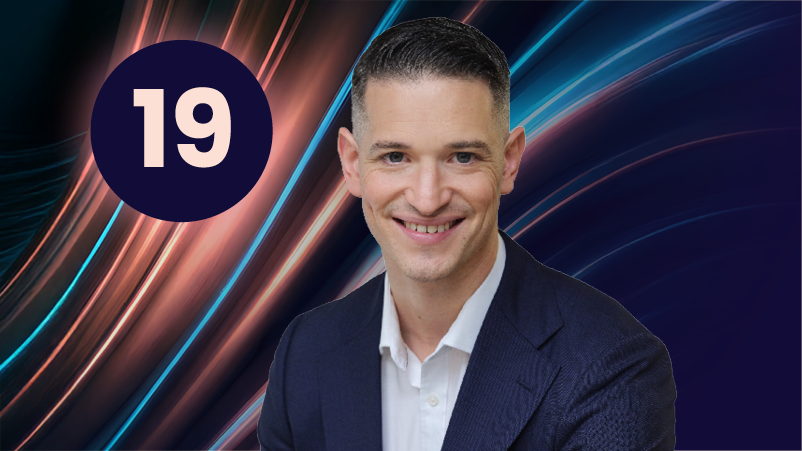
Budget reductions, busting the myth that B2B marketers is a downstream function that’s mainly obsessed with events, and bringing in the commercial line every time have been instrumental to the efficiency gains and reshaping of marketing under Leandro Perez’s CMO stewardship.
Leandro Perez is quick to dismantle one of the most persistent myths in B2B marketing: “That we just run events – or more broadly, that the CMO function is limited to brand aesthetics, creative campaigns and conference logistics,” he says.
“There’s a version of B2B marketing that lives and dies by the next event, and I understand why people see it that way, because it’s visible. But the work that actually moves the needle happens before and after anyone steps into a room.”
It’s a pointed observation, and one that reflects how he has reshaped marketing at Salesforce ANZ. Because in Perez’s world, marketing isn’t about visibility. It’s about commercial impact.
“The CMO role – at least the one I do – is fundamentally commercial,” he says. “My job isn’t to fill rooms. It’s to ensure we’re engaging the most senior decision-makers long before a sales interaction occurs, concentrating capital ruthlessly, and establishing trust at scale. When marketing is executed with precision, it doesn't just change how the business looks. It fundamentally alters the growth trajectory.”
That philosophy has been tested under pressure. In FY26, Perez led marketing through a budget reduction and a cut in team capacity, while still increasing pipeline, strengthening brand position, and helping Salesforce pivot into one of its most important new categories: Agentic AI.
Innovative marketing
Rather than dilute effort across a broad portfolio, Perez made a deliberate call to narrow focus – what he describes as ‘Precision Activation’. The shift moved marketing away from a traditional product-led model toward a structure aligned with how customers actually buy: By segment, by problem, and by buying centre.
“Instead of continuing the product-by-product approach inherited from global, we reorganised around customer segments – enterprise, commercial, small business and public sector – taking segment-led solutions to market, based on customer need and buying centres. This better reflected how our customers buy, and where marketing could create the greatest impact with sales,” he explains.
At the same time, Perez used the ANZ market to prove a broader strategic thesis: That Salesforce could evolve from CRM leadership into category creation in agentic AI.
The narrative was unified around Agentforce, Salesforce’s agentic AI platform, and brought to life through both internal deployment and external customer use cases, including Australia Post, One.NZ, Scape, and Fisher & Paykel.
The result was not just a campaign shift, but a market repositioning. Marketing delivered a 38 per cent contribution against a 36 per cent goal, alongside an 11-point increase in brand familiarity and 203 new enterprise Agentforce customers secured within six months.
“The shift worked because it was not just a response to cuts, it was a deliberate redesign of how marketing creates value in a mature market and a leadership bet on creating the next category,” says Perez.
The CMO role – at least the one I do – is fundamentally commercial. My job isn’t to fill rooms. It's to ensure we're engaging the most senior decision-makers long before a sales interaction occurs, concentrating capital ruthlessly, and establishing trust at scale. When marketing is executed with precision, it doesn't just change how the business looks. It fundamentally alters the growth trajectory.
Effective marketing strategy
Behind the strategic reset was a deeper operational change; one shaped by necessity. With a reduction in team capacity, the risk was clear: Increased demand without the resources to respond. Perez’s answer was not to stretch the team further, but to redesign the system.
“I did more than reinvigorate our lead management model, I built a new way of working that allowed us to maintain responsiveness without burning out the team. The risk was clear: As enquiry volumes increased, high-quality customer interest could easily have been delayed or lost,” he says.
Using Agentforce internally, Salesforce became what Perez describes as Customer Zero, embedding AI agents into live customer workflows across website discovery and lead nurture. This transformed marketing from a manual, time-bound process into a continuous, always-on engine.
In just four weeks, speed to answer improved by 16 per cent, self-serve resolution increased by 25 per cent, and low-value work for sales teams dropped by 50 per cent.
Externally, the system handled more than 2.5 million website conversations, lifted lead volume by 36 per cent, and reduced lead qualification time by 40 per cent.
“This was not just an efficiency project,” Perez says. “It improved the prospect experience, strengthened handoff between marketing and sales, and proved internally that AI works best when it augments people rather than replacing them.”
Discerning decision making
Perhaps the most defining decision of the year was also the most difficult: Choosing not to spread reduced investment across the market.
“The safer option in a year of significant constraint would have been to spread a smaller budget across established product priorities and maintain familiar activity levels,” Perez says. “But with a budget reduction and a reduction in team capacity, that approach would have diluted impact everywhere.”
Instead, he concentrated resources behind a smaller number of high-conviction plays, most notably the launch of Agentforce. “I chose the harder path: Reduce lower-yield activity, move away from the traditional product-by-product planning model, and back a customer problem-led go-to-market aligned to buying centres, sales segments and local market demand.”
It meant saying no to legacy programmes, reducing coverage across parts of the portfolio, and asking a leaner team to execute a major category play at pace.
“It also meant breaking Salesforce's 20-plus-year habit of product-led planning in favour of a model that better reflected local customer demand,” he says.
The decision paid off. Brand familiarity increased by 11 points, 203 new Agentforce customers were secured, and the reallocation strengthened pipeline across key strategic accounts, including Commonwealth Bank of Australia, Telstra and Super Retail Group.
More importantly, it reset how marketing investment was viewed, not as entitlement to be spread evenly, but as capital to be concentrated where strategic relevance and commercial return are highest. That mindset shows up most clearly in how Perez approaches moments of change.
“It’s knowing when to blow up the playbook,” he comments. “The safe move is always to run the motion that worked last year. But the most important moments in my career have come from recognising when the market has shifted, and being willing to back a different bet before it’s obvious.
“Launching Agentforce as a new AI category in ANZ, pivoting our entire programme strategy around a new GTM, becoming Customer Zero for the very products we market – none of those were the conventional call. The superpower isn’t creativity. It’s conviction. Knowing when the data and your instinct are telling you the same thing, and having the courage to act on it before the market catches up.”
Customer & market smarts
Central to Perez’s approach is a belief the most valuable insights don’t come from dashboards, but from conversations.
“We improved our understanding of customer needs by building a connected listening system across three places: Executive conversations, digital behaviour, and frontline discovery with Sales and Renewals,” he says.
The Salesforce Innovation Centre in Sydney became a critical listening engine, hosting senior decision-makers across countless meetings. These sessions highlighted a consistent pattern: customers weren’t questioning the importance of AI; they were struggling with where to start, how to trust it, and how to operationalise it.
One CEO captured the gap succinctly: “I didn’t realise how deep Salesforce was in our vertical. We don’t want to miss the next platform shift, and be left behind.”
That insight reshaped executive engagement strategy, messaging, and program design, helping to sharpen vertical positioning, improve problem-led engagement, and address customer concerns earlier in the buying process.
The impact was measurable. The Innovation Centre generated marketing-driven pipeline and contributed to a 55 per cent year-on-year increase in unique executive touches.
“The best data isn’t the kind that validates what you’re already doing,” Perez says. “It’s the kind that changes what you decide to do next.”
Data-driven decision making
Perez’s use of data extends beyond demand generation into long-term customer economics. A clear example is Signature Success: Salesforce’s premium support and success offering designed to accelerate adoption, value realisation and long-term account growth.
Analysis of account performance revealed a consistent pattern: Customers using Signature Success delivered significantly higher value, stronger retention, and greater expansion potential than standard accounts. At the same time, penetration in ANZ remained below global benchmarks.
The data pointed to a different issue, not the strength of the product, but how its value was being positioned and communicated in market.
Perez used that insight to redirect marketing focus toward high-value accounts most likely to benefit. These accounts were embedded into major programmes, aligning marketing, sales and renewals around a shared expansion objective, and repositioning Signature Success not as a service upsell, but as a strategic growth lever tied to long-term account value.
“What mattered most was not the analysis alone, but the discipline to act on it,” he says. “We used financial and customer data to identify where marketing investment would generate the most durable commercial return, then concentrated effort there. That shifted marketing from activity optimisation to portfolio management, with clear financial logic behind where we invested time, budget and leadership attention.”
Commercial acumen
Despite reduced investment, marketing delivered measurable growth. The function exceeded its contribution target and generated substantial pipeline for the ANZ business, driven by a disciplined focus on high-value segments and closer alignment between brand and demand around Agentforce.
Activations were designed around the buying centres and sales motions most likely to convert, with flagship initiatives such as the World Tour series playing a significant role in driving engagement and opportunity creation.
At the same time, marketing delivered strong efficiency across channels, with industry events and paid media generating high returns relative to investment.
But the broader impact runs deeper. Marketing helped establish Salesforce as a leading agentic AI platform in ANZ, strengthening its position in a rapidly growing addressable market and supporting the business through a major strategic shift.
“Marketing did not just help generate demand,” Perez says. “It helped create the category we now compete in,” he says.
“More importantly, these outcomes changed how marketing was valued internally. We were not measured by activity volume, but by commercial contribution, capital efficiency, and our ability to help the business win major operating change.”
Business & leadership impact
Beyond marketing, Perez has reshaped how the function operates within the broader business. It’s about positioning marketing as a growth and transformation partner, not a downstream communications function, he says.
Key here was moving away from product silos and aligning marketing directly with sales segments, fundamentally changing how teams collaborate around accounts. Perez also introduced a Strategic Pod model, bringing together marketing, sales, customer success and services around shared targets and budgets.
The result is faster decision-making, stronger alignment, and a more direct connection between market strategy, category creation and commercial execution. Notably, this transformation was delivered during a period of significant change.
Leading through a reduction in team capacity while pivoting to a new category required a culture that could adapt quickly and keep learning under pressure. Perez placed a strong emphasis on listening, simplifying processes, and raising capability across the team, particularly in AI.
The result is a function that is more adaptive, more commercially focused, and better equipped to operate at the intersection of global strategy and local execution.
“That has enabled me to translate the shift to Agentic AI into an ANZ-wide business agenda, engage regularly with our ANZ Advisory Board, and step up as an executive spokesperson for the business,” he says.