


CMOs of the Year 2026 #20: Kate Ferguson
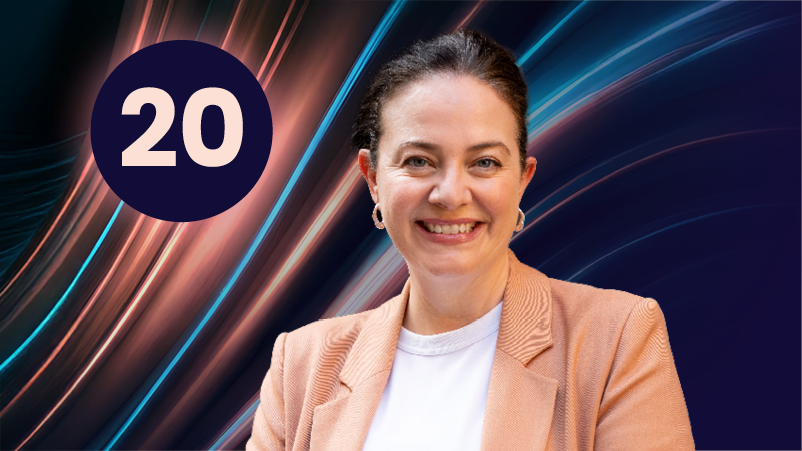
For this not-for-profit marketing powerhouse, the job doesn’t begin with channels or campaigns. It begins with a harder question: Why should anyone care? Here, she explains how she's rebuilt marketing around that principle, raising more than $100m annually.
“The biggest misconception is that working in a charity is easier,” she says. “In reality, the challenge is greater; we’re asking people to give without a product or service in return, relying entirely on trust, connection, impact and purpose.”
At Sydney Children’s Hospitals Foundation (SCHF), that challenge isn’t theoretical. It sits at the centre of every decision.
“It’s about trust – because in marketing, especially for charities, trust is the true currency. Without it, no message, story or channel works.”
Since joining in 2020, Ferguson has rebuilt marketing around that principle, transforming SCHF from a fragmented, largely invisible organisation into one of Australia’s most recognised and reputable charities, raising more than $100 million annually.
Innovative marketing
When Ferguson arrived, SCHF had a 40-year legacy, but little in the way of a unified brand. There was no clear identity, minimal awareness, and no single narrative to bring supporters together.
“Today, SCHF speaks confidently with one united brand voice – a transformation I am privileged to lead,” she says.
That change began with a full-scale rebrand in 2021. “One of our core strategic goals is to build awareness and become the charity of choice for all Australians,” she says. “This required more than a simple refresh. After extensive research and analysis, it became clear we needed a comprehensive rebrand to unlock SCHF’s full potential.”
The transformation introduced a “compelling narrative, a distinctive brand mark, an accessible visual identity, an optimised digital experience, and a powerful case for support” – creating a cohesive platform for growth.
The first brand campaign then launched in April 2023 and has continued with a TVC, above‑the‑line activity, paid media, and a strong push into earned and digital channels. From a standing start of 0 per cent unprompted awareness and 23 per cent prompted awareness, SCHF has grown to 13 per cent unprompted and 36 per cent prompted awareness at the end of 2025.
The brand has also been amplified through high-profile partnerships with the Sydney Swans, Western Sydney Wanderers, Vivid Festival, City of Sydney Christmas and Sculpture by the Sea, extending reach and relevance well beyond traditional fundraising channels. SCHF is now generating millions in unsolicited revenue, a direct reflection of stronger brand presence and deeper emotional connection with supporters.
“Our brand continues to evolve, including a refined 2026 tagline shaped by audience insights. This program is driving awareness, acquisition, and long‑term loyalty, positioning SCHF as the charity of choice for more Australians,” says Ferguson.
The biggest misconception is that working in a charity is easier. In reality, the challenge is greater; we’re asking people to give without a product or service in return, relying entirely on trust, connection and purpose.
Effective marketing strategy
Behind the brand transformation is also a fundamental shift in how marketing operates. Ferguson met with a fragmented marketing team that was reactive and heavily dependent on manual workflows when she first arrived. To lift performance and enable growth, she led a complete overhaul of the operating model, underpinned by clarity, consistency and modern marketing practice.
“We began by establishing a centralised marketing function with clear accountability, transparent prioritisation, and simplified briefing processes,” she says.
At the same time, new disciplines across brand strategy, content, digital optimisation and marketing operations were introduced, alongside agile ways of working to improve responsiveness without losing strategic focus.
One of the more recent significant changes has been the integration of AI into everyday workflows. In 2024, SCHF launched an internal AI Content Assistant to support fundraising teams in creating consistent, on-brand communications, reducing bottlenecks and lifting quality. AI is also being used to identify and match grant opportunities, extending the impact of marketing beyond communications into revenue generation.
“These changes have created a modern, empowered, and high‑performing marketing team. We now operate with greater clarity, speed, and confidence, fostering more effective fundraising and marketing across SCHF and supporting our mission with work that is consistently strategic, cohesive, and impactful,” says Ferguson.
Discerning decision making
Operating in the not-for-profit sector requires a different level of financial discipline, and a willingness to challenge conventional thinking.
“Non-profits often operate within the ‘starvation cycle,’ where low costs are equated with impact. I actively challenge this mindset,” continues Ferguson. “Sustainable growth requires thoughtful investment in marketing, technology, and data, just as it does in any high‑performing organisation.”
One of Ferguson’s most significant decisions was to reallocate a substantial portion of paid media investment into long-term digital and data capability. Rather than continuing to optimise reach through advertising, funds were redirected into upgrading CRM systems, building a marketing automation platform, and developing a data lake. These are foundational elements of SCHF’s Supporter for Life strategy.
This meant accepting a short-term reduction in paid media visibility. To offset this, the team expanded earned media and partnerships, maintaining reach and credibility without relying on large media buys. The decision required strong alignment across the organisation.
“I demonstrated that while paid media delivers visibility, investing in modern technology and data fundamentally increases efficiency, personalisation, and philanthropic return over time,” she says. “This decision reflects my commitment to disciplined, strategic resource allocation, breaking outdated assumptions, building organisational strength, and ensuring SCHF is equipped to deliver the greatest possible impact for sick children and their families.”
Customer & market smarts
A defining shift came from insights gathered through the organisation’s quarterly RepTrak research, which revealed donors responded more strongly to a unified story than to individual hospital campaigns.
“A powerful example of how we’ve deepened our understanding of supporters – and translated those insights into measurable brand and business impact – is the way we reshaped our entire fundraising model using market research, particularly our quarterly RepTrak survey,” she points out.
Historically, SCHF ran separate campaigns for Sydney Children’s Hospital, Randwick (Gold Dinner/Telethon) and The Children’s Hospital at Westmead (Bandaged Bear).
“While these campaigns had strong heritage, consumer insights revealed a critical opportunity. RepTrak data showed that when people understood SCHF fundraised for both hospitals under one unified effort, our reputation score lifted and likelihood to donate increased significantly. Donors connected more strongly when they saw the collective impact of supporting the whole Sydney Children’s Hospitals Network, rather than individual sites.”
This led to a major strategic pivot. Separate legacy campaigns were consolidated into two large-scale Appeals, the Christmas Appeal and the Sydney Sick Kids Appeal, enabling SCHF to tell a single, emotionally compelling story.
The results have been extraordinary. The Christmas Appeal grew 176 per cent within two years, while the Sydney Sick Kids Appeal increased by 494 per cent year-on-year and has sustained that performance.
“In the For Purpose sector, donors give not for a product, but for hope. Our research showed that patient stories were the strongest driver of emotional connection, particularly when told in the voices of treating clinicians and parents. Images showing recovery – not crisis –were most effective in inspiring optimism. And surprisingly, stories featuring older children resonated more deeply than those of premature or very young babies,” says Ferguson.
By embedding these insights, SCHF has strengthened trust, deepened engagement, and driven sustained growth.
Data-driven decision making
Data has also reshaped how SCHF thinks about growth at a systemic level. While acquisition programs were bringing in tens of thousands of new donors each year, analysis revealed a critical weakness: Only 35 per cent of donors were making a second gift.
This insight led to the creation of the ‘Supporter for Life’ strategy, a transformation program focused on lifetime value rather than one-off transactions. In response, Ferguson established a dedicated Donor Experience Team within marketing to address retention from a data-driven, holistic perspective.
“Historically, SCHF operated in a product- and channel‑led model, where donors were engaged based on internal program needs rather than their personal motivations or behaviours. As a result, many supporters received fragmented experiences. For example, a regular giver who loved community stories might never be invited to a relevant community event, simply because they belonged to a different fundraising product,” she says.
The new strategy uses segmentation, journey mapping, financial modelling and qualitative insight to design more personalised and coherent supporter experiences. Already, it has delivered new governance structures, improved segmentation, and embedded a test-and-learn culture across the organisation.
“The next phase is even more ambitious. We are building an AI‑powered, automated marketing engine that uses predictive modelling and micro‑segmentation to deliver hyper‑personalised communications at scale, driving deeper emotional connection, improving retention, and increasing lifetime value,” she says.
“Through Supporter For Life, we are redefining effectiveness by putting supporters at the heart of our strategy, and the business impact is already clear.”
Commercial acumen
Under Ferguson’s leadership, marketing has evolved into a major commercial growth driver for SCHF. Over four years, that shift has contributed to a 128 per cent increase in revenue and helped the organisation surpass the once-unimaginable milestone of raising more than $100 million in both FY24 and FY25.
A central focus has been the long-term value of donors, not just acquisition. “Recognising that sustainable growth depends on retention, we shifted strategic priority toward donor journeys and lifetime value,” Ferguson says.
That approach reshaped how the organisation communicates with supporters, introducing more personalised engagement, redesigned communications and structured second-gift pathways designed to strengthen relationships over time.
The impact has been significant. Donor retention increased from 35 per cent to 48 per cent across three years, while average gift value also improved.
At the same time, SCHF invested heavily in the systems and capability needed to scale growth more effectively.
“The rollout of our upgraded CRM and marketing automation platforms enabled more sophisticated segmentation, testing, and personalisation, driving strong conversion, upgrade, and retention outcomes across every program,” Ferguson says. “Enhanced digital optimisation and insight-led decision-making also contributed to significant growth in unsolicited giving, strengthening revenue resilience.”
Together, these changes have repositioned marketing from a support function to a strategic commercial engine helping drive sustained growth and long-term philanthropic impact.
Business & leadership impact
Ferguson’s influence extends well beyond marketing. During a six-month period as acting CEO, she led the development of SCHF’s FY24–FY26 Strategic Plan, setting a new growth trajectory and shifting the organisation from reactive fundraising to a long-term, donor-centred model. She now chairs the development of a 10-year fundraising strategy, a program designed to fundamentally reshape how SCHF generates and distributes funds.
At the same time, Ferguson has played a key role in shaping organisational culture and capability. From leading the Employee Value Proposition to guiding digital transformation across CRM, AI and data systems, her work has strengthened alignment across the organisation and contributed to SCHF being recognised as an AFR BOSS Best Place to Work and a certified Great Place to Work.
Certainly, for Ferguson, building capability is as important as delivering results. “I am deeply committed to building a bold, learning-led, high-performing marketing culture, one that embraces change, seeks improvement, and feels energised by possibility.”
That culture is grounded in both performance and purpose, as well as “kindness, transparency, and shared purpose,” she says.
Ferguson has championed a democratised approach to AI, enabling teams across the organisation to adopt new tools and ways of working, while also fostering an environment built on kindness, transparency and shared mission. Through structured development, external learning, and a focus on continuous improvement, Ferguson is building a team that is not only high-performing, but future-ready.
That mindset is shaped by the unique pressures of leading marketing inside a purpose-driven organisation, where trust and emotional connection are critical to growth.
Asked the biggest misconception others have about her role, Ferguson says people often assume working in a charity is easier. “In reality, the challenge is greater; we’re asking people to give without a product or service in return, relying entirely on trust, connection and purpose.”