


CMOs of the Year 2026 #7: Pete MacGregor
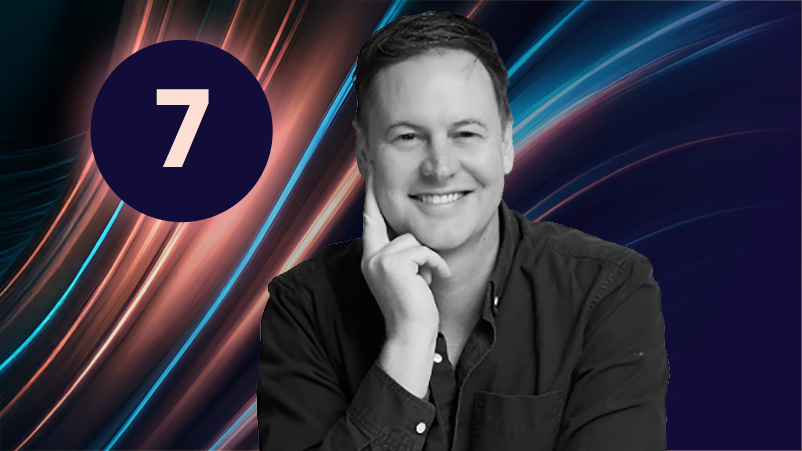
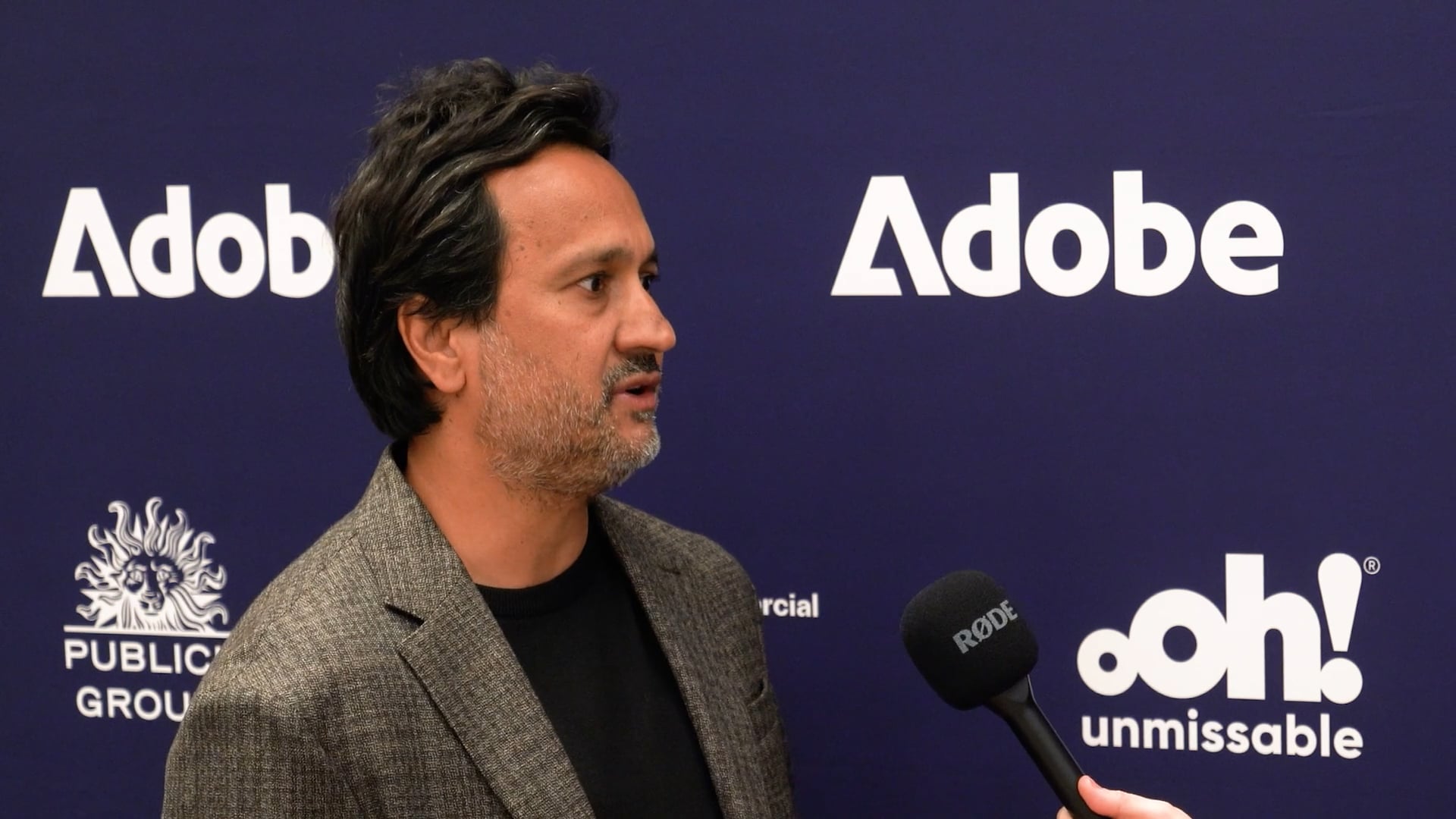
It’s one of the more controversial trade-offs a CMO has made in the last year, but transitioning to an AI-enabled, in-house creative and marketing engine has not only reduced speed to market from weeks to days and cut costs down, it’s lifted testing capability as well as creative effectiveness for the value-driven telco. It’s just one part of this marketing leader’s multi-pronged efforts to ensure marketing is a commercial growth engine – he’s also tackled CX programs, realigned ROI from campaigns to customer value, and been on-hand to drive a more simplified operating model and unified strategy, to name just a few others.
Pete MacGregor’s personal mantra is to “be a radiator, not a drain”. It’s a leadership style that had the whole company and marketing team energised behind last year’s growth strategy – and saw them nail it. This mantra is so palpable, MacGregor’s team even made him a t-shirt with that logo, which he wears with pride.
“Radiators lift the room. Drains kill momentum. In marketing, where you’re constantly balancing risk, scrutiny and pace, energy is a multiplier,” the Amaysim CMO says. “If you create the right environment where people feel encouraged and backed, you get better insight, greater ideas, faster execution. And that’s where incremental growth lives.”
This kind of energy also encourages the team to take big, calculated swings. “But not just for the sake of it; it’s about creating momentum and belief in the team to go after bigger, bolder customer driven ideas,” MacGregor says.
Innovative marketing
The Australian telco market is highly commoditised, with low differentiation, heavy price discounting and heavy customer apathy. As MacGregor puts it, customers struggle to distinguish between providers, resulting in weak brand salience and inefficient acquisition.
Against this, when he arrived at Amaysim two-and-a-half years ago, MacGregor found a marketing team that was too fragmented, had too many ideas, and faced inconsistent cut-through and sub-optimal ROI.
“We are a challenger brand and we need to stand out! We also targeted everyone … and needed to get back to a core target market and customer persona,” he says.
This ambition led MacGregor to redesign the marketing model around tentpole campaigns anchored in distinctive assets, high-attention media and consistent language. It’s all about cutting through category apathy of “I know I pay too much but don’t know what to do next”.
Having first realised the power of one big overarching idea – ‘The Escape Plan’ – the team this past year launched its ‘Escape Your Pricey Telco’ play, led by AI-powered creative to maximise speed. They turned the latest campaign execution around in just one week, a process made possible by integrating creative, media and insights into one operating rhythm to ensure each campaign is both creatively distinctive and commercially effective. Alongside this, the team has adjusted target customer personas and demographics to narrow focus.
“We found that while it was a slightly higher CPA for this audience, this target customer set had an 18 per cent better retention rate, so the customer lifecycle margin contribution value was 23 per cent better,” MacGregor says. “We’re continuing this commercial approach into the next financial year.”
In complement, the team has shifted media investment toward premium environments such as YouTube, sport, radio, where competitive customers are, and completely removing low-performing channels.
It’s all fed into a step change in unaided brand awareness, up 4 percentage points year-on-year, plus advertising recall that’s 44 per cent higher versus pre-AI creative and up 18 per cent in the last year. Other wins include new connections, market share gains in the retailer space against all telcos, and total revenue lift.
Marketing is a growth engine, not a cost centre. Simply, this comes down to one big thing: Commercial proof. Boards expect marketing to clearly show how it drives revenue and profit looking at the P&L level.
Effective marketing strategy
For MacGregor, traditional agency-led production models were too slow, costly and disconnected from real-time customer insight. “This limited our ability to test, learn and scale creative effectively across multiple brands,” he continues.
It led him to transition Amaysim to an AI-enabled, in-house creative and marketing engine, embedding AI across creative production, asset scaling (including hundreds of variants quarterly across retail, supermarkets and digital via automation tools like Canva), insight loops, and across three brands: Amaysim, Onepass and ColesMobile.
“We upskilled any marketing team member who wanted AI training through structured (role specific) courses and redesigned workflows so marketers could execute end-to-end without reliance on external agencies or data teams,” he says. “This means an individual can execute something end to end instead of relying on multiple different areas. A huge benefit of this was significantly increased job satisfaction, ownership of the work and I could see pride across the teamies who owned their activity end-to-end for the first time.”
As noted above, creative effectiveness also improved. “Many agency owners/staff criticised me personally for our AI work. In the end, it resonated with customers, was distinctive and consumers remembered it,” says MacGregor. “That’s important for a brand our size with limited budget. We can’t spend our way to memorable ads like the market’s biggest competitor.”
Velocity was the other huge win. Production timelines reduced from 3 months to weeks and even a few days for campaign and hero TVC work. Of course not all work landed as expected, which is why MacGregor is also keen to instill agility across the team. “Our new AI tools meant we could pivot specific variations and launch new work in days and hours, if really needed,” he adds.
And there’s the annual cost savings with AI tools, further helping support incremental sales growth year-on-year.
Discerning decision making
While the tools enable, culturally the emphasis is on making deliberate, and at times controversial trade-offs, to simplify and focus investments.
“Our previous marketing Opex investment model was overly complex, spread across too many channels and tools, limiting effectiveness and slowing execution,” says MacGregor. “Resources – budget and people – were not optimally aligned to highest-return opportunities.”
Big-ticket decisions included media simplification via MMM (the science) and the team’s experience (the art) to eliminate underperforming channels and zoom in on higher-performing media such as BVOD and SVOD, YouTube, radio and search. Martech consolidation has been another focus, and Amaysim has unified to one data cloud, gaining annualised savings. These were subsequently reinvested into paid media.
“Our CVM campaign team can now execute campaigns end-to-end versus going through three or four different teams, which would take weeks,” says MacGregor.
Coupled with the operating model reset and AI-powered in-house capability, Amaysim has chalked up double-digit gains in switching customers, reinvested savings into growth, and gained speed to market. Overall, it’s a simpler, faster and more scalable marketing engine, according to MacGregor.
Notably, customers love the business, with nine in 10 stating they have recommended Amaysim to their family or friends.
Customer & Market smarts
As a company, Amaysim follows the company purpose, ‘To be courageous customer champions’. But fragmented and underutilised customer insight led to suboptimal business prioritisation and missed customer and commercial opportunities and again needed a rethink.
MacGregor has now embedded a Voice of Customer system as a core business driver, unifying customer NPS, churn, UX and feedback into a single prioritisation framework and monthly syncs. Alongside this, clear personas across all brands help the team be clear on who its customers are, how to design journeys, marketing and propositions.
He’s also commenced direct frontline immersion visits to capture unfiltered insights. “I go to Manilla every six months to hear from them direct, and I’ve asked teams to hold me to account each time I visit to improving the customer pain points/friction they raised in the last visit.”
In addition, MacGregor has embedded customer feedback into weekly business rhythms, and customer quotes get added to the ‘The Goss’ internal newsletter and key senior leadership team decision-making sessions.
Thanks to these efforts, Amaysim has become Australia’s second most trusted telecommunications provider, per Roy Morgan 2025 data, and gained lifts in NPS. For MacGregor, unlocking great insights around customers has been another big win that’s delivering outcome dividends.
Data-driven decision making
Key to making marketing investment decisions worthwhile is linking directly to enterprise financial outcomes.
“Marketing is a growth engine, not a cost centre,” MacGregor comments. “Simply, this comes down to one big thing: Commercial proof. Boards expect marketing to clearly show how it drives revenue and profit looking at the P&L level.”
But to get his team there, he had to overcome limited confidence in ROI and constraints in the ability to unlock growth investment. One of the reasons was decisions were often optimised to channel or campaign metrics, rather than customer value, margin and payback.
“We reframed marketing through a CFO-grade commercial lens, building an end-to-end analysis linking, CPA and CLV to revenue, gross margin and EBIT contribution,” he explains. “This created a single view of incremental return by channel, segment and investment level, enabling us to quantify acquisition quality and lifetime value, not just volume; compare returns across channels and growth initiatives; and set clear hurdle rates and payback thresholds for investment decisions.
“Crucially, this shifted the conversation from ‘what we are doing’ to ‘what delivers the highest incremental return’, enabling more disciplined and confident opex allocation.”
Commercial acumen
Off the back of this, MacGregor points to new connections, online growth year-on-year, improved overall marketing efficiency and return on marketing spend, and improvements in customer quality and company margin.
“Most importantly, this repositioned marketing as a trusted commercial driver of profitable, scalable growth, with investment decisions grounded in financial impact, not initiatives and ‘marketing metrics’ that aren’t connected to the business,” he says.
“I repositioned marketing to be directly accountable for customer, revenue and margin outcomes, integrating brand, performance, CX and CVM into a single growth system. We built a full-funnel model spanning demand generation [tentpole campaigns], conversion [digital optimisation], and base growth [cross-sell, lifecycle and retention], ensuring every dollar worked across the lifecycle.”
Business & Leadership impact
Culturally, the biggest shift has been moving from a business trying to do everything, to one aligned on a few bold growth bets and backing them with simplified capital, capability and prioritisation.
“When I stepped into the role, the business was trying to do too much with too little focus. We had 18 competing Big Rock priorities, fragmented Martech, heavy agency reliance, and inconsistent alignment across marketing, product, tech and finance,” MacGregor says. “This diluted impact, slowed execution, and limited our ability to make bold, high-return growth bets. There was a clear need to simplify strategy, sharpen prioritisation, and align the organisation around where growth would come from.”
To do this, MacGregor stepped beyond the traditional CMO remit to reshape both strategy and how the business operates. Take simplifying and aligning enterprise strategy. “I led the build of our ‘Plan on a Page’ strategy, distilling strategy from 18 priorities down to a focused set of core growth pillars,” he explains.
This is supported by quarterly prioritisation and resourcing forums across the full leadership team, ensuring clear trade-offs on what it will and won’t do, along with alignment of resources to the highest-impact initiatives. MacGregor also cites organisation-wide focus on execution, plus a shift from activity-led to impact-led business cased execution.
A key relationship has been with the CFO, and MacGregor has repositioned marketing as a commercial growth engine, building investment cases in CFO terms. That’s about linking marketing activity to customer margin, P&L and lifetime margin and EBIT contribution, and demonstrating clear incremental returns using MMM, CPA and CLV.
MacGregor also attributes effectiveness to concentrated efforts on voice of customer and tying that to the strategy, ensuring customer insight shapes product roadmaps through to CX prioritisation and investment decisions.
“This aligned product, CX and marketing around a shared view of where customer value and growth sits,” he says. A key example is NBN growth, where a sizeable majority of sales came from the existing base and minimal media investment.
In concert, he’s been working to build a ‘Playground for Growth’ culture, extending beyond marketing to influence the entire business. To shore up capability at scale, Amaysim has invested in an accredited Mini MBA in Marketing to lift commercial thinking and collaboration, plus kickstarted AI training programs, with 18+ team members completing bespoke upskilling across creative, digital and product.
Internally, a learning system across the organisation inspired weekly forums connect teams to debate creative, CX and performance using a creative x impact framework, while ‘Weekly Numbers’ sessions share real-time performance, linking activity to commercial outcomes and building transparency across teams.
Beyond marketing function, MacGregor also plays a key role in shaping company culture as the YourVoice champion and SLT representative for the Culture Club, helping drive engagement, feedback loops and cultural initiatives across the organisation.
“I reinforced performance through recognition and culture rituals, celebrating impact – such as Marketer of the Year, Biggest Swing, Ninja Award – and actively championing talent across the business.”
Thanks to these efforts, marketing, sales and CX achieved the highest engagement scores in Amaysim, and MacGregor says he has a more capable, agile and commercially focused team.
“I am proud of helping build a culture across the organisation where teams are empowered to take big swings, equipped with future-ready [Data/AI] skills, and are accountable for delivering commercial outcomes,” he concludes.