


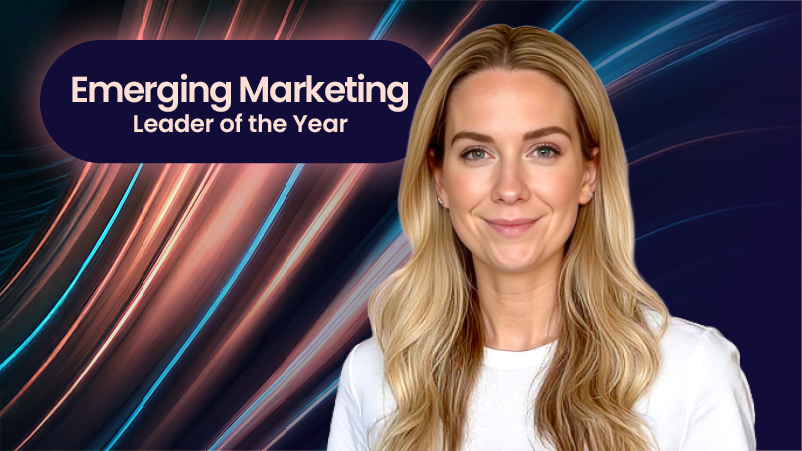
Emerging Marketing Leader of the Year 2026: Grace Eadie
Equal parts strategist and orchestrator: That’s how this year’s Emerging Marketing Leader of the Year, Grace Eadie, describes what it took to realise the crowning achievement of Wesfarmers Health’s marketing team over last 18 months: Its highly impactful ‘Anything Menopause’ program of work. For this marketing leader, the most meaningful – and commercially smart – marketing comes from genuinely understanding what’s preventing customers from engagement and where their problems lie. To do this, she’s corralled data, insight, cross-functional team collaboration and marketing momentum to deliver what’s fast becoming an enduring brand platform and growth engine for the retailer.
Budding CMO in the making, Grace Eadie, wishes more marketers would talk to a ‘customer problem’ more often.
“More often than not, marketers start with the business challenge to solve: Drive sales, launch a product or hit a growth target. I'd love to see more marketers pause and ask, ‘what customer problem are we actually trying to solve?,’ the head of marketing for Wesfarmers Health says.
“At Priceline Pharmacy, some of our most meaningful work has come from making that shift then reviewing what our role is to play and support that problem. When you genuinely understand what's preventing customers from engaging, marketing naturally becomes bigger than communications. It starts shaping products, services, partnerships and the entire customer experience. In my experience, the strongest commercial outcomes come from solving the right customer problem first.”
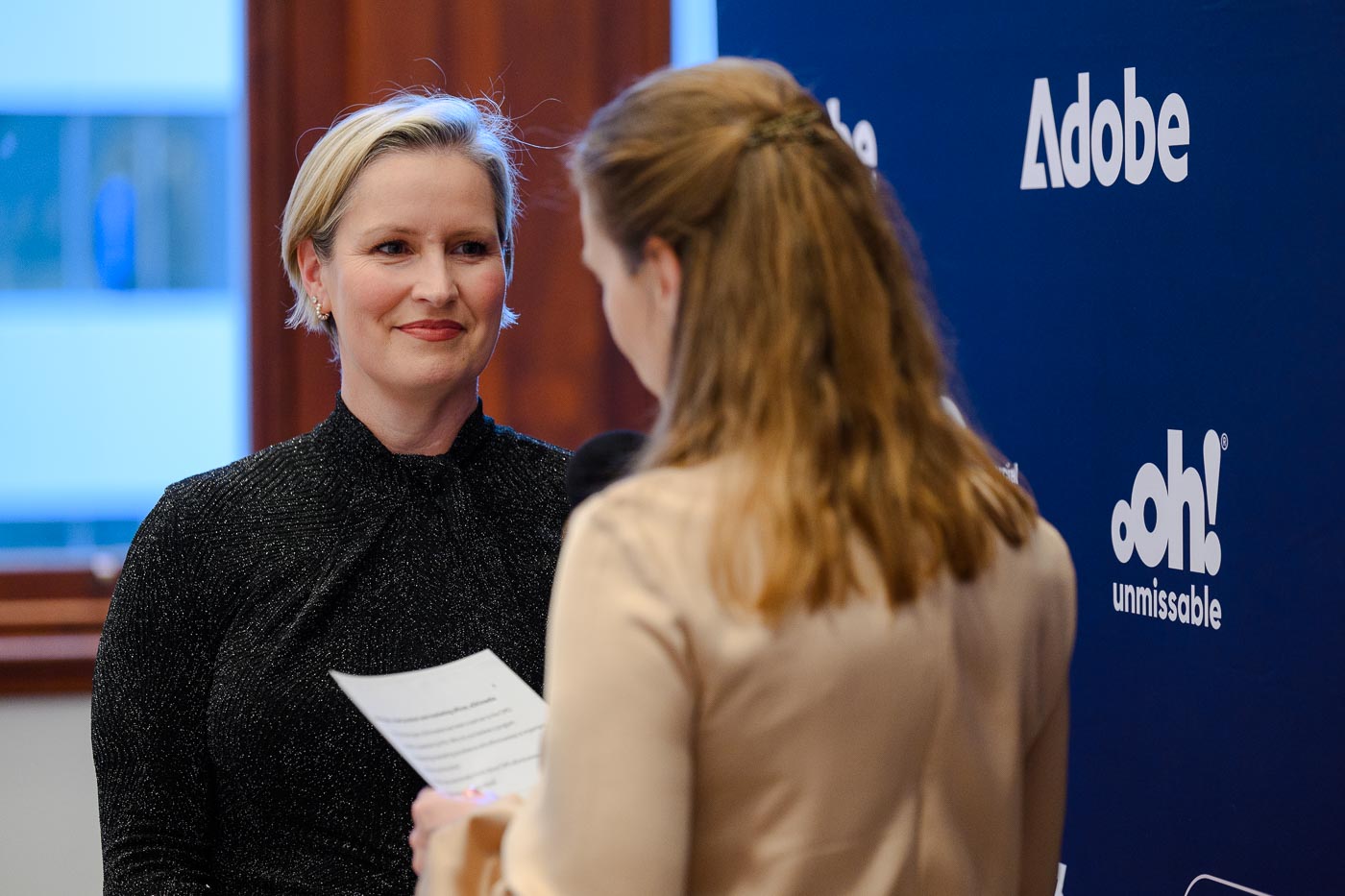
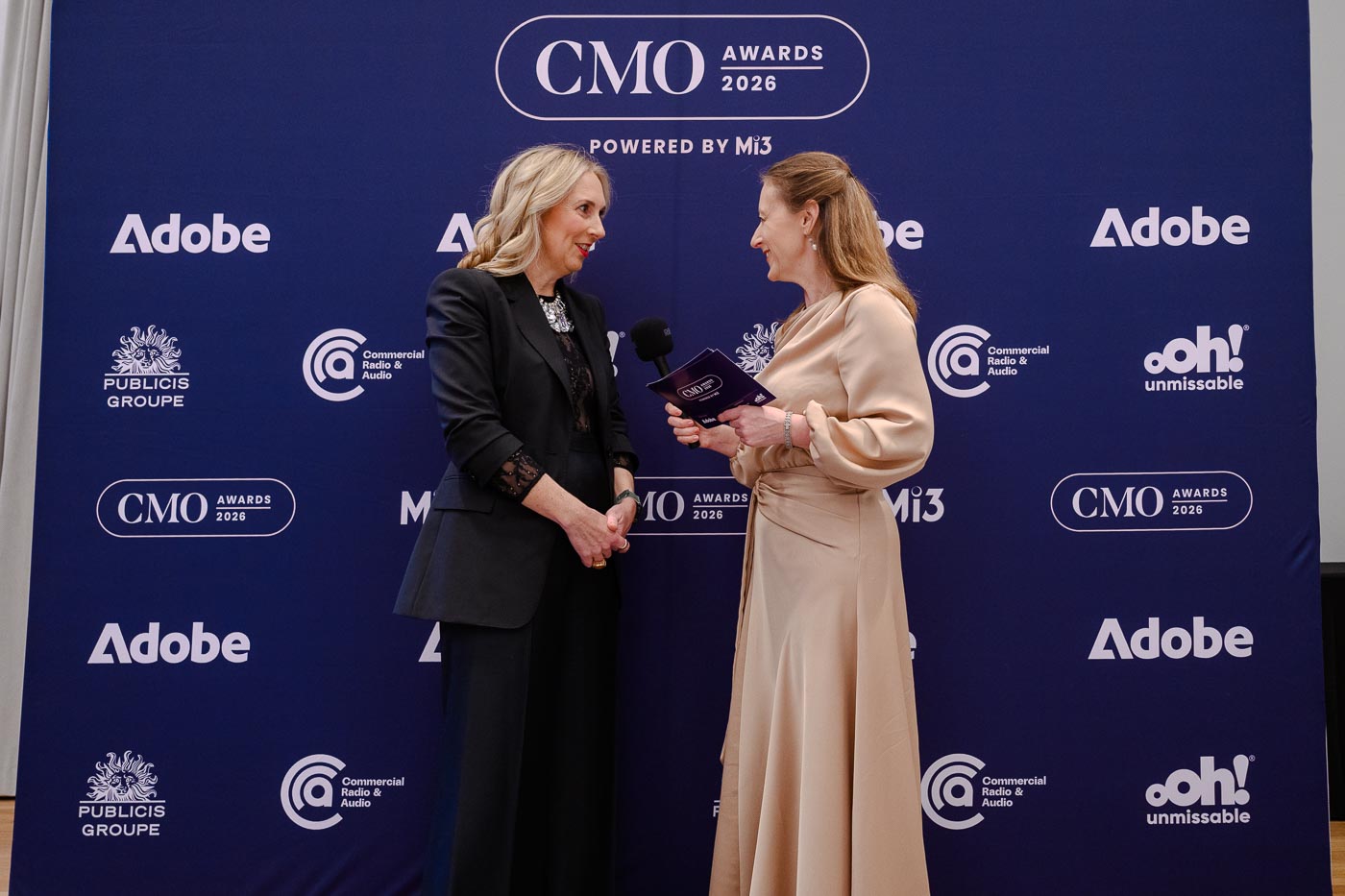
It’s this combination of customer and marketing smarts, commercial acumen, proactive attitude and leadership sensibility that saw Eadie awarded the inaugural Emerging Marketing Leader of the Year trophy, presented by Commercial Radio & Audio, at this year’s CMO Awards.
Eadie has more than 14 years' experience delivering brand, growth and customer strategies across retail, healthcare, QSR and ecommerce. At Wesfarmers, she leads a 16-person marketing team responsible for campaigns, trade, health programs and local area marketing across Priceline Pharmacy, atomica, Instant Scripts Pharmacy Health Hub and Pharmacy4Less, supporting a national network of more than 500 pharmacies and stores.
Before this, Eadie founded and successfully exited her own ecommerce business, shaping an entrepreneurial approach that continues to influence how she leads today. Her experience also spans ASX-listed organisations, founder-led brands and franchise networks, including REA Group and Grill'd.
When asked what makes her tick, she replies that she enjoys bringing clarity to complex business challenges, connecting customer insight with commercial strategy to identify growth opportunities and deliver measurable outcomes.
Innovative marketing
Most recently, Eadie led the development and delivery of Anything Menopause, an Australian-first health platform that repositioned Priceline Pharmacy's role in women's health through pharmacist education, strategic partnerships and retail innovation. In complement, she led ‘Fire Up’, a national consumer advocacy campaign with News Corp to elevate the conversation around menopause and improve awareness of women's health.
Anything Menopause is a multi-pronged menopause health program designed to make menopause care simpler, more affordable and easier to access. More than half the population will experience menopause, and it’s identified as a $667 million category opportunity. Yet it remains one of the most stigmatised and underserved health categories in Australia.
Armed with killer stats like the fact 3 million Australian women are going through menopause at any one time, and that 1.2m know more about changing a tyre than the 30-plus symptoms associated with this female transition, the marketing team spent 17 months building a program wheel with many spokes to close the gap.
“The idea emerged while building our FY25 health marketing strategy and while menopause featured as a component of the plan, when I presented it to our CCO I was challenged on ‘what is the single biggest customer problem we are uniquely positioned to solve?’” Eadie explains. “That question led us to undertake deeper customer and market research, further identifying menopause as a significant unmet need and an opportunity to strengthen Priceline's health credentials.”
Building on the initial strategic direction, Eadie worked closely with Wesfarmers GM marketing, Corrina Brazel, to evolve the concept into a long-term program that embedded education, pharmacist capability and retail innovation across Priceline's national network. This demonstrated how marketing could move beyond campaign delivery to become a strategic driver of customer growth and business transformation.
“My role was equal parts strategist and orchestrator. I led the development and execution of the program overall – not just the marketing – aligning teams across Wesfarmers Health behind a shared growth agenda,” she says.
Together with Jean Hailes for Women’s Health and Wesfarmers’ chief pharmacist, an Australian-first CPD-accredited menopause training program for pharmacists was rolled out, supported by symptom guides, in-store toolkits and dedicated menopause bays to simplify customer decision making.
Anything Menopause now operates across more than 400 Priceline Pharmacies, embedding menopause support into everyday care. At time of CMO Awards judging, more than 3500 frontline staff had been trained, triggering a 30 per cent jump in confidence to discuss menopause with customers. Wesfarmers had also seen a 63 per cent increase in dispensary sales among a number of other growth outcomes through the funnel and including advocacy.
The program was also recognised at the CMO Awards with a highly commended in the Best Growth Initiative of the Year.
“We combined market analysis, proprietary research and customer insight to uncover a significant unmet need, helping us see menopause not as another retail category, but as an opportunity to reposition Priceline Pharmacy's role in women's health and also position marketing as a growth driver in the business than a support function,” comments Eadie. “My favourite use of data is when it helps answer a bigger business question, not just a marketing one.”
I've learned leadership isn't about having all the answers – it's about creating clarity in ambiguity, bringing people together, and leaving teams stronger than you found them. That philosophy has shaped every stage of my career and continues to guide how I lead today.
Data-driven decision making
According to Eadie, a common assumption in retail persists that marketing’s role is to support commercial decisions made elsewhere. “Anything Menopause is my clearest example of challenging that - using data to identify a growth opportunity the business had not yet fully recognised, build the investment case and shape the strategy that unlocked it,” she continues.
To get to the nugget of the program, Eadie and the team delved into market participation and unmet needs across women’s health categories to identify where the largest growth opportunities existed.
International and emerging research was a key input. The UK Visibility Report revealed 94 per cent of women want menopause-friendly labelled products, yet 66 per cent cannot find them. The Menodoctor Survey Australia 2024 found nearly three in four women do not realise they are experiencing perimenopause or menopause despite 85 per cent experiencing symptoms. The 2024 Australian Senate inquiry into menopause further reinforced the scale of the issue, highlighting widespread gaps in awareness, clinical education and access to treatment.
To better understand the barrier locally, Wesfarmers Health commissioned proprietary YouGov research which revealed 51 per cent of women avoid discussing menopause and 44 per cent do not know where to seek trusted support.
“The insight was clear: The issue was not demand but access to credible guidance and education,” Eadie says. “This evidence base enabled marketing to build the case for a multi-year menopause platform, aligning pharmacy operations, digital health, wholesale, merchandise, ecommerce, loyalty, people and culture and health supplier partners behind a shared growth agenda. In doing so, marketing identified, quantified and led a new health growth opportunity for the organisation.”
Discerning decision making
As already mentioned, understanding customers is a discipline Eadie has worked to embed into how her team thinks and operates every day, building always-on customer intelligence into weekly rhythms. Among the tools at their disposal are live customer dashboards tracking NPS, brand health and shopping behaviour, all reviewed weekly to inform decisions in real time. Workjam then captures real-time feedback directly from store teams on campaigns and programs as they land.
“It’s an early warning system to act quickly when something isn't working rather than waiting for post-campaign analysis,” she comments. “Understanding the broader economic context customers are navigating is equally important. As cost-of-living pressures intensify, NPS and brand health data consistently flag price perception as a key driver of customer sentiment. This insight directly informed the development of clearer retail value mechanics. The same customer-first lens drove expansion of health services to better reflect what customers need from a pharmacy beyond products.
“The common thread is moving from snapshot thinking to a continuous, embedded understanding of the customer – and using that to make faster, more relevant and more impactful decisions.”
Effective marketing strategy
Elsewhere, Eadie has been turning her attention to how to ensure an already stretched team can find more systematic alignment and ways of working to tackle increased brand and portfolio needs. Today, Wesfarmers Health represents a multi-brand portfolio including Priceline, atomica, Instant Scripts Pharmacy and Pharmacy4Less. Bringing all these under one roof required the marketing function to evolve rapidly under existing headcount and budget constraints.
“I saw an opportunity to build a more scalable team and do more with less, make better decisions faster and embed customer-first thinking into how the business plans and executes marketing,” says Eadie.
So she dived in, developing campaign Power BI dashboards connecting sales, media and channel performance into automated reporting for the brand and supplier partners, replacing manual processes and enabling faster and more commercially informed decisions. For the first time, marketing performance could be viewed in a single environment.
When the local area marketing team was then reduced, Eadie led the team to redesign into a centralised group LAM model across Priceline’s network of 400 pharmacies. Inbox queries dropped by 85 per cent, while available, self-serve templates increased by 160 per cent. It’s improved speed, consistency and brand governance while reducing operational load for both stores and marketing.
In addition, independent Deloitte media audits to benchmark agency performance were introduced for the first time. “This created a stronger commercial discipline around media investment and repositioned marketing as a measurable growth driver rather than a cost centre,” Eadie says.
The most enduring change this past year was introducing a customer calendar as the cross-functional planning foundation, shifting the business from product-and-price-led trade planning to one anchored in customer moments.
“Together, these initiatives repositioned marketing from a reactive execution function into a proactive, insight-led growth engine – shaping commercial decisions, improving operational efficiency and supporting a rapidly expanding multi-brand retail network,” she says.
Leadership credentials
As can be seen from these example, Eadie isn’t afraid to challenge the status quo. “The clearest thread running through my career is leading through transformation - stepping into ambiguity and situations with no clear playbook then building something stronger than what existed before,” she agrees.
Earlier in her career while at Grill'd and during the Covid-19 pandemic, she inherited a 70 per cent dine-in business across 140 restaurants with no roadmap for what came next. Rather than waiting for certainty, Eadie led the rapid evolution of its marketing strategy, communications and channels to guide customers and staff through constantly changing restrictions.
At the same time, the QSR debuted new distribution channels including its own delivery platform, shifting 5 per cent of aggregator delivery orders to a more profitable channel. Despite significant disruption, the business achieved +10 per cent year-on-year growth in 2020 when much of the hospitality sector was collapsing.
More recently, Eadie returned from parental leave in 2024 to an expanded remit and has since absorbed additional brands mid-restructure while onboarding several new team members.
“Rather than simply managing through the complexity, I used it as a catalyst to reshape how the team planned, prioritised and delivered marketing, while championing Anything Menopause as a new growth platform,” she says, noting team engagement increased with renewed clarity, stability and confidence.
“Across both experiences, I've learned leadership isn't about having all the answers – it's about creating clarity in ambiguity, bringing people together, and leaving teams stronger than you found them,” Eadie says. “That philosophy has shaped every stage of my career and continues to guide how I lead today.”
As the marketing industry becomes more complex and the pace of change accelerates, Eadie believes curiosity is becoming one of the most underrated skills a marketer can have.
“The marketers who create the most value are those who stay curious enough to ask better questions, challenge assumptions, understand the 'why', and connect customer insight with commercial opportunity and broader business strategy,” she says. “AI can accelerate execution, but it can't replace the curiosity that uncovers opportunities or the judgement to know which ones are worth pursuing.”