Editorial Series

CMO Awards 25

An Mi3 editorial series brought to you by

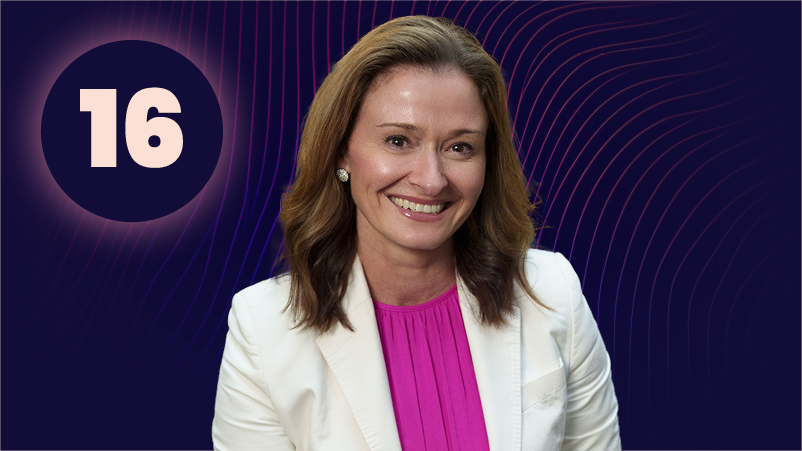
CMOs of the Year #23: Louise Cummins

Louise Cummins, the former CMO of World Vision Australia, doesn’t shy away from making bold decisions.

For her, marketing isn’t just about hitting short-term targets, it’s about creating something that lasts. One of the most significant calls she made as CMO was shifting a company’s focus from immediate performance wins to long-term brand building. It wasn’t easy, but for Cummins, it was necessary to establish a foundation for sustainable growth.

With a degree in Applied Mathematics, Cummins approaches marketing with a unique blend of data-driven insight and creative vision. “Data first,” she says, “to uncover the insights, then unleash creativity to make it unforgettable.” For her, the best marketing is about striking the perfect balance between “brain, heart, and commercial impact.”

Her leadership style? Bold, insightful, and deeply human. And when it comes to what modern marketers need, she’s clear: adaptability. “The ones who thrive aren’t just reacting fast; they’re rewiring how they think, learn, and lead in real time,” she notes, always ahead of the curve in how she shapes her teams and strategies.

Effective marketing strategy 

As World Vision Australia’s CMO, Cummins faced a significant challenge, addressing a decline in brand awareness that had plagued the organisation for over seven years. 

“Between 2015 and 2022, World Vision Australia faced challenges due to inadequate brand investment. Tasked by the CEO to reverse this trend, I collaborated closely with the CFO to develop a robust band investment and ROI model, establishing a sustainable investment structure to support growth.”

To overhaul the marketing strategy, Cummins recruited a new head of brand, built a world-class in-house agency, and secured engagement from the executive leadership team (ELT), CEO, and board on the new brand direction. 

“We launched a new brand reset campaign titled ‘This Means the World,’ which achieved strong staff engagement,” she shares. The new campaign, paired with an enhanced social media strategy, helped the organisation see a significant turnaround.

“We arrested the decline and saw consistent year-over-year growth,” Cummins says. The revamped strategy also saw social media success, including the addition of over one million followers across all platforms and a new TikTok strategy that gained over 200,000 followers within just two months.

A major part of the strategy overhaul was repositioning World Vision’s brand. Cummins explains the key to revitalising the brand was understanding its relevance to Australians. The shift wasn’t just about aesthetic changes, but about connecting the organisation’s mission with the hearts and minds of its supporters.

In addition to the brand campaign, Cummins implemented a complete digital transformation. “When I joined World Vision Australia, I identified a critical gap in digital capabilities, with only two team members connected to digital initiatives. Recognising the need for a full digital transformation, I led initiatives to modernise our marketing and supporter experience [and take the board, exec, and marketing team on the journey].” 

One of the key milestones in this transformation was the implementation of a new CRM system, the creation of a new digital strategy and optimisation team, and the launch of a new customer-first website. Additionally, she led the team through the introduction of a new customer portal and new Child Sponsorship app, enhancing engagement, conversion, NPS and retention. 

“These improvements provided better data insights, allowing us to optimise supporter journeys more effectively.” 

These initiatives didn’t go unnoticed in the industry. Cummins and her team received accolades including: Fundraising Institute Australia 2025 Winner (State) and National Finalist for Best Supporter Experience; AGDA Awards 2024 - Finalist for Redesigned Digital experience; and the Good Design Awards 2024 - Winner for Digital Design.

Building on this success, in 2024, she identified the need to integrate AI to further enhance efficiency. After completing herself, she put key memes of the leadership team through the RMIT AI in Marketing course - and later implemented department-wide AI training. She later set up an AI Champion Group and began rolling out AI-driven pilots to optimise marketing performance, setting the foundation for continuous innovation. 

“This transformation not only modernised our marketing approach, but also embedded a data-driven, customer-first, and AI-enabled culture, driving long-term growth and support engagement.” 

Discerning decision making 

One of the most significant strategic trade-offs Cummins made as CMO at World Vision Australia was reallocating investment from a performance marketing-heavy approach back into  brand building. “Over time, the organisation had become overly reliant on direct response campaigns, neglecting long-term brand equity,” she explains.

To shift this mindset, Cummins knew she needed to take a data-driven and research-backed approach. “I conducted extensive research on global best practices, incorporating insights from Mark Ritson’s brand-building frameworks,” she shares. Armed with this knowledge, she partnered closely with the CFO to make the case for brand investment, aligning both the executive leadership team and the board with her vision.

The challenge wasn’t just about convincing leadership but also managing the short-term sacrifices that would be necessary to build a stronger, more sustainable brand. “This required making tough calls, cutting smaller, low-impact initiatives to fund a more robust brand strategy,” she admits. “We also developed clear brand metrics and improved our reporting framework to better track conversion, retention, and overall ROI.” 

Working with finance, Cummins and her team also introduced quarterly campaign reviews, strengthening alignment between marketing spend and business outcomes. 

“By balancing brand and performance marketing, we created a more sustainable growth model, driving stronger engagement and long-term retention while ensuring financial accountability and strategic impact, resulting in 10-year revenue highs.” 

By balancing brand and performance marketing, we created a more sustainable growth model, driving stronger engagement and long-term retention while ensuring financial accountability and strategic impact, resulting in 10-year revenue highs.

Louise Cummins, former CMO, World Vision Australia

Business influence 

As a member of the Executive Leadership Team (ELT), Cummins has played a pivotal role in shaping the organisation’s strategic direction. One of her key contributions was retiring the previous five-year Strategic Priorities framework and leading the development of a new, more focused five-year organisational strategy.

“This work ensured greater clarity, alignment, and impact across the organisation,” she says, underscoring the importance of strategic coherence in driving long-term success.

Certainly, her influence extends far beyond Australia. Cummins is also a member of the Global Marketing Leadership Council (RDLC), where she has had a significant impact on shaping World Vision’s global marketing strategy. “My involvement in these strategic processes led to improved alignment between local and global priorities,” she notes, which in turn strengthened brand consistency and operational effectiveness worldwide.

One of the most tangible outcomes of this clearer strategic framework was a transformation in the organisation's emergency response capability. “Previously, emergency response and fundraising campaigns took weeks to activate,” she says. 

Through optimising workflows, embedding agile processes, and enhancing cross-functional collaboration, World Vision significantly reduced response times in critical situations. When the war in Ukraine began, World Vision’s response was activated within two days, raising $3 million in Australia alone. Similarly, following the Türkiye and Syria earthquakes, the team mobilised fundraising efforts aligned with field response plans in less than six hours, raising $1 million in Australia alone. 

These quick responses were the result of seamless collaboration between marketing, communications, and field teams, ensuring that media coverage, donor engagement, and fundraising efforts were all efficiently coordinated.

“By driving a strategically aligned, agile, and impact-driven approach, I influenced initiatives well beyond marketing,” Cummins says. “It enhanced World Vision’s ability to deliver critical support when it mattered most.”

Beyond marketing, Cummins also served as the Executive Sponsor for World Vision’s Climate (FMNR) initiatives, driving awareness and funding efforts to regreen communities. Her leadership helped secure high-profile exposure, including a TEDx appearance. Additionally, she played an instrumental role as the Executive Sponsor for the Australian First Nations Peoples (AFNP) programs, supporting the growth of Young Mob, an initiative empowering Indigenous youth. 

Through these efforts, Cummins demonstrated her ability to influence organisational priorities and champion initiatives that have far-reaching societal impact.

Data-driven decision making 

When Cummins joined World Vision Australia, it became clear the organisation was facing significant gaps across all stages of the marketing conversion funnel, particularly in terms of retention. Certainly, a big challenge was the lack of connected data to drive informed decisions. 

“We identified critical issues across all stages of the marketing conversion funnel, including retention challenges, but lacked connected data to drive informed decision-making,” she explains. 

To address this, Cummins led the organisation in partnering with Bain & Company to conduct a comprehensive data deep dive. This partnership uncovered key insights and system gaps that ultimately empowered World Vision to prioritise its efforts more strategically. One of the primary outcomes of this analysis was the creation of a more agile, test-and-learn environment. 

“We leveraged an Agile working environment to run rapid test-and-learn retention initiatives, including bounceback campaigns and improvements in our child sponsorship customer experience,” Cummins notes. The result? A remarkable turnaround in retention, with 2024 marking a 17-year high in Child Sponsorship retention. It’s a clear testament to the effectiveness of data-driven decision-making.

But it didn’t stop there. To further enhance World Vision's marketing capabilities, Cummins and her team overhauled their reporting systems and processes. The goal was to bring greater transparency and accountability, ensuring that every decision was backed by reliable, up-to-date data.

 “We also integrated AI-driven solutions to enhance responsiveness, embedding Azure with our data scene team to optimise customer modelling.” The impact was immediate: By embedding AI, it reduced model development time by 50 per cent and improved accuracy by 25 per cent, “allowing us to deliver more precise, personalised engagement strategies at scale,” Cummins explains.

These strategic, operational, and technological investments transformed World Vision’s approach to marketing, fostering a more data-informed, agile, and effective ecosystem. By strengthening the organisation’s data capabilities, Cummins has set a strong foundation for ongoing growth, driving stronger retention, faster insights, and more meaningful engagement with supporters.

Commercial delivery 

Cummins would be the first to reveal that Child Sponsorship, a cornerstone of the organisation’s fundraising model, was in trouble. After 17 consecutive years of decline, even internal confidence in the product had waned. The challenge was clear: How do you breathe new life into a legacy product when the organisation itself is losing faith?

“The solution: I repositioned and revitalised Child Sponsorship by embedding it into thematic campaigns, making it more relevant, engaging, and emotionally compelling for Australian audiences. By aligning sponsorship with causes Australians care about, we transformed it from a static offering into a dynamic movement.” 

To reinvigorate the supporter base and drive acquisitions, the team launched a series of powerful thematic campaigns. 

A standout was The Wiggles – This Means the World, a culturally iconic partnership that brought a burst of joy and nostalgia, leading to a 34 per cent year-on-year increase in acquisitions. 

The Green Child Sponsorship campaign aligned the brand with climate action, resonating strongly with environmentally conscious Australians and delivering a 25 per cent acquisition uplift in 2024. 

Another impactful initiative was the Disability Campaign, developed in collaboration with Paralympian Dylan Alcott and featuring an in-house produced documentary. It deepened emotional connection and expanded media coverage around disability rights in developing nations. 

Perhaps most striking was 1000 Voices for 1,000 Girls, which mobilised prominent Australian women to champion gender equity. The campaign achieved a 200% lift in acquisitions within two years and exceeded 2024 targets by 400%, becoming so effective it was adopted globally.

The impact was transformational, Cummins notes. Child Sponsorship acquisitions hit a 10-year high as Australians rediscovered a deeper connection to the mission. Internally, the shift reignited belief in Child Sponsorship, re-establishing it as a central pillar of our fundraising strategy. 

Externally, the work was recognised across the industry, earning accolades such as Finalist for Fundraising Excellence at the Third Sector Awards 2024.

“By reshaping the narrative around Child Sponsorship and embedding it into contemporary issues, we reignited donor interest, drove acquisition growth, and restored belief in its impact, both internally and externally.” 

People leadership 

But perhaps the true highlight of her time at World Vision Australia wasn’t  just the commercial success the team has achieved, but it was the people.

“People and leadership have been the highlights of my time at World Vision. With high churn of CMOs prior to my tenure, stabilising the team and fostering a high-performing, engaged culture was crucial to achieving our goals.” 

Rebuilding trust, stability, and a high-performing culture was not just important, it was essential for delivering lasting impact.

That’s why she made it her mission to foster a marketing culture defined by responsiveness, adaptability, continuous learning, and genuine connection. To do that, she introduced a series of practical, people-first initiatives designed to unleash the full potential of the team. 

Headspace Wednesdays created a meeting-free day each week to allow space for deep work, learning, and innovation. The Culture Club, a grassroots initiative, boosted morale and connection through regular, team-led events. Innovation was celebrated through the annual Kaizen Awards, with winners earning the chance to visit field programs and see their impact firsthand. 

Regular Fortnightly All-Ins and Biannual Team Days fostered open communication and continuous learning, with a focus on future-fit skills such as AI, inclusion, and leadership. Targeted development efforts upskilled the team across Agile, AI, digital marketing, compliance, and project management. 

She also restructured the team through a Structured Agile Release Train, aligning people to clear acquisition and retention priorities for sharper focus and faster delivery. Meanwhile, a Ways of Working Scoreboard made team performance transparent, helping identify and address operational bottlenecks early.

The impact of this approach was profound. “We transformed our marketing team into a more engaged, strategic, and high-performing unit” – one characterised by learning, agility and shared purpose. 

“This approach increased marketing team engagement by double digits during my tenure, showcasing the power of a growth-focused, cohesive team in driving success.” 

Shifting this not-for-profits focus from immediate performance wins to long-term brand building wasn’t easy, but for this marketing chief, it was necessary to establish a foundation for sustainable growth. Here, she explains the steps she took to realise this North Star.

CMO Awards 25

CMO Awards 25

CMO AWARDS SPECIAL REPORT
The journey to business growth: How CMOs are rethinking customer engagement
  • Six of our CMO Awards 2025 and CMO50 2022 alumni share how they are rejuvenating their customer journey approaches using data and insight, fresh segmentation, personalisation, tech and AI.
  • In-depth look at the work done by marketing teams across Freedom Furniture, Suncorp, MYOB, IBM, Anytime Fitness and REA Group, to improve responsiveness to customer journeys across the lifecycle and throughout their organisations, driving better engagement and experiences.
  • Hear how marketers are striking a balance between customer preferences and changing behaviours, privacy and governance versus hyper-personalisation at different stages of customer journeys.
  • Supported by CMO Awards Platinum Partner, Adobe, and Gold Partners, News Australia and Publicis Groupe.
Six of our CMO Awards 2025 and CMO50 2022 alumni share how they are rejuvenating their customer journey approaches using data and insight, fresh segmentation, personalisation, tech and AI.
Special Report 2
CMO AWARDS SPECIAL REPORT
From Silos to Synergies: Unlocking the CMO-CIO Partnership
  • What it really takes to transform the CMO and CIO relationship from antagonism and misalignment to unity and common goals
  • In-depth case studies with marketing and technology chiefs at 5 leading Australian brands: Beyond Bank, IAG, Treasury Wine Estates, University of Tasmania and Virgin Australia.
  • 5 key drivers instrumental to forging successful partnership
  • Strategic ways CMOs and CIOs are tackling AI together
  • Supported by CMO Awards Platinum Partner, Adobe, and Gold Partners, News Australia and Publicis Groupe.
What it really takes to transform the CMO and CIO relationship from antagonism and misalignment to unity and common goals.
CMO Awards - Special Report 1

CMOs of the Year #22: Kathryn Illy

One of the lost arts in marketing, according to Kathryn Illy, is stakeholder engagement. “I think we may have forgotten how to engage,” the Destination NSW GM of marketing believes.

“As technology continues to develop, we need to come back to the basic principles of how to build relationships and engage with stakeholders – picking up a phone and having a face-to-face conversation.”

Such whole-of-organisation influence is critical in Illy’s playbook at DNSW. And in a public sector promotional body driven by visitor outcomes and funded by taxpayer dollars, it’s arguably even more essential to foster buy-in– especially given the need to adapt and be nimble in the face of consumer and macro-economic change. So bringing stakeholders along the journey has worked in lockstep with every decision Illy has taken to move marketing forward since she joined the NSW promotional body four years ago.

Effective marketing strategy

One pivotal initiative Illy has led is the launch of Destination NSW’s ‘Feel New’ visitor brand to reposition NSW as the premier visitor destination brand in the Asia-Pacific.

“When I joined, tourism was reeling from Covid-19. Travel had become about safety, not inspiration. Compounding this was the lack of a unified brand for Sydney and NSW for over a decade,” she explains. “This presented both a challenge and an opportunity to reignite desire for travel and restore NSW’s competitive advantage.”

Development of a long-term brand strategy had three objectives: Position NSW as the leading destination in the Asia-Pacific; ensure NSW ranks first in consideration; and drive demand and grow the visitor economy through increased visitation and spend.

Underpinning this were four strategic priorities: Unify Sydney and NSW under one compelling, differentiated brand; deliver a brand that citizens are proud of; extend the brand beyond leisure to include business, education and trade audiences; and develop a sustainable, long-term positioning that adapts to evolving conditions.

“I set the vision, ensuring alignment across government, industry, and internal stakeholders. And I led the go to market process of each campaign burst from research, creative development, execution and stakeholder engagement,” says Illy. “Build the Brand is a strategic pillar of the NSW Government’s visitor economy strategy, delivering exceptional results to date.”

These stretch from NSW improving its visitor ranking, to incremental visitor expenditure and a strong return on investment.

“Beyond immediate commercial impact, Feel New has changed how NSW is marketed and experienced. It is more than just a campaign, it is a long-term brand strategy that continues to drive economic impact, industry alignment, and tourism growth into the future,” says Illy.

More recently, Illy recognised the need to continue investing in the Feel New brand while still driving shorter-term demand for the NSW visitor economy, reframed the challenge as an opportunity, coining the concept of ‘Brandemand’.

“This is about blending brand and performance marketing into a unified strategy. The principle was simple: If we had one dollar to invest, we needed to make it sweat,” Illy explains. “We extended traditional conversion-led partnership campaigns up the funnel, integrating brand-building elements via above-the-line channels like TV, print and outdoor.”

I lead a team at DNSW that does not just promote destinations. We create experiences, shift perceptions, and drive tangible economic results. Our marketing does not just serve a brand; it serves an entire state economy. That requires a team and culture that’s equipped to adapt, lead, and thrive – and that’s what I’ve built.

Kathryn Illy, GM marketing, Destination NSW

Marketing is often treated as the creative department – the storytellers. Or worse, the colouring-in department. But real marketing power lies in its ability to shape business strategy, says Illy.

One of the ways she sees marketing making progress in this vein is by proactively taking the reins on digital strategy.

“As an executive leader, I’ve embedded marketing at the centre of decision-making, championing digital transformation to elevate Destination NSW’s strategic influence,” she continues. “Our role in the consumer journey is one of influence – shaping desire, inspiring intent, and driving action. To do this effectively, we needed a smarter, more connected digital foundation.”

In partnership with Destination NSW’s digital team, Illy led development of a long-term digital transformation strategy,  implementing a Customer Data Platform (CDP) last year.

“This is more than a marketing upgrade, it’s a shift in how we influence, operate, and deliver value.”

Helping better understand what makes customers think about visiting the state through all stages before conversion is critical. But Destination NSW didn’t have a specific ‘customer ownership’ role when Illy joined the organisation from PwC four years ago. So as Mi3 has previously reported, she created one. It’s all part of brand and demand working in tandem, with the top of the funnel now better feeding the bottom.

“Our brand metrics continue to grow and equally our return on investment [within] campaign performance marketing continues to grow,” says Illy. “It’s not a debate of either [brand or performance], it has to be an and – striking the right balance between the two.”

Commercial delivery

The business lens has extended a step further with a new look at Destination NSW’s partnerships approach.

“Marketing is often judged by creativity, but when it comes to taxpayers' money, we judge it by outcomes,” Illy comments. “Every dollar we invest has to be measured, and every dollar has to deliver a return.”

Faced with this reality, Illy led the development of a strategic partnership model that prioritises investment based on commercial value and strategic alignment. It’s a model designed to help the partnerships team allocate resources and invest in partners with the highest growth potential and measurable return. And the model has now become a key tool in enabling fast, data-driven decisions on where to invest for the greatest impact and ROI.

“This model demonstrates marketing’s direct contribution to growth and firmly positions it as a high-performing, revenue-driving function within Destination NSW,” says Illy.

People leadership

Driving Illy’s leadership style is a passion for solving complex business problems through customer-centric marketing and building high-performing, empowered teams. As a CMO, she describes her approach as “inspirational, commercial and strategic”.  

“At Destination NSW, I’ve cultivated a culture that is responsive, adaptive, and rooted in continuous learning—where people feel supported to innovate, experiment, grow, and most importantly, have fun,” she says.

To future-proof capability, she’s launched ongoing training programs with ADMA and the Australian Marketing Institute, building expertise in martech, digital strategy, and consumer insights, while tapping into partners' networks for added value. Investments into tools and workflows to give teams autonomy, visibility and purpose are ongoing.

“I lead with a collaborative and consultative style, creating space for people to take ownership. Through mentoring, coaching, and thought leadership, I help emerging marketers build confidence and a strategic mindset,” Illy says.

Championing diversity and inclusion in leadership is another must, and through her roles with the AMI and UTS Advisory Board, Illy is helping shape the future of marketing education and industry standards, “giving back to an industry that’s given me so much”, she says.

“I lead a team at Destination NSW that does not just promote destinations. We create experiences, shift perceptions, and drive tangible economic results. Our marketing does not just serve a brand; it serves an entire state economy. That requires a team and culture that’s equipped to adapt, lead, and thrive – and that’s what I’ve built,” she concludes.

Setting the vision, ensuring alignment across government, industry and stakehoders and leading the go-to-market progress to deliver exceptional results is all in a day’s work for this GM of marketing in the travel and tourism sector.

CMO Awardsa 25

CMO Awards 25

CMO AWARDS SPECIAL REPORT
The journey to business growth: How CMOs are rethinking customer engagement
  • Six of our CMO Awards 2025 and CMO50 2022 alumni share how they are rejuvenating their customer journey approaches using data and insight, fresh segmentation, personalisation, tech and AI.
  • In-depth look at the work done by marketing teams across Freedom Furniture, Suncorp, MYOB, IBM, Anytime Fitness and REA Group, to improve responsiveness to customer journeys across the lifecycle and throughout their organisations, driving better engagement and experiences.
  • Hear how marketers are striking a balance between customer preferences and changing behaviours, privacy and governance versus hyper-personalisation at different stages of customer journeys.
  • Supported by CMO Awards Platinum Partner, Adobe, and Gold Partners, News Australia and Publicis Groupe.
Six of our CMO Awards 2025 and CMO50 2022 alumni share how they are rejuvenating their customer journey approaches using data and insight, fresh segmentation, personalisation, tech and AI.
Special Report 2
CMO AWARDS SPECIAL REPORT
From Silos to Synergies: Unlocking the CMO-CIO Partnership
  • What it really takes to transform the CMO and CIO relationship from antagonism and misalignment to unity and common goals
  • In-depth case studies with marketing and technology chiefs at 5 leading Australian brands: Beyond Bank, IAG, Treasury Wine Estates, University of Tasmania and Virgin Australia.
  • 5 key drivers instrumental to forging successful partnership
  • Strategic ways CMOs and CIOs are tackling AI together
  • Supported by CMO Awards Platinum Partner, Adobe, and Gold Partners, News Australia and Publicis Groupe.
What it really takes to transform the CMO and CIO relationship from antagonism and misalignment to unity and common goals.
CMO Awards - Special Report 1

CMOs of the Year #24: Jessica Richmond

As General manager of customer and online at Officeworks, Jessica Richmond combines marketing instinct with commercial rigour, drawing on data, empathy and experimentation to drive measurable results across channels.

Richmond brings what she calls a “builder’s mindset” to her work constantly learning, iterating, and taking bold bets when the opportunity arises. “To change the logo. Not as simple as it sounds,” she recalls as one of her most daring moves as CMO.

Richard also champions an agile, insight-led approach, where marketers must “quickly test, learn and evolve based on results.”

Effective marketing strategy

When Richmond took on the challenge of evolving the brand's perception beyond “just stationery,” she knew it would require more than a new campaign, it meant a new customer story.

“Historically seen as an office supplies destination, Officeworks served businesses, parent and student shoppers. With a refocus in strategy, Officeworks outlined a new vision: ‘Inspiring Australians to work, learn, create and connect’. Extending the range beyond office and school stationery to areas such as art and craft supplies, early learning, education and gaming required a more inspirational approach than just catalogues and product and price advertising, and more product integration than the typical ‘big brand ad,’” she explains.

Richmond got to work, launching Noteworthy, an online content hub featuring articles, how-to guides and engaging videos and reviews featuring Officeworks ranges across art, crafts, education, office and study furniture, gaming and technology.

Content was shared not just on the website, but across social channels and integrated within emails. The launch of the first Officeworks magazine quickly followed, delivered quarterly and sharing stories, inspiration and offers across work, learn, create and connect pillars. The magazine now reaches over 4.6 million readers quarterly. Notably, over half of readers went on to purchase a product they discovered in its pages.

“Content aimed to stretch customer perception of what Officeworks provided, showcasing ranges across stationery, art, education, technology and furniture, as well as new services such as Same Day Printing and Geek2U,” explains Richmond. “Beyond just Officeworks branded ranges, these platforms also became a communications channel for suppliers, with supplier funding driving strong advertising revenue to support Officeworks’ retail media income ambitions.”

With growing retail media ambitions, these platforms doubled as revenue channels, delivering measurable impact and reshaping customer perception. Market Mix Modelling (MMM) confirmed the magazine and content ecosystem now significantly contribute to sales – proof that marketing isn’t just storytelling; it’s commercial strategy.

Yet Officeworks’ marketing strategy was still largely anchored in traditional channels such as catalogues and TV. Digital marketing efforts were limited and focused mostly on search and an email program that reached fewer than half a million known and marketable customers. With suppliers and merchandise teams more comfortable investing in familiar formats, there was limited appetite for prioritising digital media or investing in marketing technology.

Notably, Richmond recognised Officeworks faced three core challenges: scale, capability, and belief – so she set out to change the game.

“First, we scaled customer data and marketing consent, optimising for greater marketable customers through online journeys and implementing Flybuys to capture in-store customers. From a base of less than 1 per cent, in FY25 almost half of Officeworks’ sales are from known customers,” she says.

Secondly, it was about capability. “We built the right tech stack, including a scalable data and analytics platform and self-serve audience tool and appointed and upskilled a capable digital marketing team.”

Third came belief. To gain traction internally, Richmond knew she had to speak the language of commercial benefit. Guided by the mantra ‘Show me the money’, the team launched a data-driven growth program, focusing on high-impact use cases across customer groups and product categories. Results were rigorously measured, aggregated, and shared with internal stakeholders to build confidence and momentum.

“The best creative comes from great insight,” Richmond says, highlighting her approach to insight-led innovation.

Her own leadership style – "always learning something" – has permeated the marketing function, helping to shift perceptions of marketing from the colouring-in department to a data-empowered growth engine.

“In 2025, Officeworks has a world-class digital marketing and personalisation program, with over half of marketing spend invested in digital; with both owned and paid channels contributing significantly to media driven sales. Now highly valued by internal finance and merchandise teams, suppliers are also seeking Officeworks’ rich data asset and personalisation capabilities as part of retail media to grow their own brands and businesses,” says Richmond. 

What was once met with scepticism is now embraced: internal teams see the commercial value, and suppliers are increasingly looking to Officeworks’ data and personalisation tools to grow their own brands through retail media partnerships.

In 2025, Officeworks has a world-class digital marketing and personalisation program, with over half of marketing spend invested in digital; with both owned and paid channels contributing significantly to media driven sales. Now highly valued by internal finance and merchandise teams, suppliers are also seeking Officeworks’ rich data asset and personalisation capabilities as part of retail media to grow their own brands and businesses.

Jessica Richmond, general manager customer and online, Officeworks

Business influence

One of Richmond's most transformative achievements has been leading the development and enterprise-wide adoption of the Officeworks Data and Analytics Platform (ODAP).

“Customer was a named priority for Officeworks, but customer data was lacking, as was the ability to confidently and securely store, manage, analyse this data, and to use it at scale. So we embarked on the build of Officeworks’ Data and Analytics Platform, aiming to provide a secure and scalable repository to support customer insights and personalisation use cases,” she continues.

While ODAP began as a customer data platform, Richmond expanded its remit significantly under her stewardship. It’s now evolved into an enterprise-wide asset, ingesting and integrating data across key domains including product, finance, people, B2B, inventory and store operations.

“While we had built a team of skilled engineers and scientists and new systems capability to support data across the organisation, we lacked those able to connect business challenges to analytics products and solutions. We still needed data specialists to maintain and develop what we’d built; but also needed to invest in additional resources to develop and deliver the value cases required,” Richmond says.

The operating model of the team then transitioned to a hub-and-spoke model, with Officeworks building a dedicated offshore ‘hub’ team of data engineers and developers, and an onshore team of analytics ‘spokes,’ each reporting into different functions.

“The introduction of a new hub-and-spoke operating model for the insights team has helped to unlock the benefits of these insights across the enterprise. With analytics leads hired to support merchandise, B2B, inventory, finance and customer teams, we have a team dedicated to ensuring each can leverage the rich data across each domain; as well as collaborate across the enterprise,” she says.

Examples of impact include the automation of hundreds of previously manual reports – covering areas like loss prevention, supplier income and store earnings – now made available through self-serve dashboards.

Audience profiling has become a powerful tool for suppliers, helping to inform strategic decisions and improve the effectiveness of personalised marketing campaigns. Insights from ODAP also support smarter merchandising and ranging decisions by identifying products that drive customer loyalty and lifetime value. In store operations, data-led workforce planning models have improved team availability by ensuring the right staff are on the floor at the right time.

Thanks to Richmond’s leadership, ODAP has shifted from being a siloed initiative to a foundational capability, driving measurable commercial impact and embedding a culture of insight-led decision-making across the organisation.

Data-driven decision making

Richmond acknowledges the best creative starts with great insight because data doesn't kill creativity, it fuels it. In this world of data, a key achievement of Richmond’s leadership has been transforming how the organisation measures and acts on customer experience. While customer experience had long been a named business priority, Officeworks lacked a robust, actionable metric.

“An Officeworks-created metric ‘Great Service Score’ [GSS], captured limited feedback, didn’t represent current channel mix and couldn’t be benchmarked against market. Manually classified GSS feedback was collated monthly, did not provide actionable insights, and internal engagement with the program was limited,” she says.

Under Richmond’s guidance, the business made a foundational shift. First, she led the adoption of Net Promoter Score (NPS), championing education efforts across the business to ensure teams understood the value of NPS and building familiarity by reporting both new and existing measures in parallel. She also focused on improving feedback volume across underrepresented channels.

Richmond then implemented the Medallia platform to scale this vision, enabling real-time collection, classification and analysis of customer feedback through machine learning and AI. This provided tailored, actionable insights for each business unit and dramatically enhanced the speed and specificity of CX decision-making.

“Thirdly, we needed the organisation to value customer experience as highly as they did their sales performance. A cross-functional forum commenced, with owners designated for each customer channel: Stores [by state], online, delivery, and click & collect; sharing actionable insights, and performing collective customer problem-solving to achieve targets,” she explains.

“Each channel target was built into individual and team scorecards, with the every-channel target forming an incentive KPI for the leadership team. With Stores the biggest source of feedback, every store, region and state created a unique NPS improvement plan based on their individual performance; with frequent reports and even customer video messages shared to engage and drive action.”

As of FY25, Officeworks’ every-channel NPS is nearing the ‘World-Class’ benchmark. Strong year-on-year improvements have been seen across all touchpoints – Stores, Click & Collect, Delivery, and the website – with every channel on track to exceed their NPS goals.

Thanks to Richmond’s strategic leadership, customer experience measurement has moved from an afterthought to a business-wide imperative, deeply integrated into Officeworks’ operational and performance culture.

Commercial delivery

With a firm eye on commercial leadership, Officeworks through Richmond has significantly elevated the scale and sophistication of its supplier marketing and retail media program, unlocking new revenue streams and delivering tangible business outcomes.

“Officeworks has historically had a strong supplier marketing program, heavily focused on catalogues and television. This year saw increased ambition,” she says. “The exponential growth of Officeworks’ customer data and known customer base provided opportunity. While Officeworks had established its own digital, email and lifecycle programs, there was further upside in suppliers leveraging this capability.”

In addition, Officeworks’ store traffic has grown, providing opportunities for suppliers to reach customers on their path to purchase.

Historically anchored in catalogues and television, Officeworks' supplier marketing program had a strong foundation, but Richmond saw untapped potential in growing digital capabilities and the rapidly expanding known customer base. So she spearheaded a more ambitious commercial strategy. With over half of Officeworks' sales now coming from known customers, the business was uniquely positioned to offer suppliers targeted, insight-rich marketing opportunities. This kickstarted a raft of initiatives to change how suppliers engage with Officeworks’ customers, both digitally and in-store.

“A number of major initiatives aimed to capitalise on this opportunity: Providing digital circulars, improving reach and reducing cost. Secondly, ensuring email and digital programs were appropriately valued based on their reach and strength of targeting; with additional insights and audiences offered such as customer profiling, buying behaviours, marketing effectiveness and brand performance,” Richmond says. “And thirdly, implementing digital screens in all stores to start to capitalise on the increasing traffic and reach provided in the physical retail environment.”

The impact of these commercial enhancements has been substantial. Officeworks has already seen significant year-on-year growth in both retail media revenue and margin. While Richmond notes the business is still in the early stages of its retail media journey, the momentum is undeniable.

“FY26 will be another strong year with even bigger things in the works to drive growth for supplier brands and Officeworks.”

People leadership

Richmond’s people leadership has been central to Officeworks’ transformation, as she guided the marketing team through a significant evolution, expanding its scope to include ecommerce, customer experience, data, analytics, and insights.

Richmond’s leadership journey has been defined by her ability to bring people together around a unifying idea: The customer comes first.

“A common denominator galvanised the team: Customer was king. A centralised Insights Hub was established for research, analytics, insights and actions, replacing the previous fragmented systems of record, sharing regular updates, lunch and learns and insightful showcases and reports. Customer Personas were created based on analytics, representing a common language across the business. A regular ‘Customer Night In’ brought customers to support offices, sharing new products, offers or reviewing marketing options with real customer feedback,” she says. “These ensured everyone was pulling in the same direction and to create common language across teams.”

Accountability and focus were another must. Richmond introduced a shared team scorecard aligned to three core strategic pillars: Delivering easy and engaging experiences, modernising the business, and driving profitable growth. These goals became embedded in annual planning and were regularly revisited in monthly team town halls, where performance updates were shared, and team members were encouraged to showcase their work and its impact.

“Recognition also plays a significant role. Regular acknowledgement of team contributions of initiatives that link back to the scorecard, through monthly awards, or a regular cadence of all-team emails that celebrate successes both big and small,” she says. “Importantly, encouraging teams to try roles outside their remit, with a substantial proportion of the team being promoted, seconded or transferred within the team over the last 12 months.”

What was once a marketing team has become a connected, insights-led, customer-obsessed function that helps drive decision-making and strategy across the business.

“The team has shown strong performance and progress during this time. From a typically product and finance focused business, the team has helped ensure that the customer has become a crucial focus and theme across Officeworks, contributing to future success,” says Richmond.

From redefining how Australians view this retail business to embedding marketing at the heart of digital transformation, this GM of customer and online has steered one of Australia’s iconic retail brands through an evolution from product-driven to insight-led and an engagement strategy that inspires customers to work, learn, create and connect. 

CMO Awards 25

CMO Awards 25

CMO AWARDS SPECIAL REPORT
The journey to business growth: How CMOs are rethinking customer engagement
  • Six of our CMO Awards 2025 and CMO50 2022 alumni share how they are rejuvenating their customer journey approaches using data and insight, fresh segmentation, personalisation, tech and AI.
  • In-depth look at the work done by marketing teams across Freedom Furniture, Suncorp, MYOB, IBM, Anytime Fitness and REA Group, to improve responsiveness to customer journeys across the lifecycle and throughout their organisations, driving better engagement and experiences.
  • Hear how marketers are striking a balance between customer preferences and changing behaviours, privacy and governance versus hyper-personalisation at different stages of customer journeys.
  • Supported by CMO Awards Platinum Partner, Adobe, and Gold Partners, News Australia and Publicis Groupe.
Six of our CMO Awards 2025 and CMO50 2022 alumni share how they are rejuvenating their customer journey approaches using data and insight, fresh segmentation, personalisation, tech and AI.
Special Report 2
CMO AWARDS SPECIAL REPORT
From Silos to Synergies: Unlocking the CMO-CIO Partnership
  • What it really takes to transform the CMO and CIO relationship from antagonism and misalignment to unity and common goals
  • In-depth case studies with marketing and technology chiefs at 5 leading Australian brands: Beyond Bank, IAG, Treasury Wine Estates, University of Tasmania and Virgin Australia.
  • 5 key drivers instrumental to forging successful partnership
  • Strategic ways CMOs and CIOs are tackling AI together
  • Supported by CMO Awards Platinum Partner, Adobe, and Gold Partners, News Australia and Publicis Groupe.
What it really takes to transform the CMO and CIO relationship from antagonism and misalignment to unity and common goals.
CMO Awards - Special Report 1

CMOs of the Year #11: Dean Chadwick

Dean Chadwick knows the value of starting from scratch – especially when the stakes are high.

As a driving force behind Solo by MYOB, Chadwick helped conceive and launch a mobile-first solution targeting sole traders, Australia and New Zealand’s largest and most underserved small business segment.

First as CMO and now as COO, Chadwick stepped into the Chief Commercial Officer (CCO) role in November 2024 after 18 months leading marketing, now taking on a full P&L role responsible for 68 per cent of company revenues and its largest customer segments.

Effective marketing strategy

Chadwick posed a bold question early on: How often can a B2B organisation act and behave like a B2C brand, delivering product innovation through a new brand proposition in Australia? His answer: “Welcome to Solo MYOB.”

With 1.9 million sole operators representing 61 per cent of the total addressable market, Chadwick’s strategy combined product innovation, brand creation, and sharp execution with a clear audience focus: tradies, health and wellness, professional services, arts, education and admin.

“These people are the lifeblood of our communities and economy,” Chadwick says. “This is a brand-new product for an underserved audience that is mobile and smart from day one. From a brand  strategy we had a blank canvas allowing us to be highly considered on who and how we want to show up. The  backing of MYOB gave us leverage on existing channels and then freedom to innovate further with the new brand to connect to a younger audience.

“Sole operators face numerous administrative challenges such as invoicing, expense tracking, banking connection, instant payments, and maintaining ATO-ready records. Our new product, Solo by MYOB aims to  simplify these tasks, allowing users to focus more on their primary work rather than administrative burdens.

The Solo creative campaign centres around the theme of "work work," which emphasises the additional administrative tasks sole traders manage.

Using humour and relatability, the ‘Work Work’ campaign featuring comedian Tom Cashman turned tedious admin into a punchline – and MYOB into a hero. It’s Chadwick’s belief in building scalable direct channels that’s guiding the product’s runaway success.

Additionally, under Chadwick’s leadership, MYOB unified its marketing and digital teams into a single, strategically aligned function with a clear mandate: Drive commercial outcomes and reposition MYOB as a modern SaaS company.

With a seat at the executive table, Chadwick led a comprehensive transformation of the marketing function, making it fully accountable for core growth metrics and direct acquisition. Key initiatives included a complete rebuild of MYOB.com, a streamlined operating model to balance business-as-usual efficiency with bold innovation, and the creation of a unified brand proposition supported by a refreshed identity and design system.

Chadwick also championed a high-experimentation culture, leveraging MYOB’s data assets to personalise customer experiences and lift average revenue per user. He oversaw a full-funnel revamp, tracking every lead from marketing qualified to closed won, and brought Sales Development Reps into the marketing team to sharpen pipeline generation. The introduction of a dedicated product marketing function helped clarify value propositions and test new SaaS pricing strategies. All of this was executed with a retail mindset and a daily operating rhythm focused on growth, marking a bold new chapter for the 33-year-old business.

“Given the success of the new operating model, on November 24, the CMO role was expanded to a Chief Customer Officer bringing together our most important customer constituents across accountants, bookkeepers, small businesses and sole operators. A team now of 650 team members across product,  product marketing, design, acquisition, sales, success, retention, support, brand, and digital.” 

This is a brand-new product for an underserved audience that is mobile and smart from day one. From a brand strategy we had a blank canvas allowing us to be highly considered on who and how we want to show up. The backing of MYOB gave us leverage on existing channels and then freedom to innovate further with the new brand to connect to a younger audience.

Dean Chadwick, COO, MYOB

Business influence

Chadwick doesn’t see AI as a trend; he sees it as a foundational shift. At MYOB, he’s leading an internal and external AI transformation under the banner ‘AI Everyday’.

At the heart of it all is a belief: AI won’t replace people, but people who don’t use AI may fall behind. Under Chadwick’s leadership, MYOB is making sure its people and its customers are ready for what’s next.

He’s championing a vision that “smarter businesses succeed with MYOB AI”, placing artificial intelligence at the core of how the company drives growth, innovation, and efficiency. Internally, that starts with people. AI Everyday isn’t just a slogan; it’s a rallying cry. MYOB has rolled out compulsory training modules on AI Foundations, Responsible Use of AI, and Effective Prompting to equip employees with the tools to confidently explore this new frontier.

Already, the results are material. Within the Customer Enablement team alone, 23 per cent of users reported saving at least three hours in the first week of using Glean’s AI Assistant, with one employee saving 12 hours by automating meeting summaries and follow-ups.

To deepen adoption, Chadwick helped launch a company-wide initiative at the 2025 Kick-Off, introducing AI-focused events and community groups to create safe, supportive spaces for experimentation. Whether an AI pro or complete beginner, every team member is encouraged to explore how using AI every day can supercharge their work.

Data-driven decision making

Chadwick’s default mode is data-first. In his own words: “Data or creative first? Data.”

His data-first mindset was on full display when Xero MYOB’s main competitor announced a controversial pricing change in May. Xero raised the price of its most popular products to $90 per month and removed its Payroll-only product altogether, triggering widespread backlash from small business owners.

Rather than follow suit, Chadwick and his team used market sentiment and customer insights to go in the opposite direction. MYOB dropped the price of its Payroll-only product from $12 to $9 per month and locked in that price for two years. The move reflected a clear commitment to backing small businesses, especially during times of financial pressure.

The team acted fast, launching a digital campaign that pulled no punches: ‘Why pay $90p/m when you can pay $9? Drop the Xero. $9 vs $90’. It was a rapid-response play that rallied MYOB’s support teams and made switching easy for frustrated Xero customers. The campaign struck a chord, earning praise across social media, widespread community support, and even being hailed as “ad of the year”.

“The positive response from the small business community online, including accolades such as ‘ad  of the year,’ highlighted the campaign’s success and its contribution to MYOB’s brand and business growth,” says Chadwick. 

Commercial delivery

Taking MYOB from legacy software to modern SaaS was never going to be easy. But in 2023, Chadwick led a full transformation of the marketing and digital function into a unified, high-performing engine with commercial goals at its core.

“In June 2023, marketing took full ownership of direct acquisition via the website. This was an opportunity rich with a web experience that was clunky and dated, a go-to-market play that had limited operating leverage, and a lack of cohesion and focus across channels,” he says.

Under Chadwick’s leadership, MYOB.com underwent a complete transformation. The team delivered a full CMS migration, redesigned navigation, improved journey management, and embedded experimentation powered by data science all within six months. The result: A 20 per cent year-over-year increase in channel growth.

To capitalise on this momentum, MYOB launched a dedicated SME Growth Marketing team, operating with a retail mindset and daily acquisition targets. The team rapidly matured performance and influencer marketing capabilities, embracing value-based bidding, customer lifetime value optimisation, branded search, and SEO all focused on driving more efficient customer acquisition costs that scale.

On the brand front, Chadwick’s team executed a series of integrated brand and retail campaigns to build consideration and drive conversion. The standout: ‘Nothing Beats The OG’ a bold creative platform that cut through a sea of sameness in the market. It reinforced MYOB’s heritage and value, spotlighting that for just $5 per month, customers get powerful software and the backing of 1700 experts. The campaign was built to scale, split into seven product-focused marketing ads that clearly articulated MYOB’s unique advantages.

Clearly, Chadwick didn’t just market the business he rewired it.

People leadership

Ask Chadwick how he’d describe his leadership style and you’ll hear three words: “Visionary, executor, and customer-first.” But his expectations for his team are just as clear. Modern marketers, in his view, must be commercially savvy — not just creative or data-fluent.

Certainly, he has helped reshape the culture and cadence of marketing at MYOB, moving it from a transactional ticketing system to a strategic, empowered function with clear direction and purpose.

“Following the marketing organisation coming together we were able to record our baseline engagement of 56 per cent not great. Over the course of 12 months, we were able to increase this to 77 per cent. We weren’t good at being  organised, communicating how we make decisions, and how marketing collaborated across the company. We had to change, and we did.”

When the unified marketing organisation was first established, employee engagement sat at just 56 per cent. A year later, that figure rose to 77 per cent. The turnaround wasn’t accidental. It came from investing in the fundamentals: clearer communication, better decision-making processes, more in-person connection points, and a genuine focus on learning, development, and craft. The numbers tell the story — decision-making confidence up 26 per cent, belief that action will follow up 21 per cent, teamwork and collaboration up 13 per cent, and L&D favourability at 84 per cent.

The shift was driven by an energised senior leadership team and a clear mandate for marketing’s role in the business. Everyone across the function completed their Clifton Strengths profile and participated in workshops, adopting a shared language to better understand how individuals and teams collaborate.

Two major talent programs were launched to support this people-first vision. The Aspiring Leaders Program enrolled 13 future leaders in a 12-month journey combining external learning with mentorship from senior MYOB leaders. In parallel, 34 high performers were invited into a dedicated High Performance Program, designed to accelerate capability and connection among MYOB’s top marketing talent.

Certainly, Chadwick leads with openness, clarity, and support. The result? Senior leadership engagement is at 90 per cent, and 48 out of 64 survey questions received a 100 per cent favourable response.

It’s a people-first, performance-driven culture and under Chadwick’s leadership, it’s built to last.

Conceiving a mobile-first product solution for an underserved customer market is just one of the big calls this former CMO now COO has tackled in his first two years at this Australian software player.

CMO Awards 25

CMO Awards 25

CMO AWARDS SPECIAL REPORT
The journey to business growth: How CMOs are rethinking customer engagement
  • Six of our CMO Awards 2025 and CMO50 2022 alumni share how they are rejuvenating their customer journey approaches using data and insight, fresh segmentation, personalisation, tech and AI.
  • In-depth look at the work done by marketing teams across Freedom Furniture, Suncorp, MYOB, IBM, Anytime Fitness and REA Group, to improve responsiveness to customer journeys across the lifecycle and throughout their organisations, driving better engagement and experiences.
  • Hear how marketers are striking a balance between customer preferences and changing behaviours, privacy and governance versus hyper-personalisation at different stages of customer journeys.
  • Supported by CMO Awards Platinum Partner, Adobe, and Gold Partners, News Australia and Publicis Groupe.
Six of our CMO Awards 2025 and CMO50 2022 alumni share how they are rejuvenating their customer journey approaches using data and insight, fresh segmentation, personalisation, tech and AI.
Special Report 2
CMO AWARDS SPECIAL REPORT
From Silos to Synergies: Unlocking the CMO-CIO Partnership
  • What it really takes to transform the CMO and CIO relationship from antagonism and misalignment to unity and common goals
  • In-depth case studies with marketing and technology chiefs at 5 leading Australian brands: Beyond Bank, IAG, Treasury Wine Estates, University of Tasmania and Virgin Australia.
  • 5 key drivers instrumental to forging successful partnership
  • Strategic ways CMOs and CIOs are tackling AI together
  • Supported by CMO Awards Platinum Partner, Adobe, and Gold Partners, News Australia and Publicis Groupe.
What it really takes to transform the CMO and CIO relationship from antagonism and misalignment to unity and common goals.
CMO Awards - Special Report 1

CMOs of the Year #17: Cam Luby

Cam Luby believes marketers must thrive in ambiguity to be able to do their jobs well. “You must be able to navigate the grey zones,” the Optus head of consumer marketing argues.

That doesn’t mean you go into the fog without a torch, however. Guiding Luby through is a commitment to putting the customer first. “You need both data and creativity in equal measure to create a positive customer outcome,” he says.

Effective marketing strategy

Luby has needed these approaches to steer the Optus marketing team through what’s been a tumultuous few years at Australia’s number two telco. Following the cyberattack in September 2022 that saw the personal details of 9.8 million customers exposed publicly, then a 14-hour network outage in November 2023, brand value dropped sizably. Roy Morgan’s June 2024 quarterly brand trust report pegged Optus as the least trusted brand in Australia for the third consecutive quarter.

Optus’ marketing team took stock, then adopted the mantra: Down by the elevator, up by the stairs.

“We knew recovery would require deliberate, sustained action over time,” says Luby. “We re-evaluated customer choice drivers and uncovered a shift in how Australians think about telco… Our approach focuses on this segment with programs that demonstrate network reliability, protect data and affirm value.”

For example, Optus Network Pulse shows live tower performance in-app, while Call Stop highlights scam call and text blocking. Upgrade and Protect ensures devices and enables early upgrades. All of these are front and centre in marketing efforts to rebuild the Optus brand.

In complement, marketing re-evaluated where and how to invest with a focus on impact, not visibility. The first example from Luby is the move from dominant celebrity-led marketing to community-led engagement, stepping away from high-profile ambassadors as well as major sports sponsorships. Instead, he’s reinvested in over 60 local partnerships with grassroots sports clubs and associations, activated by retail store teams and designed to build real community trust and enable local narratives about network reliability and investment.

“Combined with a shift from celebrity to community storytelling, we are changing how people engage with Optus,” says Luby.

Several internal markers showing these rebuilding efforts are working, as well as broader market indicators demonstrating it’s a good time for Optus to be proactively demonstrating value in market. Fifteen months on from the outage, brand value among target segments has grown 27 per cent from its low to now within 5 per cent of pre-cyberattack levels.

Unifying the brand strategy, product roadmap and performance marketing has been critical here. Historically, brand and performance marketing swam in separate lanes at Optus.

“That distinction no longer served the way customers thought of the category or what it would take to rebuild brand and reputation for Optus,” comments Luby.

The flip is product marketing grounded in real experiences, carried consistently through the line. That’s also because the marketing chief believes there is no brand versus performance anymore: Every brand action should drive performance, and every performance move shapes the brand.

“Every aspect – from how products are built to how they’re brought to market – is tailored to customer expectations. It’s a move away from the traditional trade-off between brand and performance marketing, and toward a model where both reinforce each other through the line,” Luby says. “Marketing is allocated to where we have the greatest impact. These trade-offs require deep collaboration and understanding of marketing contribution across the business.”

To measure this shift, Optus brought in marketing mix modelling partner, Mutinex, to track ROI. The work has seen Optus improve total marketing ROI by 10 per cent, with the biggest gain coming from the improved performance of what was historically known as the brand spend.

“This shift has proven that integrating brand, product, and performance creates stronger outcomes – and a more connected customer experience,” adds Luby.

We knew recovery would require deliberate, sustained action over time. We re-evaluated customer choice drivers and uncovered a shift in how Australians think about telco… Our approach focuses on this segment with programs that demonstrate network reliability, protect data and affirm value.”

Cam Luby, head of consumer marketing, Optus

Business influence

A further example of marketing gaining business influence Luby points to is joint product and marketing work on propositions like Unlimited Data Weekends for Prepaid and Upgrade and Protect for Postpaid. Again, these were developed directly from insights ascertained through Optus’ customer segmentation model.

Luby highlights the following comment from Optus Vice-President of Mobile & Home, Renee Garner: “From our perspective, we should not be developing any propositions or any marketing that is not anchored in real customer insight and what is meaningful in our customers’ lives. What we’ve done is build three compelling propositions which are anchored in this insight around value and ease, and we’re liberating customers from the constraints holding them back. It’s kind of simple, but it’s really customer champion insight led, and if we do that well, we know we’re going to make an impact on customers.”

The numbers are there to back it up: This approach has contributed to a 27 per cent uplift in brand value among target segments.

Data-driven decision making

A further example customer-first thinking for Luby is how Optus has repositioned customer network marketing through personalised communications about how the network performs for each customer, culminating in the Network Year in Review. This uses customer data to deliver personalised summaries of network reliability for each recipient, highlighting network performance in their area, scam protection efforts in their area, which network towers they used most, and local network investment made by Optus.

“This is essentially Spotify Wrapped, but for Optus network reliability personalised to each customer,” comments Luby.

Mail open rates and scroll depth showed strong engagement, push notifications drove My Optus App engagement, and organic social content drove high video views and reach. Lifts in customer advocacy, loyalty and network perceptions sit at about +10 per cent across control and exposed groups.

“This program is an example of insight-driven, segment-aligned marketing, where customer expectations and customer data come together. It proved that network reliability, when communicated meaningfully and personally, can strengthen retention and advocacy – and without media spend,” says Luby.

Commercial delivery

For Luby, one of the most significant steps forward demonstrating how marketing drives commercial outcomes at Optus is implementation of the real-time MMM framework, delivered in partnership with Mutinex and UM.

As the foundation client for a first-of-its-kind data integration between UM’s media systems and Mutinex’s GrowthOS platform, Optus now benefits from an MMM model that refreshes with just a 10-week lag, dramatically improving decision-making speed and precision, according to Luby.

This automation has set a new benchmark in data accuracy, security, and efficiency across the industry. Per Mutinex CEO APAC, Mat Baxter: "UM and Optus deserve congratulations for pioneering the way media data is supplied for MMM. Let's be frank, the more fluid the data supply the more valuable the insight. It's as simple as that.”

“With these faster, more reliable insights, we've significantly reshaped our investment profile,” Luby says “These changes, along with optimising our media channel investments, have resulted in a 10 per cent year-over-year improvement in ROI at Optus, and a clear understanding of the relationship between what we traditionally call brand and performance marketing. This capability has positioned marketing as a growth engine – one that makes faster, sharper trade-offs and drives impact well beyond media metrics alone.”

People leadership

Rallying the team behind the clear mantra of ‘down by the elevator, up by the stairs’ has set expectations that brand trust won’t return overnight. Instead, it’s helping Luby encourage steady, deliberate effort to drive meaningful recovery.

“To foster resilience and focus, we reoriented the team around business outcomes, only tracking marketing metrics we could directly link to commercial performance,” explains Luby. “In a climate where Australian businesses are under pressure to protect profit, this discipline has reinforced the value of marketing within the organisation.”

Equally important has been building a sense of community and growth within the team. Optus has become an active member of the AANA and ADMA and sponsor of The Marketing Academy to give its team access to training, events and a broader industry network.

It’s all helped build a more adaptive, commercial attuned, customer-first marketing team; just the way Luby likes it.

It’s been a tumultuous few years for this business. But having adopted the mantra ‘down by the elevator, up by the stairs’, its head of consumer marketing has found a path towards brand recovery and growth.

CMO Awards 25

CMO Awards 25

CMO AWARDS SPECIAL REPORT
The journey to business growth: How CMOs are rethinking customer engagement
  • Six of our CMO Awards 2025 and CMO50 2022 alumni share how they are rejuvenating their customer journey approaches using data and insight, fresh segmentation, personalisation, tech and AI.
  • In-depth look at the work done by marketing teams across Freedom Furniture, Suncorp, MYOB, IBM, Anytime Fitness and REA Group, to improve responsiveness to customer journeys across the lifecycle and throughout their organisations, driving better engagement and experiences.
  • Hear how marketers are striking a balance between customer preferences and changing behaviours, privacy and governance versus hyper-personalisation at different stages of customer journeys.
  • Supported by CMO Awards Platinum Partner, Adobe, and Gold Partners, News Australia and Publicis Groupe.
Six of our CMO Awards 2025 and CMO50 2022 alumni share how they are rejuvenating their customer journey approaches using data and insight, fresh segmentation, personalisation, tech and AI.
Special Report 2
CMO AWARDS SPECIAL REPORT
From Silos to Synergies: Unlocking the CMO-CIO Partnership
  • What it really takes to transform the CMO and CIO relationship from antagonism and misalignment to unity and common goals
  • In-depth case studies with marketing and technology chiefs at 5 leading Australian brands: Beyond Bank, IAG, Treasury Wine Estates, University of Tasmania and Virgin Australia.
  • 5 key drivers instrumental to forging successful partnership
  • Strategic ways CMOs and CIOs are tackling AI together
  • Supported by CMO Awards Platinum Partner, Adobe, and Gold Partners, News Australia and Publicis Groupe.
What it really takes to transform the CMO and CIO relationship from antagonism and misalignment to unity and common goals.
CMO Awards - Special Report 1

CMOs of the Year #10: Joanne Smith

Innovation is a critical growth driver in healthcare and requires advanced consumer-centric strategy if you’re to attain category leadership, according to Blackmores chief brand, innovation and communications officer, Joanne Smith. Yet coming into the vitamins giant five years ago, she could see innovation wasn’t delivering anywhere near enough.

“Brand health and market share performance was declining, marketing investment behind innovation was ineffective,” Smith admits.

Working with her team and the broader business, Smith has led a three-year transformation of innovation at Blackmores Group. She labels it the boldest program she’s ever delivered in her career. Her ambition? “Creating an engine of profitable growth that centres on bringing superior health solutions to our consumers across our 12 markets – informed with rich scientific data and consumer insight and commercialised with excellence.

“We have incredible capability in Australia and harnessing this to bring innovation to market is a true advantage,” says Smith. “It’s rewarding to work in a creative organisation that is developing innovation and creative executions from scratch. This has created a true competitive advantage for our business.”

Effective marketing strategy

Transforming Blackmores’ innovation program for significant commercial gain – while simultaneously improving marketing’s effectiveness – has had many parts.

Smith’s transformation playbook included reinventing the ability to access consumer/customer insight across Australia, Indonesia, Thailand and China. Such quantitative data validated a three-year plan of innovation ideas launching across 12 markets and has become a highly valued asset and key growth tool for the future.

Another innovation is a bespoke AI tool that accesses over 600,000 scientific journals for insights from clinical research, strengthening the evidence base. “It’s a first for our industry, enabling us to leapfrog competition,” claims Smith.

Idea discovery processes, meanwhile, have involved colleagues from all functions of the business, breaking down silos and ensuring organisational buy-in and stronger ideas. To help, Blackmores has trained over 200 employees, embedding new capability to ensure this wasn’t a one-off change event but an ongoing way of working. Smith also highlights a world-class gate process to ensure quality, safety and efficacy of new products that meet the highest standards and reinforce brand trust in Blackmores.

Among headline results is a return of brand performance to growth, with market share leadership in Australia, Singapore, Malaysia, and Thailand. Notably, innovation sales increased from less than 4 per cent of total sales to 20 per cent.

Alongside tentpole innovation transformation, Smith hasn’t forgotten about reinvigorating brand planning and advertising and promotion investment strategy. Historically, Blackmores’ marketing planning was ad hoc, lacking consistency in approach, KPIs or guidelines on spend allocation. Implementing integrated commercial brand planning across 12 markets, beginning with a coordinated and consistent brand planning process, has been critical.

A key first step was enrolling the organisation on the case for change. From there, Blackmores could better identify desired outcomes for a new way of working. Introducing a new level of transparency and accountability across the marketing function was another must.

From there, Smith worked on training the marketing community specifically on best-in-class brand planning, starting with data and insight, into performance, then identifying key jobs to be done and linking those to initiatives and campaigns along with KPIs. Only then does marketing allocate advertising and promotional budgets, she says.

In addition, reviewing performance against plans and reassessing spend accordingly, identifying waste and reallocating spend across the consumer decision journey, and moving spend ratios from overspend in production to best-in-class splits prioritising media reach over duplicative production costs, have followed suit.

“The results have delivered significant gains back to the business which were reallocated into media, driving stronger brand performance,” says Smith.

For example, brand health metrics, which had been declining in Australia, all returned to growth and leadership. Blackmores as ‘a brand I trust’ has increased +3 pts to 54 per cent, while agreement with the statement Blackmores ‘is a brand that works for my health and wellbeing needs’ has lifted 5pts to 51 per cent, according to brand tracking data.

Discerning decision making

Blackmores has also pared back agency relationships, replacing 13 media agencies with one strategic partnership with Mindshare and a group-wide ad server, plus cut back 70 production agencies across 12 locations to one partnership with Prodigious for content. It’s worth noting Blackmores doesn’t rely on global or regional offices for content to execute – the creation of new products and marketing content is all done in Australia, and has to compete on the global stage.

Again, the objective was to address inefficiencies in marketing budgets, brand risk, and inconsistent brand presentation globally, while improving impact from marketing budgets and teams.

“In a complex web of markets and cultural needs, we identified opportunities to improve effectiveness,  optimise investments, standardise brand presentation, and enhancing transparency,” explains Smith. “Clear evidence-based goals were set to increase brand investment, achieve greater consistency, and improve quality… Continuous improvement methods were implemented to monitor and grow commercial benefits.

“This transformative project has positioned Blackmores Group as a leader in marketing effectiveness, delivering significant financial benefits and improved impact.”

In a complex web of markets and cultural needs, we identified opportunities to improve effectiveness, optimise investments, standardise brand presentation, and enhancing transparency. Clear evidence-based goals were set to increase brand investment, achieve greater consistency, and improve quality… Continuous improvement methods were implemented to monitor and grow commercial benefits. This transformative project has positioned Blackmores Group as a leader in marketing effectiveness, delivering significant financial benefits and improved impact.”

Joanne Smith, chief brand, innovation and communications officer, Blackmores

Business influence

More recently, Smith has led the three-year corporate strategy for Blackmores Group. Her first step involved engaging the top 20 leaders of the organisation to collaborate.

“By involving a broader leadership team, we ensured ownership and commitment at all levels,” she says. “We prioritised data immersion, developing comprehensive data sets to inform our process and ensuring all team members were well-versed in this information from the outset.”

The executive team acts as a steering committee, working alongside the leadership team to shape the strategy. A useful guide has been the ‘Playing to Win’ framework by A.G. Lafley.

“I asked our CEO to hold training sessions on this framework, which were highly popular and helped build capability within the team,” Smith comments.

Collaboration with the finance team was also crucial. “We developed a commercial assessment model to rank strategic ideas based on key financial metrics, removing emotion and bias from decision-making,” says Smith.

“The result was a robust three-year strategy that delivers our growth ambitions and has high levels of buy-in across all employees. The strategy was approved by the Kirin Board in November 2024 and has been recognised by Kirin executives as an example of excellence in strategy development.”

Data-driven decision making

Getting Blackmores’ data capabilities on track to enhance consumer-centric strategy and drive growth across the 12 markets it operates in meant reinventing the approach to accessing rich consumer and customer insights.

Through cultural forecasting, Social, Technological, Environmental, Economic and Political (STEEP) assessment, and direct engagement with over 9000 consumers, the team built a deep understanding of health needs across diverse markets. This was further strengthened by the bespoke AI tool, which analysed over 600,000 scientific journals and clinical trials, providing a robust scientific evidence base for product innovations.

“We implemented a creative ideation process, involving marketing, R&D, sales, supply chain, and finance, fostering cross-functional collaboration and breaking down silos,” continues Smith. “Leveraging quantitative data, we built a three-year innovation plan, launching new products across our 12 markets at scale.”

As mentioned, innovation net sales have now grown from less than 4 per cent to 20 per cent of total sales, with profit margins 9 points higher than the company average.

“This initiative has demonstrated the power of consumer, customer and scientific data and insight in driving quantifiable brand and business impact. Innovation is now a key pillar of sales and profit delivery in the Blackmores P&L,” says Smith.

Commercial delivery

Transforming marketing investment model has happened in complement, driven by an ambition to direct spend to drive long and short-term growth and brand health. Smith cites significant savings thus far, enabling her team to reinvest in higher quality creative and more effective media investment, plus a more coordinated and consistent brand planning approach.

“This involved enrolling leaders to support a new way of working, training the marketing community on best-in-class brand planning, and reallocating spend to prioritise media reach over duplicative production costs,” she says.

Media reach increased by 44 per cent to 64 per cent, brand health metrics returned to growth and Blackmores has regained market share leadership in key markets: Australia, Thailand, Malaysia and Singapore.

Meanwhile, leveraging data-driven innovation as a sales and profit driver makes innovation a substantive pillar of the P&L. In 2024 it delivered over $100m in sales – the highest year for innovation sales in the company’s 92-year history.

“Innovation is now a profit engine for the company driving sustainable growth,” she adds.

People leadership

For Smith, curiosity is the ultimate attribute modern marketers must possess. “Marketers who are curious and also open minded and have a desire for continuous learning start by asking the right questions and seek broad perspectives before jumping to conclusions and solutions,” she comments.

“Curious marketers often uncover deeper insights into consumer behaviour, are future focussed, and strategic but also understand how to execute with excellence. I love this attribute in marketers because it fuels creativity and more informed and effective decision-making.”

To help her own marketing teams on the pathway to a learning mindset, Smith has spearheaded development and sustained investment in a Marketing Capability program, known as the ‘Vitality Brand Masters Program’. It’s become so robust, the program has achieved accreditation from the Australian Marketing Institute. The program includes an externally reviewed Marketing Competency model, eight formal learning modules, a bespoke selection of courses, mentoring, and partnerships with industry associations such as AMI, ADMA, The Ehrenberg Bass Institute, Mark Ritson, Circus Street and RMIT.

In 2025, the Vitality Bespoke Learning Program, now in its fourth year, delivered eight master classes, over 180 learners and more than 2450 hours of digital e-learning.

“These programs enabled uplift in capability across key fundamentals, improved marketing spend effectiveness, embedded a common language in brand planning, improved engagement scores, and led to higher retention rates,” concludes Smith. “The approach, including the Marketing Competency Framework, has supported development and career planning, contributing to engagement results above the group average. This comprehensive learning initiative has fostered a culture of continuous improvement and adaptability, ultimately enhancing the marketing function's performance and business contribution.”

Innovation has grown from 4 per cent to 20 per cent of total sales off the back of the pioneering efforts of this chief brand, innovation and communications officer to resurrect the new product pipeline. And thanks to a bespoke AI tool, it’s continuing to leapfrog the competition by tuning into the real insights that matter.

CMO Awards 25

CMO Awards 25

CMO AWARDS SPECIAL REPORT
The journey to business growth: How CMOs are rethinking customer engagement
  • Six of our CMO Awards 2025 and CMO50 2022 alumni share how they are rejuvenating their customer journey approaches using data and insight, fresh segmentation, personalisation, tech and AI.
  • In-depth look at the work done by marketing teams across Freedom Furniture, Suncorp, MYOB, IBM, Anytime Fitness and REA Group, to improve responsiveness to customer journeys across the lifecycle and throughout their organisations, driving better engagement and experiences.
  • Hear how marketers are striking a balance between customer preferences and changing behaviours, privacy and governance versus hyper-personalisation at different stages of customer journeys.
  • Supported by CMO Awards Platinum Partner, Adobe, and Gold Partners, News Australia and Publicis Groupe.
Six of our CMO Awards 2025 and CMO50 2022 alumni share how they are rejuvenating their customer journey approaches using data and insight, fresh segmentation, personalisation, tech and AI.
Special Report 2
CMO AWARDS SPECIAL REPORT
From Silos to Synergies: Unlocking the CMO-CIO Partnership
  • What it really takes to transform the CMO and CIO relationship from antagonism and misalignment to unity and common goals
  • In-depth case studies with marketing and technology chiefs at 5 leading Australian brands: Beyond Bank, IAG, Treasury Wine Estates, University of Tasmania and Virgin Australia.
  • 5 key drivers instrumental to forging successful partnership
  • Strategic ways CMOs and CIOs are tackling AI together
  • Supported by CMO Awards Platinum Partner, Adobe, and Gold Partners, News Australia and Publicis Groupe.
What it really takes to transform the CMO and CIO relationship from antagonism and misalignment to unity and common goals.
CMO Awards - Special Report 1

CMOs of the Year #1: Lara Thom

Lara Thom is a firm believer in the through line between marketing and revenue generation. As global CMO of Guzman y Gomez  (GYG), her marketing budget is the direct result of sales generated, meaning her team are incentivised to deliver growth and commercial gains.

“An attribute I expect modern marketers to have is the ability to connect all marketing projects or campaigns to both brand and revenue generation,” she says.

Since joining GYG nearly nine years ago, Thom has been in the privileged position of helping shape one of the most exciting growth stories in Australian retail and hospitality. With responsibility for all revenue functions and now spending 40 per cent of her time internationally, she’s led marketing, brand and commercial strategies through a period of extraordinary expansion, not just in Australia but globally. In FY2024, GYG’s total network sales reached AUD$960 million, marking an increase of over $200 million from the previous year.

“When I joined GYG, we were a challenger brand with a cult following. Today, we’re a global powerhouse and one of the fastest-growing quick-service restaurant brands in the world. In that time, we’ve opened over 190 new restaurants, pioneered category-defining campaigns like ‘Clean is the New Healthy’, and successfully expanded into new markets, including Singapore and the US,” Thom notes.  

“Marketing at GYG is not a support function, it’s the growth engine. It sits at the intersection of data, creativity, and commercial accountability. And as a leader, I’ve built a team and a system that moves fast, stays agile, and delivers results.”

Effective marketing strategy

‘Clean is the New Healthy’ has underpinned GYG’s global marketing re-invention of fast food. First launched in 2019 , it’s grounded in the philosophy of showcasing an uncompromising commitment to real, clean food. At the original time of its original launch, the menu took three years of product innovation to ensure there were no added preservatives, no artificial flavours, no added colours and no unacceptable additives in GYG’s products, Thom comments.

More recently, Thom has led the second iteration of the ‘Clean is the New Healthy’ platform and campaign. By this time, GyG had more than doubled its restaurant footprint and well over 50 per cent of guests loved the food – yet they weren’t aware of the health benefits GYG offered to allow guests to eat less, more often.

“We recognised the critical need to re-educate and re-inspire. Our objective was clear: Reignite awareness of GYG’s Clean food philosophy while deepening trust and connection with a growing customer base,” says Thom. “Our priority was to create a unique, distinctive brand platform that cut through cluttered food messaging and reaffirmed GYG’s leadership in ingredient transparency and quality. With customer insights guiding us, we developed a refreshed creative approach that spoke directly to our values, and our audience’s health-conscious mindset, while retaining the energy and authenticity that defines GYG.”

A high-impact, multi-million-dollar integrated campaign ensued across Australia, supported by digital, social, radio, OOH, BVOD, in-restaurant, PR and social activations. The campaign directly contributed to record sales during the IPO period and drove a significant uplift in brand affinity and repeat visitation.

“Recognising its power, we worked tirelessly with international suppliers to ensure Clean became a global platform for GYG. I led the global rollout of the campaign in Singapore and the US, adapting our messaging to resonate with local markets while staying true to the brand’s heart,” says Thom. “This global expansion reinforced our positioning and built a unified, purpose-led narrative across regions.

“This campaign represents the best of GYG’s brand strength and marketing, insight-driven, globally scalable, and anchored in values. It reflects the collaboration, creativity, and relentless drive of my team and reaffirms GYG’s mission to reinvent fast food for the better and earned my team the QSR Media Marketing Campaign of the Year award in 2024.”

Yet as work on the IPO progressed, it was also evident GYG faced a pivotal challenge. Its founder and co-CEO, Steven Marks, had long been the face and voice of the brand, but the increasing demands on his role made this unsustainable. Rather than look outward, Thom looked inward, leading to the debut of GYG TV: An in-house, on-the-ground content team equipped with roaming microphones, branded uniforms, cameras, and a clear mission, to tell the real, unscripted stories of GYG in a way that resonates with how audiences digest content today.

“Our goal wasn’t just to post, it was to connect by showcasing the everyday energy, people and purpose behind the brand,” says Thom. “This manifested in video content across multiple channels from our Exclusive Crew Incentives in the GYG Taylor Swift Era’s Tour and GYG Coldplay corporate box, to news style reporting on each new suburb we opened a GYG in. It was also key in our local and national sports sponsorships and in elevating our ‘Fast Food that Athletes Say Yes to’ platform as well as many GYG activations. Our roaming reporters and vloggers have captured every moment inside and outside of GYG’s restaurants.”

GYG TV’s content has driven record-breaking reach, engagement and revenue, with its TikTok presence placing the QSR as a finalist in the TikTok Advertiser of the Year awards. “Our approach has set a new benchmark in the industry, so much so that we’ve seen other fast-food brands begin to mimic the GYG TV style, from handheld storytelling to on-the-ground team profiles. But while they imitate, we innovate,” says Thom.

“GYG TV didn’t just change how we make content, it changed how we show up as a brand. And in doing so, it’s inspired an entire category to rethink what great fast-food storytelling looks like,” Thom adds.

Discerning decision making

Thom clearly knows how to turn constraints into catalysts. As she points out, she’s optimising a marketing budget that is a fraction of competitors’, often less than 10 per cent. “This necessitates daily strategic decisions to maximise brand awareness and drive revenue, all while upholding our unwavering commitment to quality in food, marketing, and people,” she continues.

Yet GYG’s biggest trade off turned into its biggest strength. One early decision, for example, was to not use advertising agencies and build an in-house agency. As an ex-agency leader, Thom knew where the gains could be made this way – and importantly, how to find agility.

“Rather than adhering to rigid annual marketing plans, we maintain the flexibility to reallocate funds across campaigns, delivery channels, and digital platforms in real-time, responding swiftly to market dynamics and consumer behaviours,” she explains. “In 2024, recognising the meteoric rise of TikTok and evolving content consumption patterns, we made a deliberate shift in our investment strategy. Instead of producing a handful of high-cost, large-scale campaigns, we redirected resources towards generating a multitude of micro-stories, hundreds of pieces of content designed to engage consumers daily with fresh, relevant narratives.”

This approach was exemplified in GYG’s ‘60 Stories in 60 Days’ campaign, which blended national advertisements with suburb-level local creative, resulting in 600 unique content variants and spurring record sales.

“This strategic pivot not only amplified our reach and engagement but also reinforced GYG’s position as an industry leader in content innovation,” says Thom. “By embracing agility and continuously adapting our marketing investments to align with current trends and consumer preferences, we ensure that every dollar spent contributes effectively to our brand’s growth and resonance in the market.”

In a world of short attention spans, you need to know exactly how the first 3 seconds of an ad feels. And when it’s off, we’re brave enough to turn it off. Most importantly, we’ve built a culture that values experimentation, curiosity and being ‘glass half full’. Our people feel safe to try, to fail, to adapt – and that’s where the magic happens.

Lara Thom, global CMO, Guzman y Gomez

Business influence

Arguably, however, the biggest thing to ever happen in the group’s history is its $3bn IPO on the Australian Stock Exchange in 2024. Leading up to the public listing, Thom worked closely with the executive team to develop a compelling narrative that showcased GYG’s growth trajectory and market potential.

“In collaboration with our finance and legal teams, I ensured our brand positioning was consistently and effectively communicated across all investor materials and presentations. This cohesive messaging strategy was crucial in building investor confidence and differentiating GYG in a competitive market,” she says. “Additionally, I spearheaded media engagements, participating in interviews and press conferences to articulate GYG’s value proposition and future plans. These efforts amplified our visibility and reinforced our brand’s strength in the lead-up to the IPO.”

These strategic initiatives culminated in Australia’s most successful IPO in 2024, with overwhelming demand leading to an increase in the offer size to $335.1 million. Upon listing, GYG’s shares surged by 36 per cent, elevating its market capitalisation to approximately $3 billion and marking the largest ASX debut since 2021.

“This success underscores the power of integrated cross-functional collaboration and strategic brand stewardship in achieving outstanding business outcomes,” says Thom.

Data-driven decision making

Data is embedded into the core of the marketing engine. “I operate with full revenue accountability, so every decision I make must have a quantifiable business outcome. That’s only possible because GYG is built to be agile, data-first and performance-driven,” Thom continues.

Dashboards are used to access real-time visibility on sales by product, daypart, store, and channel, and marketing also tap into its owned data ecosystem to test creative, inform product development, and personalise offers. These first-party insights, combined with channel-specific performance data, shape every brief, budget and campaign structure executed.

One of the most effective uses of data in the last year was in the ‘60 Stories in 60 Days’ campaign. “We modelled suburb level demand data to inform hyper-local messaging and creative,” says Thom.

“At GYG, marketing is the intersection of data science and brand instinct. The art only works when the science is sharp. That’s how we move faster, smarter, and more effectively.”

Commercial delivery

Another facet of Thom’s role is to translate the vision and mission set by Marks into record-breaking commercial performances. She does this by leveraging all Ps of marketing.

“Driving these outcomes, I ensured marketing was a true growth engine for GYG. I have championed brand-building initiatives that also drove sales, notably relaunching the ‘Clean is the New Healthy’ campaign to underscore GYG’s fresh, authentic food philosophy, a move that underpinned improved sales momentum,” she comments.

“Our marketing team’s creative campaigns around new menu items [such as crispy chicken tenders] and value offers [such as the $12 mini meal] converted customer excitement into measurable revenue lifts. At the same time, I have worked with my team to optimise every channel: Under my guidance, GYG’s digital platforms thrived, delivery volumes surged, and drive-thru outlets achieved outstanding throughput.

“Through confident, data-driven leadership, I have aligned marketing strategy with operations and finance, ensuring each campaign and customer touchpoint delivered ROI and sustainable growth. I believe my commercial insight and decisive direction not only contributed to an unprecedented year of sales, expansion, and transaction growth in 2024, but also solidified the brand’s market leadership in Australia. It’s a testament to marketing-led strategy translating into tangible business success.”

People leadership

Moving fast and working across six different time zones means Thom and her team never stop. “I lead a marketing team that’s built for speed, built for change, and built for impact,” she agrees.

As a result, it’s critical GYG fosters a culture where learning is constant, feedback is fuel, and calculated risk is part of the job description.

“We don’t just ‘test and learn’, we test and apply. Whether it’s jumping early onto TikTok, refining performance in real time, or shutting down what’s not working, we move with data, gut and guts,” says Thom. Such a shift isn’t surprising really, given Thom is a big believer in trying new channels. But she also knows when to stop investing in them. Take the bold call she once made as a CMO to turn everything off, except social media. “It worked,” she remarks.  

“We’ve built the capability to monitor and pivot at speed, fuelled by real-time insights. It’s why GYG doesn’t just exist on emerging platforms, we lead them,” she bullishly states, noting the huge importance she places on understanding these platforms herself, not just delegating.

“In a world of short attention spans, you need to know exactly how the first 3 seconds of an ad feels. And when it’s off, we’re brave enough to turn it off,” she says. “Most importantly, we’ve built a culture that values experimentation, curiosity and being ‘glass half full’. Our people feel safe to try, to fail, to adapt – and that’s where the magic happens.

“The result? A bold, responsive team that knows how to deliver results in a constantly changing world. We don’t just keep up, we set the pace. And we have a whole lot of fun doing it.”

Lara Thom

From challenger brand with cult following to IPO-listed QSR goliath with hundreds of locations across Australia, the US and Singapore: Over nine years, this CMO has been on the ride of her life as the business has rapidly grown and expanded its position. Connecting all marketing projects or campaigns to both brand and revenue generation is absolutely key, she says.

CMO Awards 25

CMO Awards 25

CMO AWARDS SPECIAL REPORT
The journey to business growth: How CMOs are rethinking customer engagement
  • Six of our CMO Awards 2025 and CMO50 2022 alumni share how they are rejuvenating their customer journey approaches using data and insight, fresh segmentation, personalisation, tech and AI.
  • In-depth look at the work done by marketing teams across Freedom Furniture, Suncorp, MYOB, IBM, Anytime Fitness and REA Group, to improve responsiveness to customer journeys across the lifecycle and throughout their organisations, driving better engagement and experiences.
  • Hear how marketers are striking a balance between customer preferences and changing behaviours, privacy and governance versus hyper-personalisation at different stages of customer journeys.
  • Supported by CMO Awards Platinum Partner, Adobe, and Gold Partners, News Australia and Publicis Groupe.
Six of our CMO Awards 2025 and CMO50 2022 alumni share how they are rejuvenating their customer journey approaches using data and insight, fresh segmentation, personalisation, tech and AI.
Special Report 2
CMO AWARDS SPECIAL REPORT
From Silos to Synergies: Unlocking the CMO-CIO Partnership
  • What it really takes to transform the CMO and CIO relationship from antagonism and misalignment to unity and common goals
  • In-depth case studies with marketing and technology chiefs at 5 leading Australian brands: Beyond Bank, IAG, Treasury Wine Estates, University of Tasmania and Virgin Australia.
  • 5 key drivers instrumental to forging successful partnership
  • Strategic ways CMOs and CIOs are tackling AI together
  • Supported by CMO Awards Platinum Partner, Adobe, and Gold Partners, News Australia and Publicis Groupe.
What it really takes to transform the CMO and CIO relationship from antagonism and misalignment to unity and common goals.
CMO Awards - Special Report 1

CMOs of the Year #5: Michelle Klein

“The hard thing about hard things is you have to look them in the eye and be fearless, and not afraid to fail,” says Michelle Klein.

It’s a mantra IAG’s first chief customer and marketing officer has lived her career by. Prior to joining IAG and while at Meta, she launched a $200m global grants program for 40,000 businesses during the pandemic; before it was expected, before others moved. “Marketing didn’t just tell the story, it led the action and sparked some of the most positive sentiment the company had seen in years,” recalls Klein.

In her first two years at the ASX-listed insurance giant, she ran two major efforts simultaneously, repositioning to A Help Company and becoming a broadcast partner of the Paris 2024 Olympic and Paralympic Games for the first time, in just four months with an immovable deadline.

“It was a purposeful sprint, high stakes and real disruption in action, energising the team, galvanising the business, and resetting how people – inside and out – saw us. As A Help Company,” Klein says.

Effective marketing strategy

The North Star of evolving NRMA Insurance from an Insurance ‘Brand’ to a ‘A Help Company’ (AHC) started coming to life ahead of a major milestone for NRMA Insurance: Its Centenary.

“For this momentous occasion, the business needed a transformative idea to set the tone for the next 100 years. It was about highlighting the strength and distinctiveness of NRMA’s services today, while providing an uplifting vision for the customer experience, marketing, product and employee engagement of tomorrow,” Klein says.

The deceptively simple elevation of the brand’s promise of ‘help’ has begun pervading the entire company’s identity and kickstarted a company-wide transformation. As Klein makes clear, AHC is far bigger than an ‘advertising idea’; it acts as a galvanising lens for the business to reinvent everything from CX, NPD, portfolio diversification, staff engagement, partnerships and more.

Initiatives already spurred by the all-encompassing positioning include using NRMA's scale to provide proactive extreme weather warning by location, trialling DroneAssist roof inspections to give homeowners better information about how they maintain their homes, expanding wear and tear tips through HomeHealth Check, providing empathy training to frontline staff, and enabling consumers to track their claims in real time. It’s equally spurred action to fix one of Queensland's most notoriously dangerous highways, and seen NRMA strike fresh third-party partnerships both in the community as well as to support its digital offering. 

“I know vision alone is not enough. Throughout my career, I have been on a mission to quantifiably prove that marketing drives growth to boards and c-suites,” Klein comments.

Already, one in two new customers cite 'A Help Company' as a factor for joining NRMA. It’s also helped deliver double-digit new business volumes. According to Brand Finance data, NRMA secured a +1-percentage point improvement in total brand value, cracking the $2bn mark for the first time to cement its position as the #1 insurance brand in Australia and three globally.

Fuelling change further is Klein’s belief customer experience is not only a lever for marketing, but the core ingredient. When she became IAG’s inaugural chief customer and marketing officer, she helped shape this remit, bringing together previously disparate divisions under a united customer experience and marketing team (CXM). This meant building entirely new operational processes, strategies and ways of working.

A tangible example is ‘Start Up’ Structure, which embraces learnings from Klein’s time leading major global tech companies in Silicon Valley to reimagine operations of her newly formed team. Streamlining operational rhythms and embracing a fail-fast mindset ensures the new model is constantly tested, iterated and scaled when proven, she says. This has already enabled greater agility in the go-to-market flow, halving the average speed to market.

Another early project for the CXM was customer experience mapping, involving a deep dive on existing customer journey, analysing opportunities for the brand to provide a more helpful experience. This resulted in a series of new experiences launched in line with the new brand platform like Policy Snapshot for information about customer coverage, and the drone technology trial.

To support the new-look team and to ensure agency partnerships were capable of delivering deliver integrated business transformation, Klein hired Accenture Song as a pioneering global/local end-to-end marketing and CX ecosystem partner. As reported previously by Mi3, this partnership unifies multidisciplinary talents across Accenture’s global network (tech, creative, CX, commerce and measurement) to deliver growth initiatives and outcomes.

Discerning decision making

On the marketing execution front, meanwhile, NRMA Insurance became an official broadcast partner of the Paris Olympic Games. “This was a highly visible partnership, with a highly intentional strategic purpose; to rapidly build national awareness and affinity for the brand’s new 'AHC' vision,” says Klein. “In hindsight, especially with the stellar results, it may seem like an easy and obvious strategy. However, making it happen in the timeframe it was delivered was an astonishing feat.”

To get there, Klein built a business case to switch strategies away from the traditional marketing effectiveness playbook to one of calculated cultural activation.

“Knowing brands are built in the collective conscience, and there are very few remaining platforms that drive national collective engagement, I galvanised the board, executive leaders and the entire company behind the opportunity to redirect investment to make it happen, all in a matter of months,” she says.

Simultaneously, Klein co-ordinated her new team, agency partner and the entire business to deliver the completely new brand platform, business and customer experience refresh against an immovable deadline of under six months. The commitment paid off, accelerating impact on all key brand metrics, especially in new markets. As Klein puts it, the result was the equivalent of two years of marketing impact.

An attribute I expect modern marketers to have is range. The ability to turn insight into impact, to move seamlessly from customer truths to commercial outcomes, to know which levers drive growth, and translate creativity into numbers the CFO respects. The best marketers are builders: Curious, commercially sharp, brave enough to challenge, collaborative enough to bring others with them, and committed to growing themselves and the business.

Michelle Klein, chief customer and marketing officer, IAG

Business influence

In terms of shaping the broader business agenda, AHC has already informed a major CX overhaul aligned to a broader digital migration strategy, personalising the customer experience more than ever before. It’s equally birthed new solutions, such as amplifying digitised claim tracking and scaling product propositions such as multi-policy discounts, as well as business expansion into categories beyond insurance.

Community partnerships with help-minded partners have been another priority. NRMA has now partnered with Cricket Australia, Surfing Australia, Adelaide Fringe Festival and Thriving Communities ‘One Stop One Story’ to support vulnerable customers.

Another milestone Klein points to is its education platform, Help Nation, in partnership with the Australian Red Cross, to help Australians be better prepared for extreme weather. To date, more than 700,000 customers have been reached and 3000 trained in-person.

Data-driven decision making

Then there’s the proactive media-led, data informed work to make Queensland's most notorious highway, the Bruce Highway, safer. The ambition NRMA Insurance set out to address was a uniquely Queensland problem to prove the power of help, continues Klein.  

Reviewing customer surveys, claims data and cultural listening, they identified the biggest pain point: the notorious Bruce Highway. Listed among the world’s 25 worst roads, the Bruce Highway has a crash rate three-to-five times higher than major highways.

To help fix it, NRMA Insurance partnered with News Corp to launch ‘Help Our Highway’ – a statewide advocacy program making the Bruce Highway a government priority. The campaign launched on April 17, 2024, with a massive statewide editorial blitz, featuring coordinated front-page stories across all Queensland mastheads. “Supported by NRMA Insurance claims data, consumer insights, creative advertising and localised editorial, this blitz set the news agenda, generating national television, talkback and social coverage beyond the NewsCorp ecosystem,” says Klein.

 ‘Help Our Highway’ delivered 68.2 million media impressions and real impact. Within two weeks, the Federal Government committed to Australia’s first National Road Safety Data Hub and a $21 million investment. It’s a milestone that's taken more than a decade to land. By May, $467m was pledged in the federal budget, with an additional $7.2bn committed over five years to enhance safety and capacity on the Bruce.

“This proved to Queenslanders that NRMA Insurance isn’t just an insurer, it’s A Help Company. All this resulted in direct brand uplifts,” says Klein.

Commercial delivery

Collectively, these results drove short-term growth, but also long-term equity. The NRMA Insurance brand’s value, according to Brand Finance  data, is up +1% YoY to over $2bn, the only brand in category whose value has grown.

“Proudly, all the above were achieved despite growth headwinds – navigating a cost-of-living crisis as a premium brand, increasing competitor marketing activity 10 per cent YoY, and overall insurance category challenges in such a climate,” Klein says.

People leadership

For Klein, the other reward is the extent 'What would A Help Company do?' has become a simple but galvanising statement transforming how NRMA Insurance operates and develops its people.

“It opens talent to rethink every element of the business, from customer experience to new product features, to more adaptive development and cross-functional business contribution, leveraging lean start up principles and a growth mindset,” she says. “A Help Company builds a workforce of professional empaths, people who have understanding not just as a personality trait but a skill.”

Helping this along are hands-on training programs such as community immersion to provide education, valuable training, customer stories, call listening and daily reviews of the voice of the customer. CXM Connect is a monthly meetup built to surface and solve business challenges through multi-disciplinary skillsets. Instead of siloed projects, CXM connect unites service, marketing, UX, complaints, social impact teams and more around integrated customer experience workstreams.

In addition, on the last Wednesday of every month, the CXM team come together to hear from external leaders about case studies, solutions and cutting-edge innovations outside the business and category that enhance the customer experience. Across IAG, Klein also introduced a new company-wide program called Circles, whereby she meets with a wide range of employees on a quarterly basis to discuss challenging topics in a psychologically safe environment , such as advice for women in leadership during International Women’s Day, or how to prioritise via the Eisenhower Matrix.

“An attribute I expect modern marketers to have is range,” concludes Klein. “The ability to turn insight into impact, to move seamlessly from customer truths to commercial outcomes, to know which levers drive growth, and translate creativity into numbers the CFO respects. The best marketers are builders: Curious, commercially sharp, brave enough to challenge, collaborative enough to bring others with them, and committed to growing themselves and the business.”

What first appeared a deceptively simple elevation of brand promise has turned into an all-of-company transformation for this 100-year-old Australian business under its first chief customer and marketing officer. A galvanising lens for the business to reinvent, it’s touching everything from CX and new product development to portfolio diversification, staff engagement, partnerships and more.

CMO Awards 25

CMO Awards 25

CMO AWARDS SPECIAL REPORT
The journey to business growth: How CMOs are rethinking customer engagement
  • Six of our CMO Awards 2025 and CMO50 2022 alumni share how they are rejuvenating their customer journey approaches using data and insight, fresh segmentation, personalisation, tech and AI.
  • In-depth look at the work done by marketing teams across Freedom Furniture, Suncorp, MYOB, IBM, Anytime Fitness and REA Group, to improve responsiveness to customer journeys across the lifecycle and throughout their organisations, driving better engagement and experiences.
  • Hear how marketers are striking a balance between customer preferences and changing behaviours, privacy and governance versus hyper-personalisation at different stages of customer journeys.
  • Supported by CMO Awards Platinum Partner, Adobe, and Gold Partners, News Australia and Publicis Groupe.
Six of our CMO Awards 2025 and CMO50 2022 alumni share how they are rejuvenating their customer journey approaches using data and insight, fresh segmentation, personalisation, tech and AI.
Special Report 2
CMO AWARDS SPECIAL REPORT
From Silos to Synergies: Unlocking the CMO-CIO Partnership
  • What it really takes to transform the CMO and CIO relationship from antagonism and misalignment to unity and common goals
  • In-depth case studies with marketing and technology chiefs at 5 leading Australian brands: Beyond Bank, IAG, Treasury Wine Estates, University of Tasmania and Virgin Australia.
  • 5 key drivers instrumental to forging successful partnership
  • Strategic ways CMOs and CIOs are tackling AI together
  • Supported by CMO Awards Platinum Partner, Adobe, and Gold Partners, News Australia and Publicis Groupe.
What it really takes to transform the CMO and CIO relationship from antagonism and misalignment to unity and common goals.
CMO Awards - Special Report 1

CMOs of the Year #16: Rebecca Darley

After three years of marketing reinvention at Domain Group, Rebecca Darley stepped into a new challenge as Group CMO at TPG Telecom. While her current tenure at TPG is just beginning, her impact at Domain set a benchmark for what bold, strategic, and commercially grounded marketing leadership can deliver.

At Domain, Darley wasn’t just following a rulebook, she was rewriting it. Taking on a marketing function known for being reactive and fragmented, she transformed it into one of the most technologically advanced and customer-centric marketing teams in the country.

Effective marketing strategy 

“There are marketers who follow a playbook, be that globally or locally defined, and there’s marketers who create the playbook,” Darley acknowledges.

Certainly, Darley’s tenure at Domain has been marked by bold strategic thinking in the face of formidable challenges.

“Domain had historically been guilty of a tactical, reactive focus. It was lagging its major competitor who had a 2x larger marketing budget and who’d created the category playbook driven by vanity metrics. At a category level, the complexity and drama of the property industry was adding to an already overwhelming experience for consumers,” she admits.

But playing “to the category” wasn’t going to cut it. The property industry was already a complex, emotionally charged space for consumers. For Darley, the real opportunity wasn’t in matching spend or chasing superficial wins. It was in reframing the entire conversation.

“The solution lay in challenging the category rather than the major competitor. Shifting from playing the category numbers game [i.e.: most, biggest] to owning a long-term positioning built from the insight that, in a complicated category and a challenging economy, there’s no one place to go for guidance and information in their property journey,” she says. 

That meant abandoning the numbers game - being “most” or “biggest” - and instead carving out a differentiated, insight-led position. At the heart of her strategy was a clear understanding: in a turbulent economy and a chaotic category, what buyers and sellers needed most was clarity and trust.

In 2023, Darley launched ‘Know What We Know,’ a bold and enduring brand platform backed by a fully integrated marketing strategy. The campaign brought in Hollywood couple Rose Byrne and Bobby Cannavale to elevate Domain’s brand presence and resonate on a more human level. The work was smartly orchestrated across all channels, ensuring that every customer touchpoint delivered relevant and timely information, reinforcing the brand’s new promise.

It wasn’t just the high-profile creative that delivered results. Darley’s team drove innovative partnerships – including a highly effective collaboration leveraging ABC’s hit children’s show Bluey – to ensure Domain’s message reached Australian households in fresh and authentic ways.

“The rebranding was underpinned with an integrated marketing program ensuring every touchpoint was delivering the right information in the right moment to support the customer and bringing to life the brand promise,” says Darley. “These elements, plus ground-breaking partnerships, saw Domain outstrip both the category and its major competitor in monthly unique audience growth, a key category metric, alongside growing marketing’s contribution to revenue [key internal metric].”

Business influence 

What was once a legacy ‘spots and dots’ operation – selling basic ad placements to reach Domain’s audience – has been transformed under Darley’s leadership into a high-performing media business built for the future.

Historically, Domain Media functioned as a conventional ad-sales arm. But with the foundation of marketing already being reshaped through investment in data, martech, personalisation, and content, the opportunity emerged to evolve Domain Media into a 360-degree media platform that could unlock scalable, sustainable revenue growth.

“Domain has a long-established media business, Domain Media, historically selling ‘spots and dots’ placement across its platforms to advertisers wanting to reach Domain’s audience,” she says. “Leveraging Marketing’s transformation of data, martech, personalisation and content, the Domain Media business could be repositioned as a 360-degree media offering to deliver scalable revenue growth.” 

Darley saw the potential and led from the front. Based on the early success of this transformation, she was appointed Managing Director of Domain Media in September 2023. From there, she shifted the business away from its traditional focus to a bold new strategy grounded in delivering intelligence-driven media outcomes for partners.

A highlight of this success came in July 2024, when Domain - working closely with Google and Meta, as well as its internal product, sales and tech teams - launched an Australian-first product: Domain Audience Boost.

This innovative solution gives advertisers the ability to extend the power of Domain’s audience data across external channels, redefining how property-related advertisers connect with high-intent audiences. The product has already delivered strong results, including a 23 per cent increase in quality listing views, reinforcing the impact of precision-targeted media on buyer engagement.

This shows how Darley didn’t just evolve the media business; she sought to rewrite the rulebook.

I can clearly articulate marketing’s contribution to revenue – for example, for every $1 spent in marketing, what is the return and when will it be realised. Moreover, what is the compounding annual growth rate of marketing investment over the past three years. This level of commercial acumen should be a minimum standard for modern marketers.

Rebecca Darley, former CMO, Domain

Data-driven decision making

In the property ecosystem, data is abundant, ranging from property listing attributes and dynamic market trends to Domain’s vast troves of first-party behavioural data collected from millions of daily user sessions, alongside rich third-party consumer insights.

But for Darley, success hasn't come from using one data source in isolation. Instead, Domain’s advantage has come from building a far more sophisticated data engine - one that intelligently aggregates and connects these disparate datasets to form detailed, real-time consumer and customer profiles.

“The ‘secret sauce’ has been the aggregated build of something far more sophisticated at Domain, which brings together these disparate sources to inform consumer/customer profiles. The output being the most efficient onsite/offsite targeting capabilities throughout the lifecycle, driving down paid media spend,” she says.

The result? Hyper-targeted, efficient audience engagement across the entire property journey, both onsite and offsite. This data sophistication has not only sharpened targeting precision, but has also materially reduced paid media costs - proving that smart data integration is as much about performance as it is about savings.

Discerning decision making

Darley’s marketing vision at Domain was anything but modest.

Take the personalised marketing team, for instance, where data scientists, technologists, and campaign managers collaborate closely with the internal 'Content Hub', a multidisciplinary team of designers, writers, videographers, editors, and motion graphics specialists. Together, they strive to achieve the elusive ‘holy grail’ of marketing: delivering the right message, at the right time, through the right channel.

“And in a property sales cycle of up to seven years, that level of deep engagement and known, repeat visitation is key,” she says.

Domain now produces tailored content series, five weekly digital magazines, editorial content through journalists embedded in the Channel Nine newsroom, and bite-sized social and digital content.

After three years of transformative leadership, Darley’s impact is unmistakable – setting a new benchmark for bold, strategic, and commercially savvy marketing in the property sector.

Customer-first thinking

Darley knew at the heart of Domain’s marketing evolution lies a deep commitment to understanding and serving its customers better.

This began with a complete overhaul of the company’s marketing technology (martech) stack, revamping systems and processes to unlock a sharper, more actionable understanding of the needs, behaviours, and preferences of its diverse audience groups.

Key to this transformation was the creation of the Personalisation at Scale Centre of Excellence (CoE). By uniting expert technologists, data scientists, and campaign managers - and empowering them with best-in-class tools - Darley led a movement to deliver truly personalised experiences: the right message, to the right person, at the right moment, through the right channel.

“The formation of the Personalisation at Scale CoE brought together leading technologists, data scientists and campaign managers with the best of breed technology to deliver the right message at the right time through the right channel to the right customers. Whilst that might sound simple enough, there’s a complex ecosystem of moving parts to ensure ‘We ‘don’t leave the Ferrari parked in the garage,’ it’s a reminder that when you have the tools to drive exceptional customer experience, you have to put them to work.

Indeed, it’s a deceptively simple vision, but one that requires synchronising a complex ecosystem of data, technology, and talent.

Commercial delivery

For Darley, marketing has never been just about creative or campaigns, it’s about commercial outcomes. She’ll be the first to tell you: “An attribute I expect modern marketers to have is commercial acumen. You gotta know the numbers that drive your business.”

What’s more, she firmly believes marketing must speak the language of the boardroom: Revenue, ROI, and CAGR. And while many marketers still struggle to connect their work to financial impact, Darley has made it a non-negotiable standard.

Throughout this story are clear examples of marketing’s contribution to Domain’s commercial growth – from revenue gains to media efficiency. But what sets Darley apart is her ability to articulate these impacts with precision. She can tell you exactly what Domain gets in return for every marketing dollar spent, when that return will be realised, and how the marketing investment is compounding over time.

“I can clearly articulate marketing’s contribution to revenue – for example, for every $1 spent in marketing, what is the return and when will it be realised. Moreover, what is the compounding annual growth rate of marketing investment over the past three years. This level of commercial acumen should be a minimum standard for modern marketers,” she says.

Underpinning this rigour is a custom-built Market Mix Model (MMM), developed under her leadership. This isn’t just a tool for tracking effectiveness - it’s a strategic engine. The MMM informs every marketing investment decision and performance report across the business. More than that, it’s become a business-wide capability embedded at board level, turning marketing into measurable growth.

“It’s a business super-power which I’ve embedded in the boardroom and at the most senior levels of the organisation,” according to Darley.

People leadership

One of Darley’s greatest strengths lies in her ability to build high-performance teams and redefine how marketing operates within a complex organisation. She’s not just a people leader, she’s a capability architect.

“Three words I’d use to describe my style as a CMO are brave, curious, commercial,” she explains.

Certainly, her ambition was clear from day one: To build a customer-led, tech-enabled, fully scaled marketing team within her first year at Domain. She delivered it - without business interruption and within the existing budget.

The result today is one of the most technologically advanced marketing teams in the country, designing around customer needs and delivering quantifiable business outcomes in real time. Domain’s Marketing team was recognised as a finalist for Marketing Team of the Year (2023 & 2024) and won PR Team of the Year (2024), with team members regularly called upon as respected industry commentators.

For Darley, she recognised the inefficiencies of legacy silos, and led the creation of cross-functional Centres of Excellence, replacing generalist models with future-focused, by-discipline specialists and dedicated technologists. This move unlocked stronger collaboration, accelerated delivery, and elevated executional standards across the business.

“A common pain point for large matrix teams is how to collaborate, share projects and enable decisions cross-functionally. I broke barriers implementing regular, structured Steerco’s and showcases, keeping initiatives in-sync, ensuring opportunities are realised,” she says.

Meanwhile, the quarterly Marketing Exec Series sees global thought leaders brought into challenge and inspire the team.

Darley’s leadership extends deeply into culture. As the team has expanded, so too has her commitment to in-person connection and team cohesion. She established new forums to support face-to-face collaboration, knowledge sharing, and community building, reinforcing Domain’s culture as the business grows.

“With an expanding team, in-person culture is imperative. New regular forums created opportunities for socialising, presenting, sharing and collaborating; building a sense of community in real life,” she notes.

At the same time, Darley’s approach to external partnerships is equally progressive. She views industry partners not as suppliers, but as an extension of the team. This mindset fosters deeper collaboration, creative ideation, and access to best-in-class thinking across the marketing ecosystem.

Beyond her business impact, Darley dedicates 15 per cent of her time to lifting the wider industry, advocating for higher standards, stronger leadership, and community impact. She has served as an IAB Board Director (2023–2024), is a member of the inaugural APAC Fellowship cohort for The Marketing Academy, sits on the ANZ Meta Client Council (2023–present), and continues to mentor emerging leaders, judge awards, and speak at industry events. She is also a long-time UnLtd Board Director and Co-Chair (2010–2024), championing social impact through media and marketing.

Indeed, it’s this blend of internal excellence and external advocacy that defines Darley’s leadership, elevating not only her team and business, but the broader industry.

This former CMO of Domain took a reactive and fragmented marketing team and gave it a new lease on life as a technologically advanced, customer-centric marketing team delivering commercially grounded results. Here’s how.

CMO Awards 25

CMO Awards 25

CMO AWARDS SPECIAL REPORT
The journey to business growth: How CMOs are rethinking customer engagement
  • Six of our CMO Awards 2025 and CMO50 2022 alumni share how they are rejuvenating their customer journey approaches using data and insight, fresh segmentation, personalisation, tech and AI.
  • In-depth look at the work done by marketing teams across Freedom Furniture, Suncorp, MYOB, IBM, Anytime Fitness and REA Group, to improve responsiveness to customer journeys across the lifecycle and throughout their organisations, driving better engagement and experiences.
  • Hear how marketers are striking a balance between customer preferences and changing behaviours, privacy and governance versus hyper-personalisation at different stages of customer journeys.
  • Supported by CMO Awards Platinum Partner, Adobe, and Gold Partners, News Australia and Publicis Groupe.
Six of our CMO Awards 2025 and CMO50 2022 alumni share how they are rejuvenating their customer journey approaches using data and insight, fresh segmentation, personalisation, tech and AI.
Special Report 2
CMO AWARDS SPECIAL REPORT
From Silos to Synergies: Unlocking the CMO-CIO Partnership
  • What it really takes to transform the CMO and CIO relationship from antagonism and misalignment to unity and common goals
  • In-depth case studies with marketing and technology chiefs at 5 leading Australian brands: Beyond Bank, IAG, Treasury Wine Estates, University of Tasmania and Virgin Australia.
  • 5 key drivers instrumental to forging successful partnership
  • Strategic ways CMOs and CIOs are tackling AI together
  • Supported by CMO Awards Platinum Partner, Adobe, and Gold Partners, News Australia and Publicis Groupe.
What it really takes to transform the CMO and CIO relationship from antagonism and misalignment to unity and common goals.
CMO Awards - Special Report 1

First-Time CMO of the Year and CMOs of the Year #19: Kristy Rutherford

When Kristy Rutherford stepped into the role of marketing director for Pernod Ricard ANZ in July 2023, the business was at a crossroads. Innovation was faltering, market share was slipping, and a siloed culture was stalling success. But where others saw a crisis, Rutherford saw opportunity. 

“Our team was overwhelmed with resource-heavy and inefficient work. This was driven by a culture built on silos - with separate reporting lines for Marketing, Trade marketing AU, NZ, digital, insights and media. We were also saying yes to every ‘opportunity’ and launching too many brands or campaigns without adequate plans to make them successful.” 

Her bold vision, “Do LESS to unleash our power and impact MORE”, has since redefined how Pernod Ricard approaches marketing across Australia and New Zealand. 

“When I became CMO, I spearheaded a new initiative called 'More IMPACT'. I set a dynamic vision: “To become the #1 marketing team in Australia & New Zealand, by doing less and impacting more”. The goal was to unleash the power already in our organisation by making decisions based on the impact they would have, not what everyone was used to doing, and through this transform our culture.”  

A standout example of its ‘More IMPACT’ approach was the powerful three-way partnership between St Hugo Wine, Daniel Ricciardo, and Dan Murphy’s.

“St Hugo has been releasing co-created wine with the F1 superstar since 2021. But in 2024/25, my team approached this differently using ‘MORE IMPACT.’ 

“Working seamlessly between the marketing, trade and sales teams, we pitched to Dan Murphy’s [the #1 wine retailer in Australia] to execute the ‘Greatest wine takeover in History’. They went for it – and we achieved never-before-seen integration between three brands. Dan Murphy’s re-named their stores ‘Dan Ricciardo’s’, and swapped Daniel’s face onto their iconic logo. 

“We had people flocking to stores to take photos, taste St Hugo, and then flood social media. We then surpassed this in 2025 by launching a new Rosé and re-naming the store ‘Dan Murphé’, then executing a social-first campaign featuring Daniel that garnered 6.6 million views, and +3,400 comments. We achieved 230 pieces of PR coverage representing 18.5 million in reach. Win-win-win.” 

Certainly, achieving the vision of ‘doing less and impacting more’ and achieving cultural change required re-imagining almost every process and inspiring people to think differently about decision-making, Rutherford admits. 

To bring the vision to life, she led the Marketing Leadership Team (MLT) in developing a strategic framework called ‘IMPACT More in ’24’. 

She introduced 10 core principles to drive sharper decision-making and cultural change across the business. These included challenging legacy thinking with ideas like the ‘Death of the 360 Wheel’ – focusing on fewer, high-impact initiatives instead of overloaded plans – and ‘One Great Is Better Than 50 Boring’, which encouraged standout content over high-volume, always-on activity. 

“To ensure the vision and principles embedded into the work, I then lead a monthly meeting called ‘More IMPACT’. The MLT presented inspiring topics relating to creativity and the 10 principles, and the team presented their work, demonstrating to their peers how they had employed the principles to create greater impact.   

Through a relentless focus on impact (over volume) we transformed into a culture focused on growth.   

This initiative has been transformative. We are now winning share in all four business segments. And we are delivering our most strategic and impactful work ever, even on legacy brands – a significant example is G.H.Mumm. We have been the champagne partner of the Melbourne Cup for fifteen years. 

In 2024 we managed to increase social/digital reach (a key indicator of growth) by +28% to 10.3 million assisted by the addition of a Vogue media partnership, better (& less) content creation and greater focus on facilitating User Generated Content.” 

Discerning decision making

Rutherford doesn’t believe that ‘doing less’ means playing it safe. In fact, her leadership is marked by knowing when to break the rules and go big.

At the heart of More IMPACT is the art of making strategic trade-offs. It’s not about doing less for the sake of it, it’s about doing less of what doesn’t matter and more of what truly moves the needle. As one of our guiding principles puts it: “Don’t be afraid to go ALL IN.” Sometimes the right call is to double down, back big ideas, and invest in work that actually gets noticed.

That mindset came to life with The Glenlivet. The brand had all the ingredients to win –strong margins, heritage, and a fresh global positioning (‘Live Original’) – and it was slated to be a major commercial focus. The problem? US-led comms hindered by the conservative tone of that market.

“But we are a more open society,” she says. “And the growth opportunity was too big for us to miss due to a lack of assets.” 

So, she made the call to brief a local agency, Emotive, for a bold, social-first campaign that spoke to Australian sensibilities. The result? Obey the Rules, Miss all the Fun – a punchy, progressive idea fronted by Oscar-winner Anna Paquin, designed to challenge whisky’s traditional rules. With lines like “Best enjoyed however the $#! you want”* and “Whisky doesn’t care what’s between your legs,” the campaign resonated powerfully with a new generation of drinkers.

It paid off. The Glenlivet surged – and more than doubled the category – and the campaign has now run for over three years.

“I am a huge advocate for maximising working dollars by using global assets on 90 per cent of occasions. However, you need to know when to step away from rules, be brave, and invest in creative. This experience has given me more confidence to be bolder in future decisions and drive this mindset with my team,” says Rutherford.

I am a huge advocate for maximising working dollars by using global assets on 90 per cent of occasions. However, you need to know when to step away from rules, be brave, and invest in creative. This experience has given me more confidence to be bolder in future decisions and drive this mindset with my team.

Kristy Rutherford, marketing director ANZ, Pernod Ricard

Business influence 

Rutherford will be the first to tell you: “Never waste a good crisis – or a good restructure.”

That mindset defined her first major act as CMO: Leading an initiative as a member of the Executive Leadership Team (ELT). The task was clear but challenging: Reshape the marketing function for a more agile, fit-for-purpose future. But where others might have seen constraints, Rutherford saw a rare opportunity to rewire not just her department, but the wider business.

“I saw this as an incredible opportunity. I had the ability to shape the business and make us more efficient and agile, and it also gifted me a platform to establish myself as a new leader with a new agenda and accelerate the shifts that I was aiming to make to the team’s thinking,” she says. 

Her impact extended beyond marketing. “I influenced changes to cross-functional structures to make decision-making more agile and release tensions across teams. 

That change wasn’t just operational; it was cultural. It allowed two key principles of the company’s ‘IMPACT More in ‘24’ strategy to take root: “Create NZ plans as though you live there” – thanks to tighter trans-Tasman integration – and “Set budgets based on objective”, now possible with consolidated budget ownership.

Inside the marketing team, Rutherford removed unnecessary layers and redefined every role to be broader and more accountable. This eliminated the kind of “busywork” that can creep into under-optimised teams, and instead instilled a laser focus on work that truly moved the business forward. The changes were supported by the introduction of a unifying vision, ‘More IMPACT’, which helped her team rally around a clear purpose even as they adjusted to a leaner structure.

“Within marketing, I also removed layers and made every role bigger and more important. This reversed the behaviour of people filling their time with work whether it would have a business impact or not. Any reduction in headcount can be tough to adjust to, however I facilitated this transition by combining it with the launch of ‘More IMPACT’, demonstrating how the new vision and principles could make us more productive and successful, even though we had less people.” 

The results speak volumes. Despite the headcount reduction, productivity rose. So did morale. Just three months after the restructure, engagement scores had soared. 

“I’m most proud of that,” Rutherford says, proving that having people laser-focused on impact can drive business results. 

Data-driven decision making 

When asked, “Data or creative first?” Rutherford doesn’t hesitate: “Creative 100 per cent – the human brain responds to magic more than logic.” 

That said, she’s clear-eyed about the power of data. Behind the scenes, data-driven segmentation is enabling the business to punch well above its weight, ensuring every creative move is backed by precision targeting and insight.

“We don’t have the marketing budgets of the largest players, therefore if we can’t win at ‘Share of Investment’ we need to punch above our weight in ‘Share of Impact’ and ‘Share of Intelligence’.” 

As a result, she initiated a Usage & Attitudes study in 2024 on the Alcoholic Beverages sector. 

“The data segmented the market into ‘need states and occasions’ and determined the biggest growth opportunities over the next five years. This data has proven extremely powerful. It has given us one consistent data source that we are using across the business - from prioritisation and setting our three-year business strategy, to engaging external customers, and writing insights for our ‘Better Briefs’.” 

This highlights that one of the most powerful shifts under Rutherford’s leadership has been the move from brand-by-brand execution to a more strategic, data-led portfolio approach. By grouping brands based on shared consumer targets and need states, the business unlocked new levels of efficiency and creativity.

A standout example is its partnership with the ASB Classic, New Zealand’s premier international tennis tournament. Rather than investing in a single-brand activation, Rutherford led the negotiation and strategy behind a partnership that brought three brands – G.H.Mumm Champagne, Stoneleigh wine, and Altos tequila – under one integrated platform.

“These brands shared common target consumers, yet sat in different need states and could successfully activate against different occasions within the one platform. G.H.Mumm’s role [Discern needstate] was elevation celebration +  owning VIP spaces. Stoneleigh’s role [Bond & Connect] was enabling friends to connect and enjoy the tennis together. Altos [Release] got the Margarita’s flowing and brought fun vibes in the higher-energy section of the precinct.” 

She says it went beyond the event itself. “We leveraged the partnership to drive sales. One trade marketing budget, driving three brands instead of one, all powered by data and analytics.” 

Commercial delivery 

Rutherford had an ambition to gain share from the big players while growing the category. 

It was a bold goal, given Jameson was the newcomer in a ready-to-drink (RTD) segment dominated by veterans like ‘Jack’ (Daniels), ‘Jim’ (Beam), and ‘Woody’ (Woodstock), each with a ~20-year head start. 

But rather than being daunted by the gap, Rutherford saw opportunity in focus, simplification, and smart, high-impact execution.

“We had spent years launching disjointed innovation that resulted in nine different products in market, with only 2 >80 per cent distribution. We needed to simplify to become more sophisticated.” 

Rutherford developed a new strategy, centred on doing three things extremely well for More IMPACT including: Simplified and differentiation brand architecture; building awareness through one platform (AFL); and leveraging its power as a culturally magnetic brand. 

Under the strategy, she streamlined the Jameson RTD range by de-listing five SKUs and focusing its efforts behind the top four, which represented 79 per cent of the opportunity. To secure shelf space, she introduced 4-packs, offering a lower RRP during the cost-of-living crunch while increasing margin per can.

“This differentiated us and allowed us to sell at a lower RRP (but higher price/can) than competitors, which was appealing to retailers during the cost-of-living crisis. Boom – we were in.” 

At the same time, to build awareness and trial of the RTD, we went all-in on the AFL with a broadcast sponsorship and an MCG commercial partnership, allowing the team to sell and activate at games. The team also leaned into Jameson’s cultural cachet by getting branded merch onto the right people, turning fans into walking advocates and amplifying the brand’s presence on the street.

People leadership 

Rutherford knew that for ‘More IMPACT’ to be more than a slogan, it had to be lived and felt across the team, and be sustained by learning, capability building, and a sense of shared belief. 

“‘More IMPACT’ could only take hold and drive cultural change if it was sustained by a learning and development program that supported everyone across the marketing function to engage in, and truly believe, that they could do less and have more impact,” she says. 

That meant creating space for inspiration, skill-building, and connection. Alongside the Marketing Leadership Team (MLT), she launched a structured program to fuel both mindset and mastery.

At the heart of it was Uncorked, a yearly offsite designed to bring the outside in, with thought-provoking speakers and training that introduced fresh perspectives and energy. She also redefined how the team approached creative work, engaging the “magnificent” Pieter-Paul and Matt from Better Briefs to run workshops on how to craft truly effective briefs. “This completely revolutionised the quality of our briefs, and improved relationships and outputs from all of our agencies -– I couldn’t recommend them highly enough,” Rutherford says.

Another bold move was putting every marketer through the Mark Ritson Mini MBA. Rather than approve ad-hoc enrolments, she saw greater value in taking the team through it together. 

“We didn’t have the budget to do it all at once, but I asked my MLT, ‘What would have more impact on morale: Doing the course, or more dinners and drinks this year?’ Everyone said the course.” She funded it by trimming the travel and entertainment budget, embodying the very mindset she was instilling – focus on what matters most.

Through clarity, conviction and the belief that less really can be more, she’s turned a marketing team under pressure into a business unit that’s now winning share in every segment.

In a world that often celebrates doing more, I’ve learned that true marketing impact comes from clarity, focus, and love – for the craft, for the team, and for the story we’re here to tell. 

“Or, as I like to say, the three words that define my style as a CMO: Drive. Impact. Love,” adds Rutherford. 


When this first-time CMO stepped into the role of marketing director for ANZ across this alcoholic giant in July 2023, the business was at a crossroads. Innovation was faltering, market share was slipping, and a siloed culture was stalling success. But she wasn’t daunted: Through crisis, this marketing chief saw opportunity. 

CMO Awards 25

CMO Awards 25

CMO AWARDS SPECIAL REPORT
The journey to business growth: How CMOs are rethinking customer engagement
  • Six of our CMO Awards 2025 and CMO50 2022 alumni share how they are rejuvenating their customer journey approaches using data and insight, fresh segmentation, personalisation, tech and AI.
  • In-depth look at the work done by marketing teams across Freedom Furniture, Suncorp, MYOB, IBM, Anytime Fitness and REA Group, to improve responsiveness to customer journeys across the lifecycle and throughout their organisations, driving better engagement and experiences.
  • Hear how marketers are striking a balance between customer preferences and changing behaviours, privacy and governance versus hyper-personalisation at different stages of customer journeys.
  • Supported by CMO Awards Platinum Partner, Adobe, and Gold Partners, News Australia and Publicis Groupe.
Six of our CMO Awards 2025 and CMO50 2022 alumni share how they are rejuvenating their customer journey approaches using data and insight, fresh segmentation, personalisation, tech and AI.
Special Report 2
CMO AWARDS SPECIAL REPORT
From Silos to Synergies: Unlocking the CMO-CIO Partnership
  • What it really takes to transform the CMO and CIO relationship from antagonism and misalignment to unity and common goals
  • In-depth case studies with marketing and technology chiefs at 5 leading Australian brands: Beyond Bank, IAG, Treasury Wine Estates, University of Tasmania and Virgin Australia.
  • 5 key drivers instrumental to forging successful partnership
  • Strategic ways CMOs and CIOs are tackling AI together
  • Supported by CMO Awards Platinum Partner, Adobe, and Gold Partners, News Australia and Publicis Groupe.
What it really takes to transform the CMO and CIO relationship from antagonism and misalignment to unity and common goals.
CMO Awards - Special Report 1

SMB CMO of the Year: Bradley Firth

When Bradley Firth stepped into the CMO role at Mountain Culture Beer Co in December 2023, he inherited more than a successful brewery – he took on the stewardship of a fiercely loved craft brand with deep roots in community and creativity. 

But Firth saw something more: A ceiling in the company’s growth trajectory and an opportunity to professionalise its approach to marketing without sacrificing its soul.

Effective marketing strategy 

In FY25, he led the development of the company’s first-ever formal marketing plan and budget. 

Firth says the company had been winning on word-of-mouth, social buzz, and an incredibly loyal base. But it needed to scale that magic. 

“Our marketing has been built on organic growth tactics like word of mouth, products, festivals, email, awards and a category leading social media profile. An incredible foundation that had started to reach a ceiling. Even though we had been voted the #1 craft beer two years running [and recently won it a third time], the mainstream craft beer drinker had never heard of us,” he admits. 

Grounding his approach in data and customer insight, Firth built a brand strategy aligned with sales and developed a full-funnel marketing campaign – produced entirely in-house on a shoestring $25k budget.

“We first installed brand tracking to get a level and define objectives. We looked at all the available sales data and purchased more where appropriate. We then surveyed our loyalists, founders, customers + employees. We built a brand strategy complete with target, position, objectives and brand codes. We planned a year-long budget that worked hard to grow both our brand and sales.” 

Essentially, he says the team realigned trade marketing support and built a cohesive GTM plan that focussed on the key areas and periods for growth. 

The results? Brand awareness jumped from 8 per cent to 13 per cent – and reached 15 per cent among the core 18–44 demographic – while sales soared 38 per cent year-on-year. Mountain Culture bucked industry trends by growing in a declining category. Notably, in key markets like Dan Murphy’s and pub venues – critical to the light craft beer drinker – growth hit 55 per cent and 80 per cent, respectively.

Discerning decision making

It’s safe to say Firth is unafraid of making tough calls. Case in point: Shifting trade marketing resources away from the historically dominant indie off-premise (independent and small group bottle shops) channel to better align with target consumers. 

Even with the indie off-premise audience already loving the company, Firth realised the next wave of growth lay elsewhere – with newer, curious drinkers in majors and on-premise venues. 

“Historically our trade marketing spend has been weighted towards the indie off prem accounts. These accounts over-index on the hardcore craft drinker and have been the biggest factor in Mountain Culture’s growth,” he explains. “In FY25, we strategically redirected our trade marketing resources towards the two channels that our target [18-44-ear-old light craft drinker in Syd/Mel/Bris would more likely a) visit and b) be prepared to try something new. The two channels = the majors and Indie on-prem.”  

To test his theory, Firth rolled out a dedicated trade marketing program with Dan Murphy’s alongside a wider brand campaign. The results were immediate – 38 per cent year-on-year growth overall and a standout 55 per cent spike during Q2, a key trading window.

“We also invested in our on-premise trade marketing program, the idea being someone would most cheaply be able to try Mountain Culture as a new customer in the form of a single schooner. This channel is performing at +80 per cent year-on-year.”

But even success demanded scrutiny. When Firth dug into the numbers, he found that while the majors delivered strong volume, they were eating into profitability. In response, he rebalanced the spend again – refining the mix between revenue-driving and margin-friendly channels.

“We have since changed our trade marketing ratios to reflect what we believe is the right balance across all channels again between revenue + profit,” he says. “This is something we review monthly and continue to test and learn from.” 

We first installed brand tracking to get a level and define objectives. We looked at all the available sales data and purchased more where appropriate. We then surveyed our loyalists, founders, customers + employees. We built a brand strategy complete with target, position, objectives and brand codes. We planned a year-long budget that worked hard to grow both our brand and sales.

Bradley Firth, CMO, Mountain Culture Beer Co

Business influence

Over the past 12 months, Firth’s role as CMO has evolved well beyond the traditional bounds of marketing, playing a central role in shaping the business’s strategic and operational direction. 

“Our business has undergone an evolution over the last 12 months that has meant the CMO role has expanded beyond marketing,” Firth explains – and that expansion has been both broad and deep.

He’s been instrumental in onboarding a new operating system across the company, ensuring it gains traction not just at the leadership level, but department-wide and business-wide. His influence has also been felt in critical structural decisions, including sales leadership. This saw Firth involved in identifying then proposing a bold interim solution – appointing the trade marketing manager to lead sales. He then worked with both the CEO and interim head to “rebuild our sales strategy from the ground up.” This included goal setting, performance tracking, team growth, hiring, and driving profitable sales.

On the commercial side, Firth has partnered closely with the CFO to improve visibility of profitability by channel and SKU. “One output being our price increase plan for this year,” he says. “We meet on this multiple times a week, and are building a road map with our sales director for implementing these changes with customers.”

Indeed, his innovation influence is equally pronounced. Working with the Product Innovation Manager and Head of Production, Firth has helped refine the Limited Release Beer program, a high-margin line that’s now growing at the same pace as the Core Range. He also helped bring a major new product to life.

“From idea, to recipe, to testing, to distribution and more,” Firth says. “This product was released 2 weeks ago and has tripled our sales expectation.”

Beyond those headline achievements, Firth has contributed to planning brew volumes, reviewing data systems, aligning budgets, revamping supplier relationships, and strengthening customer and relationships. Notably, he played a key role in securing the company’s first investor and brand ambassador, Pat Cummins.

Data-driven decision making

Firth isn’t just fluent in data, he’s made it central to how Mountain Culture makes decisions. 

In late 2023, he led the introduction of brand tracking across the business. While the initial aim was to measure brand equity and inform marketing strategy, the data quickly proved valuable well beyond traditional brand work – driving short-term sales, new customer wins, and long-term growth planning.

The insights unlocked new market opportunities. “It showed 45% of our customers are under 44 – 10 per cent more than competitors,” Firth explains. That data helped sharpen marketing targeting, but also proved persuasive when pitching to youthful venues. It was key in winning over the Oxford Scholar, now Mountain Culture’s biggest customer in Victoria.

Another standout finding: 8 per cent of Mountain Culture’s customers identify as Indian, far more than any competitor. This prompted a targeted campaign in high-density Indian suburbs and directly led to a deal with a national Indian restaurant chain.

The brand tracking also revealed surprisingly strong awareness in WA, SA, and Tasmania, despite limited distribution. Armed with that data, the team locked in new distribution partners, scaled brew volumes, and optimised the supply chain for long-haul logistics. “When we launched in WA 1 month ago, the beer had sold out before the pallets had made it to Perth,” Firth says.

Crucially, Mountain Culture now tracks 10 competitors in detail. That comparative data gives the team a unique edge when vying for scarce tap space. “When it comes down to many brands competing for one independent tap in a pub, we can show data in our pitch that proves we are stronger in that region, within that demo, or compared to that competitor,” he says. “This is proving a huge advantage against indie brands who are not tracking their brand effectively – or at all.”

Customer-first thinking

Even as Mountain Culture expands, Firth keeps the drinker – especially the light craft drinker – at the centre of every decision. His team regularly surveys loyalists and target customers, and aligns marketing efforts with the realities of how and where people discover beer.

“Within our size business, we have limited budget to spend on research. What we do have, goes into getting access to the sales data from our biggest customers like Coles Liquor Group or our brand tracking. Note: we still can’t afford to buy the data from Endeavour Group and this is after applying Mark Ritson’s generous rule for budgeting research.”

But for Firth, limited budget doesn’t mean limited insight. “The strength of a small business however is that we are far closer to our customers. At Mountain Culture this is more true than anywhere else.”

That closeness is most evident in the brewery’s loyalist community – affectionately named the Cult. “We send out a simple Google Form annually to conduct our qual research with the completion rate at 80 per cent,” Firth says. The team also polls Cult members about product styles, encourages reviews through Untappd, and goes beyond digital by inviting top-tier fans to drink and give feedback in person. “The top tiers of the Cult were the first to experience our new venue before opening it to the public. Free of charge of course.”

That same hands-on approach extends to Mountain Culture’s customers. “We invite all our tier A + B customers to free experiences with the brewery, which often includes brewing a beer for their venue. We hear in real time what their problems are and how we can help solve them.”

And before any national product launch, Firth ensures the team pressure-tests its appeal. “Whenever we launch new products, we send out test kegs under temp names to all these core customers so they can get real time feedback from their drinkers and pass it on. The test kegs of the recent new product launch have been in market since July last year, equating to eight months of refining the recipe before launching it nationwide.”

Commercial delivery 

Firth’s resourcefulness is a hallmark of his leadership. As CMO, he has helped transform the role from one focused purely on brand to a central driver of commercial performance across venues, ecommerce, national sales, and strategic partnerships.

Working closely with the group venue manager and venue managers, Firth has overseen a 5 per cent year-on-year revenue increase at the flagship Katoomba venue, reversed a decline at Emu Plains which is now growing 2 per cent year-on-year, and successfully launched the new Redfern venue, building a profitable business underpinned by accurate forecasting and strong operational discipline.

In digital, he led the redesign of the company’s website and the rebuild of its ecommerce program, resulting in a return to growth for direct-to-consumer sales, up 20 per cent year-on-year for the second half. 

His leadership in sales and marketing strategy has also been instrumental in building a robust go-to-market (GTM) plan with the Sales Director, now accounting for 70–80 per cent of the business and growing over 30% year-on-year for FY25. A key component of this has been targeted investment in brand growth, which has not only increased awareness but also lifted purchase rates – taking Mountain Culture ahead of key competitors at the lower funnel for the first time.

Firth has also worked hand-in-hand with the CFO to track channel and SKU-level profitability, helping steer decisions that increase margin and drive smarter growth. 

At the customer level, Firth has helped craft and communicate compelling proposals for tier-one clients, winning major group accounts including Solotel, AVC, and becoming Merivale’s top-performing craft beer. It’s a testament to how marketing at Mountain Culture now delivers tangible commercial impact.

People leadership

Firth describes his leadership style in three words: Strategic, creative, gritty. That grit shows in how he empowers his team.  By adopting the Entrepreneurial Operating System (EOS), Firth has introduced structure, communication processes, and templates that have measurably improved team alignment and performance. 

“We find the structure, comms processes and templates allow us to build a higher performing and higher engaged team. They are better aligned with the business as a whole, and directly with departments like sales,” he says.

The impact is showing up in employee engagement scores, which have improved significantly under his leadership.

Culture is also a deliberate focus. Firth believes the fun, irreverent tone of the Mountain Culture brand must start internally, and his team makes time to be creative and enjoy the ride. “We are a fun brand and this shows up when the people behind it are enjoying themselves,” he says.

That energy has led to the team going viral six times in one year, thanks to a balance of structured processes and creative freedom. “Even within a more structured department, we allow the team to follow their gut and try things and we regularly celebrate our success and work hard to keep the small business brewery vibe alive. Note: we also drink a bit.”

Each quarter, the team sits down for values-based performance reviews. There's recognition too: Firth has made it a point to elevate marketing alongside other departments by entering awards, with the team recently shortlisted for Best In-House Agency Campaign of the Year.

The team is young and still growing in experience, but Firth is investing in their development. “Two members started their MC careers behind the bar [now our marketing manager and videographer] and another came straight from delivering Domino’s [our illustrator],” he explains. The marketing manager has now completed Mark Ritson’s Mini MBA in Brand Management, the illustrator is being trained as a designer, and creative AI training is being explored for the videographer and content creator. 

This mix of grit, growth, and good times has created a distinct culture – one that’s both high-performing and unmistakably Mountain Culture Beer.

This CMO of a small brewery won the hearts and minds of this year’s CMO Awards judges for the way he’s build a brand from the ground up. Here, he shares the story of how he took a fiercely loved craft brand with deep roots in community and creativity and made it even more.

CMO Awards 25

CMO Awards 25

CMO AWARDS SPECIAL REPORT
The journey to business growth: How CMOs are rethinking customer engagement
  • Six of our CMO Awards 2025 and CMO50 2022 alumni share how they are rejuvenating their customer journey approaches using data and insight, fresh segmentation, personalisation, tech and AI.
  • In-depth look at the work done by marketing teams across Freedom Furniture, Suncorp, MYOB, IBM, Anytime Fitness and REA Group, to improve responsiveness to customer journeys across the lifecycle and throughout their organisations, driving better engagement and experiences.
  • Hear how marketers are striking a balance between customer preferences and changing behaviours, privacy and governance versus hyper-personalisation at different stages of customer journeys.
  • Supported by CMO Awards Platinum Partner, Adobe, and Gold Partners, News Australia and Publicis Groupe.
Six of our CMO Awards 2025 and CMO50 2022 alumni share how they are rejuvenating their customer journey approaches using data and insight, fresh segmentation, personalisation, tech and AI.
Special Report 2
CMO AWARDS SPECIAL REPORT
From Silos to Synergies: Unlocking the CMO-CIO Partnership
  • What it really takes to transform the CMO and CIO relationship from antagonism and misalignment to unity and common goals
  • In-depth case studies with marketing and technology chiefs at 5 leading Australian brands: Beyond Bank, IAG, Treasury Wine Estates, University of Tasmania and Virgin Australia.
  • 5 key drivers instrumental to forging successful partnership
  • Strategic ways CMOs and CIOs are tackling AI together
  • Supported by CMO Awards Platinum Partner, Adobe, and Gold Partners, News Australia and Publicis Groupe.
What it really takes to transform the CMO and CIO relationship from antagonism and misalignment to unity and common goals.
CMO Awards - Special Report 1

CMOs of the Year #21: Peter Chapman

It was a bold call: Employ a long-term creative agency colleague as in-house creative director and reshape his team to lead brand thinking and tone internally, including internalising a recent rebrand.

“A bold call and turns out, a very good one,” says Chapman of the recent rebranding work at Reflections. But never suggest marketing is about being brave to this former agency lead, now client-side CMO. The ability to make a call and defend it? Yes, that’s the job of the marketing chief. But being obsessed with bravery? No way, he says.

“Doing good work isn't brave, it's smart. And even so, as far as all the brave work going on in the world, marketing isn't near the top of the list,” Chapman comments, adding he’s about creative first, data second.

Effective marketing strategy

Promoted 18 months into his first client-side marketing stint with the holiday park operator to the c-suite, Chapman was tasked with repositioning the Reflections brand. What had been a series of smaller trusts operating the parks as separate entities has transformed into one of the largest players in the sector with a market value of about $500 million and $80 million in annual revenue. Under CEO, Nick Baker, Reflections has kick off a re-engineering of the business model to a social enterprise, profit-for-purpose business. As the executive team has unified and pulled together foundational, back-end and operation models to ensure a consistent approach to market and park management, the time was ripe for a holistic brand positioning all staff could rally behind.

Historically, Reflections’ marketing strategy saw 90 per cent of budget and efforts going on short-term demand drivers and performance media, and just 10 per cent on brand building activities and future demand drivers. As a result, awareness was low and preference was even lower. In early 2024 Chapman started making the drastic shift in strategy to flip this, reducing short-term tactics to 10 per cent and investing 90 per cent of budget into brand building, awareness, salience and future demand tactics. Central to this strategy was rebranding from Reflections Holiday Parks to Reflections Holidays, complete with a new brand look and positioning, ‘Life’s Better Outside’.

Achievements include a new brand campaign and revamped loyalty program, plus signing key sponsorships with NRL Newcastle Knights and AFL GWS Giants – two key geographic battlegrounds, says Chapman. “We also invested heavily in organic social, SEO and ecommerce, launching an award-winning new website. The work across all channels bucked category norms by turning ad breaks into mini holidays and reminding people, Life’s Better Outside.”

The tester was Reflections’ first above-the-line campaign in 2022 centred around radio, peak TV and out-of-home billboards. The work contributed to 20 per cent growth in 2023, Reflections’ biggest-ever year. It also led to immediate demand growth of 20 per cent as well as significant gains in prompted brand awareness +30 per cent higher than original benchmarks.

The new brand strategy made for some exceptional – and ironically, short-term – results including 10.1 year-on-year, topline revenue growth between February 24 and February 25, a +15.9 per cent lift in NPS, and a 20 per cent increase in loyalty club membership. Ecommerce has started increasing too, and there’s 14 per cent growth in the number of trips taken. All this while paid search is down by 77 per cent.

“In tourism, show don’t tell is key. Once someone sees us, they’re more likely to consider. We achieve this through traditional marketing tactics but while this can get us a lot of the way, it costs and is still Reflections talking about Reflections,” Chapman continues. “We needed an additional strategy that would tap into word of mouth. Cue the Reflections Ambassador Program; a team of 50 super fans with a unique creative talent.”

Reflections Ambassadors were recruited from its Loyalty Club and attracted a whopping 4500 applications. A diverse group of outdoor enthusiasts from every demographic are now in the Ambassador ranks, from illustrators, artists and photographers to writers, poets, videographers and podcasters.

“Missions are assigned matching need, demographic and creative talent, resulting in is a magically diverse range of authentic content,” says Chapman. “So far, Ambassadors have completed 134 missions, captured 1206 pieces of content and built an army of loyal fans. They also road test new product, join development planning workshops and review our procedures. This program has given us access to an army of passionate story tellers and product researchers which has not only aided our marketing efforts but our CX efforts too.”

Reflections will host its first Ambassador Meetup this August, a three-day campout at which Ambassadors and the Reflections team will spend the weekend learning, sharing and building relationships, further strengthening the program and its potential, adds Chapman.

Discerning decision making

Not everything has worked, however, and Chapman is the first to learn and adapt. For instance, as part of Reflections sponsorship program, the park operator is the naming rights sponsor of iconic surfing festival ‘Surfest’ in Newcastle NSW and has done a wealth of activation work around it.

“Although successful in providing a good experience for people at the event, it had a three-day shelf life, minimal amplification and limited overall impact on any metrics. We made the decision to redirect this budget towards funding our own junior surfing tournaments across NSW,” explains Chapman.

Partnering with the Surfest, Reflections has now created the Reflections Cadet Cup, spanning three events and filling what Chapman believes is an important gap in surf culture for ambitious young surfers. He believes it’s establishing Reflections as the leading player on the youth surfing scene.

“At a micro event level, each competition reaches 100+ families, all who stay with Reflections during the event period. Every Cadet Cup event books out the nearby Reflections park, generating more revenue than is spent on the event,” comments Chapman. “In addition, the waiting list to join each competition is double the length of the entrants’ list, indicating a huge demand for the events which we’re now looking to extend.

“By diverting funds from the Surfest finals activation to create a series of events in the communities we operate within, we have driven greater brand reach, revenue and community impact.”

Aussies want to be outside amongst nature in well considered camping environments. The challenge was that our staff had trouble grasping this. They felt that following category norms was the path to success. The executive looked to marketing to change perceptions.

Peter Chapman, CMO, Reflections Holidays

Business influence

With staff spread nationally, it’s critical to be crystal clear about priorities at Reflections. “At an exec level, we know who we are: The outdoor hospitality company for people that love the outdoors. Seems obvious but it’s not. Our category, holiday parks, is obsessed with presenting as an amusement park to sleep at,” Chapman says.

“They’re missing the point. Aussies want to be outside amongst nature in well considered camping environments. The challenge was that our staff had trouble grasping this. They felt that following category norms was the path to success. The executive looked to marketing to change perceptions.”

To help, Chapman’s team aggregated diverse customer data to paint a clear picture, including macro trends from Tourism Australia, over 17,000 customer reviews, 180,000 NPS surveys and four waves of brand health surveys (consideration drivers) to demonstrate who Reflections is for target segments, and what they want. Identified macro drivers include nature, connection and experience, while key frustrations are over developed spaces, poor customer service and poorly maintained facilities. Highlighted drivers of consideration meanwhile, included access to nature and quality amenities.

Chapman’s team presented this to the entire business at the 2024 Reflections conference, announcing Reflections is ‘For The Camper’ and naming FY25 ‘The Year of The Camper’. “It’s had us ask and answer the question of every move: Is this for the camper?” says Chapman.

“From our ads to our new glamping precincts, designing and launching ‘The World’s Best Amenity Block’ and launching campfire acoustic sessions. Year of The Camper has been a glue in aligning our efforts as a company and has been a key driver in NPS rising 15.9 per cent year-on-year.”

Data-driven decision making

Such insight was made possible after the Reflections marketing team led a project to connect NPS points to revenue, discovering that a one-point increase in NPS was worth $307,000.

“Like most organisations, we have always gathered vast amounts of customer feedback and tracking metrics like Net Promoter Score [NPS], but we were faced with a critical challenge: Understanding how these scores translate into tangible business outcomes,” explains Chapman. “NPS was no different, and the team had struggled to quantify its financial impact. This, in turn, made it difficult to justify investments in customer experience (CX) initiatives.

Kapiche’s platform was brought in to help provide advanced feedback analytics and bridge the gap, connecting NPS changes to key financial metrics, such as revenue, customer retention and lifetime value.

“By building a data-driven understanding of how each point of NPS improvement influenced the bottom line, we were able to make informed decisions and clearly demonstrate to the business the financial value of enhancing customer experience,” says Chapman. “Additionally, this allowed us to prioritise CX improvements that offer the greatest financial return, maximising the ROI of our CX initiatives and align our efforts with broader business objectives for sustained growth.”

With a robust customer listening ecosystem, Reflections aggregates and orders reviews and NPS surveys of its 40 properties into one central intel bank via Kapiche. It also conducts brand health surveys twice a year, runs focus groups with ambassadors and uses social listening tools to understand what people are saying about us online.

One gap, however, was reading the online customer journey beyond analysing behaviour and site performance. To address this, Reflections has partnered with tech platform, Intercom, to enable web chat on its website.

“While the immediate benefit of deploying this capability was in guiding our 2.4m annual unique web users through their journey, the bigger opportunity came in way of the insights it provided on our customers while they were in the moment,” says Chapman. “We’ve found, perhaps unsurprisingly, that customers use chat when they can’t find what they want or they’re frustrated by the process. To ensure we provided a great customer experience, we appointed a team of reservations agents from our reservations team to man the chat rather than frustrate people further with bot responses.”

Another key benefit Chapman cites is using insights from chat to inform and prioritise web improvements. Again, it’s delivered a value back to the business in hard commercial terms, increasing online conversion from 3.16 per cent to 3.45 per cent in the first year.

Commercial delivery

Throughout it all, Chapman is all too aware loyalty among Reflections guests is key to financial success. Even with a lacklustre loyalty program when he started at Reflections, members accounted for 50 per cent of overall tourist revenue.

“The rewards club did not have a clear identity and incentivised guests for business that they would have given Reflections anyway, generated little added revenue as a result,” he says. “At the time, the actual cost of the program was also unclear due to a lack of financial reporting on usage of guest credits.

Reigniting the program, now known as the Outsiders Loyalty Club, meant restructuring the incentives on offer, promoting time spent at Reflections (volume) and exploring different Reflections locations (cross sale). As a result, the program was 21 per cent cheaper to run than previously, and resulted in guests taking more subsequent trips than before - 12.7 per cent up YOY. Notably, visits to different Reflections locations increased substantially (21.6% up YOY). The loyalty club now accounts for 70 per cent of all Reflections tourist revenue.

In complement, Chapman has developed an agile marketing automation program, which now automates hundreds of unique triggered customer campaigns, including reminding guests to book, prompting them to follow through with abandoned purchases, suggesting new stays and reminding guests to spend their credit. The program personalises communication to each guest, taking into consideration where they live, what activities they enjoy, and what accommodation they prefer.

As a result, the Reflections marketing automation program has already delivered $2.3m in marketing automation assisted revenue in the first eight months of the financial year, exceeding a target of $1.6m. The ROAS on this program currently sits at 16x when accounting for platform and employee costs.

People leadership

Tech aside, Chapman’s overarching priority as CMO is to make the time that his team spends at Reflections “the time that they talk about for the rest of their career”.

“Most teams consist of two types of people: Those who are good, and those who are good at it. We’re building a team of people who are both. Our plan: No dickheads and no passengers,” he says. “These good and good-at-it individuals deserve and demand a great environment to perform and grow so we have developed a set of rituals and behaviours that foster growth.”

Among these are a biannual Campout, where each member of the team presents on their discipline – what’s working, what’s not and what’s changing.

“At campout we leave titles at the door – everyone contributes. We eat together, exercise together and build plans together,” says Chapman. “Campout has been a great glue for the team. It’s brought us together, grown great ideas and called bullshit on bad ones.”

Ideas born from Campout are built out in 90 days plans. Each of Chapman’s four reports have their own, cascading into weekly team WIPs.

“We also hold monthly marketing masterclasses in which a fellow CMO shares their recipes for success. The team have loved this program, many sparking informal mentor relationships,” Chapman adds.

As this $500m travel and tourism player makes its pivot into a social enterprise, profit-for-purpose business, this marketing chief has spearheaded an all-encompassing brand overhaul and flipped a penchant for performance marketing towards a firm belief in the power of brand.

CMO Awards 25

CMO Awards 25

CMO AWARDS SPECIAL REPORT
The journey to business growth: How CMOs are rethinking customer engagement
  • Six of our CMO Awards 2025 and CMO50 2022 alumni share how they are rejuvenating their customer journey approaches using data and insight, fresh segmentation, personalisation, tech and AI.
  • In-depth look at the work done by marketing teams across Freedom Furniture, Suncorp, MYOB, IBM, Anytime Fitness and REA Group, to improve responsiveness to customer journeys across the lifecycle and throughout their organisations, driving better engagement and experiences.
  • Hear how marketers are striking a balance between customer preferences and changing behaviours, privacy and governance versus hyper-personalisation at different stages of customer journeys.
  • Supported by CMO Awards Platinum Partner, Adobe, and Gold Partners, News Australia and Publicis Groupe.
Six of our CMO Awards 2025 and CMO50 2022 alumni share how they are rejuvenating their customer journey approaches using data and insight, fresh segmentation, personalisation, tech and AI.
Special Report 2
CMO AWARDS SPECIAL REPORT
From Silos to Synergies: Unlocking the CMO-CIO Partnership
  • What it really takes to transform the CMO and CIO relationship from antagonism and misalignment to unity and common goals
  • In-depth case studies with marketing and technology chiefs at 5 leading Australian brands: Beyond Bank, IAG, Treasury Wine Estates, University of Tasmania and Virgin Australia.
  • 5 key drivers instrumental to forging successful partnership
  • Strategic ways CMOs and CIOs are tackling AI together
  • Supported by CMO Awards Platinum Partner, Adobe, and Gold Partners, News Australia and Publicis Groupe.
What it really takes to transform the CMO and CIO relationship from antagonism and misalignment to unity and common goals.
CMO Awards - Special Report 1

CMOs of the Year #12: Jo Feeney

Michael Hill’s Jo Feeney gets the power of being adaptable as a CMO. Having spearheaded a full brand relaunch and reposition of the retail jewellery brand up into the premium space over the last four years, and knowingly making a few ‘controversial’ yet evidence-based decisions in her first 90 days, she’s also been the epitome of her chosen style as a CMO: Creative, transformation and data-driven.

But the marketing term she would like us all to stop using is ‘agile’. “Let’s not use it to excuse lack of strategy,” the experienced marketing chief comments, with a nod to her very strategic intent inside the ASX-listed retailer.

It’s also arguably why, when asked whether she’s data or creative first, Feeney says “data by a nose”. “Data fuels creativity, creativity with no data can be risky. Data informed, creatively led.”

Discerning decision making

Feeney fesses up to making several ‘controversial’ decisions in her first 90 days back in 2021 – all evidence-based decisions that challenged the status quo, she argues. One of those immediate steps was investing in brand tracking to measure the Michael Hill brand against key growth drivers and redefined customer segmentation.

“But arguably the most transformative decision was the reallocation of marketing investment, shifting 60 per cent of advertising funds into brand building, a move unprecedented in the company’s history,” Feeney says. “To build the future, we had to honour our past. Few customers knew that behind the brand stood two founders: Sir Michael and Lady Christine Hill – a story waiting to be told. With a finite budget, I made the call to eliminate paper catalogues – once filled with product and price – and redirected those funds to crafting a brand narrative that would resonate deeply with consumers.”

No small call: One-quarter of the marketing budget was spent on catalogues, versus 0.2 per cent on digital channels. “Our media mix was simply not driving outcomes, and I changed this entirely in year one,” continues Feeney.

This history didn’t just shape Feeney’s subsequent approach to brand storytelling, it’s inspired every element of the Michael Hill rebrand. The colour palette itself draws from the landscape of the retailer’s birthplace, Whangārei, New Zealand.

“Slotted between our retail calendar, brand investment gained us ESOV and attention, converting our historical trough periods into peaks,” says Feeney.

Effective marketing strategy

Big changes needed to happen to reach this point. It was evident to Feeney when she joined Michael Hill that baseline sales were shrinking, and growth was being driven by deep discounting tied to retail events  such as Valentine’s Day or Christmas. Future demand wasn’t a consideration and brand health hadn’t mattered.

“The challenge was clear: Deliver enduring growth. Short-term sales bumps through aggressive discounting were easy, but they weren’t a strategy, nor were they sustainable. We needed to build future demand,” says Feeney.

Extensive qualitative and quantitative research revealed a transformational opportunity: Michael Hill was stuck in the ‘messy middle’ of mall retailers, which meant the retail business was undifferentiated, over-reliant on promotions, and losing relevance. The whitespace? “Position the brand just below luxury players like Tiffany & Co. to attract a higher-value customer who was actively spending on jewellery – just not with Michael Hill. This was a customer segment with both the means and the appetite for fine jewellery,” notes Feeney.

The ‘Brand Reappraisal journey’ has ended up a rediscovery of Michael Hill’s origins as a fine jeweller.  It’s even earned the moniker of one of the most significant brand transformations in Australian marketing history by Russel Howcroft on Gruen Transfer.

“When I joined Michael Hill, two critical things stood out: A lack of customer data and insights and as a result too much distance between our customer and management,” Feeney says. “The voice of the customer was absent. Without it, how could we ensure future growth and understand what we were chasing?”

So she prioritised research into how the retailer could attract the higher-value customer without alienating its core. Using this, Feeney aligned leaders across retail, product, and ecommerce, ensuring marketing’s influence extended far beyond campaigns. The tangible impact of this strategy thus far are brand portfolio expansion efforts through the acquisition of Bevilles (value brand) and the launch of Ten Seven (premium offering).

Product elevation was Feeney’s second area of business impact: “The brand reappraisal set new quality benchmarks, leading to the elimination of subpar products and the launch of High Jewellery, a category that did not exist at MHJ before,” she says.

Retail footprint optimisation was another area of focus, and stores were redistributed across the new portfolio, ensuring alignment with each brand’s positioning. A flagship store strategy was also embraced and launched in the Melbourne suburb of Chadstone in May 2024. Ecommerce innovation didn’t miss out either, and Michael Hill has invested in UX and CX, including Ten Seven Seven’s world-first digital ring builder, giving customers unprecedented customisation.

Then there’s the brand identity refresh. “The fastest way to signal change was through bold, modern brand assets, moving away from an outdated aesthetic to a fresh, stylish, and contemporary identity, while telling our brand story with authenticity,” Feeney says. Helping the first reappraisal campaign along was Michael Hill’s newly signed ambassador, Miranda Kerr.

According to Feeney, Kerr’s impact has been transformational, opening doors previously closed to the brand both in consumer perception and exposure, with an estimated PR value five times over initial investment.

“The brand reappraisal strategy at Michael Hill is built on three core pillars: Product quality, customer experience, and brand perception. The transformation aligned product, retail, and marketing, ensuring a holistic, strategic shift that elevates both brand equity and commercial performance,” adds Feeney.

These foundational changes have not only streamlined marketing performance but have also redefined its role within the business. Marketing is now seen as a strategic growth engine, enabling the entire organisation to work in lockstep toward our north star: Sustained growth through a strong, future-fit brand.

Jo Feeney, CMO, Michael Hill Jeweller

Business influence

Through all of this work, Feeney has had to build business influence. For example, to elevate product quality and exclusivity, marketing played a pivotal role in reshaping the product strategy to reinforce Michael Hill’s position as a true fine jeweller.

“Through brand tracking, we knew how critically important this element of the equation was, so we began by removing less quality lines and implementing stricter quality protocols,” explains Feeney.

Meanwhile, the retailer has been shifting focus from mass-market key volume lines to exclusive, differentiated collections, such as Spirits Bay, designed by Lady Christine Hill and launched for Mother’s Day. It’s also introduced signature brand assets such as the Signature Lock.

“The brand repositioning extends beyond product – it’s about delivering an elevated experience that resonates with high-value customers,” continues Feeney.

Hence the retail transformation, moving away from discount-driven selling toward a more personalised, service-led approach, which she admits is still a work in progress.

“The brand reappraisal included step-by-step instructions for our 270 stores to increase compliance ensuring consistency of experience,” Feeney says. “We’re redefining out customer journey’s instore, re-mapping our VM to be customer experience led, totally resetting the way our stores were laid out.”

One of the most significant of the 4Ps – Pricing – has also been in Feeney’s sights, and she describes Michael Hill’s more nuanced approach as “smarter, more strategic discounting”. Ultimately, it’s about providing reasons to buy without resorting to discounting.

In addition, Feeney took on loyalty reinvention through a new-look MHJ ‘Brilliance’ program, which has grown from 600,000 to 2 million members today. Her team are now using the Brilliance loyalty program to drive more profit through targeted, personalised offers based on predictive propensity modelling. It’s led to loyalty purchasing equalling one-quarter of total sales and becoming the most profitable customer cohort in the business.

Data-driven decision making

Building a brand is a long-term investment, but performance is scrutinised at Michael Hill quarter by quarter and even day by day. To champion data-led decision making that can straddle short and long-term needs, Feeney established a data insights team. While reporting into the CMO, their whose work spans the entire business.

“Our brand reappraisal strategy was born from rigorous diagnostics, identifying a clear white-space opportunity to reposition the brand and attract higher-value customers, where we were previously significantly underrepresented,” she says. “The success of this investment is measured in tangible outcomes: Did we attract the high-value customer, and their increased spend as forecast? The answer lies in the numbers, proving that a strategic, evidence-led approach to brand-building delivers measurable commercial impact.”

After three years in negative growth, the subsequent three years delivered positive growth in group sales revenue at ASX-listed Michael Hill in a tough retail climate: +13.1 per cent (2021), +7 per cent (2023) and +9.8 per cent (2024). Feeney also cites sales increases across its growth customer segment, with net transaction value growing grew 9 per cent against the existing customer base. Across maintained segments, net transaction value also rose 11 per cent.

To get to these figures, Feeney’s team calculates the Marketing Efficiency Ratio (MER) by dividing the increase in revenue by the marketing spend, providing insight into how effectively marketing investments drive top-line growth.

“During this time period we ran fewer, deeper promotions, we did not increase our retail footprint, the most compelling change we made was investing in brand,” she says. “For Michael Hill in 2023, the revenue increased from $595.2 million in 2022 to $630 million in 2023, a $34.8 million gain. With a $25 million marketing budget, the MER is 2.33. This means that for every $1 spent on marketing, Michael Hill generated $1.39 in additional revenue. Unlike traditional ROI, which focuses on profit returns, MER highlights marketing's direct impact on sales growth, making it a valuable tool for evaluating marketing efficiency and budget allocation.”

It’s worth noting this was done on a $7 million reduction of marketing budget in 2023 from the year prior and facing into the tough economic headwinds.

Commercial delivery

“Marketing has been the driving force behind our brand reappraisal strategy, which has evolved into a business-wide transformation as we seek sustained growth,” continues Feeney. “This strategic shift has demanded seamless cross-functional integration, shaping everything from product development to retail execution, while simultaneously launching Ten Seven and acquiring Bevilles, securing category dominance.”

“Marketing’s role has been unequivocal: Redefining our brand, elevating its appeal, and unlocking new growth pathways that position Michael Hill for long-term success. Given the headwinds of the last 24 months, the growth in revenue has been reassuring.”

People leadership

As a CMO looking to realise her ambitions, Feeney knew she had to make two critical shifts to reposition marketing as a driver of growth inside Michael Hill. The first was restructuring her team to support both brand and retail, then ensuring new data insights team were fully embedded across the organisation.

“I transformed the team structure from siloed, campaign or product-focused teams into collaborative, cross-functional teams. I brought together CRM, data and insights, Visual Merchandising, ecommerce, Brand and Campaigns into one integrated unit, a first for Michael Hill. While this shift required an adjustment period, the results were undeniable: More cohesive execution and greater ownership of outcomes which had a direct impact on business performance. Previously, no one person had full end to end ownership of a program of work,” she says. “There was no true accountability, we did not have marketing discipline.

“These foundational changes have not only streamlined marketing performance but have also redefined its role within the business. Marketing is now seen as a strategic growth engine, enabling the entire organisation to work in lockstep toward our north star: Sustained growth through a strong, future-fit brand.”

This CMO admits she needed to make a few controversial calls in the first 90 days to make her mark at this retailer. But every one of them was evidence-based and grounded in the need to transform the brand story and vision of the business. And such early efforts fed neatly into a four-year journey to relaunch and reposition this business that’s delivered sales and new customer dividends.

CMO Awards 25

CMO Awards 25

CMO AWARDS SPECIAL REPORT
The journey to business growth: How CMOs are rethinking customer engagement
  • Six of our CMO Awards 2025 and CMO50 2022 alumni share how they are rejuvenating their customer journey approaches using data and insight, fresh segmentation, personalisation, tech and AI.
  • In-depth look at the work done by marketing teams across Freedom Furniture, Suncorp, MYOB, IBM, Anytime Fitness and REA Group, to improve responsiveness to customer journeys across the lifecycle and throughout their organisations, driving better engagement and experiences.
  • Hear how marketers are striking a balance between customer preferences and changing behaviours, privacy and governance versus hyper-personalisation at different stages of customer journeys.
  • Supported by CMO Awards Platinum Partner, Adobe, and Gold Partners, News Australia and Publicis Groupe.
Six of our CMO Awards 2025 and CMO50 2022 alumni share how they are rejuvenating their customer journey approaches using data and insight, fresh segmentation, personalisation, tech and AI.
Special Report 2
CMO AWARDS SPECIAL REPORT
From Silos to Synergies: Unlocking the CMO-CIO Partnership
  • What it really takes to transform the CMO and CIO relationship from antagonism and misalignment to unity and common goals
  • In-depth case studies with marketing and technology chiefs at 5 leading Australian brands: Beyond Bank, IAG, Treasury Wine Estates, University of Tasmania and Virgin Australia.
  • 5 key drivers instrumental to forging successful partnership
  • Strategic ways CMOs and CIOs are tackling AI together
  • Supported by CMO Awards Platinum Partner, Adobe, and Gold Partners, News Australia and Publicis Groupe.
What it really takes to transform the CMO and CIO relationship from antagonism and misalignment to unity and common goals.
CMO Awards - Special Report 1

CMOs of the Year #8: Sarah Myers

All marketing leaders aspire for it: That big play that delivers concretely impactful brand and business gain. For REA Group’s Sarah Myers, that decision came last year when she opted to make a strategic bet on the Paris Olympics.

As GM audience & marketing, Myers’ remit includes brand and performance marketing, audience and personalisation, marketing automation enablement, and lifecycle marketing for consumer and customer, insights and analytics across marketing and product. This extends across REA Group brands including realestate.com.au, realcommercial.com.au, property.com.au, Flatmates, and Mortgage Choice.

“Going for gold by unlocking significant incremental investment to launch a new brand campaign during the Paris Olympics was high stakes and it delivered an even higher reward,” she says.  

Instead of allocating additional resources to key projects or other brands in the portfolio, sustaining growth for an established brand like realestate.com.au required a transformative approach in Myers’ opinion.

“To grow audience and trust, we needed to show up at scale in trusted environments with authentic and engaging creative,” says Myers. “Launching during the Olympics was a big bet, strategic decision that involved calculated risk. It would trade off the efficiency of our reach in favour of enhancing the effectiveness of our impact.”

The high-profile event investment delivered. Realestate.com.au’s monthly average audience went up 1 million incrementally year-on-year, as the Olympics integration delivered 95m screens impressions with a 9+ frequency, along with 20m audio impressions with a 9+ frequency. Myers positions it as unrivalled impact.

“Validating our strategic decision, we have grown the category, strengthened our leadership, and unlocked record audience numbers month-after-month,” she says.

Effective marketing strategy

Effective marketing isn’t just about crafting net new things, however. It’s also about evolving successful strategies to find new gains. For Myers, that’s required the team to build out more authentic storytelling which better reflects the stressful journey prospective property owners take when buying and selling.

“Our brand and audience strategy is centred on deeply understanding what matters to consumers in their long and complicated property journey. We have been executing this successful strategy for several years but accelerated effectiveness in FY25 with our shift to connect with audiences emotionally,” continues Myers. “We are differentiating realestate.com.au with authentic and compelling storytelling in a category that often favours function.”

Recognising the property journey is an emotional rollercoaster, full of overwhelming auction days and packed inspections that can discourage buyers, sellers and renters, REA leaned in and developed the ‘Keep Moving’ brand and creative platform, which launched in July 2024. Creative targeted different audiences by tapping into their different emotions. For example, in one narrative, the story empathetically follows the realities of finding a new home, showing how realestate.com.au can help navigate a way forward with a personalised property experience. In all, 250 assets with executions for all audiences and platforms were created.

“I am passionate about showcasing Australian music to enhance storytelling, especially for a leading Australian brand. We featured the 1980's classic Heaven by Eurogliders and were thrilled to be a finalist for an Aria Award,” comments Myers. “System1 testing revealed the creative was in the top 6 per cent of ads tracked. It received a strong rating for impact, due to an exceptional result on ‘emotional intensity’.”

The creative was paired with highly optimised media planning, built on rich data-driven insights into the role of each channel. “I’m proud of the new level of creativity the team delivered across proven channels to drive high-impact, high-engagement brand moments, including special build interactive street furniture across Sydney and Melbourne,” she says.  

Notably, the work also reflects Myers’s commitment to consistency and optimisation with space for experimentation.

Other headline results included extending realestate.com.au’s unique audience by a record 12.42 million in January 2025, up 12 per cent year-on-year, rounding to an average of 11.9m in H1 FY25. Exclusive audience extended as well by 14 per cent year-on-year to 6.5m in January, and REA hit a record 68 per cent preference score and 57 per cent top-of-mind awareness.

“We are delivering record results, sustained category growth and share, and exceeding all objectives,” Myers says.

Our brand and audience strategy is centred on deeply understanding what matters to consumers in their long and complicated property journey. We have been executing this successful strategy for several years but accelerated effectiveness in FY25 with our shift to connect with audiences emotionally. We are differentiating realestate.com.au with authentic and compelling storytelling in a category that often favours function.

Sarah Myers, GM audience & marketing, REA Group

Discerning decision making

Another one of Myers’ wins over the past 12 months has been generating more valuable Mortgage Choice broker leads via realestate.com.au. REA acquired Mortgage Choice in 2021.

“Using audience segmentation and behavioural insights, we sought to understand the key moments property seekers on realestate.com.au need financial support. We established key indicators of lead quality and the right message, time and channel to nurture audiences,” Myers explains. “We leveraged these insights to more deeply integrate Mortgage Choice into realestate.com.au web and app experiences, giving Mortgage Choice customers an advantage when searching for property on realestate.com.au.”

This strategy has helped to drive a 47 per cent year-on-year increase in Mortgage Choice broker leads generated through realestate.com.au in H1FY25. Myers also cites significant savings by delivering broker leads using realestate.com.au’s audience and lifecycle marketing rather than acquiring them off platform.

“At the same time, we developed a market-leading off platform acquisition approach by enhancing the quality of Mortgage Choice leads by leveraging online and offline data,” she says. “Our innovative and successful off platform acquisition has been recognised by Google, which said our approach of offline conversion imports alongside value-based bidding is not just effective, but market-leading.”

Business influence

According to Myers, REA’s principle of 'build once and use many, many times’ is testament to the scalability of its data approach in marketing.

“It has allowed us to quickly adapt the same underlying data from personalised communications to products driving new revenue opportunities,” she says.

A case in point is Luxe listings, a marketing powered product for luxury property. Marketing worked closely with the product teams to shape a new solution to drive more valuable leads to real estate customers. Luxe offers high impact, premium ad placements that reach highly personalised audiences, leveraging unique data segmentation to ensure maximum visibility and engagement.

“Exclusive to Luxe, we have also unlocked new channels for customers, including rich push notifications, and valuable information that leverages our powerful audience insights. We provide our customers with information that gives them a competitive edge in market,” says Myers, adding Luxe listings receive double the views.

“By constantly innovating and building market-leading products and consumer experiences, we can tap into new revenue streams and drive growth across our business.”

Data-driven decision making

Further touting the power of data-driven member experiences driving consumer engagement and seller leads is the work Myers and the team did as the Australian property market slowed dramatically during a period of 13 consecutive interest rate rises. Coupled with inflation and cost-of-living uncertainty, these challenging market conditions fuelled a decline in seller confidence.

“We conducted comprehensive qualitative and quantitative research to identify ways to inspire confidence in property owners. In response, we adapted our marketing strategy, which was focused on property buyers, and instead split investment across a dual 'buyers and sellers' strategy,” explains Myers.  

To do this, the team, relaunched an existing product and named it realEstimate. Over half (51 per cent) of consumers associated realEstimate with realestate.com.au unpromoted, demonstrating the name was distinctive, ownable, and a great brand fit.

“Uptake in realEstimate is central to our membership acquisition strategy – members are three times more likely to take a high value action,” comments Myers.

Since rebranding and relaunching, REA has seen double the number of logged-in members on realestate.com.au, with 4.3 million homeowners now monitoring the value of their property with a realEstimate. One in three properties are now tracked on realestate.com.au. More than 80 per cent of consumers also now link realEstimate to realestate.com.au, and in H1FY25, seller leads to customers increased 88 per cent YoY.

Customer-first thinking

Elsewhere, the team has been working to improve the B2B customer journey further through its Ignite real estate agent customer platform. This self-service platform allows real estate agents view and manage property listings, access daily listing performance reports, and view and respond to enquiries. Customers can also securely manage and process rental applications.

“We wanted to simplify the onboarding process to help customers unlock the full value of Ignite and REA products. Supporting customers to get the most out of Ignite,” Myer says of this CX-first initiative. “By guiding our customers, we aimed to increase platform adoption and new product adoption.”

To help, REA introduced a new Centre of Excellence operating model within lifecycle marketing to foster better collaboration with product teams. “The ability to collectively align on user pain points, leverage the marketing technology stack to gather actionable insights in real-time, share experimentation outcomes and campaign performance, has been invaluable to driving a better understanding of our users,” says Myers.

Leveraging its martech stack, marketing developed multichannel campaigns for customers who had not yet onboarded to Ignite to showcase the value of the platform. It then helped customers navigate through the onboarding process by sharing the right information at the right time and allowing users to go at their own pace with frictionless prompts.

Since launch, Myers cites achieved record results with a significant increase in monthly active members in Ignite year-on-year.

Commercial delivery

Personalisation and membership are at the heart of REA’s consumer and audience strategy. With an emphasis on leveraging first-party data, the company has Braze and Tealium platforms in play to provide highly personalised communications and in-product experiences to consumers. There are now 60+ audience segments and tailor communications to buyers, sellers, renters, and property owners across the key segments.

Through the power of personalisation at scale and using audiences effectively, Myers says her team has created efficiencies, allowing for investment in other channels and areas.

“We scaled our 60+audience segments off platform across Google, Meta, and TikTok to drive more effective marketing campaigns. We have also scaled our audience segments into the product experience, providing end-to-end personalisation and fuelling membership,” she notes.

“After prioritising audience engagement via mar tech and delivering value for our consumers and real estate agent customers, we applied the learnings to our adtech strategy. More recently, we launched data clean rooms allowing media partners to access these audiences, which we expect will drive significant opportunities for our media business.”

People leadership

Even with all the data and tech, Myers knows it’s nothing without a strong team culture, something that can be challenging to foster when you’re spread across multiple geographies and offices. With concerted effort on culture, she cites high performance and high engagement (92 per cent).

“Our regular team days – both in person and virtual – are key moments that matter, bringing everyone together to form our future thinking and understand technological changes and new challenges. We bring in guests from across the business and our external partners to help shape new thinking and inspire excellence,” Myers says.

She highlights two key initiatives at REA: A high-performance leadership series and a new marketing graduate program. The high-performance leadership series has been instrumental in the evolution to a cohesive leadership team for Myers.

“The program has accelerated a culture of continuous improvement, encouraging courage over comfort, leadership through trust, and the development of feedback-hungry teams,” she says.

The graduates program, meanwhile, sees new recruits gaining hands-on experience across REA’s digital ecosystem while developing a broad range of marketing skills across brand, performance, go-to-market, mar tech, and personalisation.

“We have had great success with our first two marketing cohorts across B2C and B2B. We are also thrilled with the development opportunities for our team members to take on people leadership and mentoring roles. This program has been key to attracting talent across strategic areas, especially martech,” Myers adds.

Growing the category, strengthening brand leadership and unlocking record audience numbers are all achievements this GM of audience and marketing has chalked up through authentic and engaging creative, consumer grounded insights and a few big plays.

CMO Awards 25

CMO Awards 25

CMO AWARDS SPECIAL REPORT
The journey to business growth: How CMOs are rethinking customer engagement
  • Six of our CMO Awards 2025 and CMO50 2022 alumni share how they are rejuvenating their customer journey approaches using data and insight, fresh segmentation, personalisation, tech and AI.
  • In-depth look at the work done by marketing teams across Freedom Furniture, Suncorp, MYOB, IBM, Anytime Fitness and REA Group, to improve responsiveness to customer journeys across the lifecycle and throughout their organisations, driving better engagement and experiences.
  • Hear how marketers are striking a balance between customer preferences and changing behaviours, privacy and governance versus hyper-personalisation at different stages of customer journeys.
  • Supported by CMO Awards Platinum Partner, Adobe, and Gold Partners, News Australia and Publicis Groupe.
Six of our CMO Awards 2025 and CMO50 2022 alumni share how they are rejuvenating their customer journey approaches using data and insight, fresh segmentation, personalisation, tech and AI.
Special Report 2
CMO AWARDS SPECIAL REPORT
From Silos to Synergies: Unlocking the CMO-CIO Partnership
  • What it really takes to transform the CMO and CIO relationship from antagonism and misalignment to unity and common goals
  • In-depth case studies with marketing and technology chiefs at 5 leading Australian brands: Beyond Bank, IAG, Treasury Wine Estates, University of Tasmania and Virgin Australia.
  • 5 key drivers instrumental to forging successful partnership
  • Strategic ways CMOs and CIOs are tackling AI together
  • Supported by CMO Awards Platinum Partner, Adobe, and Gold Partners, News Australia and Publicis Groupe.
What it really takes to transform the CMO and CIO relationship from antagonism and misalignment to unity and common goals.
CMO Awards - Special Report 1

CMOs of the Year #3: Susan Coghill

Tourism is worth $170 billion to the Australian economy. Which means Susan Coghill oversees one of the most significant, but also highly scrutinised brands a marketer could ever touch: Australia.

“With over 350,000 individual businesses, employing over 650,000 people, I’ve learnt tourism is the ultimate team sport,” she comments, summing up her style as CMO in three words: “Creative, collaborative and indefatigable”.

Coghill’s role is a true global CMO role, spanning 16 international markets and a wide array of stakeholders. These include the Tourism Minister, federal bodies, state and regional tourism organisations, 350,000 tourism operators and 650,000 employees, 200+ trade and airline partners and nearly 27 million brand owners around the country.

“I’ve worked hard to foster an open, inspiring and collaborative culture where curiosity and learning is a core part of our DNA. A team that relies not just on its talent, but engages more deeply with travellers and operators to share the very best of Australian tourism with the world,” Coghill says.

Effective marketing strategy

Which is why she’s so committed to long-term brand building and effectiveness with the ‘Come and Say G’day’ platform. “This entry isn’t about a shiny new campaign but about proving the power of consistency and long-term results for Australia’s vital tourism industry,” says Coghill.

To do this, Tourism Australia reprioritised top-of-funnel investment to attract high-yielding travellers to Australia. “This sharpened our global strategy, ensuring focus on attentive reach over short-term tech distractions that lacked scale,” Coghill says.

Tourism Australia had long bounced from campaign to campaign. After the Black Summer bushfires and Covid-19, the industry needed a lasting strategic shift. “We deliberately created an enduring brand platform that builds memory structures and shapes future travel decisions. For ultra-long-haul trips like Australia, where planning takes years, this long-term approach is essential,” she continues.

Five overarching marketing effectiveness principles were put into play:

  1. Define the challenge: Australia was lost in a sea of sameness.
  2. Double down on Distinctive Assets: Paul Hogan’s ‘Come and Say G’Day’ strapline and our national icon, the kangaroo.
  3. Invest where it matters: Refocus on top-of-funnel marketing.
  4. Be market oriented: Design for the end consumer, not Australians.
  5. Play the long-game: Embrace the multiplier effect of consistency.

The campaign was about refreshing perceptions of Australian uniqueness through place, people and product. It also defined brand Australia’s positioning as ‘The destination that sparks Genuine Connections’.

As Coghill puts it, the outcome of ‘Come and Say G’Day’ “is a tourism bounce back for the ages”. Visitor growth is 172 per cent higher than category, while spend-per-trip up 9.9 per cent. Total international visitor expenditure grew to a record $48.4bn. This has translated into $2.7bn in annual incremental tourism expenditure and 30 per cent lift in consideration.

As well as being a top performing campaign in System1 pre-testing, with five Effies in the UK and US under its belt so far, the campaign delivered an ROI across priority markets of 14:1. Australia’s global travel ranking skyrocketed from seventh to fourth, and we’re the number one destination for awareness, consideration, and planning a long-haul trip for high-yielding travellers across must-win markets, the UK, US and China. All this was achieved while defending Australia’s global standing against an influx of well-funded Middle Eastern tourism brands.

Underpinning efforts is a principles-driven destination marketing approach. As Coghill explains, knowing what works for Tourism Australia is particularly difficult given it doesn’t direct transact and therefore lacks a bottom line or direct product sales visibility. Customer convention takes time too thanks to a significant booking lag, and there’s also a network of commercial and state partners working to sell Australian tourism.

All of this prompted Coghill to create the Principles of Tourism Marketing playbook, 10 decision-making principles that have become hardwired into the Tourism Australia organisation to ensure every dollar spent delivers measurable impact.

The 10 Principles are:

Principle 1: Win in consideration. Most travellers choose between 2 to 4 destinations, and Australia often isn’t on the list. To win, we must own the top of the funnel.

Principle 2: Hero competitive experiences. Showcase unexpected, must-visit experiences.

Principle 3: Always be distinctive. Use our strongest assets to create fresh, unmistakably Australian associations.

Principle 4: Be creatively ambitious. Creatively-awarded campaigns are proven to outperform non-awarded campaigns.

Principle 5: Clever investment. Use media strategically to maximise attention with our creative work.

Principle 6: Meaningful impact. Target high-value travellers who drive industry growth.

Principle 7: Maximise broad appeal. Show Australia’s diverse experiences to enhance value and desirability.

Principle 8: Timely delivery. Capitalise on natural travel planning peaks. Knowing and executing against this is critical.

Principle 9: Build a consistent presence. Build long-term brand equity with sustained investment, boosted by tactical activations.

Principle 10: Set partners up for success in conversion. Create demand and build audiences for partners to convert into bookings.

“Unlike other industries with established frameworks, tourism had no universal principles guiding strategy and investment. With unique dynamics – shifting consumer behaviour, seasonality, airline capacity, and geopolitical factors – there is no silver bullet for resource allocation,” Coghill says.

Travellers wanted inspiration and practical details, not complex planning. We unplugged underutilised martech [approximately 30 per cent], improved our data layer, cut software contracts, and refreshed our most popular content and formats so they are optimised for crawlability and support our role in the marketing ecosystem, filling the top of the funnel. This ‘no regrets’ investment mantra streamlined operations and allowed us to prioritise resonant content, positioning us to embrace emerging technologies like Generative AI and large language models, ensuring we surface our content wherever consumers are – driving long-term competitive advantage.”

Susan Coghill, CMO, Tourism Australia

Discerning decision making

All of these inputs assist Coghill as a marketing leader to ruthlessly focus on what matters most to the people Tourism Australia needs to influence. And against the grain, it’s led her to stop a long-in-play martech roadmap in favour of reinvesting back into content.

“In a world of overhyped tech and costly trends that ‘felt right’ just because ‘everyone else is doing it’, I made the tough call to halt a long-followed martech roadmap. Instead, I challenged the team to deeply analyse the real consumer behaviour driving our high-cost tech strategy,” Coghill explains. “Analysis revealed a harsh truth: Destination website usage for trip planning is shockingly low: Just 22 per cent for Eastern and 12 per cent for Western travellers. On-site behaviour confirmed this, with only 6 per cent engaging with our trip planning features.”

The key realisation was destination website planning functionality is less important than the content available.

“Travellers wanted inspiration and practical details, not complex planning. We unplugged underutilised martech [approximately 30 per cent], improved our data layer, cut software contracts, and refreshed our most popular content and formats so they are optimised for crawlability and support our role in the marketing ecosystem, filling the top of the funnel,” says Coghill. “This ‘no regrets’ investment mantra streamlined operations and allowed us to prioritise resonant content, positioning us to embrace emerging technologies like Generative AI and large language models, ensuring we surface our content wherever consumers are – driving long-term competitive advantage.”

Business influence

As CMO of Tourism Australia, Coghill is all too aware of the power she can yield far beyond marketing.

“Our work doesn’t just drive visitation, it shapes Australia’s global reputation, fuels soft power, and turns desirability into global influence. We don’t just sell a destination; we elevate a nation,” she comments. “In a competitive global landscape, being a ‘great place to visit’ isn’t just about tourism, it drives cultural prestige, economic engagement, and global standing.”

Coghill cites several figures to back her claim up: Tourism reputation directly impacts national reputation (92%), intent to visit (98%), and recommendations for working (93%), purchasing (93%), studying (91%), and investing (92%).

‘Come and Say G’Day’ has become so influential, government bodies request to use it for global engagement. For example, the Department of Foreign Affairs and Trade requested to use TA’s brand character, Ruby the Souvenir Kangaroo, which was launched by Senator Don Farrell, Federal Minister for Trade and Tourism in Canberra, featuring her alongside Japan’s Myaku mascot for Osaka World Expo 2025 to strengthen trade relationships.

 “Major sporting partners –Football Australia, Cricket Australia, and Brisbane 2032 – seek us out, not for funding, but for our platform’s influence. Winning in tourism means building an ecosystem of influence extending far beyond your organisation,” says Coghill.

Data-driven decision making

Being an ex-creative agency person, Coghill will pick creative over data if she’s forced to choose. “But luckily I don’t have to choose in this modern marketing world and there’s an appreciation that data can help inform a great creative idea or how we effectively bring it to market, and data will help us demonstrate the impact of creativity,” she says.

Which is exactly what occurred at Tourism Australia. Having a bold vision is one thing; delivering it is a whole other matter when you have as many stakeholders as Coghill does.

“We’re constantly evolving, integrating new data sources to decode complex markets. This helps us prioritise high-value travellers, time our efforts, and sharpen Australia’s competitive edge,” she says.

Among recent data-driven improvements are merging multiple datasets to build a clear view of the travel funnel, enabling TA marketers to better focus on the consideration stage. Arrivals now exceed forecasts after the launch of ‘Come and Say G’Day’.

Using arrivals data, aviation trends and brand metrics, TA also fine-tuned campaign timing to align with demand and seat availability, ensuring messaging lands when it matters most. In priority markets, it’s using brand data, credit card spend and flight bookings to zero in on the travellers most likely to visit. In the US, targeted regions saw a 5-percentage point lift in consideration to 24 per cent, compared to 19 per cent elsewhere.

Tracking the competition is another priority, and data insights helped justify a South Korea brand investment. “We weighed audience size, aviation access and competitor spend, and it paid off, with Korean leisure arrivals up 143 per cent versus CY2019,” says Coghill.

Data has equally elevated Australia’s appeal. “By understanding what drives destination choice, we’ve fine-tuned our messaging. Come and Say G’Day lifted Australia’s warmth perception to 88 per cent, 13 per cent higher than competitors,” she says. “We’ve identified and then leaned into what makes Australia unique, from G’Day to kangaroos.”

Customer-first thinking

With more than 26 million Australians arguably obsessed with how the rest of the world sees our nation, everyone has an opinion about tourism advertising.

“Fair enough. But the bear trap for the Tourism Australia CMO? Making ads for Aussie media commentators instead of the travellers who actually book trips,” responds Coghill. “As an American-born marketer who’s called Australia my home for 20+ years, I’ve resisted this urge, striving to bring an outside-in perspective. Representing or world-class tourism operators, while reorienting our marketing to the audience that ultimately matters: International travellers.”

This means in addition to the detailed systems and processes which have been highlighted in previous sections, Coghill introduced a rigorous creative testing system across key markets.

“Talking to thousands of people in-market to properly inform us about the efficacy of our work,” she says. “Managing local stakeholder opinions – often less informed on marketing – can be a challenge, but we use this research to defend our position and strengthen industry knowledge.”

Tourism Australia then annually tests in core markets – notably, it’s seeing consistent scores in the top 10 to 1 per cent of ads on System1. “We do this to make 100% sure that we haven’t lost any impact,” adds Coghill.

“For the record, the Australian public and our tourism operators loved it too. Because at the end of the day, what matters isn’t opinion, it’s impact.”

Commercial delivery

Tourism Australia’s commercial North Star is to “grow demand, enabling a competitive and sustainable tourism industry.”

Under Coghill’s leadership, Tourism Australia has driven record-breaking growth and delivered real economic impact. “We shifted from short-term campaigns to ‘Come and Say G’day,’ an enduring platform reinvigorating Australia’s tourism brand. The results speak for themselves,” she says.

For example, in the priority market of the US, high-yield visitor arrivals have exceeded forecasts by 18 per cent, with a $603 increase in average spend per trip. Awareness and consideration jumped by 9 per cent, while core competitors remained flat.

As previously stated, international visitor expenditure grew to a record $48.4bn, with an ROI of 14:1 across markets, as Australia climbed up the travel ranks from seventh to fourth place with a brand value increase of 13 per cent.

People leadership

Coghill’s personal mission, meanwhile, is to create an environment where her team does the best work of their careers. She points to 70 per cent of learning happening through hands-on work.

“Real growth happens in the trenches. Our flat team structure gives everyone ownership, influence, and the chance to contribute from day one. This fuels debate, bold experimentation, and a relentless focus on impact,” she says.

Collaboration and mentorship takes up the next 20 per cent, while the final 10 per cent, formal learning, has been augmented by creation of the Tourism Australia Marketing Academy. This offers staff the Marketing Week Mini-MBA for advanced strategic marketing insights, Advertising Council’s Strategic Planning Program to refine strategic thinking, Senior TA Executive Mentor Program for leadership and career growth, Industry Familiarization Visits for on-the-ground experience with key tourism partners, and financial training to foster closer working relationships between marketing and finance.

“If you ask my team what drives their growth, they’ll tell you: The projects they lead, the experiments they run, the debates we have, and the challenges we push each other to overcome,” concludes Coghill, giving the last word to head of global public relations and advocacy, Nicole Foster:

“Our work is unquestionably better because of Susan. We are braver, we aren’t afraid to have tough conversations and challenge each other to continually improve and exceed. Her leadership has fostered a safe space that drives creative freedom while also pushing us to be a more effective and strategic marketing team.”

How many CMOs do you know have to manage 16 markets, uphold a brand for 350,000 individual businesses and 650,000 employees, and manage stakeholders from government to 27 million brand owners all with their own opinions? No wonder this marketing chief sees marketing as a team sport. Here’s how she navigates the game of play.

CMO Awards 25

CMO Awards 25

CMO AWARDS SPECIAL REPORT
The journey to business growth: How CMOs are rethinking customer engagement
  • Six of our CMO Awards 2025 and CMO50 2022 alumni share how they are rejuvenating their customer journey approaches using data and insight, fresh segmentation, personalisation, tech and AI.
  • In-depth look at the work done by marketing teams across Freedom Furniture, Suncorp, MYOB, IBM, Anytime Fitness and REA Group, to improve responsiveness to customer journeys across the lifecycle and throughout their organisations, driving better engagement and experiences.
  • Hear how marketers are striking a balance between customer preferences and changing behaviours, privacy and governance versus hyper-personalisation at different stages of customer journeys.
  • Supported by CMO Awards Platinum Partner, Adobe, and Gold Partners, News Australia and Publicis Groupe.
Six of our CMO Awards 2025 and CMO50 2022 alumni share how they are rejuvenating their customer journey approaches using data and insight, fresh segmentation, personalisation, tech and AI.
Special Report 2
CMO AWARDS SPECIAL REPORT
From Silos to Synergies: Unlocking the CMO-CIO Partnership
  • What it really takes to transform the CMO and CIO relationship from antagonism and misalignment to unity and common goals
  • In-depth case studies with marketing and technology chiefs at 5 leading Australian brands: Beyond Bank, IAG, Treasury Wine Estates, University of Tasmania and Virgin Australia.
  • 5 key drivers instrumental to forging successful partnership
  • Strategic ways CMOs and CIOs are tackling AI together
  • Supported by CMO Awards Platinum Partner, Adobe, and Gold Partners, News Australia and Publicis Groupe.
What it really takes to transform the CMO and CIO relationship from antagonism and misalignment to unity and common goals.
CMO Awards - Special Report 1

CMOs of the Year #6: Andy Morley

He might have a wealth of data at his fingertips working for digital aggregator, but Uber’s Andy Morley knows the power of leading with creative first. “It’s better to get noticed, even if not with the optimal insight or plan, than have a great strategy with wallpaper creative,” he comments.  

Fuelling that commitment to raising the bar creatively is curiosity. “It's essential to becoming truly consumer centric, judging your work objectively and raising the bar continuously,” says the Uber and Uber Eats CMO.

Effective marketing strategy

Which leads us into one of the boldest creative and brand decisions Morley has had to make since he took up the ANZ marketing leadership reins in 2019, followed by APAC in 2023: Move on from the highly effective ‘Tonight I'll Be Eating’ platform – a golden goose of a platform – towards a new platform that would reposition Uber Eats for almost anything.

As Morley puts it, the challenge Uber Eats Australia faced was a paradox: Dominance in food delivery had become a ceiling to growth potential as the portfolio of products available through the Uber Eats apps stretched beyond traditional meal delivery and into groceries, alcohol and more. Cue the creative idea of Uber being the place to source almost anything that sparked a whole new brand platform.

“Our name was synonymous with takeout food, and while ‘Tonight I’ll Be Eating’ was a powerhouse marketing platform, our future growth depended on breaking out beyond food. The challenge? Repositioning the Uber Eats brand without losing the equity we’d spent almost a decade building,” says Morley.

To kick off the high-stakes shift, Morley guided the team through a 14-month strategic overhaul designed to evolve Uber Eats into a true on-demand convenience platform. The result was ‘Get Almost Almost Anything (GAAA)’ – a bold, global-first transformation built to retain the tone and distinctiveness of the highly iconic original campaign platform for Uber Eats, while reimagining the brand’s meaning in consumers’ minds long term and could better future proof the business. It also took that humorous approach by highlighting the shortcomings and what Uber wasn’t delivering, even as the portfolio of things it delivered swelled.

Helping drive decision making was a combination of deep consumer insights, ambitious creative reinvention, tightly defining the brand DNA and rigorous multi-market testing. “We crafted a platform that kept Uber Eats’ signature tone while reframing it for grocery, alcohol, and… almost almost anything,” says Morley.

Launched in carefully sequenced phases, the first objective was to build mass awareness of the new platform, then drive habitual changes through storytelling and full-funnel execution. Six GAAA chapters have since launched in Australia, again featuring a range of stars willing to poke some fun at themselves and their own reasons for cultural distinctiveness – Kris & Kendall Jenner, Tom Felton, Andy Murray and Cher – with each iteration further reinforcing Uber Eats’ broader role.

To date, the work has seen awareness of new product categories surge by +37 per cent in grocery and by +28 per cent in alcohol, and driven +234 per cent new customer trials in two years.

Despite the repositioning, the new platform also outperformed the final ‘Tonight I’ll Be Eating’ brand campaign iterations for food delivery, with salience up +3pts, incremental new user growth up +12 per cent and sales uplift increasing +7 per cent. The creative power of each GAAA chapter has delivered stronger attention, brand linkage, and commercial impact than the previous chapter, demonstrating the compounding benefits of a consistent platform to Morley and his team. And it’s become a global success since its first wins in Australia, with GAAA launching in nine markets globally including the US.

“By evolving the brand without losing what made us iconic, ‘Get Almost Almost Anything’ secured Uber Eats’ future- and set a new benchmark in brand evolution,” says Morley.

For Morley, a critical piece of the puzzle was the compounding benefits of long-term agency partnerships, which Uber has demonstrated through enduring collaborations with founding partners Special Group, Essence Mediacom, Hello, and Fifty Five Five.

Yet maintaining strong partnerships requires effort, especially for Uber Australia, where a lean marketing team of just nine manages an agency village of 70+ The cracks were beginning to show by 2023.

“Processes lacked clarity, communication gaps caused friction, and stretched teams risked burnout. We needed a reset to reinforce partnerships, supercharge collaboration, and deliver exceptional work at scale in a sustainable and joyful way,” comments Morley.

The solution was an Integrated Agency Team (IAT) Program, built on three pillars. The first is World-Class Processes. “Over six months of listening sessions and workshops, we co-designed a custom go-to-market framework with clear roles, responsibilities, and workflows. The program has been game-changing in creating alignment, accountability, and efficiency, enabling us to consistently build world-class work together,” says Morley.

Stronger partnerships was the second ingredient, and to help, Uber introduced quarterly feedback loops and surveys to pinpoint improvement areas.

“Open leadership forums and full team workshops turn insights into action, ensuring everyone is invested in growing the partnerships and aligned to our shared ambitions. Radical candor training across all our village improved communication, and an APAC agency partnerships lead was also appointed to ensure continued focus on elevating our effectiveness,” says Morley.

The third piece is what Morley labels ‘Unified culture’. “We fostered a shared vision through inspiration sessions, business updates, capability-building, and collaborative workspaces. We live by a principle of treating agency teams as internal employees, being highly inclusive for all activities,” he says.

Trust-building events such as the annual Cinco de Mayo celebration – born from a $1.4m campaign mishap – further encourage risk-taking and innovation.

All this has seen agency collaboration scores improve by 69 per cent, leading to a 12-point lift in agency view (81 per cent), and seen Uber’s view of collaboration go from 75 per cent to 79 per cent. Employee Engagement have also increased, with internal pulse scores up +7pts for team effectiveness. And the industry accolades have followed suit, with Uber and Special Group winning Best Agency-Client Partnership at the Effies.

“Our long-term partnerships drive faster execution, brand consistency, and a shared commitment to bold risk-taking work. By investing in processes, partnerships, and culture, we have elevated the effectiveness and happiness of our village to new heights,” says Morley.

Discerning decision making

A further example of the boldness of Morley’s approach as a CMO was shifting investment from buying eyeballs to earning attention. In fact, the marketing term he wishes the industry would stop using is frequency. “I long for a moment when we can evolve to attention,” he comments.

Every marketing leader knows consumer attention is at an all-time low, and traditional ad investments are delivering diminishing returns. “To address this, I threw out the old playbook and led a radical shift, moving significant investment from paid media to ‘earned’ campaigns to capitalise on modern consumer behaviour,” Morley explains.

The shift meant pivoting investment planning from traditional IMCs to PR, brand acts, creators and partnerships as primary drivers of salience and organic reach. “Against industry trends, we increased non-working budgets from 25 per cent to 35 per cent and prioritised unmissable cultural moments over traditional ad placements.”

The risks were high, but according to Morley, results have been even higher. For example, Uber doubled its brand act executions to drive earned media and virality with huge success, with an average media ROI of 3:1 vs traditional paid media. Highlights included Valtteri Bottas’ Uber Carshare (28M organic views, +32pt surge in Carshare awareness) and Uber Clothing Drive for Red Cross (826 PR hits, 31M organic social views, and 83,417kg of clothes collected).

A Creator Program, meanwhile, delivered +60 per cent greater brand lift efficiency than traditional media and led Uber to now triple investments in creators and influencers. Celebrity partnerships have been another stronger string in the bow. A 15 per cent increase in investment has unlocked 30 per cent more earned value, generating $10M+ in earned PR coverage.

“Whilst riskier, this shift proved that earning attention can be more powerful than paying for it in the current media landscape. We’ve now play booked this strategy to roll out across Uber markets globally,” adds Morley.

Our long-term partnerships drive faster execution, brand consistency, and a shared commitment to bold risk-taking work. By investing in processes, partnerships, and culture, we have elevated the effectiveness and happiness of our village to new heights.

Andy Morley, CMO APAC, Uber & Uber Eats

Business influence

It’s not surprising then, that transforming Uber’s planning approach from finance-led to consumer-first has been another one of Morley’s milestones over the last couple of years.

“For years, Uber APAC’s annual planning was finance-driven, with marketing playing a supporting role. Growth strategies looked great on spreadsheets but lacked real consumer insight, leading to gaps marketing had to scramble to fill. It was time for a reset – one that put consumer needs ahead of financial models,” he comments.

In 2024, Morley led the initiative to shift from marketing bolting into financial forecasts, to building strategic decisions from the ground up. The transformation saw him introduced a six-stage planning framework, integrating finance, product ops and strategy teams into a structured journey – from insight scoping to growth modelling.

“Every decision had to be tied to real-world impact,” he explains. “To fuel this, we launched APAC-wide Usage & Attitude studies, delivering the deepest consumer intelligence we’d ever had. Beyond numbers, we facilitated consumer deep-dives and experiential immersions, bringing leadership face-to-face with real users. The program culminated in 26 high-impact workshops, where insights turned into action, and growth models were rebuilt with the customer – not just financial projections – at the centre.”

As a consequence, Uber has eliminated 22 per cent of low-impact priorities. Leadership buy-in ensued. “Stakeholders validated the new process as clearer, more actionable, and aligned with consumer needs,” says Morley. “Our influence skyrocketed, leading to a +17 per cent marketing budget increase while other international budgets declined.”

APAC’s approach is now inspiring planning processes worldwide. “By flipping the script on planning, I didn’t just elevate marketing, I reshaped how Uber thinks about growth. Because real impact comes from strategies built around consumers, not just financial targets,” says Morley.

Commercial delivery

More broadly, Morley has been working to build a learning culture to raise the bar on marketing’s commercial value inside Uber.

“With growth becoming more challenging and external pressures increasing, it was critical we didn’t solely rely on past positive results. Instead, we needed to remain vigilant in objectively assessing our work to determine how we could raise the bar further,” he says. “To achieve this, I championed a program to rebuild our measurement framework and shape a culture that embraced learning as a path to continuous improvement—ensuring every marketing dollar delivered increased measurable impact.”

Two key components were implemented, the first a data-science backed measurement framework that assessed campaigns from multiple angles. For every large campaign, measurement included market-level holdouts, in-depth analysis of two brand trackers, brand-lift and conversion-lift studies for each digital platform, creative diagnostic testing, and platform best-practice creative score-carding.

Uber’s first Marketing Mix Model (MMM) followed, utilising 70 per cent of Australia as test and control markets for 12 months with significant variations in media buys, analysing the impact on both brand and business metrics.

However, data-science tools are only valuable if paired with a culture that embraces learning, failing and improving for Morley. “I cultivated a learning-focused culture by shifting post-campaign assessments to prioritise growth opportunities over successes,” he says.

“By openly sharing failures and learnings in all-hands meetings and quarterly reviews, and distributing post-campaign assessments widely across the business, we built trust, increased accountability, and inspired a relentless focus on improvement,” he says. “This combination of analytical rigour and cultural transformation ensured we continuously raised the bar on the effectiveness of our marketing investments.”

People leadership

Morley describes his CMO style as “Coach, Innovator, Culture-builder”. So when it comes to people leadership, he’s dead set on inspiring a culture where everyone can do career-defining work.

“Our culture has always been our secret sauce for creating world-class work in a fun and memorable way. However, in 2023, despite a history of success, our team culture showed signs of strain – burnout was rising, new members required upskilling, and overall cohesion needed improvement. While satisfaction remained strong at 78 per cent, the downward trend signaled a need for action,” he admits.

The realisation led to the launch of 10 workstreams and 40 initiatives to improve marketing culture and performance under four key priorities:

  • Marketing Excellence – A Marketing Academy program featuring monthly training on insights, briefing, creative process, media execution, business skills, and leadership development.
  • Making Work Easy – Workflows were overhauled and new training rolled out to reduce friction and get brilliant work to market faster.
  • Driving Your Growth – A personalised growth plan, supported by managers with significant investments in career progression. Off the back of this 75 per cent of the team took on new roles or stretch assignments to build new capabilities.
  • Culture & Connection – Recognition programs and shared experiences beyond social events, including cross-border ‘brain trusts’ to foster meaningful, purpose-driven connections.

“Each workstream was owned by leadership members, fostering shared ownership and deep engagement. The Marketing Academy proved so impactful that I scaled it globally, leading to over 30 training sessions across international markets. Today, I continue to lead this program globally,” says Morley.

Proudly, Morley reveals the Uber Marketing APAC team is the most engaged team at Uber globally, with satisfaction increasing from 78 per cent to 91 per cent. Work engagement lifted 14 points to 91 per cent, and there’s been Zero regrettable exits in two years.

“By focusing on talent, collaboration, and capability-building, we didn’t just protect our culture, we supercharged it,” concludes Morley. “In doing so, we created the conditions for the most impactful work of our careers.”

Shifting from a golden goose of a brand platform towards a new platform to reposition a business in a new realm was a bold creative and business decision for this APAC CMO. But facing a paradox and ceiling on growth potential without a new gameplan, it was a critical one. Here’s how the work not only paid off, but delivered substantial commercial gains.

CMO Awards 25

CMO Awards 25

CMO AWARDS SPECIAL REPORT
The journey to business growth: How CMOs are rethinking customer engagement
  • Six of our CMO Awards 2025 and CMO50 2022 alumni share how they are rejuvenating their customer journey approaches using data and insight, fresh segmentation, personalisation, tech and AI.
  • In-depth look at the work done by marketing teams across Freedom Furniture, Suncorp, MYOB, IBM, Anytime Fitness and REA Group, to improve responsiveness to customer journeys across the lifecycle and throughout their organisations, driving better engagement and experiences.
  • Hear how marketers are striking a balance between customer preferences and changing behaviours, privacy and governance versus hyper-personalisation at different stages of customer journeys.
  • Supported by CMO Awards Platinum Partner, Adobe, and Gold Partners, News Australia and Publicis Groupe.
Six of our CMO Awards 2025 and CMO50 2022 alumni share how they are rejuvenating their customer journey approaches using data and insight, fresh segmentation, personalisation, tech and AI.
Special Report 2
CMO AWARDS SPECIAL REPORT
From Silos to Synergies: Unlocking the CMO-CIO Partnership
  • What it really takes to transform the CMO and CIO relationship from antagonism and misalignment to unity and common goals
  • In-depth case studies with marketing and technology chiefs at 5 leading Australian brands: Beyond Bank, IAG, Treasury Wine Estates, University of Tasmania and Virgin Australia.
  • 5 key drivers instrumental to forging successful partnership
  • Strategic ways CMOs and CIOs are tackling AI together
  • Supported by CMO Awards Platinum Partner, Adobe, and Gold Partners, News Australia and Publicis Groupe.
What it really takes to transform the CMO and CIO relationship from antagonism and misalignment to unity and common goals.
CMO Awards - Special Report 1

CMO of the Year #13: Jason Piggott

Jason Piggott will be the first to tell you that “playing the long game isn’t always the popular path” to take.

In fact, this five-year marketing exec of Freedom Furniture Australia says it might not even be the “right path,” but for Freedom it’s the one path that has delivered the results and continues to provide the foundations for its next chapters.

Admittedly, he says it takes conviction, and the ability to make “deliberate” moves, even if it’s the slower, more frustrating pursuit, particularly for the “speed junkies” in the senior team.

“Marketers are hardwired to make bold calls – testing, learning, backing ideas, and shaking things up. But sometimes, the boldest move is the one you don’t make,” Piggott says.

“At Freedom, we’ve chosen not to chase every short-term spike or shiny tactic (when and where we can). Instead, we’ve stayed the course on a long-term vision: rebuilding our brand, rewiring our go-to-market, and reshaping how we show up for customers and team members.” 

Effective marketing strategy

It’s this bold behaviour that sees Piggott, the company’s general manager of marketing and franchisees, reinventing brand strategy, and claiming new and increasing market share.   

Market research revealed that Freedom was underserving the ‘quick and affordable’ sofa segment, so he set himself a mission.

“As a mid-market player in the furniture category, to be successful Freedom needs to drive its volume by ensuring that enough ‘value customers’ trade up from competitors like Fantastic and Amart, whilst gaining an unfair share of customers from the ‘mid-to-top’ end players like Nick Scali, King, Plush to drive higher margin sales. Whilst holding our own against the mid-to-top end competitors – the challenge over the past decade has been conquesting the value/volume customer [for us this is defined by our use of Roy Morgan Helix Personas].” 

Piggott says the ‘quick and affordable’ sofa segment was looking for a suitable product, within the right price bracket, and importantly with the right delivery timeframe.

“Seventy-five per cent of the sofa market is either immediately delivered, or within one month. Of this, 44 per cent of immediate deliveries and 49 per cent of under one-month deliveries are priced under $2k. The question therefore was does Freedom have the right products for the <$2k market that can be delivered quickly, and how can this be best communicated.?” 

The solution? Piggott says it was multi-faceted and driven across the business, including initiatives with the merchandise team to identify products within the price bracket that would appeal to ‘Younger Independents’ and ‘Family Home Improvement’ customers. As the business traditionally operated as a ‘made-to-order’ sofa provider, they also shifted to ensure that these products were warehoused as ‘made to sell’ so they could be delivered in under a month.

Additionally, the team worked with retail operations, visual merchandising, and online teams to ensure that these ‘Quick Ship’ products were clearly communicated to customers within this segment. From a marketing perspective, they rebalanced the brand and retail approach to focus on the ‘Home of Sofa’ and promoted ‘Sofas from $999’ to reinforce its mid-market positioning.

This approach directly addresses the challenge Piggott outlined: competing in both the value and mid-to-top-end segments, ensuring that Freedom doesn't just capture market share, but maximises revenue opportunities through strategic upselling.

“Freedom have unlocked the ability to service customers with an immediate need for a sofa on a shorter lead time, generate volume from the value customer segments that allow our highly trained sofa specialists upsell customers into higher price, higher margin, longer lead time products and delivered consolidated sofa [upholstery] revenue growth.” 

As a mid-market player in the furniture category, to be successful Freedom needs to drive its volume by ensuring that enough ‘value customers’ trade up from competitors like Fantastic and Amart, whilst gaining an unfair share of customers from the ‘mid-to-top’ end players like Nick Scali, King, Plush to drive higher margin sales. Whilst holding our own against the mid-to-top end competitors – the challenge over the past decade has been conquesting the value/volume customer.

Jason Piggott, GM marketing and franchisees

Customer-first thinking

To prepare for the future, Piggott says Freedom must rapidly elevate its customer experience and re-calibrate the business around a 'customer first' approach across all channels.

“It’s clear if we are to build for the future, as a legacy retailer we need to quickly go ‘next level’ on customer experience and re-calibrate the wider business to have a ‘customer first approach’ no matter what the channel or touchpoint,” he says.

Central to this is the marketing team's work in customer journey mapping and insights, creating a full view of Freedom's customer experience – from research and purchase to delivery and after-sale support.

The team launched an end-to-end 'Voice of the Customer' program via Qualtrics to track performance across key touchpoints including website, in-store and product delivery, and embed insights through education, dashboards, and hard baking the feedback into the stores incentive system.

“This data is now being used to identify opportunities for where improvement is needed in our customer journeys and deliver real and actionable insights of where we need to improve including driver analysis to identify positive and negative drivers of the results and which touchpoints and measures to place importance on and prioritise actions which can be used to drive improvements in Freedom’s NPS. Associated with this we communicate these via infographics on Workplace to spell out the impact of NPS, key drivers and employee behaviours on customer retention and acquisition in a real and tangible way linked to store and staff performance,” says Piggott.

Supplementing this, the team conducts biannual brand and category research via Qualtrics Bx across furniture, homewares, and mattresses to benchmark customer attitudes and track brand health, with live dashboards enabling more customer-centric decision making.

The leadership team has embedded this “customer-first approach” into Freedom’s three-year strategic plan. Next on its CX Horizons Roadmap: innovation initiatives like Outer Loop Process Design; the myFreedom Loyalty Program Survey; new integrations (Zendesk, Product Review, Google Review); utilising Qualtrics to assist with AI functionality; and initiatives to drive post-purchase advocacy. 

Piggott says early results are promising: Freedom’s NPS has hit a record 72, and its Product Review Score has climbed from 3.5 to 3.9 over the past 12 months. Additionally, in early 2024, acknowledging the need to align brand promise with customer expectations and business strategy, Piggott redirected brand advertising funds into a cross-functional CX initiative.

The goal: Conduct a business-wide audit of Freedom’s current customer experience and business strategies; create a future-state roadmap for improvements; and embed customer thinking at the heart of decision-making.

“Retail marketing is dominated by the challenge of building a brand for tomorrow while driving sales today, navigating these two priorities can be difficult - but it is crucially important that marketing leaders can take a long-term video and understand how they can influence stakeholders and drive business strategy beyond ‘bold and relevant’ creative executions or ‘engaging and innovative’ media plans.” 

All of this signals a powerful shift at Freedom: Customer experience is no longer a standalone function – it’s now a central, strategic pillar driving growth, loyalty, and long-term differentiation. It’s embedded in every decision, action, and initiative across the business.

That alignment is no surprise, given Piggott’s deep commitment to customers.

“I lead with a customer-obsessed mindset – putting the customer at the centre of everything, from how we define our brand promise to how we map journeys, measure experience, and make strategic trade-offs,” he says. “Whether it’s using data to refine our loyalty program or embedding feedback into every touchpoint, this approach ensures we’re building marketing that’s not only relevant, but genuinely valuable.”

Data-driven decision making

For Piggott, the most effective marketing doesn’t favour data over creativity – or vice versa. It thrives at the intersection of both.

“Data brings precision, helping us understand the who, what, where and when. But it’s creativity that drives emotional connection, builds brand distinctiveness, and ultimately shifts consumer behaviour.” 

“That balance, however, doesn’t happen by default. It starts with a strong brief – one that’s built on insight, not just information. A brief that frames the challenge clearly, but leaves space for ideas to breathe. And it continues with thoughtful, constructive feedback that sharpens thinking without prescribing outcomes.” 

This philosophy underpins how Freedom has evolved over the past five years. According to Piggott, the business has strategically embedded data and insights across every layer of its customer and loyalty strategy, culminating in substantial commercial impact in FY24 and the development of a rich, first-party, single-view data source.

Through deep analysis of customer behaviour, segmentation, and purchase trends, Freedom’s CRM and Loyalty programs – myFreedom and Freedom Trade – have collectively driven $30 million in gross profit contribution. This achievement demonstrates how data doesn’t just inform decision-making; it powers high-impact initiatives that materially affect the bottom line.

Piggott outlines the key drivers of this gross profit contribution: incremental gross profit when myFreedom vouchers are redeemed; gross profit from myFreedom members who redeem a voucher and then make an additional purchase within eight weeks; profit generated from CRM campaigns (email and SMS); and profit from new Freedom Trade members, with over 70% of these members being new to the brand. These gains, he notes, are offset by the costs of voucher redemptions, the Homewares Free Delivery benefits, and the operating expenses associated with running the CRM team.

The growth of Freedom’s loyalty base further highlights the power of its data-led strategy. “The loyalty base grew 21.3 per cent year-on-year to 1.34 million members, now contributing 87 per cent of total sales. myFreedom members spend significantly more than non-members, with new members spending 152 per cent more and visiting 50 per cent more frequently after joining. Marketing opt-in rates among new members reached 70 per cent, providing a rich, addressable audience for future targeted communications.”

Leveraging transactional and behavioural data, Freedom has also fine-tuned its voucher program.

“Freedom uses transactional and behavioural data to optimise its voucher program, identifying that members spend up to 6.7x the value of a voucher when redeemed, driving $14.3 million in incremental gross profit sales. Data also revealed that 42% of vouchers remain unredeemed, highlighting a valuable opportunity. Targeted re-engagement strategies are now in place to increase redemption rates and maximise ROI via automated campaigns and staff training to highlight with myFreedom customers.”

Looking ahead, Piggott says Freedom has a clear roadmap to build on this momentum. “A clear future roadmap driven by data includes consolidation of fragmented communication platforms into a unified, insight-driven system and further investment in personalisation and AI at scale. This will support our ambitious FY25 goals to double loyalty membership and triple sales contribution from direct communications whilst further elevating the myFreedom and Trade programs into the categories' most powerful loyalty programs, designed not just to reward, but to retain, engage and drive advocacy.”

Business influence

Certainly, over the past five years of Freedom’s turnaround journey, the team recognised a clear strategic truth: If they could "win in sofa," the team could drive sustained profitability to underpin its broader ambitions.

To capitalise on this, marketing focused on achieving a deeper understanding of the shopper journey – specifically, how to win in the critical sofa category.

To deliver on this goal, Piggott partnered with Cognition (qualitative) and Ipsos (quantitative) to build an insights program designed to identify what ‘best-in-class’ sofa retail looks like, and where Freedom could better meet evolving customer needs.

The research program involved mapping the key steps in the customer journey, developing a clear understanding of the basics of each step – such as the time taken, channels used, and retailers considered – and identifying shopper missions along with the motivations behind them. It also focused on uncovering key customer needs and pain points across the journey, for both Freedom and its competitors. Crucially, the program was designed to drive these insights through the business, ensuring they informed decision-making at every level.

The project was delivered in four phases: beginning with internal briefings and stakeholder interviews to build foundational knowledge, followed by deep qualitative research through in-home and in-store ethnography, competitor safaris, and staff interviews. A quantitative study then validated key issues across the broader category. Finally, insights were embedded across the business through infographics, customer videos, and stakeholder workshops.

“This comprehensive, end-to-end research has resulted in numerous cross-functional initiatives aimed at enhancing Freedom's customer experience and operational efficiency. These initiatives include collaborating with the merchandise team to identify appealing products for specific customer segments, recalibrating from a ‘made-to-order’ to a balanced ‘made-to-sell’ model to ensure quicker delivery times, and working with Retail Operations, Visual Merchandising, and Online teams to clearly communicate the availability of quick-ship products to customers through managing the customer journey post purchase by personalised customer communications in the wait and an enhanced delivery experience,” he says.

Piggott says he’s energised by the momentum behind these efforts, which are aimed at better meeting customer needs while driving stronger sales and profitability across the business. While the initiatives are still in the deployment phase, he’s confident they’ll deliver meaningful impact in the months ahead.

Commercial delivery

Under Piggott’s leadership, Freedom’s marketing team has proven its ability to deliver strong commercial results by identifying and capitalising on two key growth opportunities that are perfectly aligned with the company’s three-year strategic plan: the Freedom Trade Program and Freedom Property Styling.

These initiatives showcase Piggott’s knack for driving profitability, diversifying revenue streams, and expanding the brand’s footprint.

Launched in May 2023, the Freedom Trade Program was a masterstroke in targeted marketing. By analysing myFreedom membership data, Piggott and his team identified that a portion of members were trade customers who would benefit from a more tailored offering. The program was designed to cater specifically to business customers, offering them compelling benefits: 15% off regular prices, an additional 5 per cent off sale and clearance items, and exclusive access to trade-only events like VIP sporting experiences and surprise rewards.

He says program is now gearing up for an accelerated acquisition and growth phase, having already attracted a strong base – 69 per cent of members are entirely new to Freedom, with the remainder largely transitioning from the previous myFreedom program.

Piggott has also led the launch of Freedom Property Styling, a new business model that taps into adjacent markets and capitalises on Freedom’s brand strength. The service, which focuses on property staging and furniture hire, was launched in Sydney in January 2025 and is set to expand to Melbourne by mid-2025.

“The ambition is to cover all major capital cities and major regional centres in the medium term. From a Freedom perspective, this new-to-market channel further solidifies the Freedom brand as the ‘Home of Home’, demonstrates our brand stretch to unlock further business opportunities and delivers a quantifiable, ongoing revenue stream via product sales and ongoing licencing fees from both sub-licensing of areas and a license charge on every project.”

Piggott recognises the significance of this new venture, which expands the Freedom brand into the interior design and real estate space while opening up new revenue streams through product sales and recurring licensing fees.

This kind of innovation, he says, is exactly where marketing should be playing at the intersection of brand, customer experience, and commercial growth.

For Piggott, modern marketers are no longer just brand storytellers; they must be strategic growth partners, deeply embedded in business decision-making.

“The best marketers [right down to the most junior levels] can connect creativity with commercial outcomes. It means understanding how marketing activity directly impacts revenue, margin, market share, and customer value – and being able to articulate that impact at whatever table you are sitting at,” he says.

“In a retail environment where every dollar must drive performance, commercial acumen allows marketers to shift from being seen as cost centres to growth engines. It brings a stronger voice to the boardroom and ensures marketing strategies are aligned with broader business goals.

“Whether it's forecasting the ROI of a loyalty campaign, defending brand investment in a volatile economy, or balancing short-term conversion with long-term equity, commercially minded marketers will lead the charge in proving that brand and business growth are two sides of the same coin.”

People leadership

Indeed, Piggott’s leadership style revolves around creating a workplace where team members feel a deep sense of purpose and belonging, one that is closely aligned with the organisational values.

“In a world of automation and algorithms, people and capability are more important than ever and creating an environment where the team feels a sense of purpose and belonging aligned to the organisational values is at the centre of my approach.

“With the war for talent ongoing and very real, people, capability and connection are more important than ever – ensuring that they want to be here, they can see and feel their development taking them where they want to go and a sense of responsibility and accountability to their peers is anchored in my approach.”

At Freedom, this includes structured development through the Australian Marketing Institute, using its Core Marketing Competency Framework to guide individual growth. Team members take part in AMI courses, mentoring, and bootcamps, while also embracing AI as a tool for both efficiency and innovation.

“We are also collectively focused on empowering the team via AI. Our approach here is two-fold - it's about how we embed AI in every role in the team to increase efficiencies, improve outcomes and ensure alignment across all we do; as well as focusing on ensuring that individuals are building muscle on how to harness the technology for today and tomorrow.”

At the same time, innovation is encouraged through a disciplined yet creative approach.

“From a team perspective we encourage this via our ethos of being bold and taking risks. To empower the team, we use a structured approach of documenting our innovation (see below Marketing Innovation Brief), investing the resources to execute and then clearly measuring the results and communicating this across the team (and where applicable across the business). We have found that this approach not only focuses the thinking but provides a structured process to present ideas linked to commercial outcomes and take calculated risks.”

For Piggott, it's about linking creativity to commercial impact – and empowering the team to take smart risks. 

Sometimes the boldest move you make as a marketing chief is the one you didn’t make, says this retail GM of marketing and franchisees. Here’s a multi-year lesson in how CMOs find the right things to focus on, and the ones they leave behind.

CMO Awards 25

CMO Awards 25

CMO AWARDS SPECIAL REPORT
The journey to business growth: How CMOs are rethinking customer engagement
  • Six of our CMO Awards 2025 and CMO50 2022 alumni share how they are rejuvenating their customer journey approaches using data and insight, fresh segmentation, personalisation, tech and AI.
  • In-depth look at the work done by marketing teams across Freedom Furniture, Suncorp, MYOB, IBM, Anytime Fitness and REA Group, to improve responsiveness to customer journeys across the lifecycle and throughout their organisations, driving better engagement and experiences.
  • Hear how marketers are striking a balance between customer preferences and changing behaviours, privacy and governance versus hyper-personalisation at different stages of customer journeys.
  • Supported by CMO Awards Platinum Partner, Adobe, and Gold Partners, News Australia and Publicis Groupe.
Six of our CMO Awards 2025 and CMO50 2022 alumni share how they are rejuvenating their customer journey approaches using data and insight, fresh segmentation, personalisation, tech and AI.
Special Report 2
CMO AWARDS SPECIAL REPORT
From Silos to Synergies: Unlocking the CMO-CIO Partnership
  • What it really takes to transform the CMO and CIO relationship from antagonism and misalignment to unity and common goals
  • In-depth case studies with marketing and technology chiefs at 5 leading Australian brands: Beyond Bank, IAG, Treasury Wine Estates, University of Tasmania and Virgin Australia.
  • 5 key drivers instrumental to forging successful partnership
  • Strategic ways CMOs and CIOs are tackling AI together
  • Supported by CMO Awards Platinum Partner, Adobe, and Gold Partners, News Australia and Publicis Groupe.
What it really takes to transform the CMO and CIO relationship from antagonism and misalignment to unity and common goals.
CMO Awards - Special Report 1

CMOs of the Year #9: Angela Greenwood

It took Youi’s CMO, Angela Greenwood, a full year after joining the insurer to release any new creative work. Why? Because it was critical she first got the lay of the land, then built her brand and strategic foundations on solid ground. Challenger brand notwithstanding, it was a program of work that also saw her transform her team.

“It was tough to resist the temptation, but it ensured that once we were ready to take new work to market, we exploded out of the blocks,” says the marketing chief.

Nielsen data shows Youi has entered Australia’s Top 20 advertisers for the first time in 2024. This position is a clear demonstration of marketing’s strong contribution to Youi’s growth.

Vision is an attribute Greenwood expects modern marketers to have if they’re to make such gains. “I believe marketers play a strong role in orientating their businesses confidently into the future and our vision is powerful when it’s woven seamlessly into the overall business strategy,” she says.

Effective marketing strategy

The North Star for Greenwood has been reigniting Youi’s incredible challenger brand and spirit. FY23, the first year in her efforts as CMO, she put the emphasis on building strong foundations to address the dual challenges of slowing business growth and low team engagement. Key initiatives included a team restructure, an evolved hybrid approach to augment what was a fully in-house agency model with expert partners, and a comprehensive deep dive to inform a “crisp articulation” of Youi’s future brand strategy.

At Greenwood and her team’s disposal were several powerful distinct brand assets – notably, ‘you.insured’ – and brand differentiation. “My goal therefore wasn’t reinvention, rather amplification of existing strengths,” she says.

“This foundational work was supplemented by rapid-fire optimisation of top performing channels and creative to reinvigorate growth while forming the future battle plan.”

Armed with the right talent and insights to drive forward, in FY24 Greenwood felt marketing was ready to refresh the brand and how Youi presented to Australians. In October 2023, marketing released the first wave of bold work grounded in that challenger spirit. Key creative ingredients introduced include the ‘Insurance that’s a bit more you-shaped’ moniker, “a compelling expression of our customer-first approach”,  comments Greenwood. “Backed by a substantial media buy, it was a game changer for our business trajectory.”

FY25 meant scaling up further with greater impact and campaign velocity than ever before. “We’ve translated growing brand preference into switching with the launch of ‘You haven’t shopped around until you’ve tried Youi’,” she says.

According to Greenwood, such great creative has deep insights at its core. As a result, she’s not convinced that marketers have to choose between data or creative first. “But if I had to choose, my heart says creative first because I’ve seen time and again that a powerful idea will far outperform something that’s been optimised within an inch of its life,” she comments.

Getting her ducks in order also meant turbo-charging operational efficiencies and removing a mature in-house team’s bottlenecks. Greenwood began by transitioning to a hybrid model that seamlessly integrates internal expertise with selective agency partnerships.

“This gives us the right firepower to both enhance our thinking and scale production during peak periods,” she explains. “In the transition, I was determined to stay true to a core Youi principle followed for 15 years: Keeping all strategic activity in the hands of our internal teams and resisting the well-trodden path of outsourcing ‘big brand’ work to externals.”

Very focused recruitment was required, made that bit harder by Youi’s HQ location on the Sunshine Coast. But with strongly pedigreed new hires in the roles of Creative Director, Head of Creative & Production and Head of Media all coming on-board in 2023, Greenwood knew the team could not only continue, but enhance the legacy.

Another cornerstone of operational transformation was implementing project management platform, Wrike. A dedicated multidisciplinary working group then mapped new campaign processes, introducing refined workflows, and conducted three rounds of in-depth training. As a result, 100% of team members adopted the platform within six months, exceeding an already ambitious benchmark. It’s a change that’s enable 32 per cent more creative asserts to be created in 2024 versus 2023, and saved hundreds of hours per month – the equivalent of 1.8 full time resources.

“Our refined operating model has been critical to our rapid execution in market and impressive growth trajectory – no small feat for a passionate Sunny Coast crew,” adds Greenwood.

Discerning decision making

Sponsorship has become another improved string to the brand bow, as Greenwood turned her attention to giving more meaning to Youi’s NRL and AFL partnerships as 'The Official Partner of Footy Fans’.

Since 2017, Youi has been the ‘Official Insurance Partner’ of the NRL, and in 2020 commenced a Brisbane Lions partnership. Despite this, brand recognition remained low, with fewer than one in 10 knowing of the NRL partnership after seven years.

“We hypothesised that creating greater meaning with footy fans via an integrated creative platform would drive customer growth from these audiences. But this was unproven and required a leap of faith,” continues Greenwood.

So she carved off a cross-functional team to run at the challenge and diverted media funding to boost exposure and impact in hero footy moments. ‘Footy. Made by Fans.’ was born and came to life in the 2024 season across everything from bespoke TVCs to community fundraising. In a first for both Youi and Australia, Greenwood’s team backed a hero PR moment when it handed over Brisbane Lions sponsorship to a superfan, Scott Villiers.

One in three NRL fans now associate Youi with their code, while the Lions partnership generated a +14 per cent increase year-on-year in QI Media Value. NRL and Lions fans are also more likely to become Youi customers vs national benchmarks.

By tapping simply and directly into a growing consumer behaviour and claiming the idea of ‘shopping around’ for insurance in consumers’ minds, we’re driving more consumers to put us on their shopping list.

Angela Greenwood, CMO, Youi

Business influence

Youi’s CEO calls insurance a team sport and Greenwood is in no doubt he’s right. Following several years of business growth in which marketing has played a strong role, she’s now part of a working group alongside a handful of c-suite colleagues to shape Youi’s strategy for FY26 and beyond. Strong collaboration ensures marketing activity is aligned to product profitability targets, Youi’s underwriting approach and frontline capabilities.

“This reflects the ‘seat at the table’ that marketing has well and truly earned, and the expectation that our function is seamlessly integrated into the broader organisation,” she says.

Such involvement in the business beyond marketing has since seen Greenwood participate in an insurance simulation, requiring detailed decision making across every business value driver from product portfolios to capital management.

In addition, she’s proactively led programs of Youi-wide uplift, including a ‘Customer Love’ initiative aimed at uniting every area of business in the mission to deliver seamless and brand aligned customer experience. This resulted in the launch of Youi’s Cultural Credo, which captures the spirit of Youi's culture, how it underpins strategy, and supports execution.

Data-driven decision making

As a data-led business, marketing has equally followed suit, partnering with Youi’s actuarial function to build bespoke internal metrics which ensure confidence in marketing’s ongoing business growth contribution. This was bolstered by becoming an early adopter of Mutinex in February 2023.

“This has given us maturity in media modelling and armed us with business cases to push harder in channels where we’re far from diminishing returns,” says Greenwood.

For instance, campaign-level insights show the broadcast ROI of ‘You haven’t shopped around until you’ve tried Youi’ has outperformed previous top performing CTA-focused campaign by healthy triple digits. This campaign’s success also sprang from robust insights at the core of how it was developed, with Roy Morgan Single Source data and Kantar brand tracking showing shopping behaviour on the rise in the category due to cost-of-living pressures, alongside increasing preference for challenger brands.

“By tapping simply and directly into a growing consumer behaviour and claiming the idea of ‘shopping around’ for insurance in consumers’ minds, we’re driving more consumers to put us on their shopping list,” says Greenwood.

Commercial delivery

Driving profitable growth has to be a core goal for marketing leaders and Greenwood is no different. Youi’s brand health tracking showed a 9.5 per cent year-on-year increase in brand preference at the close of 2024, translating into strong lead generation. This has resulted in impressive growth across both new customer acquisition and additional sales staff hired to service the demand.

Mutinex econometric modelling also shows a 91.5 per cent increase in Marketing ROI in 2024 vs 2023, measured via customer lifetime value of policies acquired. As has been reported in Mi3 previously, the Mutinex platform has played a solid role in proving the effectiveness of the strategy at an executive level.

Search data also shows Youi’s brand interest grew more than 3x faster than the industry average during 2024. And Roy Morgan’s view of the car insurance market showed Youi achieving the second highest position in the industry for net growth in 2024.

People leadership

Greenwood sums up her CMO style in three words: Focused, courageous, caring.

“At Youi, company culture and values sit at the heart of everything we do, and our culture is built on our people-first approach,” she says. The marketing team is a beacon for high performance and engagement at Youi, achieving the equal highest department score in the 2024 annual Values Survey of 8.6/10.

“One of our core values is Human, and we live by it. Our team is actively involved in supporting our community through volunteering and support for worthy causes.”

Training’s not a luxury in the team either. Everyone receives dedicated annual training budget, alongside Youi’s organisation-wide programs that accelerate promising performers into the leaders of tomorrow. All people leaders receive annual 360-degree feedback and scoring for continuous growth too. Last year, Greenwood was up in the top echelons for building relationships, leading others, managing self, strategic thinking, task management and values alignment.

Recognition is also key to Youi’s team culture and everything from spot prizes, weekly #RecognitionWednesday Teams chat to Yearly Marketing Stars Awards and a company-wide Gala Dinner are leveraged to deliver it.

“I’m passionate about ‘growing our own timber’ and many of our marketers began their careers in Youi’s frontline teams, gaining valuable insights into our customers’ needs that translate into our customer-first marketing approach. I’m also committed to ‘walking the talk’ in creating a diverse and inclusive workplace,” concludes Greenwood. “Many of our marketers have benefitted from progressive parental leave and flexible work arrangements that balance personal and professional commitments without sacrificing career growth.”

Holding back from pushing through new creative work for a year was a strategic move by this marketing chief to ensure her marketing and brand foundations were right first. Tough to resist the temptation, but it ensure when the insurance company was ready to take new work to market, it “exploded out of the blocks”,  she says.

CMO Awards 25

CMO Awards 25

CMO AWARDS SPECIAL REPORT
The journey to business growth: How CMOs are rethinking customer engagement
  • Six of our CMO Awards 2025 and CMO50 2022 alumni share how they are rejuvenating their customer journey approaches using data and insight, fresh segmentation, personalisation, tech and AI.
  • In-depth look at the work done by marketing teams across Freedom Furniture, Suncorp, MYOB, IBM, Anytime Fitness and REA Group, to improve responsiveness to customer journeys across the lifecycle and throughout their organisations, driving better engagement and experiences.
  • Hear how marketers are striking a balance between customer preferences and changing behaviours, privacy and governance versus hyper-personalisation at different stages of customer journeys.
  • Supported by CMO Awards Platinum Partner, Adobe, and Gold Partners, News Australia and Publicis Groupe.
Six of our CMO Awards 2025 and CMO50 2022 alumni share how they are rejuvenating their customer journey approaches using data and insight, fresh segmentation, personalisation, tech and AI.
Special Report 2
CMO AWARDS SPECIAL REPORT
From Silos to Synergies: Unlocking the CMO-CIO Partnership
  • What it really takes to transform the CMO and CIO relationship from antagonism and misalignment to unity and common goals
  • In-depth case studies with marketing and technology chiefs at 5 leading Australian brands: Beyond Bank, IAG, Treasury Wine Estates, University of Tasmania and Virgin Australia.
  • 5 key drivers instrumental to forging successful partnership
  • Strategic ways CMOs and CIOs are tackling AI together
  • Supported by CMO Awards Platinum Partner, Adobe, and Gold Partners, News Australia and Publicis Groupe.
What it really takes to transform the CMO and CIO relationship from antagonism and misalignment to unity and common goals.
CMO Awards - Special Report 1

CMOs of the Year #25: Manelle Merhi

When it comes to bold decisions, marketing maven Manelle Merhi of Kennards Hire, doesn’t flinch.

After two decades of brand alignment, she famously pulled the pin on a major sponsorship with Australia’s biggest reno show – a move driven by instinct, not inertia. It’s this combination of fearless creativity, data-savvy strategy, and unwavering grit that defines Merhi’s approach to marketing.

Whether she’s challenging overused industry jargon – like “journey” – advocating for brave, boundary-pushing ideas, or leading with a strong sense of purpose and collaboration, Merhi is defined by her authenticity, boldness, and deep commitment to advancing the marketing profession.

Effective marketing strategy 

Indeed, Merhi knows how to steer a brand toward high-value growth without losing sight of its roots. 

As the general manager of marketing and customer experience of Kennards Hire since April 2020, and a team member for over 12 years, she has played a pivotal role in reimagining the company’s marketing approach – especially when it comes to engaging the commercial segment.

“Historically, our brand has had a strong hold on the DIY and Trade segment; the foundation for our business success. But with the changing nature of the construction industry and increase in large scale infrastructure development, we were being overlooked within the largest segment – commercial,” she explains.  

Recognising a critical gap – Kennards had strong awareness but low consideration among high-value commercial customers – Merhi created a dedicated division within her marketing team to bridge that divide. 

“We have operated for years with high awareness within the DIY segment but didn’t appear on their consideration set [71 per cent for the commercial segment compared to an average of 87 per cent for our DIY & Trade customers]. When one commercial segment is as valuable as 148 customers in another, the opportunity to the bottom line is clear.”   

What followed was a carefully balanced repositioning. “Critical to our approach was to protect the distinct personality of Kennards Hire and ensure we are protecting our core customer base whilst still resonating with this high value growth segment. We put significant effort and evaluation into avoiding turning our brand into a clinical B2B marketing brand, instead finding a way to stretch our mass market narrative to connect with this segment to drive conversion.” 

The results speak volumes: Brand consideration jumped from 71 per cent to 90 per cent, and brand usage grew from 48 per cent to 85 per cent. 

Merhi’s bold, customer-led strategy is proof of her ability to evolve a well-loved brand without diluting its DNA, all while creating measurable business impact. At the same time, Merhi has helped shift the mindset and strategy of the broader business, highlighting her ability to move beyond the borders of marketing. 

She initiated a bold transformation in Kennards' sales operations by advocating for a dual-operating model – one that balances day-to-day execution with longer-term strategic development.

“I worked alongside the CEO to define how the marketing and CX team could work alongside the GM of sales to have a stronger contribution working ‘on the business’ whilst Sales were focusing on driving sales performance,” she explains. “The outcome was standing up a sales enablement discipline which saw us design and commence the implementation of a Sales Maturity strategy including a 3-year roadmap for changes across sales culture, training, tools, processes and technology.” 

This collaboration gave birth to a new sales enablement discipline focused on improving maturity across sales culture, training, tools and technology.

Already, she says the transformational processes are adding value to customer experience, driving growth in sales, but have also enabled a significant reduction in administration, leaving more time to focus on sales.   

“But the true value comes from the connection we’ve been able to build between Sales and Marketing. Removing the barriers and embracing a truly collaborative approach with complete alignment around commercial objectives, financial goals and service level agreements to best serve this segment.” 

Discerning decision making 

After two decades of partnership with one of Australia’s highest-rated renovation shows, The Block, Merhi made the bold call to step away. 

“Since Season one, we’ve been a key sponsor of The Block through both financial and contra product investment. The partnership had been critical in our business growth, but when our contract was up for renewal in 2024, I led an evaluation of our partnership to ensure this ongoing investment was the right thing for the business in the future,” she says.

Working closely with the executive leadership team, board, and the Kennards family, Merhi built a business case grounded in data, insights and future-facing strategy. The result: A collective decision to reallocate the investment and focus on a more targeted, multi-segment growth strategy.

“With this investment, I created tailored creative assets and a media strategy targeting the Commercial segment through mass brand messaging. This changed investment is one of the most critical areas in unlocking this segment’s growth. Our brand tracking shows this segment has the highest recall, showing the changed investment is driving results, whilst maintaining momentum in all other segments,” she says.    

Certainly, the pivot freed up the budget to develop a tailored creative and media approach aimed squarely at the commercial segment – one of the company’s highest-potential audiences. 

Business influence 

A transformational shift in the sales experience – led by Merhi’s focus on automation and customer-centric tools – has significantly reduced time spent on sales administration, delivering both cost savings and a better customer experience.

“I initiated some robust conversations for a need of a function or a team with a focus of working ‘on’ the business on our Commercial GTM approach as we are all heads down working ‘in’ the business, if we were to be effective in our commercial segment aspirations,” continues Merhi.  

As a result, her role now includes critical long-term sales strategy and planning, including contributing to pricing philosophy, data and reporting dashboards, knowledge systems, sales capability training and CX for the end-to-end sales process. 

A highlight of this strategy is creating a Sales Playbook in both print and digital format alongside an account portal for commercial customers with useful tools and resources to streamline sales administration, allowing the sales team to connect in real time into business data whilst on the road. 

The playbook and portal are standout innovations under her leadership – tools purpose-built to streamline the sales process. 

“Early reports for this system provide intel that there is a 15 per cent increase in sales efficiency to process customer orders and manage their accounts, freeing up significant hours in the day for them to focus on building closer customer relationships and drive growth with more sales time,” says Merhi.  

Customer feedback has been overwhelmingly positive. With faster, more accurate data flowing through the system, customers now have greater visibility and control over their transactions, improving their experience and reinforcing trust in our service.

“I genuinely believe the process of shifting sites and creating a function focused on the business has helped to shape our strategic agenda,” she says. Her influence now touches pricing, data dashboards, knowledge systems, and CX across the full sales funnel — a clear sign of her leadership beyond marketing.

Data-driven decision making

For Merhi, data and creativity don’t compete, they complement. “I sometimes prefer to be creative first - don’t shackle the dreams, the out-of-the-box thinking, the opportunity to scare yourself and be challenging,” she says. “Harness the freedom to let creativity soar, but then definitely lean into the data to ensure the strategy is aligning to the insights – basically leave  room for experimentation then use data to guide.” 

That ethos guides her on many of her daring decisions. “With the competitive landscape intensifying, we knew change was coming and we needed to have a strategy to fight against the competitive pressures. I knew the marketing and CX team would play a critical role in driving change and protecting our base.”  

Merhi began with the rigorous groundwork: Extensive research, competitor analysis, market projections, and insights drawn from frontline teams, customers, and suppliers. Armed with data, she made a conscious decision not to compete on price and proximity – areas the competitors were using to differentiate. Instead, she doubled down on the strength that has long defined its brand: exceptional service.

“Using human centred design, we reviewed, optimised and extended our service capabilities to make sure we protected our leadership standing in the service of tradies. The culmination of this journey was a suite of 10 transformational service benefits to make tradies’ jobs easier.”  

One standout initiative was the introduction of a coded after-hours drop-off system, enabling tradies to return equipment outside of regular hours. It’s a direct response to their business pressures and a key factor in maintaining our premium market position.

This service-led transformation is delivering results. “Our dedication to making the job easy is being rewarded with a larger share of wallet and loyalty, with a 30 per cent increase in average customer value,” she adds. 

The true value comes from the connection we’ve been able to build between sales and marketing. Removing the barriers and embracing a truly collaborative approach with complete alignment around commercial objectives, financial goals and service level agreements to best serve this segment.

Manelle Merhi, GM marketing and customer experience, Kennards Hire

Commercial delivery 

Under Merhi’s leadership, alignment of marketing, sales, and customer experience strategies has fundamentally reshaped Kennards Hire’s commercial segment, delivering standout results in an industry facing broad decline.

While Oxford Economics forecasts a 1.8 per cent downturn across key construction and infrastructure sectors, Kennards Hire has sustained year-on-year growth over the past two financial years. This growth follows three consecutive years of double-digit expansion, particularly in the top-tier commercial markets.

“Whilst our current projection for FY25 may not be double digits, what makes me proudest is the consistency in growing all the four customer segments Kennards Hire operates in,” comments Merhi. “This is testament to making strategic choices that allow for sustainable, quality growth whilst maintaining superior customer experience across all personas and geographies, staying true to their core value proposition of superior service, maintaining a CSAT rating of 9.4 for years in both legacy and new markets.” 

What sets this performance apart is not just the growth itself, but its consistency. Even as macro-economic headwinds intensify, Merhi’s strategic focus has enabled quality, sustainable growth across all four customer segments Kennards Hire operates in. By making deliberate choices around where and how to invest, the business has maintained momentum while safeguarding its reputation for service excellence.

People leadership 

Under Merhi’s leadership, marketing at Kennards Hire has evolved into a customer-obsessed, insights-led function that balances bold creativity with operational excellence. Her team of 20, spanning marketing and CX, thrives under a leadership style she describes in three words: “Passionately authentic, bold, and a servant to the profession and my people.”

That servant leadership mindset is evident in how she empowers her team to be resilient, creative and commercially-minded.

The one attribute Merhi expects from modern marketers? “Grit! The ability to persevere through challenge –only people with grit can really break through the mediocre level of marketing,” she says.

But admittedly, recent years have been challenging when creating positive momentum in team culture and performance. 

“I’ve learnt a lot and adapted my style and focus to find new ways of connecting with my team and increasing performance, whilst accommodating health, safety and flexible working requirements,” says Merhi. “As a people-first leader, I believe my team should be personally recognised for their contribution, and I seek to nurture each of them so they can perform to the best of their ability.” 

Bringing this philosophy to life are a range of people-focused programs that promote belonging, growth, and flexibility. These include a back-to-work coach for returning parents, no-meeting Fridays, monthly lunch-and-learns, and flexible work arrangements. She ensures recognition is personalised – through gifts or team lunches – and invests in tailored development opportunities like expert coaching in strategic brand planning.

“I’ve focused on planning, communication, training and collaboration principles that are at the heart of our marketing function and extended these principles to invest time and efforts to embed a measurement culture into the team over the last two years.” 

This deliberate and values-driven approach has not only strengthened team performance but also elevated marketing’s credibility across the business. 

By embedding a culture of accountability, continuous learning, and care, Merhi has built a high-performing team that feels connected to purpose and empowered to drive results. 

Her leadership is a reminder that great marketing doesn’t just come from strategy – it comes from people who are inspired, supported, and given the space to thrive.

Got to make a bold decision? Don’t flinch says this chief marketing officer, who has made it her business to bring fearless creative, data-savvy strategy and unwavering grit to the tasks at hand.

CMO Awards 25

CMO Awards 25

CMO AWARDS SPECIAL REPORT
The journey to business growth: How CMOs are rethinking customer engagement
  • Six of our CMO Awards 2025 and CMO50 2022 alumni share how they are rejuvenating their customer journey approaches using data and insight, fresh segmentation, personalisation, tech and AI.
  • In-depth look at the work done by marketing teams across Freedom Furniture, Suncorp, MYOB, IBM, Anytime Fitness and REA Group, to improve responsiveness to customer journeys across the lifecycle and throughout their organisations, driving better engagement and experiences.
  • Hear how marketers are striking a balance between customer preferences and changing behaviours, privacy and governance versus hyper-personalisation at different stages of customer journeys.
  • Supported by CMO Awards Platinum Partner, Adobe, and Gold Partners, News Australia and Publicis Groupe.
Six of our CMO Awards 2025 and CMO50 2022 alumni share how they are rejuvenating their customer journey approaches using data and insight, fresh segmentation, personalisation, tech and AI.
Special Report 2
CMO AWARDS SPECIAL REPORT
From Silos to Synergies: Unlocking the CMO-CIO Partnership
  • What it really takes to transform the CMO and CIO relationship from antagonism and misalignment to unity and common goals
  • In-depth case studies with marketing and technology chiefs at 5 leading Australian brands: Beyond Bank, IAG, Treasury Wine Estates, University of Tasmania and Virgin Australia.
  • 5 key drivers instrumental to forging successful partnership
  • Strategic ways CMOs and CIOs are tackling AI together
  • Supported by CMO Awards Platinum Partner, Adobe, and Gold Partners, News Australia and Publicis Groupe.
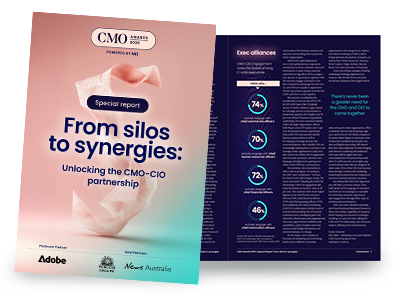
What it really takes to transform the CMO and CIO relationship from antagonism and misalignment to unity and common goals.
CMO Awards - Special Report 1

CMOs of the Year #20: Pete Macgregor

“Be passionately inquisitive – about the data, the customer, the creative, the hypothesis, how we could make something better,” encourages Amaysim CMO, Pete Macgregor. “Basically, anything you work on.”

It’s these attributed the marketing chief has been exhibiting in spades since taking on the challenge of overseeing the SingTel-owned mobile virtual network operator brand and its marketing function nearly two years ago after earning his telco stripes at both Telstra, Optus and Virgin Mobile. Which is also why Macgregor’s  description of his own CMO style is so fitting: Energetic, and oriented to impact and growth.

He’s equally enthusiastic about the value of data and creative in the job that needs to be done by marketing teams. “Data first – always – be clear on the job to be done,” Macgregor believes. “Then let the creatives fly.”

Effective marketing strategy

The best example of this thinking in action at Amaysim is what Macgregor’s “Tent-Pole Marketing: Big Swigs, Big Returns” ambition. The objective: Find the breakthrough needed for further growth.

“We asked ourselves: How could we step-change customer interest and sales without increasing spend? The answer: Tent-Pole Marketing,” Macgregor explains. “We focused on four big, high-impact campaigns per year. The goal was to create thematic, creative campaigns that break through the noise, disrupt the seasonal sales cycle and shift consumer behaviour, targeting the top three telco customer segments.”

To get there, Amaysim briefed four agencies to pitch big ideas. From 30+ concepts, it finally landed on ‘The Escape Plan’ (twice), what Macgregor describes as a cheeky campaign inviting Aussies to break free from pricey telcos. The campaign triggered record sales and a more than double-digit increase in MROI year-on-year.

“We ran this as our EOFY campaign, but continued into July, when competitors traditionally slow down, further accelerating sales momentum,” he says.

Next up was ‘Spend & Win $50m’, inspired by Amaysim’s two-year running retention renew & win campaign and “stealing a bit from Macca’s Monopoly”, says Macgregor. The idea came from a junior customer value management (CVM) executive, via an innovation fund the CMO had launched to drive creativity inside the business. The exec tapped retention insights, which showed higher renewals ensued as the result of prizes.

“We took it to the head of Amaysim. Despite initial scepticism, it became our most successful acquisition and retention campaign in our company history, resonating with our ‘value seeker’ segment, driving more switches,” Macgregor says. “These big swings generated an uplift in sales from Apr to Feb, improved ARPU, our base health [customers stay longer/spend more] and exceeded revenue, margin and EBITDA goals.”

Importantly, the success also unlocked renewals. “Tent-Pole Marketing is now our operating rhythm, designed to surprise, delight, and drive performance,” adds Macgregor.

To elevate marketing’s effectiveness, speed and commercial impact, Macgregor has transformed Amaysim’s in-house creative function into a fully integrated studio, spanning design, copywriting and now idea generation and production.

 “Our goal was to reduce dependency on external agencies, save dollars, increase creative agility, and drive greater commercial returns. We prioritised speed to market, creative excellence, and stronger cross-functional collaboration, while improving creative effectiveness and impact,” he explains.

Helping here was empowerment of internal talent via expanding roles and accountability. This included giving Amaysim’s copywriter and social manager the opportunity to shape creative strategy, which led to standout work across major campaigns like ‘Koalas - better value’, Spend & Win and Escape Plan 2.

“By owning production all the way to TV, our team gained flexibility to iterate fast, act on live feedback, and align messaging with evolving customer insights,” says Macgregor.

Another big part of the shake-up was introducing a creative effectiveness and impact scale that benchmarks art versus science. “I often see creative scales in our industry [AB InBev, Telstra, Leo Burnett] but they never include the most important part, the impact of the work,” comments Macgregor. “We developed our own inhouse art v science scale and customised for marketing campaigns, CX and CVM [customer value management]. When we have an idea we put it on the scale, we also come back during the price investment ratio and see where we actually landed on the scale to enhance learning.”

Through all of this, Amaysim has reduced production costs by $710,000 year-on-year, allowing reinvestment into media and martech personalisation. It’s also increased team morale and motivation, and led to stronger brand storytelling via integrated design, content and marketing collaboration across all assets including app, web, retail and more. It’s equally assisted delivering an 68ppt uplift in marketing ROI.

“This reinvention along with the introduction of our art vs science scale has redefined how we build campaigns, deliver and measure effectiveness,” Macgregor says.

Discerning decision making

At the same time, Macgregor made the big call to stop investing in an additive personalisation platform, which was consuming a significant share of marketing resources and incompatible with Amaysim systems. Despite two years of effort from 10+ core team members spanning data science, martech, CVM and engineering, the platform wasn’t delivering commercial value.

“I had a one-to-one conversation with each core team member, revealing no one believed it would deliver a good commercial return,” says Macgregor. “Momentum was driven purely by senior stakeholder bias. I recalled advice from a former boss: ‘Too many leaders optimise a program that should never have existed’. That stuck.

“As CMO, I called an emergency SLT meeting, shared the feedback from each individual and pitched reallocating resources to Salesforce Data Cloud, a platform we already owned but had underutilised. Within three months, we saw stronger returns: 28 per cent higher campaign conversions at four times the scale, delivered faster with fewer people. The team is now more engaged and proactively identifying further martech to retire.”

This decision wasn’t just about cost for Macgregor. “It was about better utilising the limited resource we have for a better commercial return and empowering our team to drive, servant leadership approach vs parent child or top down.”

I often see creative scales in our industry [AB InBev, Telstra, Leo Burnett] but they never include the most important part, the impact of the work. We developed our own inhouse art v science scale and customised for marketing campaigns, CX and CVM [customer value management]. When we have an idea we put it on the scale, we also come back during the price investment ratio and see where we actually landed on the scale to enhance learning.

Pete Macgregor, CMO, Amaysim

Business influence

Shaping the strategic agenda and fostering company-wide alignment has been another of Macgregor’s missions as CMO.

“The objective was to launch a bold new company ambition and strategy, motivate the team, and ensure clarity at every level: Company, team and individual,” he says. “I led the redesign of our strategic framework and ‘Plan on a Page’, flipping the structure to lead with purpose, values, and culture, placing people at the heart of our growth ambition. We introduced three company-wide strategic themes.”

To embed this, Macgregor co-designed and led ‘Play-2-Win’, a company-wide two-day offsite for all 117 employees. “Through immersive storytelling, customer insight presentations, persona-based skits, and interactive team and initiative sessions, we brought strategy to life in a way that resonated across Engineering, IT, Operations, CX, Customer Service, Finance, Sales and Marketing,” he says, adding a powerful new ambition also came out of the exercise.

The impact? A record-high engagement score in Amaysim’s 14-year history. “Employees cited unprecedented clarity, excitement about the new ambition, and a clear understanding of how their team and individual work connects to the company’s direction,” adds Macgregor.

Data-driven decision making

Another one of the shifts Macgregor is leading internally is around how to make decisions by embedding data-driven discipline into both customer experience and media investment strategies. A milestone thus far is an insight to action framework for voice of the customer.

“We were overwhelmed by disconnected customer insights, brand health trackers, churn surveys, acquisition surveys, social reviews, product reviews, customer care feedback, CX/UX insights, leading to fragmented decision-making and misaligned resource allocation,” he explains.

Tasked with consolidating insights, structure prioritisation, and creating focus, Macgregor came up with the strategic framework and governance model, then led a Voice of the Customer Forum to aggregate all sources (NPS, CSAT, churn, UX, sales, competitor research), identify common themes, and build a prioritised action plan and backlog.

“This ensured clear accountability, visibility on what we’re fixing, and alignment on what we’re not,” he says. “As a result, our SLT and stakeholder are crystal clear that our next quarter is laser-focused on improving what was identified as our highest friction and highest impact issue, rather than diluting resources across less critical improvements. If we can fix this, we estimate customer retention benefit in year along with increased CNPS as this is a high-volume issue.”

To help with data-driven marketing decision making and get away from digital first because it’s simply more measurable, Amaysim has also invested in the Mutinex Marketing Mix Modelling platform.

“Traditionally our media mix has been highly skewed to digital vs non and we didn’t have a great understanding of our attribution across it all,” continues Macgregor.

Since adopting the model, marketing ROI rose by double-digit percentage points in a year, with the head of Amaysim and CFO’s full support. “We have seen our overall cost per acquisition decrease – that is, more sales for less opex – helped by more investment in emotive channels like radio and video. It’s a strategy shaped entirely by data.

“Together, these initiatives demonstrate how structured data interpretation, capability building, and executive alignment can unlock smarter marketing decisions with a tangible customer and commercial impact.”

Commercial delivery

It’s clear Macgregor is committed to transforming marketing. The fruit of his labours is now visible to the executive leadership team. “With one week to go until year-end, marketing has been the undeniable growth engine of Amaysim,” he says.

“We’ve had marketing-led, breakthrough E2E tentpole campaigns that step-changed sales performance and awareness of Amaysim in the market, launched a new MMM-based media strategy, and overhauled web journeys, lifting conversion. We launched NBN with arguably Australia’s best CX, multiple steps for an existing customer to sign up and activate vs the industry’s 20, achieving one of the highest NBN NPS in market.”

Having also migrated customers off 3G devices, Amaysim has exited underperforming martech, and reinvested in undervalued platforms already delivering ROI, and scaled its mobile device portfolio year-on-year. Recognition followed, with parent company SingTel citing Amaysim as a ‘high-growth brand’ in 2025 HY results. Optus CEO also told  Amaysim drove “93% of all new subscribers” for the group.

People leadership

For Macgregor, it all comes down to building a playground for growth. To do that, he knows it’s critical to drive culture, capability and collaboration across the whole organisation, not just marketing.

“As CMO, I’m committed to building a high-performing, learning-first culture that thrives in a dynamic, competitive landscape. My mantra is to create the future CX, marketing, and commercial leaders of tomorrow,” he comments.

As well as offering the whole marketing team, plus finance, product and commercial teams, the ability to do an accredited Marketing MBA program, he’s introduced AI training, bringing in prompt engineers to upskill the marketing and product teams across prompting, tools, and innovation. Staff can additionally access specialist product, design and digital training via Macquarie University.

“Every week, our entire team connects to debate marketing craft, CX impact, and industry work. We use the creative versus impact scale to orient the conversation,” Macgregor says. “These sessions drive creative excellence, critical thinking, and shared learning. Our Play2Win offsite which I helped lead syncs the company on strategy, team and individual goals, while our weekly numbers session [run with my insight analyst] shares real-time performance in a fun, engaging way to the whole organisation.”

In addition, Amaysim has launched new internal awards as an incentive and recognition for the crew: GOAT Award, People’s Champion, Marketer of the Year, Biggest Swing & Energy Giver award.

“I take pride in our ‘Playground for Growth’ culture, supporting talent even when growth takes to another business outside Amaysim… I take pride in being one of our brand’s biggest champions, and inspiring a growth mindset, energising all to become one of our brand’s biggest champions, and energising all teams, guiding strategy, driving brilliant execution, to ensure we enjoy the journey together.”

Step-changing customer interest and sales without increasing spend was the name of the game for this telco CMO as he built out a ‘tent-pole’ marketing approach centred around four big high-impact campaigns per year and an internal charge to connect the dots between creative boldness and commercial impact.

CMO Awards 25

CMO Awards 25

CMO AWARDS SPECIAL REPORT
The journey to business growth: How CMOs are rethinking customer engagement
  • Six of our CMO Awards 2025 and CMO50 2022 alumni share how they are rejuvenating their customer journey approaches using data and insight, fresh segmentation, personalisation, tech and AI.
  • In-depth look at the work done by marketing teams across Freedom Furniture, Suncorp, MYOB, IBM, Anytime Fitness and REA Group, to improve responsiveness to customer journeys across the lifecycle and throughout their organisations, driving better engagement and experiences.
  • Hear how marketers are striking a balance between customer preferences and changing behaviours, privacy and governance versus hyper-personalisation at different stages of customer journeys.
  • Supported by CMO Awards Platinum Partner, Adobe, and Gold Partners, News Australia and Publicis Groupe.
Six of our CMO Awards 2025 and CMO50 2022 alumni share how they are rejuvenating their customer journey approaches using data and insight, fresh segmentation, personalisation, tech and AI.
Special Report 2
CMO AWARDS SPECIAL REPORT
From Silos to Synergies: Unlocking the CMO-CIO Partnership
  • What it really takes to transform the CMO and CIO relationship from antagonism and misalignment to unity and common goals
  • In-depth case studies with marketing and technology chiefs at 5 leading Australian brands: Beyond Bank, IAG, Treasury Wine Estates, University of Tasmania and Virgin Australia.
  • 5 key drivers instrumental to forging successful partnership
  • Strategic ways CMOs and CIOs are tackling AI together
  • Supported by CMO Awards Platinum Partner, Adobe, and Gold Partners, News Australia and Publicis Groupe.
What it really takes to transform the CMO and CIO relationship from antagonism and misalignment to unity and common goals.
CMO Awards - Special Report 1

CMOs of the Year #15: Sian Chadwick

In FY24, ANZ marketers won brand investment back. In FY25, the team introduced a portfolio-wide, business-case-driven funding model, investing a double-digit percentage of the marketing budget into growth initiatives. By FY26, marketing will fully transition to zero-based budgeting. Reshaping marketing funding has become a defining step for ANZ GM of marketing, Sian Chadwick, in her first couple of years at the big four bank.

“It’s required marketing to align all internal stakeholders around common objectives,” she says.

No mean feat, but necessary if you’re going to rewrite the marketing playbook to ensure a commercially-driven and customer-focused marketing function. Such work requires Chadwick to put data and insight first, answering ‘who’, ‘what’ and ‘why’ in a way the rest of the business can comprehend.

“Marketing at ANZ had to move beyond rigid product-based structures and disaggregated reactive campaigns. Customers don’t wait, and neither could we. We needed a function as sharp as the data it used and as integrated as the whole-of-customer insights it generated,” she says.

At the core of this new playbook is what Chadwick calls ‘Strategy, Insights, and Growth’. “It’s not just another function, but a strategic hub designed to identify demand drivers, identify commercial value pools, and embed marketing into decision-making. We’re transforming, using democratised analytics and deep customer understanding to develop long-term differentiation strategies,” she explains.

Previously, budgets were distributed to product and customer experience teams with minimal ‘whole of customer’ oversight. Which is why the portfolio-wide business-case-driven funding model in this current financial year investing a double-digit percentage of the marketing budget into growth initiatives is such a significant change internally. Transition to zero-based budgeting will ensure every dollar invested drives measurable portfolio value, continues Chadwick.

“Given the scale of change, we’re bringing stakeholders on this journey, ensuring upfront alignment on a balanced set of principles that drive efficiency,” she says. “We’ve developed an overarching brand strategy for Australia, unifying our brand propositions and messaging in market across our business divisions and complex customer set. Moving forward, we will speak with one voice, owning our purpose and delivering growth.”

None of this works in isolation. “Marketing is becoming a connective tissue across ANZ, integrating with product, sales, and customer experience teams to create a unified, strategic growth function,” says Chadwick.

All this ensures ANZ marketing is no longer reactive but predictive, “not refining how we work, but redefining what marketing means within a large matrixed enterprise”.

Effective marketing strategy

A key change required was the recalibration back to brand. By May 2023, ANZ’s brand budget had been substantially reduced due to economic caution and budgetary pressures.

“While this addressed short-term cost concerns, I recognised the long-term risk of underinvesting in brand equity. Brand is not a discretionary expense, it is a business asset driving both immediate revenue and sustained growth,” comments Chadwick.

To build the case for investment, the marketing team leveraged Commercial Mix Modelling (CMM), built in partnership with Analytics Partners, alongside brand and reputation metrics, using data to demonstrate the direct impact of brand spend on business performance. For Chadwick, CMM is decision-making tool that is able to compare business growth levers, rather than just marketing. The numbers were run, the sceptics won over and brand investment not only improved in FY24, but increased further in FY25.

“This was no ordinary budget win. It was a renaissance,” says Chadwick. Off the back of the decision, ANZ reshaped its agency village, introducing Leo Burnett Australia and Untangld alongside PHD and Thrive PR for enhanced strategic and creative firepower.

Sharpening the customer-first brand vision, leveraging insights to unearth untapped opportunities and shaking up campaigns to encourage deeper and more meaningful connections gave ANZ a 1.6ppt year-on-year increase in brand reputation and 2ppt increase in brand consideration.

Operationally, it’s also extended media buying cycles from six to 12 weeks, which Chadwick believes allows for greater precision, smarter spend and stronger returns.

“We partner closely with finance and have ensured data-driven budget allocation and measurement. Integrating data teams within marketing further improved targeting and campaign effectiveness,” she says. “CMM became a core decision-making tool, allowing us to optimise business growth levers with precision. The impact: A 25 per cent improvement in marketing ROI year-over-year, delivering through media efficiency.”

But it wasn’t just about percentages for Chadwick. “By gaining brand investment, ANZ didn’t just reclaim its place at the table – it rebuilt the table entirely, rebuilding brand equity, enhancing customer engagement, and reinforcing marketing as a key driver of business success.”

Discerning decision making

Meanwhile, Chadwick’s decision to bring creative production in-house has been a power saving, rather than pure cost-saving move. “Outsourcing has become expensive, slow and creatively inconsistent. The answer? ANZ’s own creative production studio called Blue Sky,” she says.

The short-term gain was clear: A 50 per cent reduction in production costs, freeing up budget for strategic brand investment. But Chadwick also cites greater control, agility, and future-proofing ANZ’s creative capabilities as long-term wins.

To gain further productivity, ANZ is rolling out Adobe Workfront, streamlining workflows, automating processes, and improving workforce planning. The studio is becoming a testing ground for audiovisual production capabilities and AI-driven creative production too including building Brand assets (Adobe Express), Brand illustrations (Adobe Firefly) and production rollout (Adobe GenStudio).

“We are setting up and building out consistent asset libraries at pace, enabling iterations for AB testing and significantly speeding up the route to market for intricate, high-quality executions,” says Chadwick. “Looking ahead, this shift strengthens ANZ’s ability to compete in a digital-first world. The result? Faster, more cost-effective, and higher-quality creative output – a decision that has transformed not just production, but the entire way ANZ approaches marketing execution.”

We are setting up and building out consistent asset libraries at pace, enabling iterations for AB testing and significantly speeding up the route to market for intricate, high-quality executions. Looking ahead, this shift strengthens ANZ’s ability to compete in a digital-first world. The result? Faster, more cost-effective, and higher-quality creative output – a decision that has transformed not just production, but the entire way ANZ approaches marketing execution.

Sian Chadwick, GM marketing, ANZ

Business influence

A persistently problematic area every banking marketer continues to juggle with is how to get the focus on people, not just products. As Chadwick knows all too well, traditional bank marketing often focuses on product features such as interest rates, the fees and fine print.

“But people don’t build their lives around banking products; they build their lives around their needs,” she comments.

Having secured that incremental brand investment, Chadwick led a shift from product-focused marketing to a customer-centric approach, prioritising underserved segments. To drive this change, ANZ is unifying Australia Commercial and Retail divisions under a single brand platform, aligning strengths and driving brand equity.

“This shift has ultimately resulted in the highest overall brand consideration for ANZ in three years, and a step change amongst non-customers where we’ve achieved #1 position against competitors nationally,” Chadwick says. “This approach is proving effective – incremental resources have been secured, proving marketing's strategic value. We are integrating insights into broader business decisions, and are expanding our attention across ANZ’s entire segment strategy in FY26, transforming how we serve customers at every level.”

Data-driven decision making

Insights are crucial in the decision-making process. In a volatile financial landscape, Chadwick knew security was becoming a growing differentiator in consumers’ minds.

“Three quarters of Australians are worried about scams and frauds, and believe banks can do more to educate them on safety. In fact, security has become a driver of consideration, with 57 per cent of Australians saying fraud influences how they choose a bank [Kantar],” she points out.

Partnering with TheLab, ANZ leveraged contemporary insights to “decode the psychology of consumer trust”. The insights were unambiguous: Fraud and scams had become a persistent concern, and customers linked ANZ’s original 2006 Falcon campaign with vigilance and strength.

“We took that insight and ran with it, relaunching The Falcon for a new era. This wasn’t nostalgia; it was strategic resurrection. Enter ‘Doppelfalcons’, a personalised security shield for every customer, reinforced with the tagline: Fraud Protection. Now it’s Personal,” explains Chadwick.

The campaign unfolded across broadcast, billboards, print, and PR, alongside AI-powered YouTube Director’s Mix, which leveraged data to create over 100 hyper-personalised video ads. Ooh!media launched Australia’s largest 3D Out-of-Home campaign, with over 2,100 screens showcasing The Falcon ‘watching’ passersby.

The work has helped brand consideration hit a two-year high, 6 per cent higher than target. Digital engagement surged 38 per cent, while YouTube ad completion rates exceeded industry benchmarks by 51 per cent. ROI also outperformed the benchmark. Notably, security messaging resonated strongest with 18-24-year-olds, driving a 50 per cent jump in noticeability in Q4.

“This campaign reframed ANZ as an institution that doesn’t just promise security but actively protects customers. This is the power of data-led, insight-driven marketing – not just reinforcing a brand, but making it indispensable in meeting consumer needs,” says Chadwick.

Commercial delivery

Another one of those insights powering Chadwick’s approach is that Australians know the value of a good deal, particularly given the challenges of our cost-of-living crisis. She notes 95 per cent are enrolled in at least one loyalty program, yet banks traditionally lagged behind when it comes to delivering meaningful rewards.

So Chadwick took on the task of launching a new program to enhance customer engagement whilst proving commercial results within four months to instill business confidence that customer engagement can be profitable.

ANZ Circle is a new loyalty program designed with data insights to target areas of attrition and address these customers’ needs for appreciation. The goal is to protect ANZ Main Financial Institution (MFI) market share. The program connects ANZ to its customers through their passion points of movies, music, sports, facilitated by multiple new partnerships.

“As a first for ANZ, this bold move translated into real-time commercial value and revenue within months of launch, gaining executive support and new belief that investing in exceptional customer engagement delivers commercial growth,” says Chadwick.

ANZ Circle commercial realisation is progressing to deliver 100 per cent ROI in-year. “It’s rare for a new program to both show in-year commercial value growth and ability to self-fund. There will be further commercial benefits as ANZ Circle matures and scales, however today we have demonstrated marketing’s innovative approach can be a key growth driver, and commercially sound investment to improve ANZ’s position as Main Bank for its customers and the market.”

People leadership

Chadwick sums up her people leadership style as one that fosters a culture of commerciality, innovation and continuous learning.

“A marketing function that doesn’t evolve is one that fades into irrelevance. I knew that to make ANZ’s shift to customer-centric marketing truly meaningful, we needed a culture that didn’t just embrace innovation and commerciality, it had to demand it,” she says.

“I developed a multi-year innovation plan, not through grand investments or sweeping tech overhauls, but through something more fundamental: curiosity and structured experimentation. We launched an eight-week human-centered design workshop process, where our marketers, stakeholders and Agency Village partners worked side by side, exploring value propositions through the lens of desirability, feasibility, and viability.”

In addition, ANZ’s long-running upskilling and reskilling program, Marketing Masters, introduced a Banking Simulation, where marketers ‘ran’ a bank for a day, honing commercial acumen and building fundamental knowledge of how a complex financial institution makes money. It was also a good way of teaching the team the language of finance and product business partners.

“Because great ideas need space to breathe, productivity training was introduced, ensuring teams could manage increasing demands without sacrificing creativity,” adds Chadwick.

Reshaping marketing funding and getting the focus back on brand is just one of the milestones this GM of marketing has realised since joining this big four bank. Here, she explains the steps she’s taken to win the business over.

CMO Awards 25

CMO Awards 25

CMO AWARDS SPECIAL REPORT
The journey to business growth: How CMOs are rethinking customer engagement
  • Six of our CMO Awards 2025 and CMO50 2022 alumni share how they are rejuvenating their customer journey approaches using data and insight, fresh segmentation, personalisation, tech and AI.
  • In-depth look at the work done by marketing teams across Freedom Furniture, Suncorp, MYOB, IBM, Anytime Fitness and REA Group, to improve responsiveness to customer journeys across the lifecycle and throughout their organisations, driving better engagement and experiences.
  • Hear how marketers are striking a balance between customer preferences and changing behaviours, privacy and governance versus hyper-personalisation at different stages of customer journeys.
  • Supported by CMO Awards Platinum Partner, Adobe, and Gold Partners, News Australia and Publicis Groupe.
Six of our CMO Awards 2025 and CMO50 2022 alumni share how they are rejuvenating their customer journey approaches using data and insight, fresh segmentation, personalisation, tech and AI.
Special Report 2
CMO AWARDS SPECIAL REPORT
From Silos to Synergies: Unlocking the CMO-CIO Partnership
  • What it really takes to transform the CMO and CIO relationship from antagonism and misalignment to unity and common goals
  • In-depth case studies with marketing and technology chiefs at 5 leading Australian brands: Beyond Bank, IAG, Treasury Wine Estates, University of Tasmania and Virgin Australia.
  • 5 key drivers instrumental to forging successful partnership
  • Strategic ways CMOs and CIOs are tackling AI together
  • Supported by CMO Awards Platinum Partner, Adobe, and Gold Partners, News Australia and Publicis Groupe.
What it really takes to transform the CMO and CIO relationship from antagonism and misalignment to unity and common goals.
CMO Awards - Special Report 1

CMOs of the Year #14: Leigh Barnes

Launching a global brand in the middle of a pandemic when your revenue is in freefall is just one of the ways this marketing and customer leader exhibited his deep believe in purpose-led marketing that drives long-term business results.

At a time when the global travel industry was in freefall, Leigh Barnes made the kind of decision most CMOs would balk at: he launched Intrepid Travel’s first global brand campaign - in the middle of a pandemic. 

For Barnes, who has been with Intrepid for more than 15 years and currently serves as Chief Customer Officer, the move wasn’t just bold - it was a reflection of his deep belief in purpose-led marketing, long-term brand building, and doing business the right way.

Reporting directly to the CEO and leading a team of 177 people, Barnes has helped transform Intrepid from a nimble adventure operator into one of the most respected responsible travel brands in the world. 

Under his marketing leadership, Intrepid has grown its global revenue to A$626 million in FY24, drawing more than 75,000 travellers from ANZ alone. With a unique mix of commercial acumen and people-first thinking, Barnes doesn’t just lead marketing - he leads change across the entire organisation.

Effective marketing strategy

Following the pandemic, Barnes led a strategic pivot from short-term, performance-heavy marketing to a brand-led strategy that aligned with Intrepid’s purpose. Intrepid’s marketing strategy in recent years has been defined by bold, values-driven campaigns that blend purpose with performance. 

Campaigns like ‘Good Trips Only’ (GTO) and ‘Only Intrepid’ (OI) delivered emotional storytelling, global reach, and measurable results - such as 41 per cent growth in online revenue and a 55 per cent surge in global brand search. The campaigns also reasserted Intrepid’s leadership in responsible travel and helped drive 21 per cent year-on-year customer growth.

In 2023, the GTO campaign demonstrated a clear commitment to sustainable travel, showcasing trips that positively impact travellers, local communities, and the planet. With over 500 creative assets deployed across TV, digital, out-of-home, and social media platforms, the campaign cut through globally and served to reinforce Intrepid’s core purpose and ethical positioning in the travel sector.

Building on that success, the 2024 OI campaign became the largest and most ambitious in the company’s history. With nearly 1000 assets spanning TV, print, digital, and out-of-home, the campaign achieved standout visibility through placements in globally recognised locations such as Times Square, London buses, and Sydney’s Bondi Junction. 

This campaign firmly positioned Intrepid as a leader in responsible travel and aimed to elevate the unique and emotionally rich experiences and moments you can only have with Intrepid,” Barnes says. 

These campaigns were not only brand-building exercises - they were instrumental to Intrepid’s post-pandemic business recovery. 

GTO alone contributed to a 41 per cent growth in online revenue and a 34 per cent uplift in brand demand search. Together, the campaigns successfully achieved key marketing objectives: differentiating Intrepid in a crowded market, deepening global brand awareness, and directly driving bookings through strong emotional and purpose-led storytelling.

Additionally, the GTO campaign delivered record-breaking sales of $4.7 million, reinforcing the commercial strength of purpose-led messaging. The follow-up OI campaign in 2024 drove a 55 per cent year-on-year increase in global brand search volume as of January 2025, along with a 21 per cent uplift in aided brand awareness. 

In the ANZ market, Intrepid climbed to 4th place - surpassing its goal of reaching the top five from a previous 6th position - while achieving 21 per cent year-on-year customer growth and a 27 per cent surge in bookings, significantly outperforming campaign KPIs.

Discerning decision making

Certainly, when cashflow was tight and the future uncertain, Barnes rebalanced Intrepid’s marketing spend, shifting from a 90:10 performance-to-brand mix to 60:40. 

In 2021, the travel industry collapsed due to the pandemic - and Barnes had to make tough decisions about where to allocate Intrepid's limited marketing budget. 

“While many companies focused on short-term performance marketing, we chose to invest in building Intrepid’s brand for the future, even if it meant sacrificing immediate returns. Instead of spending 90 per cent of the budget on performance marketing, we shifted to a 60:40 split: 60 per cent on brand marketing and 40 per cent on performance. My vision was to strengthen Intrepid’s brand by focusing on its core values, ensuring long-term success through the uncertainty of the pandemic,” he says. 

This allowed the company to invest in its long-term brand while staying agile. Initiatives like Intrepid’s ethical marketing guidelines - aimed at improving representation in travel - and another standout initiative - the UNICEF Vaccine Equity campaign - which was designed to increase accessibility of vaccines in remote communities and resolve vaccine hesitancy - deepened brand trust. 

The results speak volumes: from a $60.7 million loss in 2021 to a $21.8 million net profit, and a $29 million revenue bump from first-time customers in early 2025 alone.

“These initiatives reinforced that Intrepid cared about more than just selling travel, creating a strong sense of purpose,” he says. 

“Homing in on the company’s values and unique value proposition, we used Intrepid’s B Corp certification to demonstrate the company’s commitment to doing good in the world. This was despite the company bleeding cash daily, with no product operational and no certainty of when it would return.” 

By January 2025, brand awareness surged by 21 per cent, and 10,000 first-time customers booked through Intrepid’s website, generating a record $29M in sales. Intrepid was also named one of TIME 100’s Most Influential Companies and made Fast Company’s Most Innovative Companies list for four consecutive years. 

Barnes' decision to focus on the brand, even in tough times, proved successful, demonstrating that long-term, purpose-driven marketing can lead to impressive growth and set the company up for future success.

These initiatives reinforced that Intrepid cared about more than just selling travel, creating a strong sense of purpose... Homing in on the company’s values and unique value proposition, we used Intrepid’s B Corp certification to demonstrate the company’s commitment to doing good in the world. This was despite the company bleeding cash daily, with no product operational and no certainty of when it would return.

Leigh Barnes, chief customer officer, Intrepid Travel

Business influence 

Barnes leadership extends far beyond marketing. His commitment to Intrepid’s values has helped shape the company’s DEI and ethical practices globally. By spearheading Intrepid’s open-source ethical marketing guidelines, he influenced company-wide operations, ensuring that messaging, representation, and storytelling are more inclusive. 

“In 2021, Intrepid became the first global travel company to unveil an ethical marketing policy, outlining 23 measurable actions for more inclusive marketing and communications. This policy was developed in collaboration with a diverse group of consultants passionate about creating a more inclusive travel industry,” he says. 

“Intrepid has since led the charge in championing diversity in the travel industry, investing in initiatives that elevate marginalised voices. By 2023, the company had met 92 per cent of its DEI targets. In 2025, while others scale back on DEI, Intrepid is deepening its commitment, investing over half a million dollars in LGBTQIA+ and BIPOC-owned businesses and creators. The company is also sharing its ethical marketing guidelines to inspire broader industry change.” 

What’s more, Intrepid’s commitment to business as a force for good is deeply embedded in its operations, brand, and leadership. As a certified B Corp and an organisation aligned with Australia’s Reconciliation Action Plan (RAP), Intrepid has taken deliberate steps to ensure its values of inclusivity and sustainability are more than aspirational - they are operationalised across the business.

And the impact of Barnes’ work hasn’t gone unnoticed.

In 2024, he was invited by the United Nations Global Compact to join its Chief Marketing Officer Think Lab - an international collective exploring how marketing can help advance the UN’s Sustainable Development Goals. He also contributed to the UN Global Compact’s CMO Blueprint for Sustainable Marketing and Growth, sharing practical insights on how brands can align commercial performance with social impact.

Under his strategic direction, Intrepid is on a path to becoming a $1.3 billion business by 2030, with an ambitious goal of reaching 600,000 customers annually and reinvesting 1 per cent of its revenue into purpose-led initiatives.

His leadership reinforces a simple but powerful message: when marketing is anchored in purpose, it can fuel both meaningful change and long-term growth.

Data-driven decision making

When asked whether data or creativity should come first, Barnes doesn’t hesitate: “Why not both?”

And Barnes knew the company couldn't rely on intuition alone. As competition surged post-pandemic and consumer preferences shifted toward more meaningful, authentic travel, Barnes leaned into data to chart a clearer course. Using insights from Qualtrics and other research tools, the team uncovered a critical gap: while Intrepid was loved by loyal travellers, the brand wasn’t cutting through the noise in a crowded landscape.

“In 2023, as Intrepid navigated and recovered in a highly competitive global travel market, it capitalised on changing consumer preferences towards more meaningful and authentic travel experiences. Previous insights garnered through Qualtrics and other research tools revealed that Intrepid’s brand wasn’t standing out enough in the market. This insight presented an opportunity to better communicate our unique position as a leader in experience-rich and local leader-led travel.”

This finding sparked a pivotal strategic decision - and Barnes knew this was its moment to double down and tell the world what set the company apart.

In response, Intrepid launched its largest-ever brand campaign in September 2024: ‘Only Intrepid,’ a bold $5 million global initiative designed to elevate the brand’s presence and clarify its point of difference. The campaign set out to achieve three things: differentiate the company through its locally led travel model, boost global brand awareness, and drive bookings during key sales windows.

What made ‘Only Intrepid’ stand out wasn’t just the budget or scope - it was how tightly the campaign was tethered to customer insights.

“Intrepid based the campaign creative on the research, honing in on authentic, local moments—such as sharing meals with families and making mochi in Japan - to highlight the personal connections central to Intrepid’s experiences. The campaign ran across TV, digital, print, and out-of-home, using over 500 tailored creative assets.”

In fact, these weren’t staged experiences - they were real-life moments that captured the emotional richness of Intrepid travel.

“Intrepid subsequently achieved its highest-ever aided awareness score, meaning more people know the brand than ever before. In January 2025, 10,000 customers booked through intrepidtravel.com for the first time, generating $29 million in sales (an all-time record, representing 34 per cent of total sales and a 30 per cent year-on-year growth). The campaign generated 21 million social media impressions and earned significant media coverage.”

“By prioritising research and analytics, we connected with our audience more effectively, drove impressive growth, and reinforced Intrepid's unique market position," Barnes says.

In a sector where emotional storytelling and operational authenticity matter more than ever, Barnes’ commitment to data-driven creativity helped position Intrepid not just as a travel company, but as a brand that truly understands its customers - and delivers experiences they can’t get anywhere else.

Customer-first thinking

At the heart of Barnes’ success is a deep, structural commitment to the customer.

By unifying marketing, sales, PR, brand, and CX/UX under one agile, matrixed structure, Barnes created a feedback loop that doesn’t just listen to customers - it acts on their needs in real time. This cross-functional integration allowed Intrepid to move faster, be bolder, and make smarter decisions that directly enhanced the customer journey.

One of Barnes’ most transformative moves was revamping Intrepid’s customer care team. No longer a reactive function, it’s now a proactive, global operation that slashed response times by 50 per cent and delivered 89 targeted product and service improvements - each one rooted in improving the traveller experience.

But Barnes didn’t stop there. He introduced the Voice of the Customer (VoC) role, ensuring that customer insights weren’t siloed - they were embedded across the business. Through tools like quarterly sentiment reports and NPS modelling, the VoC initiative drove 42 improvements in Q4 2024 alone. On the ground, these changes had real impact: issue resolution during trips jumped to 71 per cent and remarkably, 18.5 per cent of initial detractors returned to travel with Intrepid again.

Putting the customer first isn’t just good service - it’s good business. And the numbers back him up.

He also invested in smarter tech to optimise sales and customer service systems, driving a 30 per cent reduction in wait times and boosting internal team satisfaction by 11 per cent. 

“These upgrades resulted in a $400,000 cost saving per productive hour and a 6-point increase in booking NPS, reflecting higher customer satisfaction with service delivery.” 

Through his customer-first lens, Barnes isn’t just improving how Intrepid serves its travellers - he’s redefining what it means to build a truly responsive, human-centred travel brand.

People leadership

“Three words I’d use to describe my style as a CMO? Ambitious, caring, and action.”

That blend of drive, empathy, and decisiveness defines Barnes’ leadership - and underpins the culture he’s built at Intrepid. He believes that great marketing leaders don’t just set strategy - they inspire people, nurture talent, and create the conditions for teams to thrive.

Under Barnes' stewardship, Intrepid adopted a more agile matrix structure, bringing together sales, PR, marketing, CX/UX, and brand teams for greater cohesion and impact. His decision to unite the Customer and Experience Departments - now led by the CMO - has been a pivotal legacy move. 

“This change promotes closer collaboration, faster decision-making, and stronger results, aligning teams across the entire customer journey.” 

A people-first leader, he empowers his team through upskilling and development, championing purpose alongside profit. He’s introduced initiatives that drive cross-team collaboration and transparency, including monthly sales and customer team wraps, regular customer insights emails, and the ‘Tiny Mic’ internal video series to keep everyone aligned.

He has also launched new learning programs like internal mentoring and the LAMP course, along with tools such as a global marketing calendar and clearer team responsibilities to boost efficiency and ownership.

As he steps into his new role as President of the Americas, he leaves behind not just a high-performing team, but a leadership legacy that puts people, purpose, and performance on equal footing.

Launching a global brand in the middle of a pandemic when your revenue is in freefall is just one of the ways this marketing and customer leader exhibited his deep believe in purpose-led marketing that drives long-term business results.

CMO Awards 25

CMO Awards 25

CMO AWARDS SPECIAL REPORT
The journey to business growth: How CMOs are rethinking customer engagement
  • Six of our CMO Awards 2025 and CMO50 2022 alumni share how they are rejuvenating their customer journey approaches using data and insight, fresh segmentation, personalisation, tech and AI.
  • In-depth look at the work done by marketing teams across Freedom Furniture, Suncorp, MYOB, IBM, Anytime Fitness and REA Group, to improve responsiveness to customer journeys across the lifecycle and throughout their organisations, driving better engagement and experiences.
  • Hear how marketers are striking a balance between customer preferences and changing behaviours, privacy and governance versus hyper-personalisation at different stages of customer journeys.
  • Supported by CMO Awards Platinum Partner, Adobe, and Gold Partners, News Australia and Publicis Groupe.
Six of our CMO Awards 2025 and CMO50 2022 alumni share how they are rejuvenating their customer journey approaches using data and insight, fresh segmentation, personalisation, tech and AI.
Special Report 2
CMO AWARDS SPECIAL REPORT
From Silos to Synergies: Unlocking the CMO-CIO Partnership
  • What it really takes to transform the CMO and CIO relationship from antagonism and misalignment to unity and common goals
  • In-depth case studies with marketing and technology chiefs at 5 leading Australian brands: Beyond Bank, IAG, Treasury Wine Estates, University of Tasmania and Virgin Australia.
  • 5 key drivers instrumental to forging successful partnership
  • Strategic ways CMOs and CIOs are tackling AI together
  • Supported by CMO Awards Platinum Partner, Adobe, and Gold Partners, News Australia and Publicis Groupe.
What it really takes to transform the CMO and CIO relationship from antagonism and misalignment to unity and common goals.
CMO Awards - Special Report 1

CMOs of the Year #4: Jo Boundy

Ask Jo Boundy, CBA’s CMO, if data or creativity comes first, and she’ll tell you it’s data hands-down.

“It gives you a window into what your audience really cares about –their behaviours, pain points and desires – so you can connect meaningfully through creativity,” the executive general manager and CMO of the Commonwealth Bank of Australia explains.

But creativity still matters, and she’s willing to make big bets when it counts. One of her boldest? Redirecting CBA’s ad dollars to produce a TV show, known as The Brighter Side, an eight-part show on Channel 10, developed in partnership with The Project and Paramount.

It was a move that paid off when millions tuned in and the bank built new levels of trust and connection during a time of financial stress for many Australians.

For the cost of two commercials, she created 176 minutes of high-quality, evergreen content, reaching over 2.2 million via broadcast and 10 million through amplification. With 80 per cent of viewers taking positive action, Brighter isn’t just building brand affinity – it’s making a real difference.

Certainly, her style as a CMO is centred on trust, people, and culture. She expects modern marketers to be resilient, given the pace, stakes, and visibility of the job. “You won’t always get it right. But how you learn and adapt is key to growth and success,” she says.

While she has a healthy respect for marketing buzzwords, there’s one she’d rather retire: Authentic.

“Authenticity is critical to build trust, connection, credibility, and resilience. But it gets thrown around so often [authentic brand, authentic experience, authentic storytelling] that it’s starting to lose its meaning and become very, well, inauthentic.”

Boundy’s leadership is a case study in strategic clarity and executional agility. She knows when to be bold and when to listen to data, when to protect legacy and when to innovate.

As she continues to stretch the CBA brand into new categories – from travel to green services – her impact is clear: She's not just marketing a bank. She’s redefining what one can be.

Effective marketing strategy

Therefore, as she sits at the helm of marketing for one of Australia’s most valuable brands, Boundy isn’t just safeguarding legacy – she’s boldly reshaping what a bank can be.

As CMO, she leads with a rare mix of creativity, data smarts, and cultural relevance, delivering commercial outcomes with deep social impact.

Her marketing remit is vast: protecting and growing a 110-year-old brand, navigating a rapidly changing media landscape, and connecting with more than 10 million Australians across every channel imaginable.

Under her leadership, CBA has transformed its reputation, helping Australians through cost-of-living pressures while also becoming a platform for progress in areas like diversity, financial literacy, regional community resilience, and fraud protection.

Over the past three years, Boundy and her team have evolved CBA’s 12-year-old ‘Can’ platform into its current expression, ‘For all the ways we can,’ a brand idea designed to reflect and celebrate the diversity of Australians while positioning the bank as both hopeful and useful.

Under her leadership, CBA has also driven a multifaceted marketing program focused on real impact—from championing diversity and inclusion in sport through high-profile partnerships like the CommBank Matildas and the Australian Women’s Cricket Team, to delivering financial education that has empowered customers during the cost-of-living crisis.

The bank has also taken a proactive stance against scams and fraud, with awareness initiatives contributing to a more than 70 per cent reduction in losses over two years.

In regional Australia, CBA has invested in meaningful engagement through programs like the Bush Summit, Beef Week, and regional branch initiatives. At the same time, the bank has hosted over 1,000 events for institutional and business customers to build advocacy and trust, while also expanding its brand footprint into new service categories like Travel Booking, Green services, and Car sales.

CBA’s position as a market leader is no accident. Its $15.7 billion valuation earned it the title of Australia’s most valuable brand by Brand Finance.

As Boundy explains, “With a 110-year legacy, the Commonwealth Bank brand is part of Australian culture. Our team is privileged to be custodians of the brand and our greatest responsibility is both protecting and growing our reputation.”

Not content to play by traditional rules, Boundy is also behind one of the boldest innovations in Australian banking: the launch of CommBank Connect, the country’s first bank retail media network.

“In 2023, I developed a five-year business case to invest in the infrastructure of our key channels; to connect our first  party data with our owned assets; to build a sales capability and to create organisational alignment on the valuation of, and access to, the channels.”

This platform reimagines the role of a bank in the media ecosystem, transforming CBA’s owned channels—ATMs, branches, app, email, web—into a data-driven media network capable of delivering tailored messages to millions of customers.

“In 2024, CommBank Connect launched: an Australian banking first, offering CBA, CBA-partners and advertisers’ access to over 10m CBA customers through a connected physical and digital content ecosystem. This includes over 2000 digital screens across 660 branches (more screens than Westfield), on 2000 ATMs, in app, email and web. Powered by CommBank iQ, Connect uses de-identified transaction data and custom segment insights (alongside  audience targeting, ad-serving, campaign optimisation and monetisation software platforms) to deliver targeted  messages to customers.”

With deep integration into CBA’s digital environments, Connect is forecast to deliver in a host of ways, Boundy says.

“Connect has improved the customer experience, serving more relevant, personalised and timely content offers and service messages in an  improved digital environment. Connect also enhances experiences for our Institutional customers, opening new  channels for them to communicate with CBA customers,” she notes. 

“The scale and complexity behind a bank becoming a media publishing business shouldn’t be underestimated – from deploying future-proof technology systems, deprecating end-of-life legacy platforms [CMS, hardware, posters, DVDs], compliance with relevant advertising, data and privacy legislation, overcoming cyber and technology risks, and  introducing new financial and accounting requirements.” 

The scale and complexity behind a bank becoming a media publishing business shouldn’t be underestimated – from deploying future-proof technology systems, deprecating end-of-life legacy platforms [CMS, hardware, posters, DVDs], compliance with relevant advertising, data and privacy legislation, overcoming cyber and technology risks, and introducing new financial and accounting requirements.

Jo Boundy, CMO, Commonwealth Bank

Data-driven decision making 

Shortly after joining CBA, Boundy was instrumental in the launch of CommBank Yello in November 2023 – Australia’s first banking recognition program –built entirely on customer insight and data-driven decision making.

At its core, Yello is about recognising and thanking customers for their loyalty, while commercially supporting CBA’s strategy by incentivising customers to consolidate their banking relationships. The program’s design was informed by extensive market, ethnographic, qualitative, and quantitative research to deeply understand what customers value most.

Since launch, Yello has become one of Australia’s largest loyalty programs, engaging over 5 million customers in just a few months, a growth rate unprecedented in the Australian market. Beyond engagement, Yello has become a powerful real-time feedback loop, providing rich behavioural and performance data that continuously informs product development, offer design, customer communications, and broader strategic decision making.

Through a blend of engagement metrics, offer activations, redemption rates, NPS scores, digital feedback, and communication performance data, CBA is constantly refining and expanding the program. This includes enhancing incentives and targeting, evolving eligibility criteria, and expanding Yello into new segments like small business customers through Yello for Business.

“We continue to evolve Yello by leveraging an extensive range of data points – including engagement metrics, offer activation and redemption rates, NPS scores, digital feedback, and communication and marketing performance – to inform the evolution of the program’s design," says Boundy.

Insights gathered from this data have led to ongoing improvements in incentive structures, such as enhancing benefits and more precisely targeting offers to customer needs. They have also shaped updates to eligibility requirements and driven product innovation, including the expansion of the program to support small business customers through Yello for Business.

The results speak for themselves: Deeper customer engagement, stronger retention, meaningful commercial growth, and, most importantly, a genuine sense of value and appreciation from customers. Yello is a flagship example of how data-driven decision making can power improved customer experiences, product innovation, and brand loyalty at scale.

People leadership

Leadership to Boundy is not just about setting a direction, it’s about shaping a culture where everyone is empowered to lead from where they stand.

“I’m incredibly proud of the culture our marketing leadership team have shaped together – one that fosters an inclusive environment with authenticity, adaptability and collaboration at its core. 

CBA plays a significant role in the lives of Australians, the economy and society. Our marketing team embrace this responsibility – putting it at the heart of our renewed team truths: ‘We are one team and we can make a difference in the lives of our customers, our community and the country’

“These truths, supported by a focus on transparent decision-making, have seen an evolution of our (large) team’s mindset, unlocking ambitious thinking and big ideas – with the customer at the heart.”

Additionally, her leadership approach has also embraced structural change. The enterprise-wide shift to agile ways of working enabled the team to form cross-functional teams that move faster, collaborate better, and learn continuously. By implementing quarterly retrospectives, she created feedback loops that allow for real-time improvements based on performance data and customer insights, a muscle that has strengthened over time and continues to drive effectiveness.

A critical enabler of this success has been its investment in people. “Development has also been a major focus, with 100 per cent of employees having an active development plan – focused on capability uplift [learning new marketing and technology skills] and practical application [through new and varied experiences].

This commitment to growth has not only elevated individual performance, but fostered stronger succession pipelines, and positioned Marketing as a trusted and indispensable business partner within the organisation.

Yet leadership also shows up beyond the day-to-day. One of the moments she’s most proud of came in 2024 during its annual Can4Cancer fundraising initiative.

“Over-enthusiastically, I signed up for all five events [21km walk, 50km team run, 20 km team swim, Barangaroo stair-sprint, 350km ride – the only employee to do so]. Having never ridden a bike; the training was  intense. I’m proud this leadership inspired many in our 300+ team to participate, raised considerable funds, but mostly built culture, comradery and friendship. The record fundraising speaks to the heart of our team and what we can accomplish together. For me, it was a humbling reminder of how far our leadership shadow reaches.”

As Boundy continues to push the boundaries of marketing at CBA, one thing is clear: She’s not just transforming the bank’s brand – she’s reshaping the very way Australians connect with it, blending data, creativity, and resilience in a way that sets a new standard for modern marketing.                            

Stretching into new categories isn’t just about marketing a bank, it’s about redefining what one can be for this CMO.

CMO Awards 25

CMO Awards 25

CMO AWARDS SPECIAL REPORT
The journey to business growth: How CMOs are rethinking customer engagement
  • Six of our CMO Awards 2025 and CMO50 2022 alumni share how they are rejuvenating their customer journey approaches using data and insight, fresh segmentation, personalisation, tech and AI.
  • In-depth look at the work done by marketing teams across Freedom Furniture, Suncorp, MYOB, IBM, Anytime Fitness and REA Group, to improve responsiveness to customer journeys across the lifecycle and throughout their organisations, driving better engagement and experiences.
  • Hear how marketers are striking a balance between customer preferences and changing behaviours, privacy and governance versus hyper-personalisation at different stages of customer journeys.
  • Supported by CMO Awards Platinum Partner, Adobe, and Gold Partners, News Australia and Publicis Groupe.
Six of our CMO Awards 2025 and CMO50 2022 alumni share how they are rejuvenating their customer journey approaches using data and insight, fresh segmentation, personalisation, tech and AI.
Special Report 2
CMO AWARDS SPECIAL REPORT
From Silos to Synergies: Unlocking the CMO-CIO Partnership
  • What it really takes to transform the CMO and CIO relationship from antagonism and misalignment to unity and common goals
  • In-depth case studies with marketing and technology chiefs at 5 leading Australian brands: Beyond Bank, IAG, Treasury Wine Estates, University of Tasmania and Virgin Australia.
  • 5 key drivers instrumental to forging successful partnership
  • Strategic ways CMOs and CIOs are tackling AI together
  • Supported by CMO Awards Platinum Partner, Adobe, and Gold Partners, News Australia and Publicis Groupe.
What it really takes to transform the CMO and CIO relationship from antagonism and misalignment to unity and common goals.
CMO Awards - Special Report 1

CMOs of the Year #2: Jenni Dill

The Arnott’s Group CMO, Jenni Dill, knows a thing or two about driving marketing that delivers measurable, meaningful impact to the business. The recipe for success? Truly classic, all-4P marketing.

Through her five-year tenure at the iconic FMCG business, Dill has been instrumental in building out new product lines (Arnott’s gluten-free and reduced sugar ranges), expanding ecommerce opportunities, opening up direct consumer engagement and new retail placements, and lifting masterbrand value and equity, leading to more commercial value.

To make it all happen, Dill says she’s needed to be a CMO who’s an instinctive-innovator, problem-solver and team-builder. Which is why she firmly believes all modern marketers need to find both resiliency and adaptability in the job today.

“It’s the resilience and tenacity to work through setbacks and around obstacles to deliver what is needed. In the absence of a crystal ball, shaping the future certainly requires it,” she comments.

Business influence

Arnott’s marketing, under Dill’s leadership, has evolved into a core driver of the company’s broader strategic and long-term growth agenda, shaping key business initiatives beyond traditional advertising, integrating with innovation, sustainability, and commercial teams to drive brand and business outcomes.

Just a few of the business-grade initiatives she can point to are:

  • Health & Wellness Expansion: Partnering with R&D to create gluten-free and reduced-sugar product lines, backed by big business investment of $30 million in production capabilities, capturing new growth in health-conscious segments. To date, health-focused product launches contributed to a 15 per cent lift in sales among health-conscious consumers.
  • E-commerce, website and new channel expansion: Partnering with sales, Dill’s team has helped more than double ecommerce though a mix of dedicated joint business plans with key retailers, while exploring new channels including Amazon and Quick Commerce. The Arnott’s website has also gained D2C campaign capability, supported by a CDP to enable personalised, one-to-one communication.
  • Sustainability Integration: Marketing has collaborated with R&D and supply chain to launch recyclable packaging, reinforcing Arnott’s commitment to environmental responsibility while enhancing brand equity.
  • International Expansion: Marketing’s support for the launch of Arnott’s Tim Tams in the UK with major supermarkets, Waitrose and Tesco placements. Tim Tam unit sales per store per week are now at similar levels to Australia after less than 12 months.

“Through these initiatives, marketing has become a strategic driver of growth, delivering measurable ROI and positioning Arnott’s for long-term success, both in Australia and overseas,” Dill comments.

Effective marketing strategy

At a functional marketing level, getting to this point has meant undertaking a transformational journey. This has been driven by relentless focus on what matters most, reflected in Dill’s three foundational strategic priorities: Reinvigorate the core; build a scale better-for-you biscuits business; and win in premium indulgence.

At the heart of this – and the external manifestation of this ambition – is the 'Life's Little Moments' Masterbrand campaign, designed to reignite consumer love for the brand while driving significant business impact. Dill describes the results as a true group effort across marketing and cross-functional teams, agency partner, Publicis, and broader industry partners.

The Masterbrand campaign platform was built on data-driven insights, which allowed Arnott’s to optimise creative, media and investment strategies. By applying rigorous marketing mix modelling, Arnott’s isolated the direct impact of advertising on sales, proving marketing was a substantial driver of business growth, with a contribution to sales rising five-fold over three years (as measured by Analytic Partners).

In the four years it’s been in play, Arnott’s masterbrand work has also seen creative effectiveness scores increase to all-time highs and the best pre-tested campaign in 160-year history. In 2023 and 2024, Arnott’s received industry recognition at an Australian (Grand Effie + four Gold/Silver Effies) and international level (WARC Awards).

To make marketing investments work harder, Arnott’s transformed its marketing operating model by restructuring teams, refining processes, and applying data-led decision-making. Among these were creation of cross-functional business teams bringing together marketing, R&D, category, finance, and supply chain. This enables agile decision-making aligned with top and bottom-line results.

An overhauled campaign process was also realised, which simplified what had been a traditional 12-month, seven-step planning model into a three-step, three-month process, reducing inefficiencies and enabling more responsive marketing. A KPI-based incentive structure for agency partners was also introduced to reward strong creative, media efficiency and ROI performance.

ROI on advertising investments has more than doubled, with a Gross Profit ROI almost 5 times the FMCG benchmark. Media efficiency improved dramatically, equally reducing cost of reach and increasing weeks on air and monthly reach without additional budget. Among strong brand metrics over the last 12 months are a +3pt life in usage and +1 gain in preference.

Investment in marketing effectiveness tools were also made: Engaging Analytic Partners, Mad Clarity, Luma Research, for example – and social and PR capability was built in-house.

It’s all led Arnott’s to double short-term (1 year) and long-term (3 year) ROI on advertising investments, with a Gross Profit ROI almost 5 times the FMCG benchmark. This is in the top 5 per cent of global FMCG ROI results.

These strategic decisions ensured continued sales and brand growth despite a constrained budget. Advertising has become an increasing accelerator of sales, proving that smart, precise marketing investment decisions yield tangible business results.

Jenni Dill, CMO, The Arnott's Group

Discerning decision making

Tough decision making has never far away for this CMO. Faced with rising supply chain costs, for example, Arnott’s had to make strategic choices about where to allocate marketing investments without compromising growth.

Rather than cut spend, Dill and her team optimised media efficiency and reinvested savings into high-impact areas to drive growth. Notable decisions included reducing non-working investments, such as research, packaging, and POS materials, to free up an additional media investments withing same budget.

A focus on fewer, high-impact campaigns, increasing media weight and weeks on air, was another win, while bringing social and PR in-house delivered 10x more content, across 6x more brands and 3x more channels.

“These strategic decisions ensured continued sales and brand growth despite a constrained budget,” comments Dill. “Advertising has become an increasing accelerator of sales, proving that smart, precise marketing investment decisions yield tangible business results.”

Data-driven decision making

Through of this, data-driven decision making is paramount to drive more effective marketing, enhance consumer engagement, and inform product innovation. Strategic and systematic investments have seen MMM rolled out with the help of Analytics Partners, contributing significant sales uplift over three years.

More recent innovations include AI-Driven Audience Segmentation, which has increased digital campaign engagement by 12 per cent through highly targeted messaging. In addition, retail and shopper data analytics has helped optimise ecom promotions with Coles and Woolworths, improving sales efficiency by 21 per cent.

At a more tactical level, social listening enables the team to capitalise on trends with fast reactive content that drives real engagement. For instance, in-house social teasers often test consumer appeal for actual product launches.

“The Tim Tam x Jatz April Fools stunt is now one of our best-selling products on shelves across Australia, and about to be launched internationally,” says Dill.

Consumer-first thinking

Strategic consumer insight-led innovation is most evidently seen in the launch of Arnott’s gluten-free and reduced-sugar ranges, driving a 15 per cent increase in sales from health-conscious consumers.

But in-housing social and PR teams to build more content and more engagement across more of the portfolio throughout the year is also powered by everyday consumer-first insights. “With the inclusion of our in-house Chef and our R&D teams, we now ideate, create and drive amplification of our initiatives all year round,” says Dill.

An example is 'Recipe Hacks'. While approximately 10 per cent of consumers bake with Arnott’s biscuits, many more use them in simple, often bake-free hacks to create impressive, sweet treats. Trending recipes featuring Arnott’s biccies include Scotch Finger Rocky Road, Malt-o-Milk Ice Cream Sandwiches, Choc Ripple Cakes and Salada 'Crack’.  A recent success garnering over 15 million impressions in December 2024 was similar Christmas Hacks.

Third-party product partnerships are also increasingly on Dill’s radar. An example is the Shapes XBOX Controller. “Through social listening on gamers channels, we knew of their love for Shapes and understood their one-handed munching habits while gaming,” she says.

As well as an on-pack promotion giving away hundreds of XBOXes on Shapes, rapid ideation with R&D saw Arnott’s create XBOX Controller Shape prototypes in less than a week.

“The team loved it, so we decided to make 100 packs [by hand] and give them away on social media. Within 24 hours, gamers and gamers publications jumped on board, generating coverage around the world of 25M social and PR impressions with a media value equivalent of around $9m,” says Dill. “Coles then placed a muti-million-dollar sales order as a job lot and we found ourselves on shelf nationally.”

An opportunistic cultural win, meanwhile, was TayTams. National Tim Tam Day, February 16, coincided with the first date of Taylor Swifts groundbreaking Eras tour.

“Instead of trying to fight for airtime, we jumped on the bandwagon and drove it like we stole it,” says Dill. “We leveraged Taylor’s love for the ‘life-changing’ Chewy Caramel variety and renamed them TayTams in celebration of her arrival Down Under.”

100,000 packs were handed out to fans at concerts around the country, creating a frenzy and a highly collectible souvenir, generating a total owned and earned media value of $16M.

Commercial delivery

All of this had ensured marketing has been a core business growth driver, contributing directly to financial success. Transformative levels of sales growth since 2020 is one result, thanks to a doubling of media ROI, delivering short-term Gross Profit ROI of almost five times the FMCG benchmark.

In-house content and social investments have also seen $100M+ PR Media value equivalent delivered each year and over half of total media impressions.

“By embedding data-driven decision-making, fostering innovation, and optimising media spend, marketing at Arnott’s has delivered short-term commercial impact and positioned the brand for sustainable, long-term growth,” add Dill.

People leadership

Such results don’t come without cultivating a culture of continuous improvement, embedding effectiveness and a creative mindset in the team. Supporting this is a firm test-and-learn approach, where Arnott’s allocates 10 per cent of budget to innovation pilots.

“This leadership approach has enabled marketing to operate with agility and drive sustained growth,” Dill says.

Staff progression as ensued, including promotions for two of Dill’s key direct reports in the last 12 months to the executive leadership team as chief transformation officer and general manager of the meals & beverages division for Australia & New Zealand.

Beyond her Arnott’s CMO role, Dill has long been a driving force in the Australian marketing industry, bringing her expertise and leadership to multiple key industry bodies. As a board member of the Australian Association of National Advertisers (AANA), she has been instrumental in supporting advertising industry self-regulation and raising advertising standards. Now, as Chair of the AANA, she is poised to shape the future of a trusted and sustainable marketing industry in Australia. 

Harnessing all 4Ps of marketing – product, price, place and promotion – lie at the heart of the FMCG marketer’s stellar efforts to build multi-year growth and marketshare. And the key attributes this marketing chief holds to make it happen? Instinctive-innovator, problem-solver and team-builder.

CMO Awards 25

CMO Awards 25

CMO AWARDS SPECIAL REPORT
The journey to business growth: How CMOs are rethinking customer engagement
  • Six of our CMO Awards 2025 and CMO50 2022 alumni share how they are rejuvenating their customer journey approaches using data and insight, fresh segmentation, personalisation, tech and AI.
  • In-depth look at the work done by marketing teams across Freedom Furniture, Suncorp, MYOB, IBM, Anytime Fitness and REA Group, to improve responsiveness to customer journeys across the lifecycle and throughout their organisations, driving better engagement and experiences.
  • Hear how marketers are striking a balance between customer preferences and changing behaviours, privacy and governance versus hyper-personalisation at different stages of customer journeys.
  • Supported by CMO Awards Platinum Partner, Adobe, and Gold Partners, News Australia and Publicis Groupe.
Six of our CMO Awards 2025 and CMO50 2022 alumni share how they are rejuvenating their customer journey approaches using data and insight, fresh segmentation, personalisation, tech and AI.
Special Report 2
CMO AWARDS SPECIAL REPORT
From Silos to Synergies: Unlocking the CMO-CIO Partnership
  • What it really takes to transform the CMO and CIO relationship from antagonism and misalignment to unity and common goals
  • In-depth case studies with marketing and technology chiefs at 5 leading Australian brands: Beyond Bank, IAG, Treasury Wine Estates, University of Tasmania and Virgin Australia.
  • 5 key drivers instrumental to forging successful partnership
  • Strategic ways CMOs and CIOs are tackling AI together
  • Supported by CMO Awards Platinum Partner, Adobe, and Gold Partners, News Australia and Publicis Groupe.
What it really takes to transform the CMO and CIO relationship from antagonism and misalignment to unity and common goals.
CMO Awards - Special Report 1

CMOs of the Year #7: Brent Smart

Brent Smart is excited by ideas. As a creative-led CMO, he’s demonstrated time and time again that he’s the sum of his convictions when it comes to how he approaches, develops and executes on brand. In taking on the CMO reins at Telstra two-and-a-half years ago, he’s set about demonstrating not just what creative can do to win consumer mindshare for Australia’s largest telco, but how it can deliver commercial gains and foster a more learning-oriented culture, too.

Effective marketing strategy

Smart positions his approach as one of creative transformation: To overhaul one of Australia’s largest legacy brands and bastion of corporate risk aversion, Telstra, in an industry that views the creatively-led CMO as somehow less serious than the commercially-focused or data-driven one.

“Ironically, creativity is the smartest commercial decision a CMO can make, with high-quality creative driving 2.5x more revenue growth and 4x more profit than average creative. Proving that creativity is serious business after all,” Smart comments. “Lots of people talk about creativity, but how do you commercialise it and systematise it, without strangling it?”

For Smart and his team, creative excellence isn’t just a core belief, it is a program that embeds creativity into marketing culture, and he wants to coach people to embrace creative thinking to improve the effectiveness of every initiative.

“We treat creativity as a capability, setting out to raise the creative confidence of our team. We have designed a bespoke system to create a common creative language and quantify our creative output,” he explains.

Helping here is Telstra’s innovative bespoke agency model, +61, which sees creative led by independent agency, Bear Meets Eagle on Fire, paired with larger player, TBWA, and supported by OMD on media – all under one commercial arrangement. The structure rolled out in late 2023.

The fruit of these labours include Telstra’s work to create brand moments with cultural impact at Christmas, the Paris 2024 Olympics and the Footy Finals. “We obsess over the craft. Our work gets talked about, not just here, globally. Last year, we had not one but four Editor’s Picks in Ad Age USA, something no other Australian brand has ever done,” Smart says.

“But that’s not why we do it. We have transformed our brand creatively to transform our business commercially, with marketing delivering measurable increases in effectiveness from 2022 to 2024.”

Marketing Mix Modelling, for example, shows the work has grown additional revenue driven by marketing, with a double-digit increase in return on advertising spend.

One of the inputs that fed into Telstra’s rethought brand positioning was how it had been perceived in market. Despite significant improvements in customer experience and record-high NPS, its reputation was in the lower rungs of Australian brand ranks. The problem lay with non-customers who rated the telco lower on reputation than actual customers.

“All our CX investments were not felt by non-customers; only brand advertising could reach them and capture their attention and start to change how they felt,” Smart points out.

To shape the brief, Smart commissioned an ethnographic study, with the most telling insights coming from when people were asked to draw the Telstra brand. These inferred traits such as corporate, boring, profit-focused and a company that sometimes talked down to customers.

“Working closely with our agency +61, we developed a unifying brand idea for Telstra, ‘Wherever we go’. It was an optimistic promise of partnership and a better future, born out of our company’s purpose to ‘build a connected future so everyone can thrive’,” says Smart. “We didn’t just reinvigorate a way of working or capability, we reinvigorated the whole brand, giving it a warmer, less-serious and more human brand personality.

“Unlike other big brands that hold up a mirror to their customers and stick to corporate design templates, we wanted to stretch our brand into animation and hand-crafted visuals. While our executional styles may change, the brand has found a distinct voice and design language.”

The new brand work had instant cut through in-market. In the first week of launch, recognition hit 34 per cent, 14-points above the category norm for the end of campaigns. Telstra even saw traction with hard to move non-customers, who rated the business higher if they recalled the brand advertising, leading to the highest ever non-customer reputation score in late 2024.

According to Brand Finance, Telstra is the fourth-strongest telco brand in the world, increasing brand strength +2.9 points in the last year, while the average decline for the top 100 telco brands was -0.13 points. The Telstra brand is now outperforming its category by 20x.

Discerning decision making

The mobile phone market is hyper-competitive; to win against the other telcos, retailers and the handset makers, Telstra had invested heavily in trade / performance marketing. When Smart arrived in late 2022, this kind of work consumed a huge chunk of the media budget.

“As a disciple of Binet & Field, I knew we were a long way from the optimal 60:40 brand: performance mix for long-term growth,” he says. “To meaningfully change our mix would require a meaningful budget reallocation – and shifting out of what was seen internally as hard working, into brand that was seen as ‘soft’. This was a high-risk move; if business performance faltered in the short term, there would be no support for more brand investment longer term.”

The answer was designing a test market. In Adelaide from Feb-June 2023, Telstra changed its investment mix to 50:50 brand: performance, hoping it wouldn’t see a drop in retail metrics. In fact, the opposite happened, with sales higher than the national average. This gave Smart’s team the confidence to double brand investment and reduce trading spend, shifting the split to 40:60 brand: performance in the 2024 financial year. It’s seen marketing deliver a +13.4 per cent growth in media-driven revenue and +27.5 per cent growth in ROAS, including Trading ROAS of +39 per cent.

To build creative confidence, you need a common creative language and a way to mark improvement. We designed the Telstra Creative Dial to do just that. It helps us quantify every output, every channel, every quarter. We also include an external perspective from the Global CCO of TBWA, to keep us honest. Having scored every quarter since September 2023, we have seen our creative output improve from an average of 3.8 to 5.5 in December 2024.

Brent Smart, CMO, Telstra

Business influence

Meanwhile, with such a sizeable share of sales happening in the Christmas retail period, rethinking the approach to market at this time was another must. Real headwinds had buffered the business in late 2023, including a recent price rise and offers were being outgunned by competitors. Yet the business objectives were to grow activations and revenue.

Traditionally, marketing had approached Black Friday and Christmas tactically, and as two retail campaigns to end the calendar.

“We saw a bigger strategic opportunity to make Christmas a cultural moment for the brand. We used emotional storytelling at the brand level to establish a theme that we could integrate across both sales events and all channels,” says Smart. “This required big changes to our go-to-market planning and execution, with marketing collaborating closely with retail, trading, merchandising and digital teams to deliver integration across all touchpoints.”

Smart points to another little-known gem, ‘Free Calls to Santa’, which employed recorded voice messages on Telstra payphones at Christmas. “We wanted to make it a famous Christmas ritual, elevating the experience through conversational AI, requiring deep collaboration with data, AI and technology teams at Telstra and partners at Google.”

This whole-of-business approach to Christmas delivered impressive business results. Telstra CEO Vicki Brady even called it out when talking about financial results in the Australian Financial Review:  “Brady played down any major boost from her competitor’s (Optus) misfortune, pointing to a strong Christmas advertising campaign from Telstra.”

For Christmas 2023, the story of a lost reindeer established the theme ‘Hello Christmas’ and grew mobile revenue while delivering ROI of 505 per cent for every dollar spent on the campaign. In all, 590,000 free calls were made to Santa, up 400 per cent year-on-year, and the Telstra marketing team won a silver Effie amongst 15 global and local awards for the effort.

By Christmas 2024, the story had evolved to a singing donkey, linking the brand idea with the theme ‘wherever we go, together is for Christmas’.  It managed to beat 2023’s impressive results, increasing revenue further year-on-year and seeing calls to Santa climb even higher.

Data-driven decision making

Smart is creative-led, always. “But data comes first in the process, to understand the business problem and audience,” he says. “I see my role as chief storyteller; yes, emotional brand stories, but also telling stories with data to demonstrate the commercial value marketing is delivering.”

To do that in a compelling way, Smart knew the team needed to get beyond clicks and attribution to more sophisticated modelling. Marketing partnered with Annalect to build a bespoke econometric model with unrivalled scale and sophistication in this market, including more than 7500 campaigns modelled using 40 distinct data sources and 10 automated data feeds.

“Granularity is clarity - we can model not just by campaign, media channel or product, but down to the purchase channel, device and partner,” says Smart. “Our model measures both short-term ROI within the quarter and has nested models to measure long-term brand impact.”

The model also focuses on new activation revenue, to align with the company’s growth objectives. So far, it’s showing marketing directly contributes close to half of new connection revenue, doubling its revenue contribution in two years.

“We also believe in constantly testing and learning with data-driven experiments,” continues Smart.

As well as the brand testing already mentioned, data has fuelled multi-state search experiments, revealing a point of diminishing returns where search delivers more traffic but less conversion. Tests removing brand search terms and reinvesting into generic search drove sales uplift and cemented organic search’s power. It’s also helped guide where and when to use and turn off performance marketing for the long-tail of products supported, delivering sales uplift.

Commercial delivery

Through all of these efforts, marketing under Smart has delivered impressive commercial growth at the top and bottom of the funnel, despite price rises and Telstra’s position at the premium end of the market.

“Overlaid with Australia’s cost-of-living crisis, it is clear our growth is defying market and category trends,” says Smart. “Increased brand investment and stronger brand creative has increased the commercial value of the Telstra brand. Telstra is the third-most valuable brand in Australia, valued at $12.1 billion.”

Smart can demonstrate marketing added millions upon millions to the value of the brand in 2024, with stronger brand a multiplier effect, improving the effectiveness of trading and performance marketing. Since shifting brand: trading media budget allocation from 20:80 to 40:60, he’s seen ROAS increase by 75 per cent, for instance.

“We have also elevated the craft of our retail advertising and optimised digital performance marketing, improving commercial performance at the bottom of the funnel,” he says, adding trading activity ROAS has also increased.

People leadership

With creativity his key to effectiveness, Smart has also made it the focus of learning and culture, treating creativity as a capability to be build and improved.

“That demands a capability lead, in our case, Head of Creative Excellence; a role on my leadership team that you won’t see on many others,” he notes. “We benchmarked our creative capability against the best marketers in the world with the help of Cannes Lions Advisory. Through this process, we realised the capability gap in our people was a lack of creative confidence.

“To build creative confidence, you need a common creative language and a way to mark improvement. We designed the Telstra Creative Dial to do just that. It helps us quantify every output, every channel, every quarter. We also include an external perspective from the Global CCO of TBWA, to keep us honest. Having scored every quarter since September 2023, we have seen our creative output improve from an average of 3.8 to 5.5 in December 2024.”

However, the Dial more than a score for Smart, it is a coaching tool. “We use it for quarterly deep dives with each team to give feedback and train in areas such as brief writing,” he says. “We even do ‘before and afters’, where we take low scoring work and re-execute it with the team, so they can learn from doing [or re-doing]. We don’t just critique our work, we also celebrate it, with our annual internal creative awards, the Dials, each October.

“Turns out we have created a virtuous circle at Telstra. As the creative confidence of the team has improved, the quality of our creative product has improved and the effectiveness of our marketing has improved, delivering better commercial results for our business. That’s why we wanted to be more creative in the first place.”

This creative-led CMO has demonstrated time and again that he’s the sum of his convictions when it comes to how we takes on the role of brand custodian and leader. And in the last two-a-half-years he’s taken on arguably his biggest challenge: Changing consumer perceptions and connecting the dots between creative and commercial at one of Australia’s most well-known organisations.

CMO Awards 25

CMO Awards 25

CMO AWARDS SPECIAL REPORT
The journey to business growth: How CMOs are rethinking customer engagement
  • Six of our CMO Awards 2025 and CMO50 2022 alumni share how they are rejuvenating their customer journey approaches using data and insight, fresh segmentation, personalisation, tech and AI.
  • In-depth look at the work done by marketing teams across Freedom Furniture, Suncorp, MYOB, IBM, Anytime Fitness and REA Group, to improve responsiveness to customer journeys across the lifecycle and throughout their organisations, driving better engagement and experiences.
  • Hear how marketers are striking a balance between customer preferences and changing behaviours, privacy and governance versus hyper-personalisation at different stages of customer journeys.
  • Supported by CMO Awards Platinum Partner, Adobe, and Gold Partners, News Australia and Publicis Groupe.
Six of our CMO Awards 2025 and CMO50 2022 alumni share how they are rejuvenating their customer journey approaches using data and insight, fresh segmentation, personalisation, tech and AI.
Special Report 2
CMO AWARDS SPECIAL REPORT
From Silos to Synergies: Unlocking the CMO-CIO Partnership
  • What it really takes to transform the CMO and CIO relationship from antagonism and misalignment to unity and common goals
  • In-depth case studies with marketing and technology chiefs at 5 leading Australian brands: Beyond Bank, IAG, Treasury Wine Estates, University of Tasmania and Virgin Australia.
  • 5 key drivers instrumental to forging successful partnership
  • Strategic ways CMOs and CIOs are tackling AI together
  • Supported by CMO Awards Platinum Partner, Adobe, and Gold Partners, News Australia and Publicis Groupe.
What it really takes to transform the CMO and CIO relationship from antagonism and misalignment to unity and common goals.
CMO Awards - Special Report 1
Search Mi3 Articles